Core Conclusions: Choosing the Right Black Glass Door
If you are sourcing a black glass door for a commercial or exterior application, the decision comes down to four primary factors: frame material, glass specification, hardware quality, and installation context. There is no single “best” option; the right choice depends on your building’s structural requirements, traffic levels, and design intent.
For most high-traffic retail or office entrances, steel-framed or aluminum-framed black glass doors offer the best balance of durability, security, and cost predictability. Frameless full-glass doors deliver a premium aesthetic but require thicker tempered or laminated glass and precise installation, which raises both material and labor costs. Wood-framed black glass doors are viable for interior office partitions or low-exposure exterior applications, but they demand more maintenance and are generally not recommended for exterior use in climates with high humidity or direct sun exposure.
Budget expectations vary significantly by configuration. A standard single aluminum-framed black glass door with tempered glass will cost less than a double-door steel-framed system with laminated acoustic glass and panic hardware. Always request itemized quotes that separate glass, frame, hardware, and delivery.
Types of Black Glass Doors: A Detailed Breakdown
Frameless Black Glass Doors
Frameless doors use thick tempered glass (typically 10mm to 12mm) with minimal metal fittings—usually just top and bottom pivots or floor springs, plus a handle. The black appearance comes from either tinted glass or a black ceramic frit coating baked into the surface.
These doors read as sleek and modern, making them popular for showrooms, boutique retail, and office lobbies. However, the lack of a frame means the glass edge is exposed, so edge quality and precise fabrication matter. The pivot hardware must be rated for the door’s weight; a 12mm tempered glass door leaf can be heavy, and under-spec hinges will fail prematurely.
Steel-Framed Black Glass Doors
Steel frames offer the highest structural rigidity among framed options. A black powder-coated steel frame combined with black glass creates a monolithic, high-security appearance. These doors suit exterior entrances, back-of-house access points, and any location where forced-entry resistance is a concern.
The trade-off is weight and thermal performance. Steel conducts heat readily, so exterior installations require a thermally broken frame design to prevent condensation and energy loss. Without thermal breaks, a steel-framed door will perform poorly in extreme climates.
Aluminum-Framed Black Glass Doors
Aluminum is the most common commercial choice because it balances cost, weight, and corrosion resistance. Thermally broken aluminum profiles with black anodized or powder-coated finishes provide good insulation while remaining lighter than steel.
This type dominates in storefronts, office entrances, and multi-family building common areas. Aluminum frames accommodate double or triple glazing, which improves energy efficiency. They also accept a wide range of hardware—from standard lever handles to electronic access control—making them a flexible default choice.
Wood-Framed Black Glass Doors
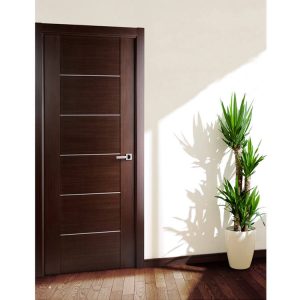
Wood frames with black glass panels offer a warmer, more traditional aesthetic. Mahogany or oak frames with a dark stain can look striking in executive offices, law firms, or hospitality settings.
For exterior applications, wood requires a quality finish and periodic refinishing. It is also less dimensionally stable than metal, expanding and contracting with humidity changes, which can stress the glass seal. If you choose wood, specify engineered wood or a wood-aluminum composite cladding for better performance.
Accordion and Sliding Black Glass Doors
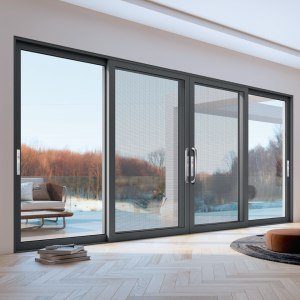
Accordion (bi-fold) and sliding black glass doors serve different purposes. Sliding doors are ideal where swing clearance is limited—such as storefronts facing a sidewalk. Accordion doors allow wide-open access, often used for restaurant patios or event spaces where the wall can fully open.
Both configurations require careful track selection. Floor tracks create a threshold that may trip pedestrians; top-hung systems cost more but eliminate the floor obstruction. For exterior use, ensure the system has adequate weatherstripping and drainage to prevent water infiltration.
Comparison Table: Black Glass Door Options at a Glance
| Type | Frame Material | Durability | Thermal Performance | Relative Cost | Best Use Case |
|---|---|---|---|---|---|
| Frameless | None (glass only) | High (if glass is thick enough) | Moderate (single glazing) | High | Retail showrooms, modern offices |
| Steel-framed | Steel | Very High | Low without thermal break | High | Exterior entrances, security-sensitive areas |
| Aluminum-framed | Aluminum | High | Good with thermal break | Medium | Storefronts, offices, multi-family |
| Wood-framed | Wood | Medium | Moderate | Medium-High | Interior offices, hospitality |
| Accordion/Sliding | Aluminum or steel | Medium-High | Varies by glazing | High | Restaurants, event spaces, wide openings |
Buying Guide: Key Factors to Evaluate
Glass Type: Safety and Energy Efficiency
For any commercial or exterior installation, safety glass is non-negotiable. Tempered glass is four to five times stronger than annealed glass and shatters into small, less dangerous pieces. Laminated glass contains an interlayer that holds the glass together upon impact, providing better security and sound insulation.
Energy efficiency depends on the glass coating and glazing configuration. Low-emissivity (Low-E) coatings reflect infrared heat while allowing visible light through. Double glazing with a Low-E coating and argon gas fill significantly improves insulation compared to single glazing. For south-facing or west-facing entrances, specify a glass with a lower solar heat gain coefficient (SHGC) to reduce cooling loads.
Black glass itself absorbs more heat than clear or white glass. In direct sunlight, the surface temperature of black glass can rise considerably, which increases the heat transmitted into the building. This makes the choice of glazing more critical for black doors than for lighter-colored alternatives.
Frame Material Selection
The frame must match the structural demands of the opening and the environmental exposure. Steel offers maximum strength but requires a thermal break for exterior use. Aluminum is corrosion-resistant and lighter, but the profile design determines its structural performance—thin-walled aluminum will flex under wind load.
Consider the wind load rating for your location. Coastal areas and high-rise buildings face higher wind pressures, requiring reinforced frames and thicker glass. Ask your supplier for the door’s tested performance data, including air infiltration, water penetration, and wind resistance ratings.
Hardware and Security
Hardware is the most frequently replaced component of any door. For commercial applications, specify hardware rated for high-frequency use. Look for ANSI/BHMA Grade 1 hardware, which indicates the highest level of durability for commercial applications.
Door closers are essential for exterior doors to ensure they close and latch properly. Choose a closer with adjustable closing speed and latching force. Panic hardware or push bars are required on egress doors in most commercial buildings. For access control, consider electric strikes or magnetic locks integrated with your building’s security system.
The handle finish should match the black aesthetic—matte black hardware is popular but shows fingerprints more than textured or brushed finishes. Consider a clear protective coating on handles to resist scratches and wear.
Building Code Compliance and Safety Standards
Building codes vary by jurisdiction, but some requirements are nearly universal. Doors in means of egress must not require more than a single action to unlatch. Glass doors must meet impact safety standards where they are located in hazardous areas—typically within 24 inches of a door opening or where the glass extends to the floor.
Fire-rated glass doors may be required in certain locations, such as stairwell enclosures or corridor separations. Fire-rated glass assemblies have specific ratings—20, 45, 60, 90 minutes—and must be tested as a complete assembly with the frame and hardware. Verify that any fire-rated door you specify carries the appropriate certification for your market.
Installation and Professional Services
Professional installation is strongly recommended for black glass doors, particularly frameless and steel-framed systems. A heavy glass door that is misaligned will bind, stress the hardware, and eventually fail. The installation process involves:
- Verifying the rough opening — The opening must be square, level, and plumb. Out-of-square openings require shimming or frame adjustment, which affects the door’s operation.
- Setting the frame — The frame must be anchored securely to the structure. Masonry openings require different anchors than steel stud or wood frame construction.
- Hanging the door leaf — Alignment and adjustment of hinges or pivots to ensure consistent gaps and smooth operation.
- Sealing and weatherproofing — Exterior installations require proper sealing at the frame perimeter and between the frame and the glass.
For retrofit projects, measure the existing opening carefully. Non-standard openings may require custom frame fabrication, which increases lead time and cost. Ensure the installer has experience with commercial doors, not just residential installations.
Frequently Asked Questions
How much do black glass doors cost?
Costs vary widely based on type, size, glass specification, and hardware. A basic aluminum-framed single door with tempered glass will be at the lower end, while a large steel-framed double door with laminated acoustic glass and panic hardware will cost significantly more. The most reliable approach is to request quotes with detailed specifications from multiple suppliers.
Are black glass doors durable?
Yes, when properly specified. Tempered and laminated glass are impact-resistant. The frame material determines long-term durability—steel and aluminum are corrosion-resistant and require minimal maintenance. The hardware is the most likely failure point, so choosing commercial-grade hardware is critical.
Can black glass doors be customized to fit non-standard openings?
Most manufacturers offer custom sizing. The practical limits depend on the frame material and glass thickness. Very wide openings require reinforced frames or multiple door leaves. Very tall doors may need thicker glass to resist wind load. Custom sizes typically add cost and lead time.
What maintenance do black glass doors require?
Black glass shows dust and smudges more readily than clear glass. Clean with a mild glass cleaner and a soft cloth; avoid abrasive pads. Black frames may show scratches if the powder coating is damaged—touch-up paint is available from the frame supplier. Hardware should be lubricated periodically to ensure smooth operation.
Are black glass doors energy efficient?
Energy efficiency depends on the glazing, not the color. A black door with double glazing and a Low-E coating performs as well as any other color with the same glazing. However, black glass absorbs more solar heat, so in warm climates, a lower SHGC coating is recommended to minimize heat gain.
Additional Considerations: Matching Your Project Needs
Black Door Glass vs. Tinted Glass
Black glass and tinted glass are not the same. Tinted glass has color added to the glass itself, reducing light transmission. Black glass is typically created with a ceramic frit coating that is fused to the glass surface, providing an opaque or semi-opaque appearance. The coating is highly durable and does not fade, but it does affect visibility—opaque black glass provides privacy but eliminates the ability to see through the door.
For retail applications where you want visibility into the store, consider a darker bronze or gray tint instead of full black. For privacy-focused applications like back offices or meeting rooms, black glass with a coating offers a modern look without the need for blinds.
Contemporary Glass Doors for Exterior Use
Modern exterior glass doors often combine full-glass panels with slim aluminum frames, creating a minimalist appearance. These systems use structural glazing, where the glass is bonded to the frame with structural silicone, eliminating bulky exterior trim. This approach requires precise fabrication and installation, as the glass carries structural load.
For exterior applications, ensure the door system has a tested water management system—internal weep holes and drainage channels that direct any water infiltration back outside. Look for performance data showing the system passes water penetration tests under simulated rain and wind conditions.
Steel and Glass Door Combinations
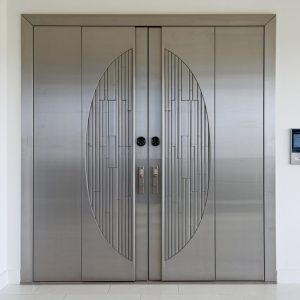
Combining steel frames with glass panels is a classic commercial aesthetic that conveys strength and permanence. These doors are often specified for bank entrances, government buildings, and other high-security locations. The steel frame can be fabricated with a variety of profiles—from narrow sightlines to heavy industrial sections.
The main consideration with steel is weight. A steel-framed door leaf is significantly heavier than an aluminum equivalent, requiring heavier hinges and a more robust frame anchorage. Floor springs are often used instead of conventional hinges to distribute the weight.
Full Glass Doors with Handles
The handle selection on a full glass door is both functional and aesthetic. For frameless doors, the handle is typically attached through the glass with a through-bolt assembly. The handle must be positioned to match the door’s swing and the user’s reach. For commercial doors, consider a push bar or paddle handle that allows operation with an elbow or forearm when hands are full.
Glass Door Installers: What to Look For
When selecting an installer, ask about their experience with commercial doors specifically. Residential glass installers may not have experience with heavy glass slabs, floor springs, or commercial locking hardware. Ask for references from recent commercial projects and verify that the installer carries appropriate insurance.
Door Slabs with Glass Inserts
If you are matching an existing door system, a door slab with a glass insert may be the most practical option. This allows you to replace the door leaf without changing the frame. Ensure the slab dimensions match the existing frame precisely, and verify the hinge and lock preparation matches your existing hardware.
How We Meet These Standards
As a manufacturer, our approach to black glass doors is built around the specifications discussed above. We produce thermally broken aluminum profiles and steel-framed systems that can be configured to meet local building codes, including wind load and impact safety requirements. Our factory in China offers direct supply, which removes the middleman markup that often inflates commercial door pricing.
We support full customization on size, color, glass specification, and hardware accessories. Whether you need a standard storefront door or a custom-sized system for a non-standard opening, we can adjust the profile structure and fittings to match your project’s requirements. Our pre-shipment inspection includes air-tightness, water-tightness, and wind resistance testing, so you receive a product that performs as specified.
For buyers managing international projects, we provide complete export documentation, including packing lists, proforma invoices, and customs paperwork. We ship both full container loads and less-than-container loads directly from our factory, giving you flexibility on order volume and logistics.
If you are comparing suppliers for a commercial black glass door project, we can provide detailed specifications and pricing tailored to your opening sizes and performance requirements.