Core Conclusion: What You Need to Know About Half Glass Doors
A half glass door combines a solid lower panel with a glazed upper section. It is a common choice for back entrances because it balances three things buyers care about: natural light, privacy, and durability. The solid lower half protects against kicks, scuffs, and everyday wear, while the glass upper half brightens an entryway or corridor without turning it into a fishbowl.
For B2B buyers — contractors, builders, property managers, and importers — the practical appeal is straightforward. A half glass door performs like a solid door where it matters most (the lower impact zone) while offering daylighting benefits that a fully solid door cannot. It also avoids the downsides of a full glass door: higher cost, greater security risk, and more demanding maintenance.
The decision process comes down to five variables: frame material, glass specification, hardware quality, insulation performance, and customization capability. This guide walks through each one, compares the trade-offs, and gives you a framework for evaluating suppliers.
Types of Half Glass Doors: Wood, Aluminum, and More
The term “half glass door” describes a configuration, not a material. You will find this design in three main frame materials, each with distinct performance characteristics.
Half Wood Half Glass Doors
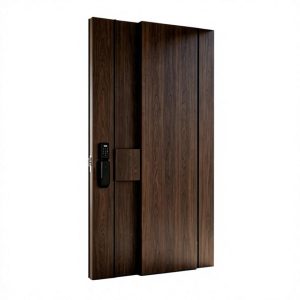
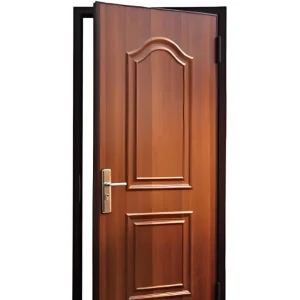
Wood remains the traditional choice for residential back doors. The lower half is typically a solid timber panel — oak, mahogany, pine, or engineered wood — with a glazed upper section divided by muntins or a single large pane.
Wood offers natural insulation and a classic aesthetic that suits period properties and high-end residential work. The trade-offs are maintenance and dimensional stability. Exterior wood doors require periodic refinishing, and solid timber can warp or swell with humidity changes unless properly sealed and specified with stable joinery.
For commercial or high-traffic applications, wood is usually the wrong call unless the project specifically demands it. The lower panel will take abuse, and refinishing costs recur throughout the door’s life.
Aluminum Half Glass Doors with Glass Panels
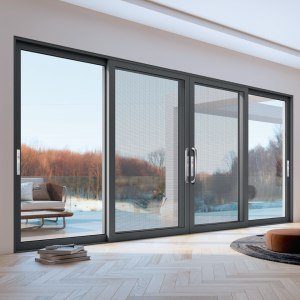
Thermal-break aluminum is the dominant choice for modern exterior half glass doors, particularly in commercial and high-end residential projects. The frame uses a polyamide thermal break to separate the interior and exterior aluminum profiles, which reduces heat transfer significantly.
Aluminum’s advantages are structural rigidity, corrosion resistance, and design flexibility. Slim frame profiles allow larger glass areas, which matters if you want the upper half to feel open rather than subdivided. Powder-coated finishes are durable and available in a wide color range, including wood-grain effects that mimic timber without the maintenance.
The main consideration is cost — good thermal-break aluminum is more expensive than uPVC and comparable to mid-range hardwood. But the lifespan and low maintenance often justify the premium for exterior installations.
uPVC Half Glass Doors
uPVC (unplasticized polyvinyl chloride) is the budget-friendly option. It offers decent insulation, requires minimal maintenance, and is significantly cheaper than aluminum or wood.
The downsides are aesthetic and structural. uPVC frames are bulkier, limiting glass area and giving a less premium look. They also have a shorter service life than aluminum and are more prone to color fading and brittleness in extreme UV exposure. For rental properties, utility buildings, or projects where budget dominates, uPVC is a legitimate option. For architectural projects or anything requiring slim sightlines, it is usually not.
Glass Options and Performance: What to Look For
The glass specification determines the door’s insulation, security, and light transmission. This is where buyers often under-specify because the differences are not visible at a glance.
Tempered vs. Laminated Glass
Safety glazing is non-negotiable for exterior doors in most jurisdictions. Two options meet safety standards:
- Tempered glass is heat-treated to shatter into small, blunt fragments rather than sharp shards. It is the baseline for door glazing.
- Laminated glass consists of two glass layers bonded with a PVB interlayer. When broken, it stays in place, held by the interlayer. This makes it significantly harder to breach — a critical security advantage for back entrances.
For exterior back doors, laminated glass is the better specification. The cost difference is modest, and the security benefit is substantial. If you are sourcing for commercial applications or ground-floor residential units, do not accept tempered-only glazing.
Low-E Coatings and Insulated Glass Units
Single-pane glass is unacceptable for exterior doors in most climates. The standard should be an insulated glass unit (IGU) — two panes separated by a spacer and sealed, often filled with argon gas.
Low-emissivity (low-E) coatings are the next layer. A low-E coating reflects long-wave infrared radiation, which means heat stays inside during winter and outside during summer. Combined with an IGU, low-E glass can reduce heat loss through the door by 40–50% compared to uncoated double glazing.
When evaluating suppliers, ask for specific performance numbers: the U-factor (heat transfer rate) and SHGC (solar heat gain coefficient). A U-factor around 0.28–0.30 W/m²K for the complete door assembly is a reasonable benchmark for cold climates. Lower is better. SHGC depends on your climate — higher in cold regions, lower in hot ones.
Frosted and Obscured Glass
If privacy is a concern — a back door facing a neighbor, a street, or a courtyard — frosted or acid-etched glass provides light transmission without visibility. Options include:
- Frosted/acid-etched: uniform opacity, moderate light transmission
- Patterned glass: decorative textures that obscure vision while diffusing light
- Smart glass: switchable between transparent and opaque with an electrical current (premium option, rarely cost-effective for doors)
The trade-off is simple: more privacy equals less clarity and slightly reduced light. For back doors, frosted glass on the lower portion of the glazed section is a common compromise.
Comparison Table: Half Glass Door Materials and Features
| Attribute | Thermal-Break Aluminum | Wood | uPVC |
|---|---|---|---|
| Insulation (frame) | Excellent with thermal break | Good (natural insulator) | Good to excellent |
| Insulation (glass) | Dependent on IGU specification | Dependent on IGU specification | Dependent on IGU specification |
| Security | High — rigid frame, multi-point locking | Moderate — depends on timber thickness and lock quality | Moderate — frame can be flexed with force |
| Maintenance | Low — powder-coated finish | High — periodic refinishing required | Low — occasional cleaning |
| Durability | 30+ years with minimal care | 15–25 years depending on climate and care | 15–20 years before UV degradation |
| Aesthetic | Slim profiles, modern, customizable colors | Traditional, warm, premium feel | Bulkier profiles, limited color options |
| Relative Cost | High | Medium to high | Low |
| Customization | High — size, color, hardware, glass options | Medium — size and finish, limited by wood species | Low — limited profiles and colors |
How to Choose the Right Half Glass Door for Your Project
The selection process should follow a logical sequence, not a vendor pitch.
Step 1: Define the Performance Requirements
Start with the building’s location and orientation. A back door in Minnesota has different insulation requirements than one in Florida. Determine the target U-factor and SHGC based on your climate zone. Check local building codes for egress requirements — in some jurisdictions, a door must allow emergency exit without a key, which affects hardware selection.
Step 2: Assess the Security Context
Ground-floor back entrances are a common break-in point. Specify multi-point locking systems — these engage bolts at multiple points along the door edge, not just at the handle. For the glazing, laminated glass is the minimum for security-conscious installations. Consider the frame material’s resistance to forced entry: aluminum with reinforced profiles is significantly harder to defeat than uPVC.
Step 3: Evaluate the Aesthetic and Architectural Fit
The door should match the building’s design language. Modern commercial projects almost always favor aluminum with slim sightlines and minimal sightlines. Residential renovations may call for wood to match existing joinery. The glass configuration matters too — a single large pane reads modern; divided lites (muntins) read traditional.
Step 4: Calculate the Total Cost of Ownership
Purchase price is only part of the equation. A cheap uPVC door may cost less upfront but need replacement in 15 years. A thermal-break aluminum door costs more initially but lasts 30+ years with negligible maintenance. For B2B buyers managing multiple units or commercial properties, the lifecycle cost is the number that matters.
Typical price ranges (per door, installed, excluding framing work):
| Material | Economy | Mid-Range | Premium |
|---|---|---|---|
| uPVC | $400–$700 | $700–$1,000 | — |
| Wood | — | $800–$1,500 | $1,500–$3,000+ |
| Aluminum (thermal break) | — | $1,200–$2,000 | $2,000–$4,000+ |
These ranges vary significantly with size, glass specification, hardware quality, and regional labor costs. For bulk procurement, expect volume discounts — but verify that the discount is not achieved by downgrading the glass or hardware specification.
Step 5: Verify Supplier Capabilities Before Ordering
For B2B buyers, supplier evaluation is as important as product selection. Key questions to ask:
- Can the supplier provide test reports for air-tightness, water-tightness, and wind resistance? These tests (typically per standards like EN 12207, EN 12208, or ASTM equivalents) verify the door’s performance under real-world conditions.
- What is the production lead time? Custom sizes and finishes typically add 2–4 weeks to standard production.
- Can they handle the logistics? If importing, confirm the supplier can provide packing lists, proforma invoices, and full customs documentation.
- What is the MOQ? Some factories require minimum order quantities that may exceed your project needs.
Frequently Asked Questions About Half Glass Doors
Can a half glass door be installed as an exterior door?
Yes, provided the frame material, glass specification, and hardware are rated for exterior use. The key requirements are an insulated glass unit with low-E coating, safety glazing (tempered or laminated), weatherstripping around the perimeter, and a threshold system that prevents water infiltration. A door intended for interior use will fail quickly if installed outside.
Are half glass doors energy efficient?
The energy efficiency depends on the combination of frame and glass. A thermal-break aluminum frame with a low-E insulated glass unit can perform as well as a solid door in terms of heat transfer. The glass area does lose more heat per square foot than an insulated solid panel, so in extreme climates, a smaller glass upper section or triple glazing may be warranted. Ask for the complete door’s U-factor rating, not just the glass.
How much does a half glass door typically cost?
At the economy end, uPVC half glass doors start around $400–$700 installed. Mid-range wood doors run $800–$1,500. Premium thermal-break aluminum doors with high-performance glazing and multi-point locking run $2,000–$4,000 or more. For bulk commercial orders, per-unit costs drop, but the specification should remain consistent.
How do I maintain a half glass door?
Maintenance depends on the frame material. Aluminum and uPVC require only periodic cleaning of the frame and tracks. Wood requires refinishing every 2–5 years depending on exposure. The glass should be cleaned with a non-abrasive cleaner; check and replace weatherstripping as it compresses over time. Lubricate hinges and locking mechanisms annually.
Can half glass doors be customized in size, color, and hardware?
Yes, particularly with aluminum and wood. Manufacturers can produce custom sizes to fit non-standard openings, apply custom powder-coated or anodized finishes, and fit a range of hardware — handles, locks, hinges, and multi-point locking systems. uPVC is more limited; profiles come in standard sizes and a narrower color range.
Additional Considerations: Back Doors with Glass and Modern Designs
The half glass configuration is one option within a broader category of back doors with glass. Understanding the alternatives helps you position the half glass door correctly.
Back doors with glass panels — a fully glazed door with one or more opaque panels — offer more light but less privacy and lower security. They are appropriate for patios and garden entrances where the door is not a primary entry point.
Modern design doors with glass — these prioritize slim sightlines, minimal hardware, and large glass expanses. The half glass configuration works well here because the solid lower panel provides visual grounding and practical durability that a full glass door lacks.
The half glass door is the compromise option: it captures most of the daylighting benefit of a full glass door while retaining the privacy, security, and durability of a solid door. For back entrances specifically — where you want light but not full visibility — it is often the optimal choice.
How We Meet These Standards
As a manufacturer of doors and windows, we approach half glass doors from the perspective of the performance criteria discussed above. Our thermal-break aluminum profiles are designed with polyamide thermal barriers to meet insulation requirements in cold and temperate climates. The adjustable profile structure allows us to tune the door to local building codes and performance standards in your target market.
We offer full customization on size, color, glass specification, and hardware accessories. If your project requires a specific U-factor, a particular glass configuration, or a custom RAL color, we can accommodate it. For wood doors, we work with stable engineered timber constructions and offer a range of species and finishes.
Our pre-shipment inspection includes air-tightness, water-tightness, and wind resistance testing — the same performance criteria you should be verifying with any supplier. We handle FCL and LCL shipments, and our export documentation includes packing lists, proforma invoices, and full customs paperwork.
If you are evaluating suppliers for a half glass door project — whether a single custom door or a bulk construction order — we can provide specifications, test data, and pricing against your requirements.