**Meta Title:** Exterior Door with Internal Blinds: Types, Benefits & Buying Guide
**Meta Description:** Explore types, costs, and key features of exterior doors with internal blinds. Compare maintenance, energy efficiency, and sizing options like 35.5 x 79.
**Slug:** exterior-door-with-internal-blinds
**SEO Keywords:** exterior door with internal blinds, exterior door with built in blinds, exterior door built in blinds, interior blinds exterior door
—
## Quick Verdict: What You Need to Know
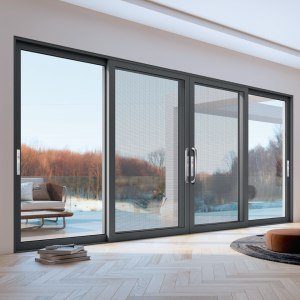
An exterior door with internal blinds integrates the blind mechanism between two panes of glass. This design solves the two biggest problems with traditional blinds: dust accumulation and cord hazards. For B2B buyers—contractors, property managers, and distributors—the primary value proposition is durability and reduced callbacks.
If you are sourcing for a project, prioritize **cordless operation** and **sealed argon-filled glass** for the best long-term performance. Expect to pay a premium of roughly 15–30% over a standard door with the same glass package. The most common failure point is the magnetic slider mechanism, not the blinds themselves, so inspect the hardware quality before committing to a bulk order.
## Types of Exterior Doors with Internal Blinds
The market offers three distinct operating mechanisms. Each has a different cost structure and failure profile.
### Magnetic Slider System
This is the most common design. A magnetic handle on the interior surface of the glass moves the blinds inside the sealed unit. There is no physical penetration of the glass, which preserves the seal.
– **Advantages:** No cords, no holes in the glass, relatively simple mechanism.
– **Disadvantages:** The magnet can lose strength over time. If the internal blinds shift, you cannot adjust them manually without disassembling the door.
– **Best for:** Standard residential and light commercial use.
### Cordless Tilt Mechanism
A small, flush-mounted dial or knob on the door frame controls the tilt of the blinds. This system is usually found on higher-end units.
– **Advantages:** More precise light control, no magnetic drag, and a cleaner look.
– **Disadvantages:** The mechanical components are inside the frame, making repair more labor-intensive.
– **Best for:** Projects where aesthetics and precise light control matter more than initial cost.
### Mini-Blind Insert
This is a budget option where a removable blind cartridge is placed inside a hollow glass unit. The glass is not permanently sealed; it has a small access channel.
– **Advantages:** Cheaper to manufacture and replace.
– **Disadvantages:** The seal is less robust, leading to a higher risk of condensation between panes. Dust can enter over time.
– **Best for:** Interior applications or very dry climates. **Not recommended** for exterior doors in humid regions.
## Comparison Table: Features and Options
| Feature | Magnetic Slider | Cordless Tilt | Mini-Blind Insert |
| — | — | — | — |
| **Glass Seal Integrity** | High (fully sealed) | High (fully sealed) | Moderate (access channel) |
| **Repair Complexity** | Low (replace glass unit) | High (frame disassembly) | Low (replace cartridge) |
| **Typical Cost Premium** | 15–25% | 25–35% | 10–15% |
| **Dust Resistance** | Excellent | Excellent | Good (seal degrades) |
| **Operational Lifespan** | 10–15 years | 15+ years | 5–8 years |
| **Best Use Case** | Most residential & commercial | High-end architectural projects | Budget-conscious interior doors |
## Sizing Guide: Standard and Custom (Including 35.5 x 79)
Standard exterior door widths in North America are 30, 32, and 36 inches. Standard heights are 80, 84, and 96 inches. However, the metric system and older construction often produce non-standard sizes.
The **35.5 x 79 exterior door** is a common replacement size, particularly in older homes and some manufactured housing. This is a “nominal” size; the actual rough opening is typically 36 inches wide by 80 inches high. When sourcing, you must specify whether you need a **slab** (door only) or a **pre-hung** unit (door + frame).
For B2B buyers, the critical measurement is the **rough opening**, not the door size itself. A 35.5-inch wide door will fit a 36-inch rough opening with a 1/4-inch shim space on each side. Always verify the jamb width—the depth of the frame—to match your wall thickness.
**Custom Sizing Considerations:**
– **Glass Size:** The internal blind unit reduces the visible glass area. A standard 36×80 door will have a glass opening of roughly 22×46 inches. Custom sizes will change this proportion.
– **Weight:** Internal blinds add 5–8 lbs to the door weight. For large custom doors, ensure the hinges are rated for the additional load.
– **Lead Time:** Custom sizes typically add 2–4 weeks to production lead time compared to standard stock sizes.
## Built-in Screens and Combination Doors
Many buyers ask about combining internal blinds with built-in screens. This is technically feasible but requires careful specification.
**The “Screen Door” Confusion:** A true screen door is a separate unit mounted on the exterior. An **exterior door with screens built in** refers to a retractable screen that deploys from a housing within the door frame or the door itself.
**Combination Options:**
1. **Retractable Screen + Internal Blinds:** This is a premium configuration. The screen is housed in a cassette at the top of the door, and the blinds are between the glass. This gives you insect protection and light control without any external attachments.
2. **Full-Lite Door + Separate Screen:** A simpler approach. Use a full-glass door with internal blinds and install a traditional storm door with a screen. This is often more cost-effective.
**Technical Challenge:** The screen cassette requires depth in the frame. If you have a narrow jamb (less than 4-9/16 inches), fitting both a screen cassette and a blind mechanism may be impossible. Verify the jamb depth before specifying this combination.
## Exterior Door Blanks: What They Are and When to Choose Them
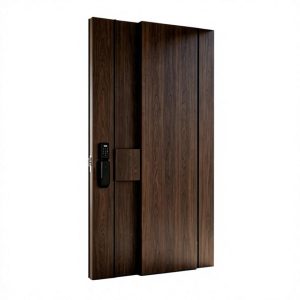
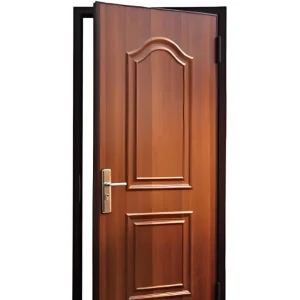
An **exterior door blank** is a solid door slab with no pre-cut holes for hardware or glass. This is the raw material for custom fabrication.
**Key Differences from Pre-Hung Doors:**
| Feature | Door Blank | Pre-Hung Door |
| — | — | — |
| **Frame Included** | No | Yes |
| **Hardware Prepped** | No (no hinges, lockset holes) | Yes (bored for lockset, hinge locations) |
| **Glass Opening** | Not cut | Pre-cut and glazed |
| **Installation Effort** | High (requires framing) | Low (drop into rough opening) |
| **Customization** | Maximum (you control everything) | Limited (manufacturer’s options) |
**When to Choose a Blank:**
– You have an existing frame in good condition and only need to replace the door leaf.
– You need a non-standard size that manufacturers do not stock.
– You are a contractor who will cut the glass opening and install the internal blind unit yourself.
**When to Avoid Blanks:**
– You are not experienced with door fabrication. Cutting a glass opening in a steel or fiberglass door requires specialized tools and can void the warranty.
– For exterior applications, a pre-hung door provides a better weather seal because the frame is designed to work with the door slab.
## Buying Tips and Considerations
### Energy Efficiency and Glass Options
The internal blind adds an insulating air space, but the glass package is the primary driver of thermal performance. Look for these specifications:
– **U-Factor:** Below 0.30 is good for most climates. Below 0.25 is excellent.
– **SHGC (Solar Heat Gain Coefficient):** Lower values (0.25–0.30) reduce heat gain in hot climates. Higher values (0.40+) are better for cold climates.
– **Argon Fill:** Argon gas between the panes reduces heat transfer by about 10–15% compared to air.
– **Low-E Coating:** This reflects heat back toward its source. In winter, it keeps heat inside; in summer, it keeps heat out.
**Important Note:** The blind itself provides R-value when closed, but it does not replace the need for a high-performance glass package. A door with a U-factor of 0.35 and closed blinds will perform better than a U-factor of 0.50 with open blinds.
### Cordless vs. Corded: What to Choose
For exterior doors, **cordless is the only sensible choice**. Here is why:
1. **Safety:** Cords are a strangulation hazard for children and pets.
2. **Durability:** Cords break and fray, especially in direct sunlight.
3. **Maintenance:** Cord mechanisms require tension adjustment over time.
Cordless systems use a spring-loaded mechanism or a magnetic slider. The magnetic slider has fewer moving parts and is generally more reliable. However, if you have a very tall door (over 8 feet), the magnetic slider can be harder to move smoothly because of the increased friction.
### Cost Considerations and Budget Ranges
Pricing for exterior doors with internal blinds varies significantly by material and brand. Use these as planning ranges, not quotes:
| Door Material | Standard Door Cost | With Internal Blinds (Premium) |
| — | — | — |
| Steel (20-gauge) | $400–$800 | $700–$1,200 |
| Fiberglass (smooth) | $600–$1,200 | $900–$1,600 |
| Fiberglass (wood grain) | $800–$1,500 | $1,100–$2,000 |
| Aluminum (thermal break) | $1,000–$2,000 | $1,400–$2,800 |
**Hidden Costs to Budget For:**
– **Rough Opening Adjustment:** If your existing frame is out of square, expect $200–$500 in carpentry work.
– **Disposal:** Removing and hauling away an old steel door costs $50–$150.
– **Trim and Casing:** New interior and exterior trim can add $100–$300.
### Installation and Compatibility with Existing Frames
If you are replacing an existing door, measure the rough opening carefully. A pre-hung door is the safest choice for exterior applications because it ensures proper flashing and weather sealing.
**Compatibility Check:**
– **Jamb Depth:** Standard is 4-9/16 inches for 2×4 walls and 6-9/16 inches for 2×6 walls. Internal blind mechanisms require this depth.
– **Wall Thickness:** If your wall is thicker than standard, you will need custom jamb extensions.
– **Sill Condition:** Check if your subfloor is level. A pre-hung door with internal blinds is heavier than a standard door, and an unlevel sill will cause the door to sag.
**Warranty Consideration:** Most manufacturers void the warranty if a door is installed incorrectly. For a door with internal blinds, the warranty typically covers the glass seal and the blind mechanism for 5–10 years. Labor costs for replacement are not covered, so a proper installation is critical.
—
## How We Meet These Standards as a Manufacturer
The specifications above represent the industry baseline. As a factory-direct manufacturer, our approach to this product category is structured around the specific pain points we see in the procurement process.
**Our Manufacturing Capability:**
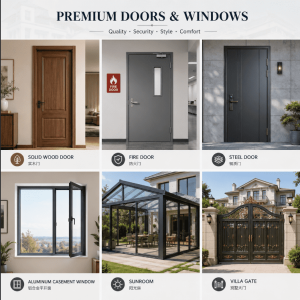
We produce thermal-break aluminum and solid wood doors with internal blind systems. Our factory operates with a quality control protocol that includes **air-tightness, water-tightness, and wind resistance tests** on every batch before shipment. This is not a spot-check; it is a pre-shipment inspection protocol that ensures the sealed glass unit—the most critical component of an internal blind door—meets performance standards.
**Customization and Sourcing:**
When you order a 35.5 x 79 exterior door or any other non-standard size, we adjust the profile structure and fittings to match your local building codes. This is a key advantage of factory-direct sourcing. We do not rely on a distributor’s interpretation of your requirements; we can adapt the door’s thermal break, glazing, and hardware to the specific climate and code requirements of your project’s location.
**OEM and Bulk Supply:**
We support OEM and construction project bulk supply. This means we can produce doors with your specified glass package, hardware brand, and finish. For projects requiring a specific warranty period, we work with you to document the specifications and ensure the installed product matches the tested prototype.
**Logistics and Documentation:**
As a factory, we handle the full export process. We provide packing lists, proforma invoices, and complete customs documentation for FCL and LCL shipments. This reduces the administrative burden on your procurement team and ensures no delays at the port.
If you are evaluating suppliers for a project that requires internal blind doors, we can provide samples and technical drawings for your review. Contact our team to discuss your specific size and performance requirements.
—
## Frequently Asked Questions
### How do internal blinds in exterior doors work?
Internal blinds are housed between two panes of glass in a sealed unit. A magnetic slider or a mechanical dial on the interior surface moves the blinds. The glass unit is sealed to prevent moisture and dust from entering the space between the panes.
### Are exterior doors with internal blinds energy efficient?
Yes, but the efficiency depends on the glass package. A door with a U-factor of 0.28 and argon fill will be more efficient than a standard clear-glass door. The blinds add an extra layer of insulation when closed, reducing heat transfer by up to 30% compared to open blinds.
### Can internal blinds be repaired or replaced?
The blind mechanism itself is usually not repairable. If it fails, the entire glass unit must be replaced. This is why the quality of the mechanism is critical. A good magnetic slider system should last 10–15 years before requiring replacement.
### How do I clean internal blinds in a door?
You do not need to clean them. Because they are sealed between the glass, they do not accumulate dust. If you see dust inside the unit, it means the seal has failed and the glass needs replacement.
### What are the disadvantages of internal blinds in doors?
The main disadvantages are the higher initial cost and the fact that you cannot manually adjust the blinds if the mechanism fails. You also cannot replace the blinds without replacing the entire glass unit.
### Do internal blinds provide privacy at night?
Yes, when the blinds are fully closed, they provide complete privacy. The light-blocking capability depends on the blind material. Standard aluminum mini-blinds block 100% of light when closed.
### Can I install an exterior door with internal blinds myself?
If you have experience installing pre-hung doors, you can install this type of door. The process is the same as a standard door, but the unit is heavier. You will need a helper and appropriate shims to ensure the door is plumb and square.
### What is the difference between a 35.5 x 79 door and a standard 36 x 80 door?
A 35.5 x 79 door is a metric-sized door, often found in older homes. The rough opening is typically 36 x 80 inches. When replacing a 35.5 x 79 door, you can use a standard 36 x 80 pre-hung unit, but you will need to adjust the shims to account for the size difference.
For a detailed size guide and to verify your rough opening dimensions, request a quote or reach out to our team with your specific measurements.