White Oak Front Door: Key Takeaways
If you are comparing white oak front door options, the core decision comes down to three configurations: solid wood, wood with a glass insert, and wood with sidelights. Each serves a different balance of privacy, natural light, and architectural presence.
- Solid white oak offers the highest durability, best insulation, and most traditional appearance, but it blocks natural light and carries the highest material weight.
- White oak with glass provides a middle ground—curb appeal with natural light—but the glass type (double vs. triple glazing, low-E coating) determines its energy performance more than the wood itself.
- White oak with sidelights maximizes light and creates a grand entry, but increases cost, installation complexity, and the number of sealed joints that require maintenance.
The single most important buying factor is not the wood species alone, but the assembly quality: how the stiles and rails are joined, the moisture content of the lumber, the type of glass unit, and the weatherstripping system. A well-built white oak door from a factory with proper quality control will outperform a poorly assembled door made from “better” wood.
Types of White Oak Front Doors: Solid, Glass, and Sidelights
Solid White Oak Front Door
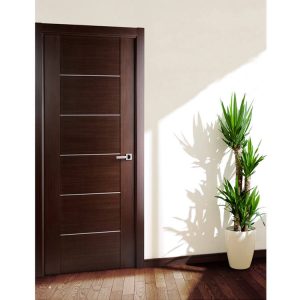
A solid white oak door is constructed from solid lumber throughout—typically stiles, rails, and panels. This is the heaviest and most substantial option. A standard 36-inch exterior door slab can weigh more than 100 pounds, which directly affects hinge selection and frame reinforcement.
From a performance standpoint, solid wood provides natural insulation. White oak has a Janka hardness rating of about 1,360 lbf, making it resistant to dents and impact damage—a meaningful advantage for a high-traffic entry. However, solid wood is dimensionally responsive to humidity. In regions with dramatic seasonal moisture swings, the door may expand and contract, which is why proper sealing on all six faces and an appropriate finish system are non-negotiable.
The grain of white oak is distinctive: prominent, with pronounced rays that create a flake-like figure, especially in quarter-sawn cuts. This is a key aesthetic differentiator from red oak, which has a softer, less dramatic grain pattern.
White Oak Front Door with Glass
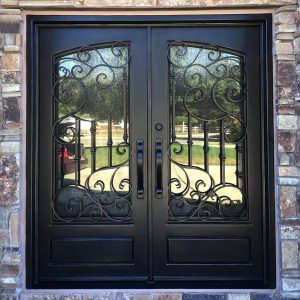
Adding glass to a white oak door changes both its appearance and its engineering. The glass insert is typically a double- or triple-glazed insulated glass unit (IGU) with a low-emissivity (low-E) coating to reduce heat transfer. The glass is held in place by wood stops or a glazing bead, and the seal between glass and wood is a critical failure point.
The energy efficiency of a white oak door with glass depends almost entirely on the IGU specification, not the wood. A door with a single-pane glass insert will perform dramatically worse than a solid door, regardless of the quality of the oak. When comparing options, ask for the glass unit’s U-factor and Solar Heat Gain Coefficient (SHGC) ratings—these are the numbers that matter for insulation claims.
The design consideration is privacy. Clear glass offers full visibility; frosted, textured, or obscured glass allows light while blocking sightlines. For a front door, the choice is often driven by whether the entry faces a public street or a private courtyard.
White Oak Front Door with Sidelights
Sidelights are narrow, fixed glass panels installed on one or both sides of the door. They transform a single door opening into a full entry system. This is the most expensive configuration, as it requires a wider rough opening, additional framing, and a more complex installation.
The benefit is significant: sidelights can increase natural light in an entry foyer substantially and make a narrow entry feel wider. They also allow the door itself to remain solid wood, preserving the durability of the main panel while adding light around it.
The trade-off is maintenance. Each sidelight adds a sealed joint between glass and frame, and between the sidelight and the door jamb. These joints are potential air and water leakage points. With a pre-hung unit from a manufacturer with quality control on the sealing process, this risk is manageable. With a field-assembled system, it becomes the installer’s responsibility—and a common source of drafts and water damage.
White Oak vs. Other Oak: What’s the Difference?
The most common comparison is white oak vs. red oak. Both are true oaks, but they differ in structure, appearance, and performance.
| Property | White Oak | Red Oak |
|---|---|---|
| Janka hardness | ~1,360 lbf | ~1,290 lbf |
| Grain pattern | Prominent, with ray flecks; more subtle, linear grain | Bold, wavy grain; more porous appearance |
| Porosity | Closed pores (tyloses) — naturally water-resistant | Open pores — absorbs water more readily |
| Stain response | Takes stain evenly; less blotching | Can look streaky; requires more careful staining |
| Rot resistance | Naturally resistant to moisture and decay | Moderate; requires more protective finish |
| Typical cost | Higher | Lower |
For exterior door use, white oak’s closed pore structure is the deciding factor. The tyloses (natural plugs in the pores) make the wood significantly more resistant to moisture penetration. This is not a theoretical difference—it translates directly to how well the door resists warping, cupping, and rot over a decade of exposure to rain and sun.
The stain response difference is also practical. Red oak’s open pores can produce an uneven, blotchy appearance when stained. White oak accepts stain more uniformly, which is why it is the preferred choice for clear finishes and light-to-medium stains that showcase the grain.
One important distinction: solid white oak vs. white oak veneer. A “white oak door” can mean a door made entirely of solid white oak, or a door with a white oak veneer over an engineered core (typically MDF or laminated wood). The veneer option is lighter, less expensive, and more dimensionally stable—it will not warp as easily. However, it cannot be refinished as many times as solid wood, and a damaged veneer surface is difficult to repair invisibly. Solid wood can be sanded and refinished repeatedly, which extends its service life significantly.
Comparison Table: White Oak Front Door Options
| Feature | Solid White Oak | White Oak with Glass | White Oak with Sidelights |
|---|---|---|---|
| Material | 100% solid white oak lumber | Solid oak frame; insulated glass unit | Solid oak door; glass side panels |
| Durability | Highest — resists dents, impact, moisture | High — wood is durable; glass is a vulnerability | High — more sealed joints to maintain |
| Insulation | Best — solid wood has natural thermal mass | Depends on glass U-factor; can match solid with triple glazing | Similar to glass option; sidelights add surface area |
| Natural light | None | Moderate — single or divided glass insert | High — multiple glass panels |
| Privacy | Full | Partial — depends on glass type | Partial — sidelights are typically clear or frosted |
| Customization | Size, finish, hardware, panel design | Size, glass shape, glass type, hardware | Size, sidelight width, glass type, hardware |
| Maintenance | Lowest — refinish every 3–5 years | Moderate — check glazing seals annually | Highest — multiple seals to inspect |
| Relative cost | Baseline | +15–30% over solid | +40–60% over solid |
This table is a decision framework, not a price list. The actual cost difference between a solid door and a glass door depends on the glass specification—a triple-glazed, low-E, argon-filled unit adds more cost than a basic double-glazed unit. Similarly, sidelight costs scale with width and glass quality.
How to Choose the Right White Oak Front Door
1. Assess Your Climate First
The local climate determines which configuration is appropriate. In humid, coastal, or high-rainfall regions, the moisture resistance of white oak is a strong advantage—but only if the door is properly finished on all surfaces, including the top and bottom edges, which are often overlooked.
In arid or high-altitude regions with intense UV exposure, the finish system matters more than the wood species. A UV-resistant finish will prevent graying and surface checking. In cold climates, the glass specification becomes the dominant factor—a solid door with a high R-value may outperform a glass door with a low-performance IGU, regardless of the wood quality.
2. Understand the Cost Structure
The total cost of a white oak front door includes four components: the door slab, the pre-hung unit (frame, hinges, weatherstripping), the finishing (stain, sealer, topcoat), and installation labor.
The door slab itself ranges from mid to premium depending on grade, thickness, and joinery. A pre-hung unit adds the frame and hardware. Finishing is a separate cost—a factory-applied finish is typically more durable than a field-applied one because it is applied in controlled conditions with multiple coats. Installation labor varies significantly by region and by the complexity of the opening.
A realistic budget must account for all four. Many buyers focus on the slab price and are surprised by the total installed cost, which can be 2–3 times the slab price.
3. Specify the Right Glass
If you choose a door with glass, the glass specification is the most important performance decision. Look for:
- Double or triple glazing — more panes mean better insulation.
- Low-E coating — reflects heat while admitting light.
- Argon or krypton gas fill — reduces heat transfer between panes.
- Tempered or laminated glass — required for safety and security; laminated glass also provides better sound insulation.
Ask the manufacturer for the glass unit’s U-factor. A good double-glazed, low-E unit will have a U-factor around 0.28–0.30. A triple-glazed unit can reach 0.20 or lower. This is the number that determines whether your door is an insulation asset or liability.
4. Check the Joinery
The corners of a solid wood door are the structural weak points. The stiles and rails should be joined with mortise-and-tenon joints, not simple butt joints or dowels. This is a manufacturing detail you cannot see in a photo—ask the supplier directly about their joinery method.
5. Plan for Maintenance
A white oak front door is a long-term investment. With proper care, it can last 30–50 years or more. The maintenance schedule is simple but requires consistency:
- Annual inspection: Check weatherstripping, hinges, and glazing seals for wear.
- Every 3–5 years: Reapply a protective topcoat (exterior-grade polyurethane or a marine varnish).
- Immediately: Address any scratches, dents, or water stains before they penetrate the finish.
The most common cause of premature door failure is not the wood—it is neglect of the finish system. A small crack in the topcoat allows moisture into the wood, which leads to swelling, then further finish failure, then rot. Catching and repairing finish damage early is the single most effective way to extend door life.
Manufacturer Insights: Meeting Industry Standards
As a manufacturer of white oak front doors, we see the practical consequences of the decisions described above every day. Our approach to building doors that meet the standards professional buyers expect is straightforward.
First, we start with lumber that is properly dried and stabilized. The moisture content of the white oak we use is controlled to match the target market’s climate—a door shipped to a humid region is conditioned differently than one shipped to an arid region. This is a detail that is rarely visible in a spec sheet, but it is the difference between a door that stays flat and one that develops a bow within the first year.
Second, we use mortise-and-tenon joinery on all solid wood doors. This is not a cost-saving shortcut; it is the structural standard for exterior doors that must withstand years of opening, closing, and environmental stress.
Third, our pre-shipment inspection includes air-tightness, water-tightness, and wind resistance testing. These are not generic claims—they are specific checks that verify the door assembly performs as designed. When we ship a door with glass or sidelights, the seals around the glass are tested as part of this process.
Finally, we understand that building codes vary by market. Our profile structures and fittings can be adjusted to match local requirements, and we provide full customs documentation for international shipments. For buyers sourcing from overseas, this is a practical concern—a door that does not meet local code is a costly problem.
If you are comparing manufacturers, ask about their joinery method, their moisture control process, and their testing procedures. These are the details that determine whether your white oak front door performs as promised.
Frequently Asked Questions
Is white oak a good wood for a front door?
Yes. White oak’s closed pore structure makes it naturally resistant to moisture penetration, which is the primary cause of exterior door failure. Its Janka hardness rating of approximately 1,360 lbf provides good dent and impact resistance. It also accepts stain and finish more evenly than red oak, making it a practical choice for a door that must withstand outdoor exposure.
How much does a white oak front door cost?
The cost varies significantly based on configuration, grade, and customization. A solid white oak slab is the baseline; adding glass increases cost by roughly 15–30%, and sidelights add 40–60% or more. The total installed cost includes the pre-hung unit, finishing, and labor, which can double or triple the slab price. Regional labor rates and the complexity of the opening are the largest variables.
How long does a white oak front door last?
With proper maintenance—including a consistent finish schedule and prompt repair of any finish damage—a solid white oak front door can last 30–50 years or more. The wood itself is highly durable; the finish system is the limiting factor. Doors that are neglected, particularly in harsh climates, may show finish failure within 5–10 years, but this is correctable with refinishing.
What is the best finish for a white oak door?
For exterior use, a penetrating oil-based stain followed by multiple coats of a UV-resistant exterior polyurethane or marine varnish is the standard approach. The finish must be applied to all six faces of the door, including the top and bottom edges, to prevent moisture uptake. Factory-applied finishes are generally more durable than field-applied ones because they are cured under controlled conditions.
How do you maintain a white oak front door?
The maintenance schedule is simple: inspect the weatherstripping, hinges, and glazing seals annually; clean the surface with a mild soap solution; and reapply a protective topcoat every 3–5 years. Address any scratches, dents, or water stains immediately—before moisture penetrates the finish. In coastal or high-UV areas, more frequent topcoat application may be needed.
Is white oak more expensive than red oak?
Yes, white oak is typically more expensive than red oak. The price difference reflects white oak’s superior moisture resistance, more uniform staining behavior, and higher demand for exterior applications. The cost gap varies by region and lumber grade, but it is generally consistent across markets.
Can white oak doors be painted or stained?
Both are possible. White oak takes stain well and is the preferred choice for clear or light-to-medium finishes that showcase the grain. It can also be painted, but painting obscures the grain and eliminates the aesthetic advantage of choosing white oak over a less expensive wood. If you plan to paint, a less expensive wood species may be a more cost-effective choice.
Are white oak doors energy efficient?
Solid white oak provides natural insulation, but the door’s overall energy efficiency depends on the entire assembly—including the glass specification, weatherstripping, and frame. A solid door with good weatherstripping performs well. A door with glass performs well only if the glass unit has a low U-factor (0.28 or lower) and proper sealing. Ask for the U-factor of the glass unit, not just the wood species, when evaluating energy performance.