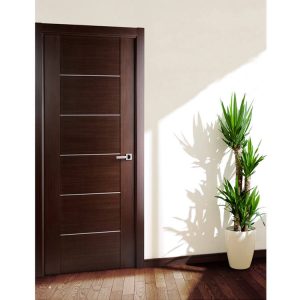
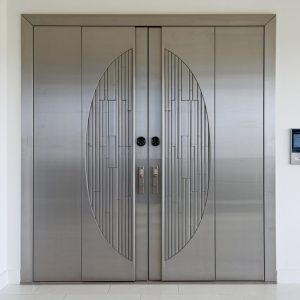
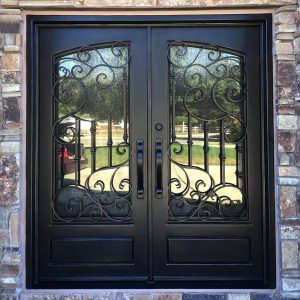
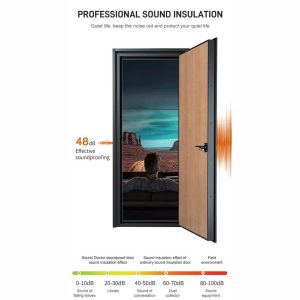
Panel doors are interior or exterior door slabs built around one or more defined panels. The number and shape of the panels affect the door’s appearance, while the construction material, core, glass, and finish affect performance. Common choices include one-panel, two-panel, three-panel, four-panel, five-panel, six-panel, shaker, raised-panel, and flush-panel designs.
If you are comparing panel door styles, start with the room, the required door size, the desired visual style, and the construction material. The panel count should support those choices rather than determine them on its own.
Panel door styles at a glance
| Style | Typical visual character | Where it works well |
|---|---|---|
| One-panel | Clean and simple | Modern interiors, minimalist rooms |
| Two-panel | Balanced and understated | Bedrooms, offices, transitional interiors |
| Three-panel | More vertical detail | Traditional and transitional interiors |
| Four-panel | Balanced geometry | Classic and contemporary interiors |
| Five-panel | Strong traditional or craftsman character | Bedrooms, hallways, living spaces |
| Six-panel | Familiar traditional appearance | Whole-home interior door sets |
| Shaker panel | Flat, square-edged panels | Modern, transitional, farmhouse interiors |
| Raised panel | More pronounced profile | Traditional interiors |
| Flush panel/flush door | Flat face with no raised panel profile | Modern and minimalist spaces |
Panel counts are not universal design standards. Manufacturers may use different rail, stile, and panel proportions even when two doors have the same number of panels.
One-panel, two-panel, and multi-panel doors
A one-panel door has a single large panel and tends to look visually quiet. A shaker one-panel door is especially useful when a homeowner wants some panel detail without a heavily traditional appearance.
Two-panel doors divide the face into two major sections. Two-panel white doors and shaker two-panel designs are common choices when the door should coordinate with simple trim and neutral walls.
Three- and four-panel doors offer more visual structure. They can work well when you want a traditional look without the stronger pattern of a six-panel door.
Five-panel and six-panel doors are among the most recognizable traditional configurations. A solid wood five-panel door can create a warmer, more substantial appearance, while a six-panel fiberglass or steel door can combine a traditional exterior look with a different material platform.
Shaker panel vs. raised panel vs. flush
The panel profile can matter as much as the number of panels.
Shaker panel doors generally use clean, square lines and a flat central panel. They are a flexible choice for contemporary, transitional, and farmhouse interiors.
Raised panel doors have a more dimensional center panel and usually create a traditional appearance. They can be a good match for classic trim, detailed millwork, and traditional furniture.
Flush doors have a flat face rather than visible raised panels. They are often chosen for modern interiors where a simple surface is preferred.
These styles can overlap. For example, a four-panel door can be Shaker or raised-panel depending on its construction.
Materials: wood, steel, fiberglass, and glass combinations
Panel configuration does not tell you what the door is made from.
Solid wood offers natural grain and can be especially attractive in oak or other hardwood species. It is often selected for appearance and substantial feel, but it can require more attention to moisture and finish conditions.
Engineered wood and composite constructions can provide more consistent dimensions and may be easier to specify for repeated interior applications.
Steel and fiberglass are more common when durability, weather resistance, or exterior performance is important. A six-panel exterior door can therefore have a traditional appearance while using a modern material.
Glass panels can introduce natural light. A four-panel door with glass, for example, may combine opaque lower panels with an upper glazed section. The glass type should be selected according to privacy, light transmission, safety, and application requirements.
How to choose the right panel configuration
Start with the door’s location.
For bedrooms and bathrooms, privacy is usually more important than decorative glazing. For living areas, offices, or spaces connected to hallways, glass or a lighter visual pattern may be useful.
Next, consider the surrounding architecture. A vintage or traditional home may suit five-panel, six-panel, or raised-panel designs. A contemporary interior may work better with one-panel, flush, or Shaker styles.
Then consider consistency. If you are replacing several doors, using one family of panel proportions can make the interior feel more intentional than selecting a different configuration for every room.
Finally, check the actual door dimensions and handing before ordering. A visually correct panel design is still the wrong choice if the slab, prehung unit, swing direction, or frame configuration does not fit the opening.
Common panel door questions
Is a five-panel door traditional?
Often, yes. Five-panel doors are frequently associated with traditional and craftsman-inspired interiors, but the final appearance depends on the panel proportions, material, finish, and surrounding trim.
Are six-panel doors outdated?
Not necessarily. Six-panel doors remain useful in traditional and transitional interiors. A simplified profile or modern finish can also make a multi-panel door work in a less traditional setting.
What is a Shaker panel door?
A Shaker panel door typically has a simple square-edged frame around a flat center panel. It is popular because the design works across modern, transitional, farmhouse, and minimalist interiors.
Can panel doors include glass?
Yes. Panel doors can combine opaque panels with glass sections. The appropriate glass configuration depends on privacy, light, safety, and the door’s location.
Is a panel door better than a flush door?
Neither is universally better. Panel doors provide more visual detail, while flush doors offer a simpler surface. The better choice depends on the interior style, budget, maintenance expectations, and performance requirements.
Bottom line
Choose the panel configuration after deciding the door’s application, dimensions, material, and desired architectural style. One- and two-panel designs can keep an interior simple; three-, four-, five-, and six-panel designs provide progressively different visual patterns; and Shaker, raised-panel, and flush constructions can change the character of the same basic door layout.
For a project requiring multiple door styles, compare the complete specification—not just the panel count—including material, slab or prehung configuration, glass, finish, dimensions, and hardware compatibility.