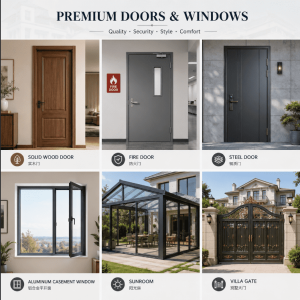
Solid wood doors remain popular when natural grain, substantial construction, and a traditional architectural appearance are priorities. Oak is one of the most familiar choices, but the right species and construction depend on the application, finish, climate, and budget.
A solid wood door is not automatically the best door for every project. Before buying, compare the wood species, construction, dimensions, finish, moisture exposure, hardware, and whether the door is intended for interior or exterior use.
What defines a solid wood door?
A solid wood door is built primarily from natural wood components rather than relying entirely on a hollow core or lightweight composite construction. The exact construction can still vary.
Some doors use solid stiles and rails with wood panels. Others may use engineered components in selected areas for dimensional stability. For that reason, ask for the actual construction specification rather than assuming that every “solid wood” product is constructed identically.
Oak and other wood choices
Oak
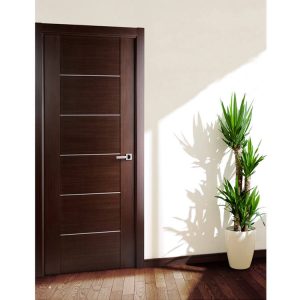
Oak is popular because of its recognizable grain and compatibility with stains and traditional finishes. White oak and red oak can create different visual effects.
Other hardwoods
Maple, walnut, cherry, and other hardwoods may be selected when the project requires a particular color, grain pattern, or architectural style.
Painted wood
A painted wood door can provide a clean architectural appearance while hiding some of the natural grain. The substrate and finish system still matter for long-term performance.
Interior vs. exterior solid wood doors
The application should determine the specification.
Interior solid wood doors are often selected for appearance, acoustic feel, privacy, and durability. Moisture exposure is usually lower than on an exterior opening.
Exterior solid wood doors must handle weather, temperature changes, moisture, UV exposure, and repeated operation. The door, frame, threshold, seals, and finish should therefore be specified as a complete exterior system.
A wood species that performs well indoors may require a different construction or finish strategy outdoors.
Panel styles for solid wood doors
Solid wood doors can be produced in many styles:
- One-panel
- Two-panel
- Three-panel
- Four-panel
- Five-panel
- Six-panel
- Shaker
- Raised-panel
- Craftsman-inspired
- Contemporary slab styles
- Glazed configurations
The panel layout should match the architectural language of the building.
Wood door with glass
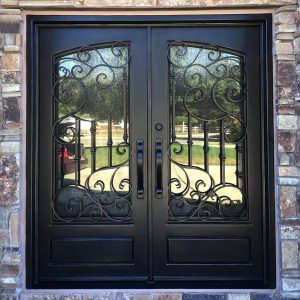
A solid wood door can incorporate glass panels, sidelights, or other glazing configurations.
Glass introduces additional considerations:
- Privacy
- Natural light
- Safety glazing requirements where applicable
- Glass thickness and construction
- Decorative appearance
- Weather sealing for exterior applications
For exterior wood doors with glass, the glazing system and seal details are as important as the wood itself.
How to choose a finish
The finish affects both appearance and maintenance.
A clear or lightly tinted finish emphasizes natural grain. Stain can change the perceived color while retaining the wood character. Paint provides a more uniform appearance.
Exterior wood doors generally require a finish system appropriate for the exposure. Follow the manufacturer’s maintenance recommendations rather than assuming an interior finish is suitable outdoors.
What affects the cost of a solid wood door?
Price depends on:
- Wood species
- Door size
- Thickness
- Construction
- Panel complexity
- Glass
- Finish
- Customization
- Frame and hardware
- Quantity
- Shipping
Custom solid wood doors can vary widely in price, so a single “average price” is not a reliable specification for an international or B2B project.
Solid wood vs. engineered wood
| Factor | Solid wood | Engineered construction |
|---|---|---|
| Natural grain | Strong advantage | Depends on face material |
| Dimensional consistency | Can vary with environment | Often more controlled |
| Custom appearance | Excellent | Also flexible |
| Maintenance | Depends on finish and exposure | Depends on construction |
| Project suitability | Premium residential and architectural uses | Broad residential/commercial applications |
Neither construction is universally superior. The right choice depends on the project requirements.
What to check before ordering
For a residential or B2B door order, confirm:
- Exact width and height
- Door thickness
- Wood species
- Construction method
- Panel design
- Glass, if any
- Finish
- Frame material and dimensions
- Swing and handing
- Hardware preparation
- Exterior exposure, if applicable
- Quantity and packaging
For custom manufacturing, request samples or finish references before approving a large order.
FAQ
Are solid oak doors durable?
They can be very durable when correctly constructed, installed, finished, and maintained for their application.
Are solid wood doors suitable for exterior use?
Yes, but the complete door system must be designed and finished for exterior exposure. Interior-grade wood door specifications should not simply be transferred outdoors.
Can solid wood doors be customized?
Manufacturers may offer custom sizes, species, panel profiles, glazing, finishes, and hardware preparation depending on the product and order quantity.
Is solid wood better than fiberglass?
It depends on the objective. Solid wood is often chosen for natural appearance and architectural character, while fiberglass can offer different weathering and maintenance characteristics.
Bottom line
Solid wood doors are best evaluated as a complete specification rather than a material label. Choose the wood species, construction, panel style, finish, glazing, and frame according to where the door will be used. For exterior applications especially, the finish and complete door system matter as much as the wood species.