Six-panel interior doors are a familiar choice for traditional and transitional homes, but the six-panel layout is only one part of the specification. A buyer should also compare material, construction, panel profile, size, prehung versus slab configuration, finish, and whether the door needs glass.
A six-panel interior door can be made from solid wood, engineered wood, or other door constructions. The same visual layout can therefore produce very different performance, weight, cost, and maintenance requirements.
What makes a six-panel interior door different?
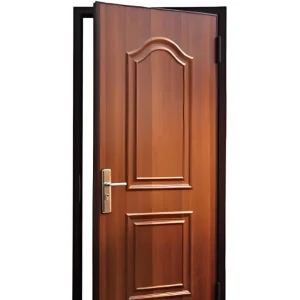
A six-panel door divides the face into six defined panel areas. The exact proportions vary by manufacturer, so two doors described as six-panel doors do not necessarily look identical.
Common variations include:
- Raised six-panel doors
- Flat or Shaker-style six-panel doors
- Solid wood six-panel doors
- Engineered or composite constructions
- Prehung six-panel doors
- Six-panel slabs
- Six-panel doors with selected glass sections
The panel arrangement is primarily an aesthetic choice. The material and construction determine many of the practical characteristics.
Six-panel vs. other interior panel styles
| Configuration | General appearance | Typical design direction |
|---|---|---|
| One panel | Simple | Modern, minimalist |
| Two panel | Clean and balanced | Contemporary, transitional |
| Three panel | More structured | Transitional |
| Five panel | Strong traditional character | Traditional, craftsman |
| Six panel | Familiar and formal | Traditional, transitional |
| Flat/flush | Minimal visual detail | Modern |
If an existing home already has five- or six-panel doors, matching the panel proportions may be more important than choosing the newest design.
Solid wood vs. engineered construction
Solid wood six-panel doors are attractive when natural grain and a substantial feel are priorities. Oak is a common choice for traditional interiors because its grain can remain visible through a stain or clear finish.
However, solid wood is not automatically the best option for every interior application. Door weight, dimensional movement, finish requirements, and project budget should all be considered.
Engineered constructions can provide more consistent manufacturing and may be practical for multi-door residential or commercial projects. The exact core and face construction should be checked with the manufacturer rather than inferred from the term “panel door.”
Raised panel, flat panel, and Shaker styles
A raised six-panel door has more pronounced panel profiles and generally produces a traditional appearance.
A flatter or Shaker-influenced configuration uses simpler lines. It can work better when the room combines traditional architecture with contemporary furniture.
If the goal is a historically traditional appearance, the profile of the rails, stiles, sticking, and panel edges can matter as much as the number six.
Door size and fit
Common interior door sizes vary by market and building application. Do not order a six-panel door based only on the nominal width.
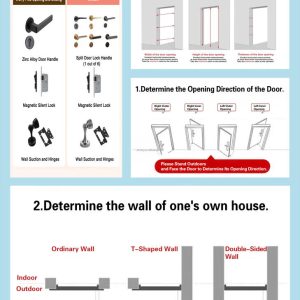
Measure:
- The existing slab width and height.
- The rough or framed opening where applicable.
- The jamb depth.
- The swing direction.
- The hinge side.
- The required clearance and trim conditions.
A 30 × 80 six-panel prehung door, for example, is not interchangeable with a 30 × 80 slab in every installation. The prehung unit includes a frame and hinges, while a slab requires a compatible frame and hardware setup.
Prehung vs. slab six-panel doors
A prehung door is supplied with the door attached to a frame. It can simplify replacement when the existing frame is damaged or when a complete door-and-frame unit is being installed.
A slab door is the door leaf only. It can be useful when the existing frame is sound and the replacement needs to match the current opening.
For replacement work, verify the hinge locations, bore preparation, swing, slab dimensions, and jamb requirements before ordering.
Should a six-panel interior door have glass?
Glass can be useful when light sharing is important, but it changes the privacy and safety requirements.
A fully opaque six-panel door is generally the straightforward choice for bedrooms, bathrooms, and other privacy-sensitive spaces.
For living rooms, offices, dining rooms, or other areas where borrowed light is useful, a partial glass configuration may be considered. Choose the glazing based on privacy and safety requirements rather than appearance alone.
Matching six-panel doors throughout a home
Consistency often creates a better result than choosing the most decorative door for each room.
If a project uses six-panel doors throughout the house, keep the following consistent where possible:
- Panel proportions
- Face profile
- Finish
- Stile and rail appearance
- Hardware finish
- Trim relationship
Interior doors can still vary by room, but major visual changes should have a clear design reason.
What to compare before ordering
A practical specification checklist includes:
- Door width and height
- Slab or prehung configuration
- Material and core
- Panel profile
- Finish
- Swing and handing
- Jamb depth
- Hinge preparation
- Lock bore preparation
- Glass requirements, if any
- Quantity
- Packaging and shipping requirements for larger projects
For a multi-unit project, these details should be confirmed in a written specification rather than left to the product name alone.
FAQ
Are six-panel doors only for traditional homes?
No. The same basic six-panel layout can be used in transitional interiors, especially with a simpler profile and modern finish.
Is solid wood better than engineered wood?
Not universally. Solid wood can offer natural grain and a substantial feel, while engineered construction may provide consistency and different cost or performance characteristics.
Should I buy a slab or prehung six-panel door?
Choose based on the condition of the existing frame and the installation requirements. A slab can make sense when the frame is reusable; a prehung unit is useful when the complete opening assembly needs replacement.
Can six-panel interior doors be custom made?
Yes, manufacturers may offer custom dimensions, materials, finishes, and configurations depending on the product line and order quantity.
Bottom line
A six-panel interior door is a design configuration, not a complete specification. Compare the panel profile, construction, dimensions, frame, handing, finish, and hardware preparation before ordering. For a whole-home or multi-project application, consistency across those specifications is often more valuable than choosing different decorative styles for individual rooms.