Content Menu
● 1. Understanding Wood Doors with Windows: Types and Applications
● 2. Wood Species and Material Selection for Doors with Glass
● 3. Cost Factors: How Much Do Wood Doors with Windows Actually Cost?
● 4. Customization and Specification: What B2B Buyers Must Know
● 5. Quality Standards and Testing: What to Verify Before Ordering
● 6. Interior vs. Exterior Wood Doors with Windows: Key Differences
● 7. How to Evaluate Wood Doors with Windows Suppliers
● 8. Production Process: From Raw Material to Finished Door
● 9. How Jusen Door and Windows Meets These Industry Standards
10 min read
The first container of wood doors with windows arrived at the port three weeks late. The finish was wrong, the glass was single-pane instead of the specified double-glazed units, and the hinges were a grade below what the contract required. The buyer had chosen the supplier based on a website and a price list — not on verified production capability.
That scenario repeats more often than most procurement managers admit. Wood doors with windows sit at the intersection of joinery craftsmanship and modern glazing technology. Getting them wrong costs time, money, and client trust. This guide breaks down what B2B buyers need to know before sending an RFQ — from material science to factory vetting.
Understanding Wood Doors with Windows: Types and Applications
Wood doors with windows combine a solid or engineered wood frame with glass panels. The configuration varies based on where the door sits, how much light the space needs, and what performance requirements apply.
Common Styles and Configurations
Full-lite doors feature a large single pane or divided lites covering most of the surface. They suit entryways, patios, and storefronts where visibility and natural light take priority.
Partial-lite doors place a window section in the upper third of the door. This balances daylight with privacy — a common choice for offices, side entrances, and interior passages.
Sidelites and transoms flank or top the main door unit. These are standard for grand entrances in villas, hotels, and commercial lobbies where the entrance is a design statement.
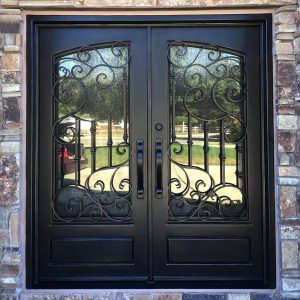
French doors pair two full-glazed units. They appear on terraces, meeting rooms, and luxury residences, often opening outward or inward depending on space constraints.
Glass Types Used in Wood Doors
The glass package often determines the door’s performance more than the wood itself. Standard options include:
- Single glazing — the most economical; acceptable for interior use or mild climates
- Double or triple glazing — improves thermal insulation; look for U-factor and SHGC ratings
- Tempered glass — required by code in many jurisdictions for door glazing; breaks into small granular pieces rather than shards
- Laminated glass — holds together when broken; provides security and acoustic benefits
- Low-E coatings — reflect heat while admitting visible light; reduces energy costs
- Decorative options — frosted, tinted, muntin grids, or custom patterns for privacy and branding
Wood Species and Material Selection for Doors with Glass
The wood species determines durability, dimensional stability, and cost. There is no single “best” wood — the right choice depends on climate, application, and budget.
Hardwood vs. Softwood: Key Differences
Hardwoods — oak, mahogany, walnut, teak — offer higher density and natural resistance to warping. They cost more but withstand high-traffic and exterior applications. A solid oak door with double glazing typically lasts 30–50 years with proper maintenance.
Softwoods — pine, fir, cedar — are more affordable and easier to machine. They require proper sealing or painting, especially for exterior use. Cedar naturally resists moisture and insects, making it a reasonable choice for coastal areas despite being a softwood.
Engineered Wood and Composite Options
Solid wood stile-and-rail construction uses traditional joinery. This is the strongest option and allows for larger glass panels without sagging.
Engineered wood — LVL or plywood-core — improves stability for wide door slabs. It reduces the risk of twisting in humid climates and costs less than solid hardwoods.
Wood-clad aluminum shows wood on the interior face while aluminum protects the exterior. This hybrid suits extreme weather zones where bare wood would fail quickly.
Matching Wood Species to Climate
- High humidity or coastal areas: teak, cedar, or engineered cores with moisture-resistant adhesives
- Dry or cold climates: oak, mahogany, or thermally broken hybrid designs to prevent condensation and heat loss
- Fire-rated requirements: certain hardwoods or treated cores that meet local ratings
Cost Factors: How Much Do Wood Doors with Windows Actually Cost?
Pricing varies significantly by region, finish, hardware, and volume. The figures below represent wholesale planning benchmarks, not quotes.
| Grade | Typical Wood | Glass Package | Price Range (per door) |
|---|---|---|---|
| Entry-level | Pine or fir | Single glazing, standard size | $200–$600 |
| Mid-range | Oak or engineered wood | Double glazing, partial lite | $600–$1,500 |
| Premium | Mahogany or teak | Triple glazing, sidelites, custom dimensions | $1,500–$5,000+ |
What Drives the Price Up
- Wood grade: exotic hardwoods cost 2–4x more than domestic softwoods
- Glass package: double glazing with low-E coating adds 15–30% versus single glazing
- Custom sizing: non-standard dimensions increase material waste and machining time
- Finishing: fully painted with UV-cured finishes costs more than pre-primed
- Hardware: hinges, locks, and handles add 10–25% depending on brand and security rating
Total Cost of Ownership
A cheap door that fails in five years costs more than a quality door that lasts three decades. Solid wood doors with proper care last 30–50+ years versus 10–20 for hollow-core alternatives. Energy savings from better insulation reduce HVAC loads over the building’s life. Buyers should calculate lifecycle cost, not just unit price.
Customization and Specification: What B2B Buyers Must Know
Precise specifications prevent factory errors. Ambiguity costs money and time.
Critical Dimensions
- Standard sizes: 30″, 32″, 36″ widths; 80″, 84″, 96″ heights (or metric equivalents)
- Rough opening vs. finished opening — always specify the latter
- Jamb depth: 4-9/16″ for 2×4 walls; 6-9/16″ for 2×6 walls
Glass Specifications for Your RFQ
Include glass type, thickness, coating, and spacer system. Warm-edge spacers reduce condensation at the glass edge. Safety glazing compliance is mandatory in many regions — in the U.S., CPSC 16 CFR 1201 applies to doors.
Hardware and Accessories
Ball-bearing hinges, mortise or multi-point locksets, weatherstripping, and threshold types all affect performance. Specify finish colors using RAL or NCS codes.
Documentation to Request
- Shop drawings for approval before production
- Test reports for air permeability, water tightness, and wind load
- Warranty terms and after-sales support policy
Quality Standards and Testing: What to Verify Before Ordering
Quality claims mean nothing without test data. A reliable supplier provides documentation willingly.
Key Performance Tests
- Air-tightness — measures air leakage through the assembly (EN 12207 classes)
- Water-tightness — simulates rain exposure under pressure (EN 12208)
- Wind load resistance — structural integrity under high wind pressure (EN 12210 or ASTM E330)
- Acoustic performance — sound transmission class ratings for noise-sensitive projects
- Cycle testing — hinge and lock durability, typically 100,000+ open/close cycles
Certifications to Request
- FSC or PEFC for sustainable wood sourcing
- CE marking for EU markets
- Fire-rated certifications (UL, Warnock Hersey, or local equivalents)
- Finish durability per AAMA 2604/2605
Red Flags in Supplier Claims
- No test reports available or refusal to share them
- Vague answers on wood moisture content — should be 8–12% for most regions
- Inconsistent lead times or unclear inspection procedures
- No pre-shipment inspection protocol
Interior vs. Exterior Wood Doors with Windows: Key Differences
The construction differs significantly based on placement.
Exterior doors must resist water ingress, UV degradation, and temperature extremes. They require weatherstripping, proper thresholds, and drainage systems. Glass units must be sealed and rated for exterior use.
Interior doors face no weather exposure. Simpler construction and lighter finishes work fine. Acoustic ratings matter for offices, conference rooms, and bedrooms. Single-pane glass is often sufficient, and decorative options are more common.
Specifying an interior-grade door for exterior use leads to premature failure — and liability. Confirm your supplier distinguishes between the two in their product lineup.
How to Evaluate Wood Doors with Windows Suppliers
A systematic vetting process prevents expensive mistakes.
Direct Factory vs. Middlemen
Middlemen add 10–30% markup and reduce your control over production and quality. Direct factory supply offers lower unit cost, direct communication, and the ability to audit production. Ask directly: “Are you the manufacturer or a trading company?” Verify with factory photos, business licenses, and production capacity data.
Due Diligence Checklist
- Request a sample or pilot order before committing to bulk volume
- Ask for production capacity — units per month — and current order backlog
- Verify export experience: request packing lists, proforma invoices, and customs documentation samples
- Confirm lead times: typically 15–30 days for standard products, 30–60 for custom
- Review shipping options: FCL and LCL availability
Questions to Ask Before Ordering
- What is your wood moisture content control process?
- Which glass manufacturers do you use?
- Can you provide third-party test reports from the last 12 months?
- What is your defect rate on large orders?
- How do you handle warranty claims for international buyers?
Avoid Suppliers Who…
- Price significantly below market average — material substitution is likely
- Refuse to provide test reports or certifications
- Have no clear process for addressing defects
- Cannot articulate their pre-shipment inspection procedure
Choose A If… Choose B If…
Choose a direct factory if you need custom specifications, volume pricing, and control over quality. Choose a trading company only if you have small quantities, need help consolidating multiple products, or lack experience with international logistics.
Production Process: From Raw Material to Finished Door
Understanding the manufacturing process helps buyers identify quality differences.
Kiln drying brings wood to the correct moisture content — typically 8–12%. Skipping this step leads to warping and cracking later.
Machining and joinery creates the stile-and-rail frame. Mortise-and-tenon joints with waterproof adhesive provide durability. Dowel or staple construction signals lower quality.
Glass installation uses glazing beads or structural silicone. The glass unit must be properly sealed to prevent condensation between panes.
Finishing involves sanding, priming, and applying stain or paint. UV-cured finishes offer better durability than conventional air-dried finishes.
Final inspection checks dimensions, finish quality, hardware function, and overall appearance.
How Jusen Door and Windows Meets These Industry Standards
Applying the framework above, here is how we operate as a factory-direct manufacturer.
Our Manufacturing Approach
We supply solid wood doors, thermal-break aluminum doors and windows, system windows, and custom villa doors and windows without middleman markup. Full customization is available on size, color, glass, and hardware accessories — matching the specification checklist outlined earlier.
Our adjustable profile structure and fittings can be adapted to meet local building codes in your target market. This matters for projects where compliance requirements differ from Chinese standards.
Quality Control and Export Readiness
Every order undergoes pre-shipment inspection covering air-tightness, water-tightness, and wind resistance tests — the same tests described in Section 5. We provide packing lists, proforma invoices, and full customs documentation to simplify international logistics. Both FCL and LCL shipments are supported with direct delivery from our China factory.
Supporting Your Project from RFQ to Delivery
Whether you need OEM, ODM, custom sizing or design, private label, or bulk supply for construction projects, our production capacity handles repeat and large-volume orders. For detailed specifications, lead times, or a quote based on your project drawings, contact our team.
Frequently Asked Questions
How much does a real wood door cost?
Entry-level pine or fir doors with single glazing run $200–$600 wholesale. Mid-range oak or engineered wood with double glazing costs $600–$1,500. Premium mahogany or teak with custom dimensions and triple glazing starts around $1,500 and can exceed $5,000. Custom sizing, glass type, and finish significantly affect final pricing.
Can you still buy solid wood doors?
Yes — solid wood doors are widely manufactured and remain a premium choice. Distinguish between solid wood (stile-and-rail or solid core) and solid-core (engineered interior with wood veneer). Specify which you need, as the price and performance differ considerably.
What type of wood is best for doors?
Oak offers durability and attractive grain. Mahogany provides stability and rot resistance. Teak excels in extreme weather. Pine and fir work for budget-friendly interiors. Match the species to your climate and application — there is no universal “best.”
Are solid wood doors worth it?
For most projects, yes. They last 30–50+ years versus 10–20 for hollow-core alternatives. They insulate better, add aesthetic value, and increase property resale value. The higher upfront cost pays off over the building’s lifetime.
What is the minimum order quantity for bulk orders?
MOQs vary by supplier and customization level. Standard sizes typically have lower MOQs; fully custom dimensions or special glass packages may require higher volumes. Submit your project details for a tailored response.
How long does shipping take from a China factory?
Production runs 15–30 days for standard products and 30–60 days for custom orders. Ocean freight to North America or Europe takes 20–40 days depending on the port. Both FCL and LCL options are available.
Do you provide samples before bulk production?
Reputable factories offer samples or pilot orders. Some charge for samples — often refundable upon bulk order — or require the buyer to cover shipping. Always request a sample for large projects.
Conclusion and Next Steps
Wood doors with windows require careful attention to material selection, glass specifications, and supplier verification. Understand the product types, specify precisely, verify quality standards, and vet suppliers systematically. Factory-direct sourcing offers cost and control advantages for B2B buyers who do the homework.
Prepare your project specifications — door sizes, quantities, glass requirements, and target timeline — before reaching out. A well-prepared RFQ gets better responses and faster quotes.
References
- ASTM International. “ASTM E330 – Standard Test Method for Structural Performance of Exterior Windows, Doors, Skylights and Curtain Walls by Uniform Static Air Pressure Difference.” https://www.astm.org/e0330-14.html
- European Committee for Standardization. “EN 12207 – Windows and doors – Air permeability – Classification.” https://www.en-standard.eu/bs-en-12207-2016-windows-and-doors-air-permeability-classification/
- U.S. Consumer Product Safety Commission. “16 CFR Part 1201 – Safety Standard for Architectural Glazing Materials.” https://www.ecfr.gov/current/title-16/chapter-II/subchapter-B/part-1201
- Forest Stewardship Council. “FSC Chain of Custody Certification.” https://fsc.org/en/chain-of-custody-certification
- American Architectural Manufacturers Association. “AAMA 2604 – Voluntary Specification, Performance Requirements and Test Procedures for Pigmented Organic Coatings on Aluminum Extrusions and Panels.” https://aamanet.org/