Content Menu
● 1. What Determines the Cost of Glazed Doors?
● 2. Hidden Costs Buyers Often Overlook
● 3. Total Cost Analysis: Cheap vs Quality
● 4. How to Evaluate Glazed Door Suppliers
● 5. How We Meet These Standards: Our Factory’s Approach
● 6. Logistics and Documentation: What to Expect
● 7. Why Buyers Choose Us for Glazed Door Projects
● FAQ
11 min read
When a procurement manager opens a sample box from a potential supplier, the first thing they check is rarely the glass. It is the frame corner — where the mitre meets the gasket. That joint tells you more about the factory’s CNC tolerances than any brochure ever will. Glazed doors look simple from the outside, but the engineering behind them determines whether they pass the air-tightness test or fail it by a margin that costs you the entire project deadline.
This guide covers the technical foundations of glazed doors, the procurement framework for bulk orders, and the factory capabilities you should verify before signing a contract.
What Determines the Cost of Glazed Doors?
A glazed door’s price is not a single number. It is the sum of frame material, glass specification, hardware grade, and testing requirements — each with its own cost drivers. Buyers who compare only the unit price often miss where the real money goes.
The frame material alone can account for 40–60% of the total cost. A thermal-break aluminum profile costs significantly more than a non-thermal-break equivalent, but it is the difference between a U-value of 1.1 W/m²K and 3.5 W/m²K. For a commercial building in a cold climate, that gap translates into thousands of dollars in annual heating costs.
Material Cost Factors (Grade, Origin, Treatment)
Aluminum profiles are priced by alloy and finish. The standard 6063-T5 alloy is the industry baseline, but the temper (T5 vs T6) affects strength and cost. Powder coating adds $3–8 per square meter depending on the finish — matte, texture, or metallic. Anodized finishes cost more but hold up better in coastal environments where salt air attacks painted surfaces.
Solid wood glazed doors follow a different cost curve. The species matters more than anything else: oak, mahogany, and teak command premiums over engineered wood cores. The joinery method — finger-jointed vs. solid stile-and-rail — affects both price and long-term stability. A solid wood door that is not properly kiln-dried to 8–12% moisture content will warp within a year.
Glass is where the price variation gets extreme. A basic 5mm tempered pane costs a fraction of a triple-glazed, low-E coated, argon-filled insulated glass unit (IGU). For commercial projects, the glass specification is usually driven by local energy codes, not aesthetics.
Labor and Manufacturing Cost Drivers
The glazing process itself is labor-intensive. Each door requires precise cutting of the glass, application of setting blocks, insertion of EPDM gaskets, and careful alignment of the glazing beads. A factory with automated glazing lines produces consistent results but carries higher overhead. A workshop doing manual glazing is cheaper per unit — until you account for the rejection rate.
CNC machining of aluminum profiles is another cost center. The precision of the mitre cuts and the drilling of hardware holes determine how well the door assembles. A factory using 5-axis CNC machines produces corners that align within 0.5mm. Manual cutting produces corners that might align — or might not. The difference shows up in the air-tightness test.
Logistics and Shipping Considerations
Glazed doors ship as finished assemblies, which means they occupy significant volume. A single-leaf aluminum glazed door takes up roughly 0.5 cubic meters of container space. Double-leaf configurations double that. FCL (full container load) shipments make sense for orders above 50–60 units. Below that, LCL (less than container load) is more economical but adds transit time and handling risk.
Export packaging is a cost line buyers often underestimate. Glass panels need wooden crates, foam padding, and corner guards. A proper export crate for a glazed door costs $15–30 per unit. Skipping this protection to save money is a false economy — the first broken pane in transit costs you more than the packaging for the entire order.
Hidden Costs Buyers Often Overlook
The sticker price of a glazed door never includes the costs that emerge later. These hidden costs are where procurement mistakes happen.
Certification and testing is the biggest one. CE marking under EN 14351-1 requires documented testing of air permeability, water tightness, and wind load resistance. If your supplier does not have these test reports, you will pay for third-party testing yourself — and wait weeks for the results. For North American projects, NFRC certification for energy performance adds another layer of cost and lead time.
Sample verification is another overlooked expense. A pre-production sample costs $200–500 including shipping. It is the cheapest insurance you can buy. Buyers who skip this step to save money often end up paying for a full container of doors that do not match the approved specification.
Customs and duties vary by destination. The HS code for glazed doors (7308.30 for aluminum, 4418.20 for wood) determines the duty rate. Some countries impose anti-dumping duties on Chinese aluminum products. A supplier with export experience should flag this before you place the order, not after the container is stuck at the port.
Total Cost Analysis: Cheap vs Quality
| Cost Factor | Budget Supplier | Quality Manufacturer |
|---|---|---|
| Frame profile | Non-thermal break, 1.2mm wall thickness | Thermal break, 1.4–1.8mm wall thickness |
| Glass | Single tempered 5mm | Double-glazed low-E IGU |
| Hardware | Standard zinc alloy | Grade 13/14 stainless steel |
| Testing | No documented reports | EN/ASTM certified test reports |
| Unit price | $180–250 | $350–550 |
| Replacement rate | 5–10% | <1% |
| Lifespan | 8–12 years | 20–25 years |
The math is straightforward. A budget door at $200 with a 7% replacement rate effectively costs $214 per installed unit — and you deal with the logistics of replacement. A quality door at $450 that lasts twice as long costs less per year of service. For commercial projects with warranty obligations, the choice is not about price. It is about risk.
When Cheap Makes Sense — and When It Does Not
Budget glazed doors work for interior applications in mild climates where performance requirements are minimal. A powder-coated aluminum door with single glazing is fine for a warehouse office partition. The same door fails completely as an exterior entrance in a coastal or cold climate. The frame corrodes, the glass fogs, and the hardware seizes within two years.
Fire-rated glazed doors are not simply about thicker glass. The frame, seal, and hardware matter just as much. A fire-rated door with the wrong intumescent seal will not pass the certification test regardless of how thick the glass is. Buyers should request the full test report, not just the label.
How to Evaluate Glazed Door Suppliers
The factory audit is the most important step in the procurement process. A supplier’s website can claim anything. The production floor tells the truth.
Start with the equipment list. A glazed door factory needs CNC machining centers for aluminum profiles, automatic glass cutting lines, and a controlled environment for glazing. Ask about the age of the equipment and the maintenance schedule. Older machines produce inconsistent tolerances even with skilled operators.
Questions to Ask Before Ordering
On manufacturing capability:
- What is your monthly production capacity for glazed doors?
- Do you perform air-tightness and water-tightness testing in-house or through third-party labs?
- Can I see your test reports for EN 12207, EN 12208, and wind load resistance?
On customization:
- Can you match custom RAL colors and provide samples before production?
- What is your tolerance for custom sizes and non-standard configurations?
- Do you offer OEM production to my drawings, or only ODM to your existing designs?
On logistics:
- What is your standard lead time for a container order of 50–100 units?
- Can you provide FCL and LCL shipping options?
- Do you handle export documentation, including packing lists and certificates of origin?
Avoid Suppliers Who…
Cannot show test reports. If a factory cannot produce documented performance data for their glazed doors, they have not tested them. That is the end of the conversation.
Quote without asking about your project. A glazed door for a high-rise curtain wall has completely different requirements than one for a ground-floor retail entrance. A supplier who quotes immediately without asking about wind load, climate, and building codes is quoting a generic product — not a solution.
Offer prices that seem too good. The aluminum extrusion, glass, hardware, and labor in a quality glazed door have a floor cost. A quote 30% below the market average means something was cut. Usually the testing, the hardware grade, or the profile thickness.
How We Meet These Standards: Our Factory’s Approach
Here is how the industry works — and here is how we operate within it. As a manufacturer of solid wood doors, thermal-break aluminum doors and windows, system windows, and custom villa doors, we supply directly from our factory in China. No distributor margins, no middleman markup. You deal with the people who actually produce the doors.
Our thermal-break aluminum glazed doors are built with 6063-T5 profiles and tested for air-tightness, water-tightness, and wind resistance before every shipment. We do not ship a container without documented performance data. The testing standards we follow are the same EN and ASTM protocols described earlier in this guide.
Customization is not a special request — it is our standard process. Size, color, glass specification, and hardware accessories are all configurable. We support OEM production to your drawings, ODM development based on your performance requirements, and private label programs for brands that need their own identity on the product.
For buyers working on construction projects, we provide the full documentation package: packing lists, proforma invoices, and customs documents. Our foreign trade experience means we know what destination countries require for smooth clearance. We also adjust profile structures and fittings to match local building codes — from wind load ratings to thermal performance thresholds.
Logistics and Documentation: What to Expect
Shipping glazed doors internationally requires planning. We arrange both FCL and LCL shipments with direct delivery from our China factory. Each door is packed in export-grade wooden crates with foam protection and corner guards for the glass panels. The packaging is designed to survive container handling, not just the factory floor.
Documentation is handled with the same care. Every order includes a packing list, proforma invoice, and the certificates needed for customs clearance in your destination country. For projects requiring compliance submissions, we provide test reports, technical drawings, and material certificates.
Adjusting to Local Building Codes
Building codes vary dramatically between markets. A glazed door certified for the European market may not meet North American wind load requirements. Our profile structure and fittings are adjustable to match the specific requirements of your target market. This is not a value-add — it is a necessity for any export-oriented buyer.
Why Buyers Choose Us for Glazed Door Projects
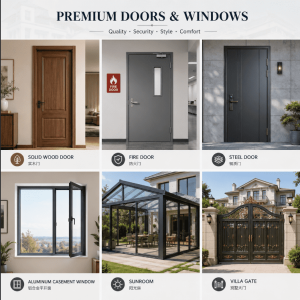
Our manufacturing scope covers solid wood doors, thermal-break aluminum doors and windows, system windows, casement doors, sliding doors, custom villa doors and windows, sunrooms, and aluminum alloy entrance doors. For buyers sourcing glazed doors, this breadth means you can consolidate multiple product lines into a single order — one supplier, one quality standard, one logistics channel.
Construction project bulk supply is a core service. We handle everything from single-building orders to multi-phase developments. The testing and documentation process supports tenders, permits, and inspections without requiring you to chase down paperwork from multiple vendors.
When you send your first inquiry, you get a clear response on feasibility, customization options, pricing structure, and lead time. We review your drawings or performance requirements before quoting — not after. Samples are available for verification before mass production begins.
Choose A if… Choose B if…
Choose a budget supplier if your project is interior, climate-controlled, and has no performance certification requirements. Choose a quality manufacturer if your doors face exterior conditions, need documented performance data, or carry warranty obligations that outlast the construction phase.
Choose a trading company if you need a single container and do not care about long-term supply relationships. Choose a factory if you plan repeat orders, need consistent quality, and want pricing that reflects manufacturing cost rather than trading margins.
FAQ
What is the difference between a glazed door and a glass door?
A glass door is typically frameless — a single pane of tempered glass with minimal hardware. A glazed door is a framed assembly where glass panels are installed within a door structure using glazing beads, gaskets, and sealing systems. Glazed doors offer better insulation, security, and customization options.
What type of glass is best for a commercial glazed door?
For exterior commercial doors, double-glazed low-E insulated glass units (IGUs) are the standard. Tempered glass is mandatory for safety, and laminated glass is recommended for high-security areas. Acoustic laminated glass achieves STC ratings of 35–40+ for noise-sensitive environments like offices and hospitals.
Are glazed doors energy efficient?
Yes, when specified correctly. Thermal-break aluminum frames with double or triple glazing achieve U-values as low as 1.1 W/m²K. Low-E coatings reduce heat transfer while allowing natural light. Glazed doors also support daylight harvesting, which reduces artificial lighting loads — a factor in LEED and BREEAM certification.
Can glazed doors be fire-rated?
Fire-rated glazed doors are available with ratings from E30 to E90. The certification depends on the entire assembly — frame, glass, seals, and hardware — not just the glass thickness. Request the full test report, not just the label, to verify compliance for your project.
What is the typical lead time for a custom glazed door order?
A standard custom order from a Chinese factory takes 3–5 weeks for production, plus 2–4 weeks for shipping depending on the destination. Certified fire-rated or high-performance doors may require additional testing time. Pre-production samples add 1–2 weeks but are strongly recommended.
What is the minimum order quantity for OEM glazed doors?
Most factories require a MOQ of 50–100 units for custom OEM production. Stock items may have lower thresholds. Some manufacturers offer trial orders at higher unit prices to validate quality before committing to full container volumes.
How do I ensure my glazed doors meet local building codes?
Request documented test reports for air permeability, water tightness, wind load resistance, and thermal performance. Verify that the factory can adjust profile structures and fittings to meet your region’s specific requirements. Ask for compliance documentation support before placing the order, not after the container arrives.
Conclusion
Glazed doors are a technical product. The frame material, glass specification, hardware grade, and testing standards determine whether your project performs — or fails — long after the installation crew has left. The sourcing framework in this guide gives you the questions to ask, the documentation to request, and the red flags to avoid.
A factory partner with genuine customization capability, documented testing, and export experience reduces procurement risk across your entire supply chain.
For project-specific questions on glazed door specifications, customization, or bulk pricing, contact our team — we respond with technical details and a clear quotation path.
References
- European Committee for Standardization. EN 14351-1:2006+A2:2010 — Windows and doors. https://www.cen.eu
- American Society for Testing and Materials. ASTM E283 — Air Leakage Testing. https://www.astm.org
- International Organization for Standardization. ISO 10077-2 — Thermal performance of windows and doors. https://www.iso.org
- NFRC. NFRC 100 — Procedure for Determining Fenestration Product U-factors. https://www.nfrc.org
- European Committee for Standardization. EN 12207 — Air Permeability Classification. https://www.cen.eu