Content Menu
● 1. 1. Understanding Exterior Doors with Sidelights: Types and Applications
● 2. 2. Quality and Performance Factors That Determine Sidelight Longevity
● 3. 3. How to Evaluate Exterior Doors with Sidelights Suppliers
● 4. 4. Key Quality Indicators for Sidelights Buyers
● 5. 5. Relevant Industry Standards and Certifications
● 6. 6. Our Sidelights Manufacturing Capabilities
● 7. 7. Quality Control: Our Multi-Stage Inspection Process
● 8. 8. Customization and OEM/ODM Options
● 9. 9. Ordering Process: MOQ, Lead Time, and Shipping
● 10. 10. Production Process: From Raw Material to Finished Sidelights
13 min read
When a contractor in Chicago emails a factory in Foshan with a drawing of a 40-inch door flanked by two 18-inch sidelights, the first question is rarely about price. It is about glass. Specifically, whether the laminated panels can survive a 120-mph wind load while keeping the U-factor below 0.30. That question determines everything else—the frame profile, the hinge rating, the shipping cost, and ultimately whether the project gets approved on the first inspection.
Exterior doors with sidelights are not a single product category. They are an engineered assembly of door slab, glazing, frame, hardware, and weather-sealing systems that must perform as one unit. For B2B buyers, this means the procurement process demands more than comparing catalogs. It requires a working knowledge of material science, test standards, and the documentation trail that proves compliance.
Key Takeaways:
- Sidelight widths of 12–18 inches are standard, but structural reinforcement must scale with glazing size and local wind-load requirements.
- Thermal performance (U-factor) and safety glazing (tempered or laminated) are the two most common compliance checkpoints in North American and EU markets.
- Factory-direct sourcing with full customization is the most cost-effective route for bulk orders, provided the manufacturer offers pre-shipment testing documentation.
1. Understanding Exterior Doors with Sidelights: Types and Applications
Direct Answer: Exterior doors with sidelights are entry door systems with one or two narrow vertical glass panels flanking the main door slab. They are specified for natural light, architectural symmetry, and code-compliant egress in commercial buildings.
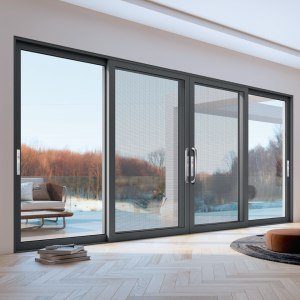
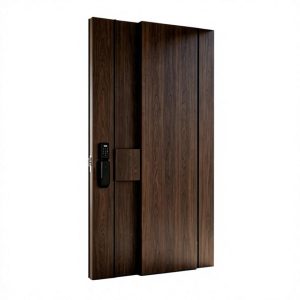
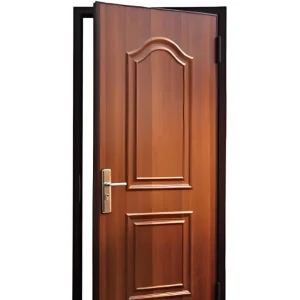
The product family splits into three practical categories based on frame material. Thermal-break aluminum dominates commercial applications because the polyamide thermal barrier separates interior and exterior metal surfaces, reducing heat transfer. Solid wood sidelight units serve high-end hospitality and historic renovation projects where aesthetics override lifecycle costs. uPVC and composite frames offer budget pricing but limit custom color matching and struggle with tall glass spans under wind load.
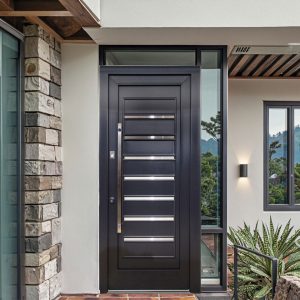
Configuration matters as much as material. A single sidelight unit suits narrower entryways and typically measures 12–18 inches per side. Double sidelight configurations create a symmetrical entrance footprint but require a reinforced header to distribute structural loads across the wider span. For operable sidelights—rare but occasionally required for ventilation—the hardware package must include additional weather-stripping and multi-point locking to maintain the same air infiltration rating as fixed units.
2. Quality and Performance Factors That Determine Sidelight Longevity
Direct Answer: The quality of exterior doors with sidelights hinges on three factors: glazing specification, frame thermal performance, and hardware load ratings. Each component must be engineered for the specific project conditions, not selected from a generic options list.
Glass selection starts with safety codes. Most jurisdictions require tempered or laminated glass for any glazing within 24 inches of a door opening. Laminated glass adds a polyvinyl butyral (PVB) interlayer that holds the panel together on impact—important for sidelights because their narrow, tall geometry creates leverage points during wind events.
Energy performance follows a clear hierarchy. Double-glazed units with Low-E coating and argon fill achieve U-factors between 0.25 and 0.30 in thermal-break aluminum frames. Triple glazing pushes U-factors below 0.20 but adds 15–20% weight, which forces heavier hinges and more robust frame anchoring. Buyers should ask for the exact U-factor and Solar Heat Gain Coefficient (SHGC) numbers on the spec sheet rather than accepting vague “energy efficient” claims.
Frame performance is where cheap suppliers cut corners. The AAMA/WDMA/CSA 101/I.S.2/A440 standard establishes performance classes based on air leakage, water resistance, and structural integrity. A sidelight unit rated for a 25-pound-per-square-foot wind load is not the same as one rated for 50 psf. Tall sidelight panels—anything above 36 inches—demand the higher rating.
3. How to Evaluate Exterior Doors with Sidelights Suppliers
Direct Answer: Evaluating sidelight door suppliers requires a document review, a facility assessment, and a sample inspection. Buyers should request test reports, verify in-house production capability, and confirm logistics documentation readiness before committing to a bulk order.
Start with the manufacturing capability assessment. Ask directly: Are the frames, glass units, and hardware produced in-house or assembled from sourced components? A factory that manufactures frames in-house and fabricates insulated glass units on-site has tighter quality control than one that orders pre-made components. Ask for the production floor layout and equipment list—CNC machining centers, glass cutting lines, and lamination presses are the specific equipment that matters.
Quality assurance documentation is the second checkpoint. Request pre-shipment inspection reports that include air-tightness, water-tightness, and wind-resistance test results. Verify whether these tests are performed per batch, per project, or only when a client asks. The difference between routine testing and on-demand testing reveals a lot about a factory’s confidence in its output.
Logistics readiness closes the evaluation. A supplier with export experience provides packing lists, proforma invoices, and full customs documentation without being asked. Inquire about FCL versus LCL shipping, minimum order quantities, and typical production lead times. A factory that cannot articulate its shipping process will struggle with the documentation requirements of international projects.
4. Key Quality Indicators for Sidelights Buyers
Direct Answer: Buyers should verify seven quality indicators before ordering exterior doors with sidelights: glass certification, frame thermal break integrity, hardware load rating, weather-stripping material, drainage system design, surface finish thickness, and pre-shipment test documentation.
Glass certification is non-negotiable. Request the interlayer type (PVB or SentryGlas), the tempering certificate, and the compliance standard (ANSI Z97.1 or CPSC 16 CFR 1201).
Frame thermal break integrity is the second indicator. A genuine thermal break uses polyamide strips that are structurally crimped into the aluminum profiles. Some budget suppliers use pour-and-debridge polyurethane that can crack after a few years of thermal cycling. Ask which method the factory uses.
Hardware load rating determines whether the hinges can handle the door weight. A sidelight unit with 48-inch tall glass panels creates significant leverage. Multi-point locking systems distribute the load across the frame, but only if the hinges are rated for the specific door weight.
Weather-stripping material separates a 3-year door from a 15-year door. EPDM (ethylene propylene diene monomer) rubber outperforms PVC weather-stripping in UV resistance and low-temperature flexibility. Ask for the material spec, not just the color.
Drainage system design prevents water from pooling inside the frame. Look for concealed drainage channels that direct water to the exterior, not weep holes that allow airflow and noise penetration.
Surface finish thickness on aluminum frames matters for coastal environments. Anodized finishes should be at least 15 microns; powder coating should be at least 60 microns. Anything less risks early corrosion.
Pre-shipment test documentation is the final indicator. A supplier that cannot produce air-tightness, water-tightness, and wind-resistance test reports for your specific batch is a supplier that is hoping you will not ask.
Questions to Ask Before Ordering
- What is the U-factor and SHGC for the glazing package you are quoting?
- Can you provide the AAMA performance class and wind-load rating for the specific sidelight dimensions in my project?
- Are your insulated glass units fabricated in-house or sourced from a third party?
- What is the expected lead time for a batch of 50 units with custom RAL colors?
- Can you share pre-shipment inspection reports from the last three projects with similar specifications?
Avoid Suppliers Who…
- Cannot name the specific test standard their products meet (AAMA, IBC, ASHRAE).
- Quote “custom sizes” without asking for wind-load requirements.
- Offer glass options without explaining safety glazing code requirements.
- Cannot produce a packing list or proforma invoice in English.
- Quote lead times of less than 2 weeks for fully customized sidelight units—this usually means they are stocking generic units, not manufacturing to your spec.
5. Relevant Industry Standards and Certifications
Direct Answer: Exterior doors with sidelights must comply with IBC safety glazing requirements (Section 2406), AAMA/WDMA/CSA 101/I.S.2/A440 performance standards, and ASHRAE 90.1 or IECC energy codes. Certification documents should be requested before ordering, not after delivery.
Three regulatory frameworks govern sidelight door procurement:
Safety glazing standards are the most commonly enforced. IBC Section 2406 requires safety glazing (tempered or laminated) for any glass within 24 inches of a door opening. The specific test methods are defined by ANSI Z97.1 and CPSC 16 CFR 1201. Buyers should verify that the factory’s glass supplier holds these certifications.
Window and door performance standards are defined by AAMA/WDMA/CSA 101/I.S.2/A440. This standard establishes performance classes (R, LC, CW, AW) based on air leakage (maximum CFM/ft²), water resistance (psf), and structural load. For commercial sidelight doors, the CW (Curtain Wall) or AW (Architectural Window) class is typically required.
Energy codes—ASHRAE 90.1 in the US and the Energy Performance of Buildings Directive (EPBD) in the EU—define maximum U-factor requirements for door assemblies. Thermal-break aluminum frames with double or triple Low-E glazing are the most reliable path to compliance. The prescriptive path in ASHRAE 90.1 allows a maximum U-factor of 0.37 for non-swinging doors in most climate zones, but buyers should verify local amendments.
6. Our Sidelights Manufacturing Capabilities
The standards described above are not abstract concepts on our production floor. We manufacture thermal-break aluminum entrance doors and solid wood sidelight units, and we engineer each assembly to meet the specific performance requirements of the destination market.
As a manufacturer, our approach to sidelight units is to treat them as engineered assemblies rather than catalog products. When you send us the project drawings, we review the wind-load requirements, the glazing specs, and the hardware integration needs before we quote. This means the price you receive reflects the actual engineering work required, not a generic per-unit rate.
Our production lines handle full customization on dimensions, glass specification (Low-E, laminated, tempered, double or triple glazing), and hardware accessories. We adjust profile structures and fittings to match local building codes in your target market. A sidelight unit we ship to Florida, where wind-load ratings are stringent, will have a different reinforcement schedule than one we ship to a temperate climate zone.
7. Quality Control: Our Multi-Stage Inspection Process
Direct Answer: Every sidelight door order undergoes pre-shipment inspection for air-tightness, water-tightness, and wind resistance. Test reports are shared with the buyer before shipment, providing documented proof of compliance.
Our quality control process begins with incoming material inspection. Aluminum profiles are checked for alloy composition and surface finish consistency. Glass panels are inspected for inclusions and edge quality before fabrication.
During production, each unit passes through three inspection checkpoints. The first occurs after frame assembly—dimensional tolerances are verified against the approved drawings. The second occurs after glazing installation—seal integrity and glass position are checked. The third occurs at the final assembly stage—hardware function, weather-stripping fit, and overall finish are assessed.
The pre-shipment inspection is the last gate. We test each batch for air-tightness, water-tightness, and wind resistance, and we share the reports with the buyer before the container departs. You know exactly what you are receiving before it leaves the factory floor.
8. Customization and OEM/ODM Options
Direct Answer: OEM and ODM options are available for exterior doors with sidelights. Buyers can supply their own drawings and specifications (OEM) or work with our engineering team to develop custom sidelight units (ODM). Private labeling is available for distributors.
For OEM projects, we produce sidelight door units to your exact drawings and specifications. This includes frame profiles, glass packages, hardware brands, and color finishes. Your brand goes on the product; our factory handles the engineering and production.
For ODM projects, our engineering team collaborates on the design. This is common when a distributor wants a unique profile design or a specific performance rating but lacks the in-house engineering capacity. We develop the product, produce samples, and refine the design based on testing feedback.
Private labeling is available for distributors who want their own branding on the door units and packaging. We produce the packing list, proforma invoice, and customs documentation under your brand if required.
9. Ordering Process: MOQ, Lead Time, and Shipping
Direct Answer: Minimum order quantities for factory-direct sidelight doors start at 20–30 units for LCL shipping. FCL orders offer the best per-unit pricing. Production lead time is typically 3–6 weeks depending on customization level. Shipping time varies by destination port.
The ordering process follows a clear sequence:
- Specification review — Send your drawings, glass requirements, and performance expectations. Our engineering team reviews and provides technical feedback.
- Sample production — For large orders or custom designs, a pre-production sample is manufactured and shipped for approval before mass production begins.
- Production slot — Once the sample is approved, we reserve a production slot. Lead time is typically 3–6 weeks depending on order size and customization complexity.
- Pre-shipment inspection — Each batch undergoes air-tightness, water-tightness, and wind-resistance testing. Reports are shared before shipment.
- Export documentation — Packing list, proforma invoice, and full customs documents are prepared for every order.
- Shipping — FCL and LCL options are available, with direct delivery from our factory in China to your port.
10. Production Process: From Raw Material to Finished Sidelights
Direct Answer: Sidelight door production involves five stages: profile cutting and machining, thermal break assembly, glazing fabrication, frame assembly and sealing, and final hardware installation. Each stage has its own quality checkpoints.
The process begins with CNC machining of aluminum profiles. Cut lengths are milled for drainage holes, hardware mounting points, and thermal break slots. Tolerance is held to ±0.5mm to ensure proper frame alignment.
Thermal break assembly uses the crimping method—polyamide strips are inserted into the profile grooves and mechanically crimped into place. This method is preferred over pour-and-debridge polyurethane because it maintains structural integrity under thermal cycling.
Glazing fabrication occurs in-house for insulated glass units. Glass panels are cut, edge-polished, and assembled with spacer bars and desiccant. The unit is sealed with primary and secondary sealants, then tested for dew point and seal integrity.
Frame assembly and sealing brings the components together. The door frame, sidelight frames, and mullions are joined and sealed with structural silicone. Weather-stripping is installed in the glazing pockets and door perimeter.
Hardware installation is the final stage. Multi-point locks, hinges, and handles are installed and tested for function. Door weight is checked against hinge ratings to ensure long-term performance.
11. Certifications and Industry Standards
Direct Answer: Our manufacturing facility operates under ISO 9001:2015 quality management standards. Our sidelight door products are tested for air-tightness, water-tightness, and wind resistance in accordance with AAMA/WDMA/CSA 101/I.S.2/A440. Energy performance is documented with U-factor and SHGC data for each glazing package.
The ISO 9001:2015 certification covers our entire production process, from incoming material inspection to final pre-shipment testing. This provides buyers with documented evidence that our quality management system meets international standards.
For performance testing, we follow the AAMA/WDMA/CSA 101/I.S.2/A440 framework. Each project’s specific performance class is determined by the wind-load requirements of the destination location. We adjust profile wall thickness, reinforcement, and glazing specifications to achieve the required rating.
Energy performance data is generated for each glazing package. We provide U-factor and SHGC values based on the specific glass combination, spacer system, and frame profile. This data supports LEED documentation and energy code compliance for your projects.
—
Decision Guide: Choose A if… Choose B if…
Choose aluminum sidelight units if your project requires wind-load ratings above 25 psf, you need slim sightlines for maximum glass area, or the building is in a coastal environment where corrosion resistance matters.
Choose wood sidelight units if the project demands a specific aesthetic—historic renovation, high-end hospitality, or luxury residential—and the maintenance schedule can accommodate periodic refinishing.
Choose factory-direct sourcing if your order exceeds 30 units, you need custom dimensions or colors, and you require documented test reports for code compliance.
Choose a local dealer or distributor if your order is under 10 units, the project timeline cannot accommodate 4–6 weeks of production lead time, or you need on-site installation support that the factory cannot provide.
The decision ultimately comes down to project scale and technical requirements. For bulk orders of exterior doors with sidelights that demand specific performance and code compliance, factory-direct sourcing with documented testing is the most reliable path.
—
References
[1] International Code Council. (2021). International Building Code, Section 2406: Safety Glazing. https://codes.iccsafe.org/
[2] AAMA/WDMA/CSA. (2019). AAMA/WDMA/CSA 101/I.S.2/A440-17: North American Fenestration Standard/Specification for Windows, Doors, and Skylights. https://www.aamanet.org/
[3] ASHRAE. (2022). ANSI/ASHRAE/IES Standard 90.1-2022: Energy Standard for Buildings Except Low-Rise Residential Buildings. https://www.ashrae.org/
[4] U.S. Consumer Product Safety Commission. (2023). 16 CFR Part 1201: Safety Standard for Architectural Glazing Materials. https://www.ecfr.gov/
[5] American National Standards Institute. (2015). ANSI Z97.1-2015: American National Standard for Safety Glazing Materials Used in Buildings. https://webstore.ansi.org/
[6] ISO. (2015). ISO 9001:2015: Quality Management Systems—Requirements. https://www.iso.org/standard/62085.html
—
Ready to source exterior doors with sidelights for your next project? Talk to our team about your specifications, and we will provide a detailed quote with full technical documentation.