14 min read
Thermal Break Aluminum Windows vs Standard Aluminum Windows: Which Is Right for Your Project?
When you’re specifying windows for a commercial tower, a villa development, or a hospitality project, the frame material choice carries consequences that play out over decades. Every contractor and developer we work with eventually asks the same question: should we pay the premium for thermal break aluminum, or will standard aluminum profiles do the job?
The short answer: it depends on your climate zone, energy targets, and budget. The longer answer requires understanding what actually happens inside the frame at the molecular level, how that affects your building’s energy performance, and where each technology delivers measurable ROI.
At JuSen Doors & Windows Manufacturing Co., Ltd., we’ve manufactured both profile types in our own aluminum workshops for over 20 years. We’ve shipped standard and thermal break windows to projects across climate zones—from tropical coastal developments to alpine residential builds. This article compares both systems from a manufacturer’s perspective, with real production data, performance figures, and the practical guidance our engineering team gives clients daily.
By the end, you’ll know exactly which system fits your project—and you’ll understand why our factory recommends one over the other based on your specific requirements, not a one-size-fits-all sales pitch.
—
Understanding the Core Difference: What Makes Thermal Break Aluminum Windows Different?
The Anatomy of a Standard Aluminum Window Frame
Standard aluminum window frames are extruded as a single continuous piece of aluminum alloy. The extrusion process forces heated aluminum billets through a steel die, producing a hollow profile with one or more internal chambers. This is efficient manufacturing—one piece, no assembly, consistent dimensions.
But here’s the problem: aluminum is an exceptional thermal conductor. Its thermal conductivity sits around 205 W/m·K. For reference, wood conducts at roughly 0.15 W/m·K, and PVC at 0.16 W/m·K. This means a standard aluminum frame acts like a heat superhighway—warmth from inside your building flows directly to the cold exterior surface in winter, and solar heat gain transfers inward during summer.
This continuous conductive path is what engineers call a “thermal bridge.” The frame becomes the weakest link in your building envelope, undermining even the best-performing glazing you install.
How a Thermal Break System Works
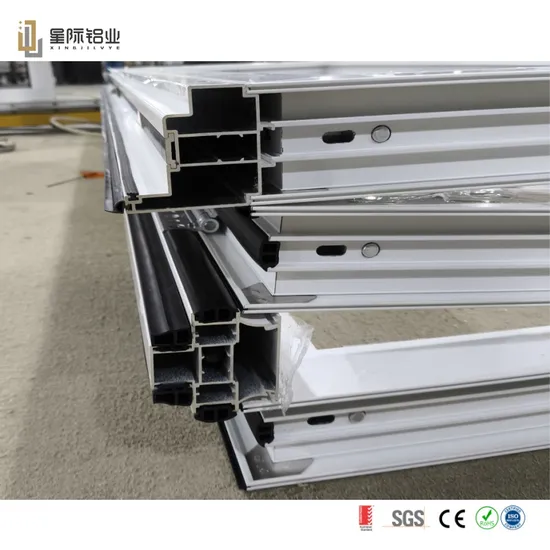
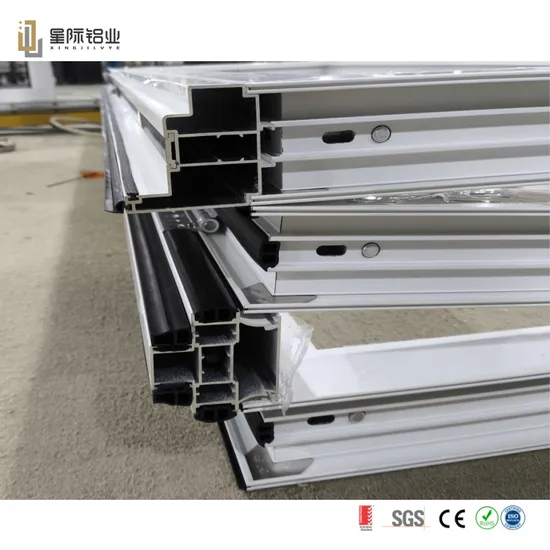
A thermal break aluminum window interrupts that conductive path. The profile is manufactured in two separate aluminum halves—an interior-facing section and an exterior-facing section—joined by a structural strut made of polyamide (typically PA66 GF25, which is polyamide reinforced with 25% glass fiber) or polyurethane.
During production, the two aluminum profiles are placed in a assembly jig, and the polyamide strips are inserted. The entire assembly is then roll-formed or crimped to mechanically lock the components together. The result is a physically separated frame—no continuous metal path from inside to outside.
Beyond the basic break, modern thermal break profiles incorporate multiple chambers within each aluminum half, further slowing heat transfer. Some systems use two separate polyamide struts with an air gap between them, creating a “double break” that performs even better.
Why the Difference Matters for Building Envelopes
The thermal break isn’t a minor tweak—it changes how the entire window performs within your building envelope. When heat can’t conduct freely through the frame, the interior surface temperature stays closer to room temperature. This affects condensation, comfort, HVAC loads, and even the structural behavior of the frame under temperature extremes.
In our factory, we fabricate both profile types on the same production lines. The difference in manufacturing complexity is significant: thermal break profiles require precision assembly, strict tolerance control, and additional quality checks that standard profiles simply don’t need. This hands-on experience informs every recommendation our engineering team makes.
For projects in extreme climates—whether that’s Minnesota winters or Dubai summers—we routinely recommend thermal break systems. For mild, temperate regions with modest heating and cooling demands, standard profiles often deliver acceptable performance at a lower cost.
—
Thermal Performance Face-Off: U-Values, Heat Transfer, and Energy Efficiency
Measuring the Gap: U-Value Comparisons
U-value measures how effectively a building component conducts heat—lower numbers mean better insulation. Here’s what we see in our testing and certification data:
| Performance Metric | Standard Aluminum | Thermal Break Aluminum |
|---|---|---|
| Frame U-value (typical range) | 5.0–6.0 W/m²K | 2.0–3.5 W/m²K |
| Interior surface temperature (winter) | 8–12°C (near frame edge) | 15–18°C (near frame edge) |
| Condensation resistance | Low—frequent fogging | High—minimal surface condensation |
| Relative energy loss through frame | Baseline | 40–60% reduction |
| Typical price premium | Baseline | 20–40% higher |
| Best suited for | Mild climates, budget projects | Extreme climates, energy-certified buildings |
These numbers translate directly to energy consumption. A building with standard aluminum frames loses significantly more heat through the window area than one with thermal break frames—even when both use identical glazing.
Winter Heating and Summer Cooling: Real Operational Impact
Let’s put real numbers on this. For a commercial building with a 30% window-to-wall ratio in a cold climate, switching from standard aluminum to thermal break frames typically reduces overall heating energy consumption by 10–15%. In cooling-dominated climates, the reduction in solar heat gain through the frame yields similar savings on air conditioning loads.
The payback period depends on local energy prices and climate severity. In northern European or northeastern US climates, the energy savings often pay back the initial cost premium within 3–7 years. In mild climates, the payback stretches longer—which is why we advise clients to run a simple lifecycle cost analysis before choosing.
Meeting Energy Codes and Green Building Certifications
Energy codes worldwide are tightening. The International Energy Conservation Code (IECC), ASHRAE 90.1, and Passive House standards all impose maximum U-value requirements that standard aluminum frames simply cannot meet in most climate zones. Thermal break systems are designed specifically to satisfy these thresholds.
For projects pursuing LEED certification, Passive House, or net-zero targets, thermal break windows aren’t optional—they’re a requirement. Our engineering team maintains thermal performance documentation for all our profile systems and provides compliance data to support project submissions. We’ve helped multiple developer clients achieve energy certifications by specifying the right thermal break configuration for their specific glazing ratios and climate conditions.
—
Structural Strength and Durability: Does the Break Compromise the Frame?
Standard Aluminum: The Strength Baseline
Aluminum’s strength-to-weight ratio is genuinely impressive. A standard aluminum frame can span large openings with minimal deflection, support heavy glazing, and withstand significant wind loads. For projects with large window walls or curtain wall applications in moderate climates, standard profiles remain structurally viable.
The continuous extrusion also provides a completely uniform cross-section, which simplifies structural calculations and engineering approvals.
Thermal Break Profiles: Engineered for Stiffness
The common concern we hear from contractors: doesn’t cutting the frame in half make it weaker? The answer is no—when properly engineered, thermal break profiles actually perform comparably or better than standard profiles.
The polyamide strut (PA66 GF25) is specifically chosen for its structural properties. The 25% glass fiber reinforcement gives it high tensile strength and stiffness. During the assembly process, the struts are mechanically crimped into the aluminum profiles with a dovetail connection, creating a rigid, permanent mechanical bond.
In wind-load testing, thermal break profiles with a 20–30mm polyamide strut typically achieve the same deflection ratings as equivalent standard profiles. For high-rise applications, our engineering team performs project-specific wind-load calculations and can reinforce profiles with steel cores if required.
Longevity and Maintenance Considerations
Both profile types receive identical surface treatments in our finishing workshop—anodizing or powder coating that provides corrosion resistance and color stability. The thermal break itself is fully protected inside the frame cavity, so it doesn’t degrade or require maintenance over its service life.
One durability advantage of thermal break systems: because they reduce internal condensation, the frame interior stays drier. This prevents the hidden damage that moisture can cause to seals, hardware, and the aluminum surface itself over decades of service.
At JuSen, our quality control process includes the same surface finishing standards for both profile types—so whichever you choose, you get the same aesthetic quality and corrosion protection.
—
Condensation Resistance: A Practical Comparison for Interior Comfort
Why Standard Aluminum Windows Fog Up
Condensation forms when warm, humid interior air contacts a cold surface. Standard aluminum frames present a cold surface in winter—often just a few degrees above outdoor temperature. The result: water droplets form on the frame, pool on sills, and create conditions for mold growth and material damage.
This isn’t just a residential nuisance. In commercial buildings—hotel bathrooms, indoor pools, restaurants, and facilities with high occupancy—condensation on window frames creates maintenance headaches, damages finishes, and compromises indoor air quality.
How Thermal Break Technology Reduces Condensation
Because thermal break frames keep the interior aluminum surface closer to room temperature, the dew point is reached far less frequently. Our testing shows interior surface temperatures 5–8°C higher on thermal break frames compared to standard frames under identical conditions.
This temperature difference is the difference between a dry frame and water running down your windows every cold morning.
Choosing Based on Your Building’s Humidity Profile
The decision guidance here is straightforward: if your project is in a cold climate or has high interior humidity (pools, spas, tropical climates with air conditioning), thermal break windows are the responsible choice. The condensation resistance alone often justifies the cost premium when you factor in avoided damage and maintenance.
Our OEM service allows us to customize drainage systems, gasket configurations, and ventilation features specifically to address condensation risk. For a hotel project in a humid coastal region, we recently modified our standard thermal break profile to include an additional internal drainage channel—a customization that eliminated condensation issues entirely.
—
Sound Insulation: Which Window System Performs Better Acoustically?
The Role of Frame Design in Acoustic Performance
Sound transmission through windows follows the path of least resistance. While glazing is the primary acoustic barrier, the frame matters more than most specifiers realize. A hollow, single-chamber aluminum frame acts like a resonance cavity, transmitting sound efficiently.
Multi-Chamber Thermal Break Systems and Sound Dampening
Thermal break profiles typically feature multiple internal chambers—often 3–5 separate cavities within the two aluminum halves. Each chamber disrupts sound transmission, and the polyamide strut itself acts as a damping layer between the interior and exterior metal sections.
In our acoustic testing, multi-chamber thermal break profiles achieve sound reduction index (Rw) values 3–5 dB higher than equivalent standard profiles with the same glazing. That’s a perceptible difference—roughly halving the perceived loudness of exterior noise.
Matching Acoustic Performance to Project Location
For urban developments, buildings near airports, highways, or railway lines, we recommend thermal break systems as the acoustic baseline. Combined with laminated or acoustic glazing, our thermal break windows achieve Rw values up to 40–45 dB—sufficient for most noise-sensitive applications.
Our aluminum window range includes multi-chamber thermal break profiles with optional acoustic glazing configurations. We supply these systems to hospitality projects worldwide, where guest comfort depends on keeping exterior noise out.
—
Cost Analysis: Upfront Investment vs Long-Term Value
Price Comparison: What You Pay Initially
Let’s be direct about pricing: thermal break aluminum windows typically cost 20–40% more than standard aluminum windows of equivalent size and configuration. The price difference comes from:
- Additional raw materials (polyamide struts, more complex extrusions)
- Extra manufacturing steps (profile assembly, crimping, precision handling)
- Tighter quality control requirements
- More complex logistics (profiles ship as assembled units, not loose extrusions)
For a mid-sized project with 500 windows, this premium might represent $30,000–$80,000 in additional upfront cost. That’s a real number that needs justification.
Operational Savings Over the Building’s Lifecycle
The justification comes from operations. Over a 20-year building lifecycle, the energy savings from thermal break frames typically exceed the initial cost premium by 2–4 times. Commercial buildings in cold climates see the fastest payback; residential developments in temperate zones see slower but still positive returns.
Beyond energy, factor in avoided maintenance: no condensation damage to sills and frames, no mold remediation, no premature hardware replacement. These costs are easy to underestimate during design, but they show up reliably in facility budgets.
Resale Value and Project Marketability
Energy-efficient features increasingly drive property values. Buildings with thermal break windows command higher rents and sale prices, and they’re easier to market to environmentally conscious tenants and buyers. Developers we work with use energy performance as a differentiator in competitive markets.
At JuSen, we provide transparent factory-direct pricing for both options. Send us your window schedule and drawings, and our team will deliver a detailed quotation within 24 hours—including a side-by-side cost comparison of standard and thermal break configurations.
—
Application Guide: Which Window Type Fits Which Project?
Ideal Applications for Standard Aluminum Windows
Standard aluminum windows remain a legitimate choice for specific scenarios:
- Mild climate regions with low heating and cooling demand (e.g., parts of Southern California, Mediterranean coastal zones)
- Interior partitions or non-conditioned spaces where thermal performance is irrelevant
- Budget-constrained projects where the cost premium for thermal break would compromise other priorities
- Utility buildings, warehouses, and agricultural structures without strict energy requirements
Ideal Applications for Thermal Break Aluminum Windows
Thermal break systems are the right call for:
- Residential villas and apartments in climates with distinct heating or cooling seasons
- Commercial buildings pursuing energy certifications or meeting strict energy codes
- Projects with large glazing areas where frame thermal performance significantly impacts overall envelope efficiency
- Coastal or high-humidity environments where condensation management is critical
- High-rise buildings where interior comfort and condensation control are non-negotiable
A Decision Framework for Contractors and Developers
Use this checklist when evaluating your project:
- Climate zone: Heating degree days above 3,000? Cooling degree days above 2,000? Thermal break recommended.
- Energy code requirements: Does your local code mandate maximum U-values below 3.0 W/m²K? Thermal break required.
- Budget: Can you absorb a 20–40% premium per window? Run a lifecycle payback analysis.
- Building use: High humidity (pools, spas, hotels)? Thermal break strongly recommended.
- Glazing ratio: Window area above 30% of wall area? Thermal break becomes critical.
- Acoustic requirements: Near noise sources? Thermal break provides acoustic benefits.
With 20+ years serving global contractors, designers, and developers, our team has seen which applications favor each window type. We’ll give you a straight recommendation based on your project specifics—not a one-size-fits-all sales pitch.
—
Why JuSen Is Your Manufacturing Partner for Both Window Types
One Factory, Two Technologies, Full Customization
Our factory manufactures both standard and thermal break aluminum windows under one roof. We operate dedicated aluminum processing workshops where extrusions are cut, machined, assembled, and finished. This single-factory approach means consistent quality control and transparent pricing—we’re not a trading company reselling third-party products.
Beyond aluminum, our in-house wood drying and spray finishing facilities support our solid wood door production. This vertical integration gives us unique insight into how different materials perform across building envelopes—knowledge we apply to every window project.
Engineering Support from Design to Delivery
Our experienced in-house design and engineering team works directly with clients to translate architectural drawings into manufacturable window systems. Whether you need a standard catalog profile or a fully custom extrusion design, we handle the engineering.
Customized shop drawings and formal quotations are provided within 24 hours of receiving your project details. For global distributors and project partners, this rapid response capability means your timeline stays on track.
Quality Assurance and After-Sales Protection
From raw material inspection to final packaging, our quality control process covers every production step. We test finished windows for air permeability, water tightness, and wind load resistance before shipment.
All orders include shipping damage protection, and our after-sales team responds quickly to any issues. We’ve built long-term relationships with contractors and developers across North America, Europe, Australia, and the Middle East—relationships that depend on delivering exactly what we promise.
—
Frequently Asked Questions
Q1: How much more do thermal break aluminum windows cost compared to standard aluminum windows?
Expect to pay 20–40% more for thermal break windows, depending on profile series, hardware quality, and glazing configuration. The premium reflects additional materials (polyamide struts), more complex assembly, and tighter quality control. For most projects in demanding climates, the energy savings recover this premium within 3–7 years.
Q2: Can thermal break aluminum windows be used in large window openings?
Yes. Our thermal break profiles are engineered with glass fiber-reinforced polyamide struts that provide structural stiffness comparable to standard profiles. For spans exceeding 2.5 meters or high wind-load zones, we perform project-specific engineering calculations and can reinforce profiles with steel cores if needed.
Q3: Do thermal break windows require special maintenance?
No. The thermal break is fully enclosed within the frame and requires no maintenance. Surface cleaning, hardware lubrication, and seal inspection follow the same schedule as standard aluminum windows. The reduced condensation actually means less maintenance over time.
Q4: How long do thermal break aluminum windows last?
With proper installation and routine maintenance, thermal break aluminum windows typically last 30+ years. The aluminum frame is corrosion-resistant, the polyamide strut doesn’t degrade, and the reduced condensation protects seals and hardware from moisture damage.
Q5: Can I order custom sizes and designs for either window type?
Absolutely. We offer full OEM and ODM customization for both standard and thermal break windows. Custom sizes, profile colors (including custom powder coating), hardware configurations, and glazing options are all available. Send us your drawings, and our engineering team will provide shop drawings and a quotation within 24 hours.
Q6: What is the minimum order quantity (MOQ) for thermal break aluminum windows?
Our MOQs are flexible and depend on the profile series and customization level. For standard catalog profiles, MOQs are relatively low—suitable for villa projects or small developments. For fully custom extrusions requiring new dies, higher volumes apply to amortize tooling costs. Contact us with your project details for a specific MOQ.
Q7: How quickly can JuSen deliver thermal break aluminum windows?
Standard production lead time is 15–25 days depending on order size and complexity. For urgent projects, we can prioritize production and offer express logistics. We understand construction schedules, and our team coordinates closely with your timeline to ensure on-time delivery.
—
Making the Right Choice for Your Project
Here’s the bottom line:
Choose standard aluminum windows if: Your project is in a mild climate with modest heating and cooling demands, energy code requirements are lenient, budget constraints are tight, and the building use doesn’t create high humidity conditions. Standard aluminum delivers acceptable performance at the lowest cost.
Choose thermal break aluminum windows if: Your project faces extreme temperatures, you’re pursuing energy certifications, condensation control matters, acoustic performance is important, or your building has large glazing areas. The higher upfront investment pays back through energy savings, reduced maintenance, and improved occupant comfort.
At JuSen Doors & Windows Manufacturing Co., Ltd., we manufacture both types with the same commitment to quality and precision. With over 20 years of experience, in-house engineering support, and comprehensive OEM/ODM services, we’re equipped to deliver windows that perform—whatever your project demands.
Send us your window schedule, drawings, or project specifications. Our team will provide a technical recommendation and a detailed quotation within 24 hours.
—
References
[1] ASHRAE. “ASHRAE 90.1: Energy Standard for Buildings Except Low-Rise Residential Buildings.” American Society of Heating, Refrigerating and Air-Conditioning Engineers. https://www.ashrae.org/technical-resources/bookstore/standard-90-1
[2] International Energy Agency. “Thermal Performance of Window Frames.” IEA Solar Heating and Cooling Programme. https://www.iea-shc.org/
[3] Passive House Institute. “Window Certification Criteria for Cool, Temperate and Warm Climates.” https://passivehouse.com/
[4] U.S. Department of Energy. “Energy-Efficient Window Frames.” Office of Energy Efficiency & Renewable Energy. https://www.energy.gov/energysaver/energy-efficient-window-frames
[5] International Code Council. “2021 International Energy Conservation Code (IECC).” https://www.iccsafe.org/products-and-services/i-codes/2018-i-codes/iec-c/