14 min read
Thermal Break Windows Advantages: Why Precision Manufacturing Determines Real Performance
Global building codes are tightening. Energy costs are climbing. And for contractors, architects, and developers, the building envelope has become the single most scrutinized element of any project. Windows are the weakest link in that envelope—responsible for up to 40% of a building’s thermal energy loss [1]. That is why thermally broken aluminum windows have moved from a premium option to a near-requirement in modern construction.
But here is the reality we see daily at Jusen Doors & Windows Manufacturing Co., Ltd.: the concept of a thermal break is simple, yet the execution is everything. A polyamide strip inserted between two aluminum profiles sounds straightforward. The actual performance depends on strip quality, assembly precision, and the manufacturer’s willingness to test—not just claim—performance.
With over 20 years of experience in aluminum processing and solid wood manufacturing, our factory has refined thermal break technology across our aluminum window series to meet the rigorous demands of global construction projects. Our engineering team applies this technology not as an afterthought, but as an integral part of the structural and thermal design of every window we produce.
In this guide, we will walk through the specific advantages of thermal break windows, explain how our manufacturing process ensures those advantages are actually delivered, and help you understand what to look for when sourcing from a factory partner.
What is a Thermal Break Profile and Why Does It Matter for Aluminum Windows?
Aluminum is an extraordinary material for windows: lightweight, strong, corrosion-resistant, and capable of slim sightlines that architects love. It also happens to be an excellent conductor of heat. In technical terms, aluminum has a thermal conductivity of approximately 205 W/m·K [2]. That means without intervention, a standard aluminum frame will readily transfer heat from your warm interior to the cold exterior in winter—and do the reverse in summer.
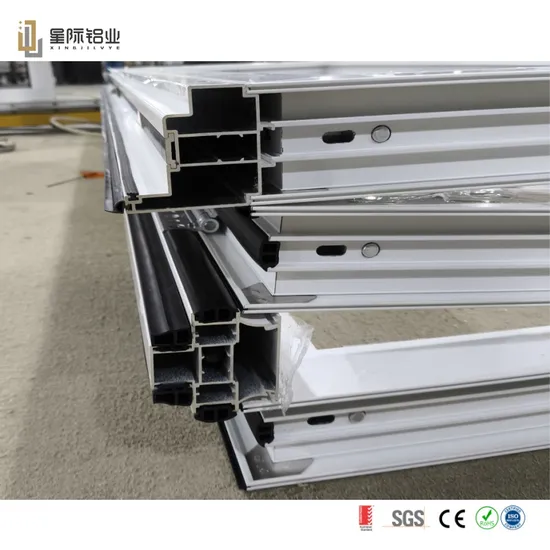
The thermal break interrupts this conductive path. A polyamide (typically PA66) or PVC strip is inserted between the interior and exterior aluminum profiles, creating a barrier that stops the flow of heat. This transforms the frame from a thermal bridge into a thermal barrier.
The Physics of Heat Transfer in Frames
Heat moves through a window frame in three ways: conduction (direct transfer through solid material), convection (air movement within cavities), and radiation (heat emitted across gaps) [3]. A thermal break addresses the first—conduction—by physically separating the two metal surfaces. The polyamide strip has a thermal conductivity of only about 0.3 W/m·K, roughly 600 times lower than aluminum [4]. This dramatically reduces the U-value (thermal transmittance) of the entire window system.
The Difference Between Standard and Thermally Broken Aluminum
Standard aluminum windows have a U-value that can exceed 5.0 W/m²K—poor by any modern standard. Thermally broken aluminum systems, by contrast, can achieve U-values between 1.0 and 2.8 W/m²K depending on profile design, glazing, and assembly quality [5]. That difference translates directly into energy savings, condensation resistance, and interior comfort.
In our factory, we utilize both a two-part pouring and stripping process and crimping of polyamide strips, depending on the specific profile series. Our in-house design team works with clients to ensure the profile selection matches the structural requirements of high-rise or villa projects, ensuring the thermal break is not just an add-on but an integral part of the structural integrity. We do not simply assemble components—we engineer the complete system.
Top 5 Advantages of Thermal Break Windows for Residential Development Projects
For B2B buyers, the advantages of thermal break windows are not just technical talking points. They are selling points for your properties, value-adds for your clients, and operational savings for building owners. Here is how we frame these benefits when working with developers and contractors.
Superior Energy Efficiency and Reduced HVAC Bills
The most immediate and quantifiable advantage is energy performance. Thermally broken aluminum windows reduce heat loss in winter and heat gain in summer, directly lowering HVAC loads. According to the U.S. Department of Energy, heat gain and loss through windows accounts for 25%–30% of residential heating and cooling energy use [6]. Installing thermally broken windows can reduce this significantly.
For a villa developer, this translates into a measurable selling point: lower utility bills for homeowners. For commercial projects, it reduces operational costs across the building’s lifespan. When we supply windows for a project, we provide U-value calculations based on the specific profile and glazing combination, giving you concrete numbers to present to your clients.
Condensation Prevention and Improved Indoor Comfort
Condensation on window frames is a maintenance nightmare. It causes mold, damages sills, and creates an uncomfortable indoor environment. Standard aluminum frames get cold in winter, and warm, humid interior air condenses on the surface. Thermally broken frames maintain a surface temperature much closer to room temperature, dramatically reducing condensation risk.
This is particularly critical for property managers and multi-unit residential buildings, where mold issues can lead to tenant complaints, health concerns, and costly remediation. Our thermally broken series helps you avoid these problems from the start.
Enhanced Acoustic Insulation (Soundproofing)
Thermal break windows offer a secondary benefit that is often overlooked: acoustic insulation. The polyamide strip, with its different density compared to solid metal, helps dampen sound vibrations. Combined with double or triple glazing, thermally broken aluminum windows can achieve sound reduction ratings (STC) that are significantly better than standard aluminum [7].
For projects near highways, airports, or in dense urban environments, this is a tangible quality-of-life advantage that justifies the investment.
Structural Strength and Durability in Extreme Climates
There is a misconception that thermal break windows are weaker than solid aluminum. The opposite is true. The polyamide strips—typically PA66 reinforced with glass fiber—are high-strength materials that connect the interior and exterior frames into a composite structure. This actually allows for larger glass panes without sacrificing stability.
We have supplied thermally broken aluminum windows for coastal villas, high-rise towers, and projects in extreme climate zones. The combination of aluminum’s inherent strength with the thermal break’s structural contribution means these windows can handle significant wind loads and temperature differentials without deformation.
Eco-Friendly and Sustainable Building Certification
Green building certifications like LEED and BREEAM increasingly reward energy-efficient building envelopes [8]. Thermally broken aluminum windows contribute to points in the Energy & Atmosphere and Materials & Resources categories. For developers targeting these certifications, the choice of window system is critical.
Additionally, aluminum is infinitely recyclable, and thermally broken profiles can be recycled at the end of their service life. This makes them an environmentally responsible choice that aligns with the sustainability goals of modern construction projects.
We manufacture these profiles specifically for our aluminum window product lines, supporting custom sizes to meet your architectural drawings. Whether you need fixed casement, awning, or sliding configurations for a villa project, our thermal break series can be tailored to your specifications. Our team will work with you to ensure the window configuration maximizes both thermal performance and structural integrity.
How We Manufacture Thermal Break Windows: A Look Inside Our Process
Manufacturing claims are easy to make. Execution is what separates a reliable supplier from a trading company. Here is exactly how we produce thermal break windows in our own aluminum processing workshop.
Precision Cutting and Crimping of Polyamide Strips
The thermal break process begins with two separate aluminum profiles—an interior and an exterior half. We use high-precision cutting machinery to ensure the profiles are perfectly dimensioned. The polyamide strips are then inserted and crimped using rollers that apply controlled pressure to lock the strip into the profile’s grooves.
The accuracy of this step is critical. If the crimping is inconsistent, the thermal break can separate under stress, compromising both thermal performance and structural integrity. Our operators are trained to check crimp depth and strip alignment on every batch. We do not rely on spot checks—each profile is inspected during the process.
The Filling and Sealing Process
For certain profile designs, we use a pouring and stripping method. This involves pouring liquid polyurethane into a channel between the two aluminum halves, allowing it to cure, then stripping away the bottom bridge to create the thermal break. This method is particularly effective for complex profile geometries.
Regardless of method, the sealing stage is equally important. We apply high-quality sealants to ensure air-tightness at all joints. An improperly sealed frame can allow air infiltration, which undermines the thermal break’s effectiveness. Our sealing process is verified through pressure testing on sample units.
Strict Quality Control from Raw Material to Finish
Operating our own aluminum processing workshops allows us to control the entire supply chain. Unlike traders, we conduct rigorous pull tests on the thermal break strips to ensure they can withstand the pressure differences of high-rise installations. We test the pull force required to separate the two aluminum halves—if it falls below our standard, the batch is rejected.
Our finishing lines ensure the powder coating adheres perfectly to the treated aluminum surface, preventing corrosion over time. We offer both powder coating and anodizing, with salt spray testing available for coastal projects. Every finished frame is visually inspected before moving to glazing and hardware installation.
This level of control is only possible because we own the workshops. We do not outsource critical steps to third parties who might cut corners to save cost. When you order from Jusen, you are getting windows that have been manufactured, tested, and inspected under one roof.
Thermal Break Aluminum vs. UPVC vs. Wood: A Comparison for High-End Projects
For high-end residential and commercial projects, the choice often comes down to three materials: thermally broken aluminum, UPVC, and wood. Each has strengths, but the decision depends on your project’s specific requirements.
| Property | Thermal Break Aluminum | UPVC | Solid Wood |
|---|---|---|---|
| Structural Strength | High — supports large spans and heavy glazing | Moderate — requires steel reinforcement for large spans | High — but requires thick profiles for equivalent strength |
| Lifespan | 30+ years with minimal maintenance | 15–25 years, prone to discoloration and warping | 20–30 years with regular refinishing |
| Maintenance | Low — powder coated or anodized | Low — but can yellow and become brittle | High — requires periodic sanding, sealing, and repainting |
| Thermal Performance | Excellent with thermal break (U-value 1.0–2.8 W/m²K) | Good (U-value 1.1–1.8 W/m²K) | Good (U-value 1.5–2.5 W/m²K depending on species) |
| Aesthetic Options | Slim sightlines, any RAL color, wood-grain finishes | Bulky profiles, limited color options | Natural wood grain, but limited color choices |
| Recyclability | 100% recyclable aluminum | Difficult to recycle, often landfilled | Biodegradable, but requires chemical treatments |
| Cost | Moderate to high | Low to moderate | High |
Thermal Break Aluminum vs. UPVC
UPVC is cheaper, but it has structural limitations. For large window spans—common in modern villa design—UPVC requires steel reinforcement, which adds weight and cost. UPVC also expands and contracts significantly with temperature changes, which can compromise seals over time. Thermally broken aluminum offers superior strength with slimmer profiles, allowing for more glass and better views.
Thermal Break Aluminum vs. Solid Wood
Solid wood is beautiful, but it demands maintenance. In high-humidity or coastal environments, wood windows can warp, rot, or attract pests. Thermally broken aluminum is virtually maintenance-free while still offering a wood-grain finish if you want that aesthetic.
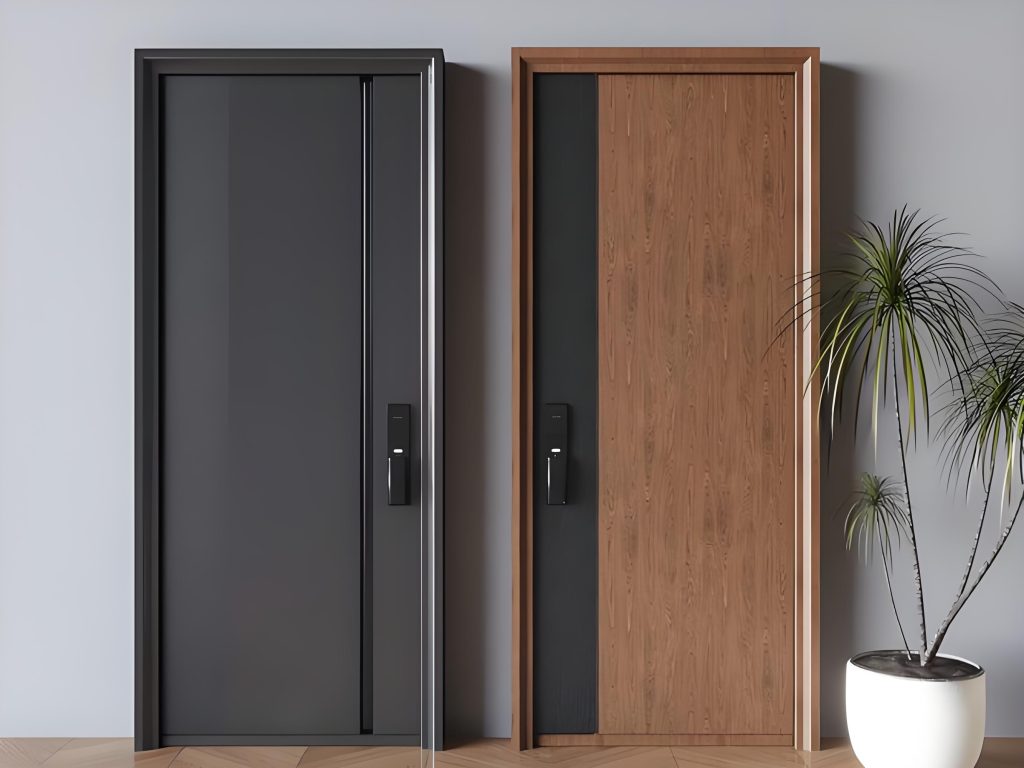
With 20 years of experience serving the high-end villa market, we often supply projects with a combination of our solid wood entry doors and thermal break aluminum windows. This allows architects to get the classic warmth of wood at the entrance with the low-maintenance, high-performance benefits of aluminum on large window facades. It is a practical approach that our clients appreciate.
Customization Options: OEM/ODM for Thermal Break Window Series
Every project is different, and off-the-shelf windows rarely fit perfectly. That is why we built our business around customization.
Color and Finish Customization
Our thermally broken frames are available in any RAL color, wood-grain foil finishes, and custom anodizing colors. For villa projects, we can match the window frames to the architectural color scheme or the wood tones of your entry doors. For commercial projects, we can provide a consistent finish across all facades.
Hardware and Glass Integration
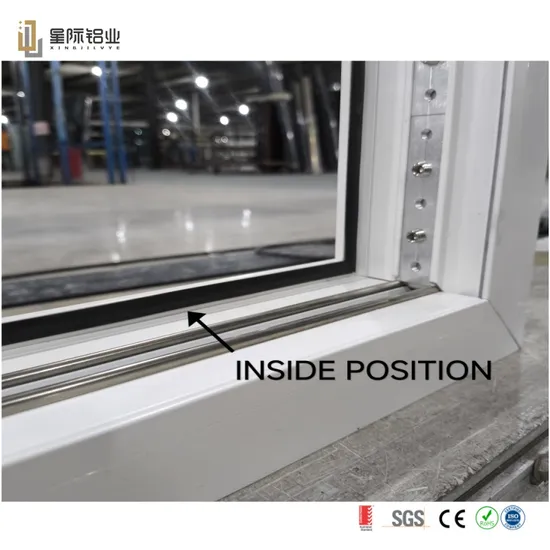
The thermal break is only one component of a high-performance window. We pair our frames with high-quality hardware accessories—hinges, locks, and operators—from established brands. We also recommend appropriate double-glazing or triple-glazing (IGU) to maximize the thermal break advantages. Our team will advise on glass specifications based on your climate zone and building orientation.
Private Label and Bulk Supply
For retail dealers and distributors who want to sell under their own brand, we offer full private label services. Your logo goes on the frames, packaging, and documentation. We manage the entire production process, ensuring consistent quality across every batch.
As a professional manufacturer, we offer full OEM and ODM services. We provide customized shop drawings within 24 hours to confirm the thermal break profile details. We understand that project timelines are tight; our flexible MOQs and fast production lead times ensure your bulk supply arrives on schedule, with comprehensive shipping damage protection. We have shipped to projects across North America, Europe, Australia, and the Middle East, and we know how to package windows for safe international transit.
Why Global Contractors Choose Jusen for Thermal Break Window Supply
When you source windows from a factory, you are not just buying a product—you are buying reliability. Here is why contractors and developers continue to partner with us.
One-Stop Customization and Supply
We manufacture both aluminum windows and solid wood doors. This means you can source the entire fenestration package from a single factory. Aligning production schedules, finishes, and delivery timelines becomes simpler when one supplier is responsible for both. Our team coordinates the production of wooden entry doors and aluminum windows to ensure they arrive together, ready for installation.
Competitive Pricing and Lead Times
Buying direct from the factory eliminates intermediary markups. Our vertical integration—owning the wood drying, spray finishing, and aluminum processing workshops—means we control costs without sacrificing quality. We offer flexible MOQs, so both small boutique projects and large-scale developments can work with us. Our production planning ensures fast lead times without rushing the manufacturing process.
After-Sales Support and Shipping Protection
We stand behind every product we ship. Our comprehensive after-sales support includes shipping damage protection—if your order arrives damaged, we work with you to resolve the issue quickly. Our team is available to answer technical questions during installation and beyond.
By choosing Jusen, you are partnering with a manufacturer who owns the production facilities. This vertical integration means we are not reliant on third parties for quality or timing. We welcome global distributors, builders, and architects to contact our team for detailed technical specifications.
Frequently Asked Questions
What is the lifespan of a thermal break aluminum window?
With proper installation and our high-quality anodizing or powder coating, these systems can last 30+ years. The polyamide strips are highly durable and resistant to aging, ensuring the structural bond remains intact. We have supplied windows for projects that have been in service for over a decade with no signs of thermal break failure.
Can thermal break windows be used in coastal areas with high salinity?
Yes. At Jusen, we recommend specific surface treatments and hardware finishes that are highly resistant to saltwater corrosion, making them ideal for seaside villas. Our salt spray testing ensures the finish will withstand harsh marine environments. We have delivered coastal projects in Southeast Asia, the Middle East, and the Caribbean.
Are thermal break windows stronger than standard aluminum windows?
Yes. The thermal break strips (typically polyamide 66) are high-strength and connect the interior and exterior frames. This creates a composite structure that is strong enough to support large glass panels while providing superior thermal performance. In fact, the thermal break can improve the overall structural rigidity of the frame system.
Do you support custom colors for the thermal break frames?
Absolutely. We support OEM/ODM customization, including any RAL color, wood-grain finishes, or custom anodizing colors to match your specific architectural design requirements. We can match the frame color to your entry doors, facade elements, or interior design scheme.
How quickly can I get a quotation for a new project?
Our in-house design and engineering team can provide customized shop drawings and formal quotations within 24 hours of receiving your inquiry. We aim to streamline the bidding process for contractors and developers. Send us your architectural drawings, and we will respond with detailed specifications and pricing.
Decision Guide: Choosing the Right Window System
Choose thermal break aluminum if:
- Your project requires large window spans with slim sightlines
- You are building in a climate with extreme temperature swings
- You want minimal maintenance over a 30+ year lifespan
- You need custom colors or finishes to match architectural designs
- You are targeting LEED, BREEAM, or other green building certifications
Choose UPVC if:
- Your budget is extremely tight
- You are working with standard window sizes
- Structural requirements are minimal
- Aesthetic flexibility is not a priority
Choose solid wood if:
- You are restoring a historic building
- The design demands authentic wood interiors
- You have a maintenance budget for periodic refinishing
- You want the warmth and character of natural materials
Choose a hybrid approach (wood doors + thermal break aluminum windows) if:
- You want the classic entry statement of a solid wood door
- You need high-performance, low-maintenance windows for large facades
- You want to coordinate finishes across both products
- You prefer to source from a single factory for consistency
—
The advantages of thermal break windows—energy savings, comfort, condensation prevention, acoustic insulation, and sustainability—are only realized if the manufacturing is precise. The polyamide strip must be correctly inserted, the profile must be properly sealed, and the finish must be durable enough to protect the aluminum for decades.
At Jusen Doors & Windows Manufacturing Co., Ltd., we have spent over 20 years perfecting this process. Our own workshops, our in-house engineering team, and our commitment to quality control ensure that every thermal break window we ship performs as specified.
If you are planning a residential development, a villa project, or a commercial building, we invite you to discuss your requirements with our engineering team. We will provide customized shop drawings and a formal quotation within 24 hours, and we will work with you to ensure your windows deliver the performance your project demands.
—
References
[1] U.S. Department of Energy. “Windows and Glazing.” Energy.gov. https://www.energy.gov/energysaver/windows-doors-and-skylights/windows-and-glazing
[2] Engineering ToolBox. “Thermal Conductivity of Metals.” EngineeringToolbox.com. https://www.engineeringtoolbox.com/thermal-conductivity-metals-d_858.html
[3] American Society of Heating, Refrigerating and Air-Conditioning Engineers (ASHRAE). “Fundamentals of Heat Transfer in Fenestration.” ASHRAE Handbook. https://www.ashrae.org/technical-resources/ashrae-handbook
[4] Ensinger GmbH. “Thermal Break Profiles: Technical Data.” Ensingerplastics.com. https://www.ensingerplastics.com/en/products/thermal-break-profiles
[5] National Fenestration Rating Council (NFRC). “U-Factor Ratings for Windows.” NFRC.org. https://www.nfrc.org/window-types/
[6] U.S. Department of Energy. “Update or Replace Windows.” Energy.gov. https://www.energy.gov/energysaver/update-or-replace-windows
[7] Glass Association of North America (GANA). “Acoustic Performance of Glass and Glazing.” GANA.org. https://www.glasswebsite.com/
[8] U.S. Green Building Council (USGBC). “LEED v4.1: Energy & Atmosphere.” USGBC.org. https://www.usgbc.org/leed