
12 min read
Meta Information
- Meta Title: Thermal Break Aluminum Doors | OEM Manufacturer Jusen
- Meta Description: Jusen manufactures high-performance thermal break aluminum doors with 20 years of expertise. OEM/ODM custom sizes, private label, global shipping. Get a quote today.
- Slug: thermal-break-aluminum-doors-manufacturer
- SEO Keywords: thermal break aluminum doors, thermal break aluminum door manufacturer, OEM thermal break doors, custom thermal break aluminum doors, thermal break door supplier
Thermal Break Aluminum Doors: A Complete Guide to Performance, Design, and OEM Manufacturing
When a global contractor approaches us for thermal break aluminum doors, they are not simply buying a product — they are investing in a precision-engineered building envelope component that must perform reliably for decades. At Jusen Doors & Windows Manufacturing Co., Ltd., we have spent the past 20 years refining our aluminum window and door production lines to deliver exactly that level of reliability. Our team has supplied custom thermal break doors to villa developers in Europe, retail dealers in North America, and large-scale construction projects across Asia. In this guide, we will walk you through the technical standards, manufacturing processes, and customization options that define a high-performance thermal break aluminum door — and show you exactly how our factory delivers on each requirement.
Read on to see how our self-owned aluminum workshop, independent design team, and rigorous quality control ensure every unit meets strict thermal and structural standards.
What Makes a Thermal Break Aluminum Door? (Our Core Technology)
A thermal break aluminum door is fundamentally different from a standard aluminum door. The difference lies in a small but critical component: a non-conductive barrier placed between the interior and exterior aluminum profiles. This barrier stops heat from traveling through the metal frame, preventing condensation, reducing energy loss, and improving indoor comfort. In our factory, we do not treat this as a simple assembly step — we engineer it as a structural and thermal system.
The Polyamide Strip vs. The Pour-and-De-Bridge Method (Our Preference)
Two primary methods exist for creating a thermal break in aluminum profiles: the polyamide strip method and the pour-and-de-bridge method. In our workshop, we exclusively use high-tensile polyamide PA66+GF25 strips for all thermal break aluminum doors. Why? Because polyamide strips provide superior shear strength and dimensional stability — both essential for large door panels that must resist twisting and sagging over years of use.
The pour-and-de-bridge method involves pouring a liquid polyurethane resin into a channel and then mechanically removing the bridge to create the break. While this method can work for standard window frames, we have found that it introduces variability in bond consistency, especially for larger door profiles. Our engineering team has tested both methods extensively, and the polyamide strip approach consistently delivers more predictable thermal and structural performance. Each strip is mechanically crimped into the aluminum profile under controlled pressure, creating a bond that maintains integrity through thermal cycling and heavy door operation.
“Pour-and-de-bridge can be adequate for small window frames, but for door panels that may exceed 2.4 meters in height, polyamide strips provide the structural safety margin our clients require,” explains our lead production engineer.
Critical Design Parameters for Thermal Performance (U-Value and Air Tightness)
Achieving a low U-value — as low as 1.8 W/m²K for our thermal break aluminum doors — requires precise calculation of the polyamide strip width, the number of thermal chambers in the profile, and the gasket sealing system. Our independent design team uses specialized thermal modeling software to calculate the optimal profile geometry for each project. We do not rely on generic profiles from a catalog. Instead, we analyze your project’s climate zone, building orientation, and local energy code requirements.
Question from a hotel developer: “Can you achieve a U-value of 1.6 W/m²K for our coastal project in Portugal?”
Yes. For that specific requirement, our design team would specify a 34 mm polyamide strip combined with a triple-chamber profile and low-emissivity glazing. We have delivered similar configurations for multiple European villa resorts. We can share performance test reports from our certified testing facility upon request.
Air tightness is equally critical. Our thermal break doors achieve Class 4 air permeability under EN 12207 (the highest classification), thanks to dual EPDM gasket systems that seal at both the inner and outer frame faces. This double-seal design prevents drafts and reduces the risk of interstitial condensation — a common failure point in poorly designed thermal doors.
Why the “Break” Matters for Structural Integrity
A concern we often hear from structural engineers is whether the thermal break weakens the door frame. In our experience, the opposite is true. When properly designed, the polyamide strip combined with reinforced aluminum profiles actually creates a more rigid structure. The strip acts as a load-distributing element that resists torsional forces better than a solid aluminum extrusion of equivalent weight.
Question from a structural engineer: “I need a thermal break door panel 3 meters tall for a commercial entrance. Can the frame handle wind loads?”
Yes, but only with proper reinforcement. For oversized panels, we integrate additional aluminum reinforcement channels within the thermal break cavity and use a thicker polyamide strip (typically 40 mm or wider). Our standard engineering practice includes finite element analysis for every non-standard door size, ensuring the deflection under design wind load stays within acceptable limits.
Our Factory Capabilities: Precision Engineering for Thermal Break Profiles
Understanding the technology is one thing. Delivering it consistently across hundreds of units is another. Our factory investment in self-owned workshops and rigorous testing protocols is what allows us to scale thermal break production without sacrificing quality.
Self-Owned Aluminum Processing Workshop (In-House Control)
We operate our own aluminum processing workshop — we do not outsource cutting, routing, or thermal strip insertion to third parties. This gives us 100% quality control over the critical thermal break seal. Our workshop is equipped with CNC machining centers and 4-axis routing stations that maintain tolerances within ±0.2 mm on polyamide strip insertion depth. The strip must sit precisely flush with the aluminum surface to prevent moisture ingress and thermal bridging.
Question from a retail dealer: “How do you ensure consistent polyamide strip bonding across different batch sizes?”
Every batch of polyamide strips is tested for shear strength before production begins. During the crimping process, our automated system monitors insertion pressure and depth in real time. Any profile that deviates from specification is flagged and removed before it reaches the assembly line. This level of process control is only possible because we own and operate every step of the aluminum processing.
The workshop also handles more complex operations like milling drainage slots, drilling hinge pockets, and routing gasket grooves — all performed in a single setup to minimize handling errors.
Stringent Quality Testing (Ensuring No “Cold Bridge” Failures)
A thermal break door that fails develops a “cold bridge” — a point where heat bypasses the break and creates a localized cold spot. This leads to condensation, mold growth, and eventual frame corrosion. We prevent this through a multi-stage testing protocol.
Every batch of thermal break aluminum doors undergoes a 72-hour thermal cycle test in our on-site facility. The test alternates between -20 °C and +80 °C at controlled humidity, simulating years of seasonal expansion and contraction. After cycling, each sample is inspected for polyamide strip separation, gasket compression loss, and dimensional changes. We also perform:
- Air permeability testing (EN 12207): Doors must achieve Class 4 before shipment.
- Water tightness testing (EN 12208): Minimum Class 7A (600 Pa) for residential doors, Class 8A (900 Pa) for commercial projects.
- Mechanical load testing (EN 13115): Verifies that hinges, locks, and frame joints withstand 100,000 operating cycles.
Our quality management system is ISO 9001 certified [1], and our test reports are accepted by major certification bodies across Europe, North America, and the Middle East.
Flexible MOQ & Lead Times for Project Deadlines
B2B buyers often tell us their biggest frustration is inflexible minimum order quantities from suppliers who only accept large container orders. We address this directly. Our MOQ starts at just 10 units for custom thermal break aluminum doors, allowing villa developers and interior designers to order exactly what their project needs without overcommitting inventory.
Question from a small retail dealer: “I need 15 thermal break doors with custom RAL colors for a residential project. Is that too small an order?”
Not at all. We routinely process orders of this size. Our flexible production scheduling allows us to mix small custom orders with larger bulk runs efficiently.
For larger projects — 100 units or more — we offer reduced per-unit pricing and priority production slots. Our typical lead time for custom thermal break doors is 25–35 working days from drawing approval. For select standard models, our North America overseas warehouses can ship within 10–15 working days, reducing transit risk and customs delays.
Customization & OEM Services for Thermal Break Aluminum Doors
One of the primary reasons B2B partners choose Jusen is our willingness to adapt our thermal break door platform to their exact specifications. We do not operate on a “one size fits all” model.
Full Custom Size & Design (One-Stop ODM)
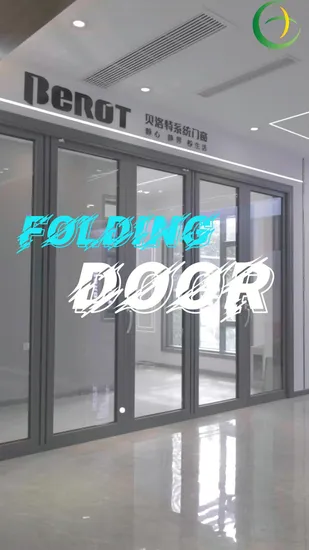
Our independent design team — which includes mechanical engineers, architectural drafters, and materials specialists — can adapt your architectural drawings into production-ready files. Whether you need an arched thermal break door for a boutique hotel entrance, a folding thermal door system for a restaurant terrace, or oversized sliding doors for a luxury residence, we have the engineering experience to handle it.
Question from an architect: “Can you produce a thermal break door with an arched top and a custom bronze anodized finish?”
Yes. For arched profiles, we use a specialized 5-axis CNC router to cut the curved polyamide strips and aluminum extrusions, then hand-assemble the frame to match the arch geometry. The bronze anodized finish requires a specific bath process that we have refined over 15 years of aluminum finishing experience.
Within 24 hours of receiving your inquiry and architectural drawings, our team will provide a formal quotation along with customized construction drawings for your review [2]. This rapid turnaround allows you to move quickly from design to procurement.
Private Label & Bulk Supply for Global Distributors
For retail dealers and distributors who want to sell thermal break doors under their own brand, we offer complete private label services. We will apply your logo to the door hardware, place your branding on the packaging and product documentation, and finish the doors in your specified color codes — whether RAL, PANTONE, or a custom chip match.
Our 20 years of experience serving global clients means we understand the documentation requirements for different markets. We provide CE marking documentation for European projects, NFRC thermal performance data for North America, and compliance certificates for Middle Eastern building codes.
Question from a distributor in Saudi Arabia: “Can you supply 500 thermal break doors with my company logo and SASO certification documentation?”
Yes. We have completed multiple large-scale projects for Gulf region clients. Our team prepares all required compliance documents as part of the standard service.
Supporting Hardware & Accessories (Matching Performance)
A thermal break door’s performance is only as good as its weakest component. A low-quality handle or gasket can compromise the entire thermal envelope. That is why we supply compatible hardware — multipoint locks, hinges, concealed closers, and sealing gaskets — as part of our one-stop service.
All hardware we source meets or exceeds the corrosion resistance and thermal durability required by the door’s specification. Our multipoint locking systems feature self-lubricating rollers and stainless steel components tested for 100,000 cycles. Our EPDM gaskets are UV-stabilized and maintain their compression set over a temperature range of -40 °C to +120 °C.
By handling hardware selection and integration in-house, we eliminate the common problem of mismatched components that degrade thermal performance after installation.
The Jusen Advantage: Why B2B Partners Choose Our Thermal Break Doors
Beyond the technical specifications and manufacturing capabilities, there are several structural advantages to partnering with Jusen for thermal break aluminum doors.
20 Years of Solid Wood & Aluminum Experience (Material Synergy)
Our company’s history includes two decades of solid wood door manufacturing alongside our aluminum window production. This dual-material expertise gives us a unique advantage: we understand how different materials behave under thermal stress, and we can design hybrid solutions that combine the warmth of wood interiors with the durability of aluminum exteriors.
For luxury residential projects, we offer aluminum-clad wood thermal break doors — a composite design where the structural aluminum frame has the thermal break, and the interior face features a bonded solid wood panel. This configuration delivers the thermal performance of an aluminum door with the aesthetic warmth that high-end villa clients demand.
Question from a villa developer: “I want the exterior to be maintenance-free aluminum but the interior to match the solid oak doors in my project. Can you do a hybrid design?”
Yes. Our aluminum-clad wood thermal break door system is designed specifically for this application. The aluminum exterior handles weather exposure, while the wood interior can be stained or painted to match your existing joinery. We have supplied this system for projects across Europe and North America.
Unlike pure aluminum window companies, we can design these composite systems because we have in-house expertise in both material families and the processing facilities to manufacture them.
Risk-Free Global Logistics (Full Shipping Damage Guarantee)
Shipping finished doors internationally carries inherent risk. Glass breakage, frame denting, and polyamide strip displacement during transit are real concerns. We address this with a comprehensive packaging system and a full shipping damage after-sales guarantee.
Our standard export packaging for thermal break doors consists of heavy-duty plywood crates lined with closed-cell foam. Each door is individually wrapped with anti-scratch film, and critical corners are reinforced with cardboard edge protectors. For glass units, we add internal bracing to prevent movement during ocean freight.
If any unit arrives damaged despite our packaging, we provide a full replacement or refund — no questions asked. This guarantee covers you as the buyer, removing the financial risk of international procurement.
Our overseas warehouses in North America allow us to stock popular models for immediate delivery to US and Canadian clients, reducing both transit time and damage exposure.
24-Hour Professional Quotation & Technical Drawings
We understand that project timelines are often tight. When you submit an inquiry to our team, we commit to providing a formal quotation and customized construction drawings within 24 hours during business days. This rapid response allows you to compare options, adjust specifications, and finalize your procurement without delays.
Our sales engineers are trained to ask the right questions upfront: What is your project’s climate zone? What U-value are you targeting? Do you need fire-rated doors? What is the aperture size and wall construction type? This thorough initial consultation prevents costly mid-project changes.
Conclusion – Partner with a Proven Manufacturer
Thermal break aluminum doors represent a significant investment in building performance and occupant comfort. Choosing the right manufacturing partner determines whether that investment pays off over decades or becomes a source of ongoing maintenance issues.
At Jusen Doors & Windows Manufacturing Co., Ltd., we offer the combination of technical expertise, manufacturing scale, and flexible service that global B2B partners need. Our self-owned workshops, independent design team, rigorous quality testing, and comprehensive after-sales support ensure that every thermal break door we deliver performs as designed.
If you are planning a project that requires high-performance thermal break aluminum doors, we invite you to start a conversation with our team.
For immediate engineering support or to discuss your project specifications, Contact Our Team.
References
[1] ISO 9001:2015 Quality Management Systems. International Organization for Standardization. https://www.iso.org/standard/62085.html
[2] AAMA TIR-A8-2014, Thermal Break Structural Design Criteria. American Architectural Manufacturers Association. https://aamanet.org/
[3] EN 12207:2016 Windows and doors — Air permeability — Classification. European Committee for Standardization. https://www.cen.eu/
[4] EN 12208:2000 Windows and doors — Water tightness — Classification. European Committee for Standardization. https://www.cen.eu/
[5] NFRC 100-2020, Procedure for Determining Fenestration Product U-factors. National Fenestration Rating Council. https://www.nfrc.org/
[6] Building Science Corporation, “Thermal Bridges in Building Enclosures.” https://buildingscience.com/documents/insights/bsi-067-thermal-bridges











