16 min read
Aluminum Alloy Doors and Window Profiles: What B2B Buyers Must Know Before Sourcing
Choosing the right aluminum alloy doors and window profiles supplier is one of the most critical decisions a contractor, developer, or dealer makes. The profiles you select directly impact your project’s thermal performance, structural integrity, installation timeline, and long-term maintenance costs. A poor supplier choice can lead to dimensional mismatches, coating failures, or delayed shipments that derail your construction schedule.
At Jusen Doors & Windows Manufacturing Co., Ltd., we have spent 20 years mastering both solid wood door processing and aluminum window production. Our self-built workshops—including dedicated wood drying, spraying, and aluminum processing facilities—give us end-to-end control over every profile we manufacture. This guide shares what we have learned from supplying thousands of global projects, covering material grades, manufacturing standards, customization options, and how to evaluate a supplier’s true capability. Whether you need OEM profiles for a villa development or private-label products for your distribution network, we will walk you through everything from our factory floor perspective.
Understanding Aluminum Alloy Doors and Window Profiles – Material Grades and Structural Design
Common Aluminum Alloy Grades Used in Door and Window Profiles
The backbone of any high-performance window or door is the alloy grade used in its profiles. In our production, we primarily work with 6063-T5 and 6060-T6 alloys. These grades offer an excellent balance of extrudability, strength, and corrosion resistance. 6063-T5 is our go-to for most window profiles because it delivers good surface finish after anodizing or powder coating and has sufficient yield strength for standard residential and commercial openings. For projects requiring higher structural loads—such as large-span sliding doors or curtain wall systems—we specify 6060-T6, which provides enhanced mechanical properties while maintaining weldability.
Our factory sources only high-grade aluminum billets from certified mills. Every incoming batch undergoes chemical composition analysis and hardness testing before it enters our extrusion presses. This ensures consistent alloy composition across every profile we ship, eliminating the batch-to-batch variation that can cause color mismatches or structural weaknesses in the field.
Profile Wall Thickness Standards and Structural Integrity
Wall thickness is where many buyers unknowingly compromise quality. According to the Chinese national standard GB/T 8478 (which aligns closely with AAMA standards in North America), the minimum wall thickness for aluminum alloy window profiles is 1.4mm, while door profiles require at least 2.0mm. These aren’t arbitrary numbers—they are calculated to ensure adequate wind load resistance, thermal break performance, and long-term structural stability under repeated opening and closing cycles.
Thicker walls also improve the effectiveness of thermal break systems. A polyamide strip bonded between two aluminum chambers loses its insulating value if the surrounding aluminum walls are too thin to maintain dimensional stability under temperature fluctuations. Our self-built aluminum processing workshop uses digital calipers and optical measuring systems to verify wall thickness at multiple points along every extrusion. Before production begins, we provide detailed profile cross-section drawings for client approval, so there are no surprises when the profiles arrive on site.
Thermal Break Profiles vs. Non-Thermal Break – Which One for Your Project?
The decision between thermal break and non-thermal break profiles depends entirely on your project’s climate zone and energy code requirements. Thermal break profiles incorporate a polyamide strip (or in lower-cost applications, PVC) that separates the interior and exterior aluminum chambers, reducing heat transfer through the frame. For projects in cold climates—northern Europe, Canada, northern US states—thermal break profiles are essential to meet building energy codes and prevent condensation on interior surfaces.
Non-thermal break profiles remain suitable for mild climate regions or interior applications where thermal bridging is not a concern. They are also lighter and more cost-effective for projects with tight budgets. We offer both configurations, and our engineering team can customize thermal barrier widths—typically ranging from 14mm to 34mm—to achieve specific U-value requirements. What is the standard wall thickness for aluminum alloy window profiles? For thermal break windows, we recommend maintaining at least 1.4mm on the main load-bearing chambers, with the thermal barrier itself designed to withstand the mechanical stresses of installation and daily use.
Our Manufacturing Capability – From Raw Material to Finished Aluminum Profiles
Factory Overview: Workshop Scale, Production Lines, and Workforce
Our manufacturing campus includes a dedicated aluminum processing workshop that operates alongside our solid wood drying and spraying facilities. This integrated setup is unusual in the industry—most manufacturers specialize in either wood or aluminum, but our 20 years of combined experience means we understand how both materials behave under different environmental conditions. Our team includes specialized technicians for extrusion, CNC machining, surface treatment, and assembly, many of whom have been with us for over a decade.
The workshop is organized into distinct zones: raw material storage, extrusion (handled by our partner extrusion plants under our quality supervision), CNC cutting and machining, corner crimping and assembly, surface treatment, and final inspection. This layout minimizes material handling time and reduces the risk of surface scratches or contamination between production stages.
Advanced Equipment for Precision Profile Fabrication
Precision in profile fabrication starts with the cutting and machining stage. We use automatic double-head cutting saws that achieve ±0.1mm accuracy on mitre cuts, which is critical for ensuring tight corner joints in casement and tilt-and-turn windows. Our CNC machining centers handle complex operations such as drainage slot milling, hardware hole drilling, and end-milling for thermal barrier insertion.
For assembly, our corner crimping machines apply consistent pressure to create mechanically strong joints without visible deformation. We also operate dedicated assembly lines for sliding door tracks, where precise roller alignment is essential for smooth operation over years of use. Our independent design team works alongside production to ensure every profile matches the exact specifications of your architectural drawings, and we can produce prototype samples for approval before committing to full production runs.
Annual Production Capacity and Order Fulfillment
Our factory has the capacity to produce over 500 tons of aluminum profiles monthly, depending on profile complexity and surface treatment requirements. This capacity allows us to handle both large-scale construction projects—such as villa developments requiring thousands of identical profiles—and smaller dealer orders with specialized customizations. How long does it take to produce a custom profile order? For standard profiles with existing tooling, sample production takes 5–7 days, and mass production typically completes within 15–30 days depending on quantity. New profile designs requiring tooling add 7–15 days upfront.
Our flexible MOQ policy is designed to support partners at every stage of growth. We welcome first-time buyers with smaller trial orders and scale up as your business expands. Stable lead times are maintained through careful production scheduling and buffer stock of common raw materials.
Types of Aluminum Alloy Doors and Window Profiles We Manufacture
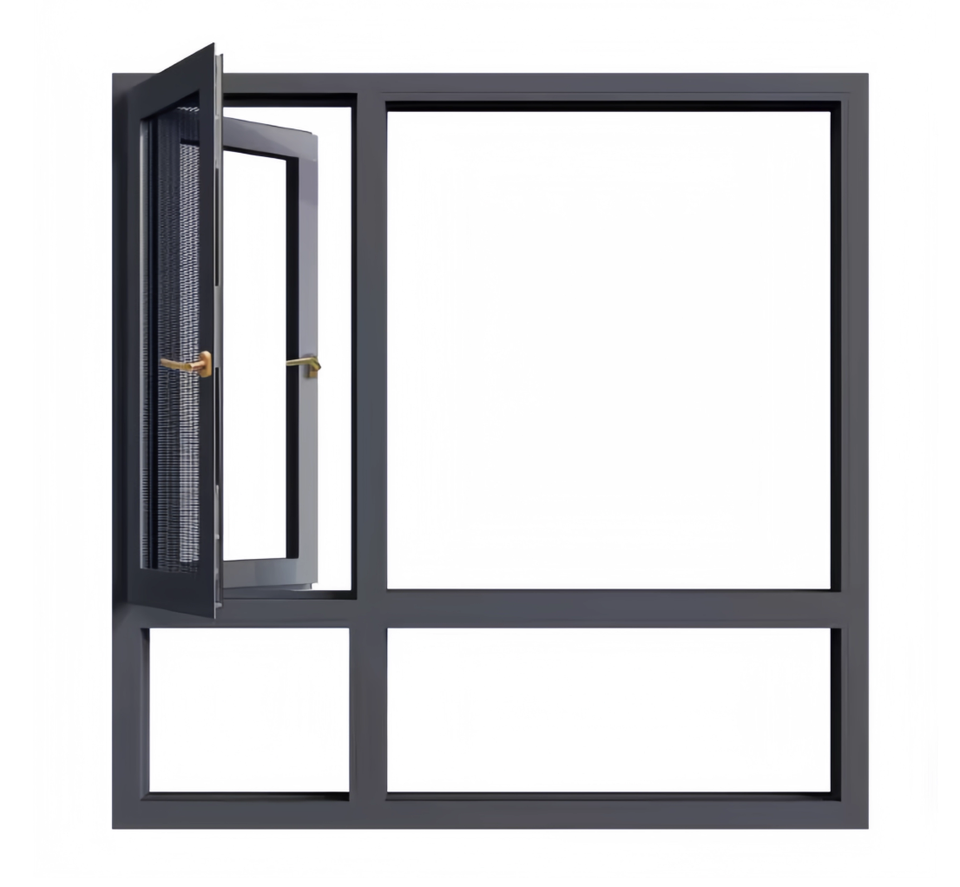
Casement Window Profiles – Multi-Chamber Design for Insulation
Casement windows remain the most popular choice for residential and commercial projects worldwide, and our profiles are engineered to maximize their thermal and acoustic performance. We offer 3-chamber and 5-chamber profile designs. The additional chambers in a 5-chamber profile create more air cavities that slow heat transfer and improve sound insulation. Our profiles also integrate EPDM sealing strips in dedicated grooves, ensuring consistent compression and long-term weather resistance.
Drainage is another critical feature we address in the profile design. Our casement profiles include hidden drainage channels that prevent water pooling inside the frame while maintaining a clean exterior appearance. These profiles support double or triple glazing up to 32mm thickness, making them suitable for villa and residential projects in both temperate and cold climates. We can customize the glazing rebate depth to accommodate specific glass packages your project requires.
Sliding Door and Window Profiles – Smooth Operation and Weather Resistance
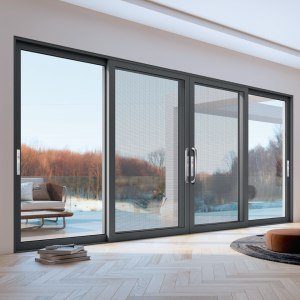
Sliding doors present unique engineering challenges because the moving panels must maintain weather seals while rolling smoothly over tracks. Our heavy-duty sliding profiles use a multi-track design with reinforced rollers rated for panels weighing up to 200kg per leaf. The interlocking mechanism between panels includes brush seals and EPDM compression seals to block air and water infiltration.
For large-span openings common in luxury villas and commercial storefronts, we offer profiles with reinforced stiles and meeting stiles that prevent sagging over time. The track profiles are designed with a slight slope to encourage water runoff, and we can integrate thermal breaks into sliding door profiles for projects requiring energy efficiency. Can you match existing profiles from other brands? Yes, our OEM service includes reverse engineering. If you have an existing profile from another manufacturer, we can replicate its dimensions, hardware compatibility, and surface finish—often at a lower cost and with shorter lead times.
Tilt-and-Turn Window Profiles – European Standard Designs
Tilt-and-turn windows are increasingly specified in high-end residential projects for their versatile ventilation and easy cleaning. Our profiles are designed to accept multi-point locking systems with reinforced hinge zones that distribute the weight of the sash evenly. The hinge reinforcement is critical—without it, repeated tilting can cause the sash to sag over time.
We offer these profiles with Euro-groove hardware channels that are compatible with major European hardware brands, allowing you to source locking mechanisms locally or from your preferred supplier. Our tilt-and-turn profiles are fully customizable in size and color, and we support OEM/ODM service for global distributors who need European-style hardware compatibility but want manufacturing flexibility and cost advantages from China.
Curtain Wall and Facade Profiles – Structural Glazing Systems
For commercial and high-end residential facade projects, we manufacture curtain wall profiles in both stick system and unitized system configurations. Stick system profiles are shipped as individual components and assembled on-site, offering flexibility for complex building geometries. Unitized system profiles are pre-assembled in our factory into panels that are lifted into place, reducing on-site labor and installation time.
Our curtain wall profiles support hidden frame (structural glazing) designs where the glass is bonded to the aluminum frame with silicone sealant, creating a seamless exterior appearance. We provide detailed shop drawings for every facade project, and our engineering team can assist with wind load calculations and thermal performance modeling. Do you provide installation instructions or construction drawings? Absolutely—global distributors and project partners receive customized construction drawings and formal quotations within 24 hours of submitting their inquiry.
Surface Treatment Options for Aluminum Profiles – Aesthetics and Durability
Powder Coating – Color Range and Coating Thickness
Powder coating is the most widely used surface treatment for architectural aluminum profiles because of its durability, color consistency, and environmental benefits (zero VOC emissions). Our spraying workshop applies powder coating in a controlled environment with thickness targets of 60–80 microns for standard applications and up to 120 microns for high-abrasion or coastal environments.
We offer the full RAL color range, including metallic and textured finishes. For projects requiring specific color matching—such as coordinating with existing building elements—we can create custom colors using spectrophotometer analysis. Our powder coating line is certified to AAMA 2603 (standard performance) and AAMA 2604 (high performance) standards, ensuring UV resistance and color retention over years of outdoor exposure. What is the minimum order quantity for custom aluminum profiles? For custom colors, we typically require a minimum quantity to justify the color changeover, but our MOQ is flexible and we work with partners to find practical solutions.
Anodizing – Natural Metallic Finish for Architectural Projects
Anodizing creates a durable, corrosion-resistant surface by converting the aluminum surface into a protective oxide layer. Unlike powder coating, anodizing is integral to the aluminum—it won’t peel or chip. We offer silver, bronze, champagne, and black anodized finishes in both matte and bright appearances.
The anodizing process in our facility includes degreasing, etching, desmutting, anodizing (typically 15–25 microns thickness), and sealing. We conduct salt spray testing in-house to verify corrosion resistance, with standard anodized profiles achieving 200+ hours of salt spray exposure without visible pitting. This makes anodized profiles particularly suitable for coastal construction projects where salt air accelerates corrosion.
Wood Grain Transfer – Matching Aluminum with Solid Wood Aesthetics
One of our unique capabilities as a manufacturer of both solid wood doors and aluminum windows is wood grain transfer on aluminum profiles. This process uses heat and vacuum to transfer a wood grain pattern from a film onto the powder-coated surface, creating a realistic wood appearance that is durable and UV-resistant.
This is particularly valuable for projects where solid wood entry doors and timber door frames are paired with aluminum windows. We can coordinate the wood grain pattern—oak, walnut, mahogany, or custom designs—across both the wood doors and aluminum window profiles, ensuring visual consistency throughout the building envelope. Our design team can provide samples to verify color and grain match before production begins.
Quality Control and Testing – How We Ensure Profile Reliability
Incoming Material Inspection – Aluminum Billet Certification
Quality begins before any aluminum enters our workshop. Every batch of raw aluminum billets is accompanied by a mill test certificate showing chemical composition and mechanical properties. Our QC team performs independent verification using a spectrometer to confirm the alloy grade (6063 or 6060) and checks for impurities that could affect extrusion quality or surface finish.
We also measure billet hardness using a Brinell hardness tester and inspect for surface defects such as cracks, porosity, or segregation. Batches that fail any parameter are rejected and returned to the supplier. This incoming inspection step has reduced our extrusion rejection rate to below 0.5%, which directly translates to fewer delays and lower costs for our customers.
In-Process Quality Checks – Dimensional Accuracy and Surface Quality
During extrusion and subsequent machining, our QC team performs random sampling at defined intervals—typically every 50 pieces for high-volume orders and every 10 pieces for complex profiles. We measure critical dimensions including wall thickness, overall width and height, straightness (within 0.5mm per meter), and twist (within 1 degree per meter).
Surface quality is checked under controlled lighting for scratches, die lines, oxidation spots, or contamination. For anodized and powder-coated profiles, we use color spectrophotometers and gloss meters to verify consistency against approved standards. Every measurement is recorded in a batch-specific inspection report that we can provide to clients for their quality documentation.
Final Product Testing – Assembly Simulation and Performance Verification
Before profiles are packaged for shipment, we conduct assembly simulations on sample units from each production batch. This involves cutting, machining, and assembling a complete door or window frame to verify that all components fit correctly, hardware operates smoothly, and weather seals compress properly.
For projects requiring performance certification, we can arrange third-party testing for water tightness, air permeability, and wind load resistance according to standards such as GB/T 7106, ASTM E283, or EN 12207. We provide test certificates and quality documentation with every international shipment, supporting your project compliance requirements with local building codes.
OEM and ODM Customization – Tailoring Aluminum Profiles to Your Project Needs
Custom Profile Design – From Your Drawings to Production
Our independent design team has extensive experience working with client CAD files. Whether you need a simple modification to an existing profile—such as adding a drainage slot or changing a gasket groove dimension—or a completely new profile design, we can develop it from concept to production.
The process typically starts with you sharing your profile cross-section drawing (DXF or DWG format). Our engineers review it for extrudability, tooling complexity, and structural adequacy. We may suggest modifications to improve manufacturability or reduce cost without compromising performance. Once the design is finalized, we create the extrusion die (tooling), produce sample profiles, and ship them for your approval. Can you match existing profiles from other brands? Yes, we routinely reverse-engineer competitor profiles. We measure the cross-section using an optical comparator, identify the alloy and temper, and reproduce the profile with identical dimensions and hardware compatibility.
Custom Size, Color, and Hardware Integration
Beyond profile cross-sections, we offer full customization of length, color, and hardware provisions. Need non-standard lengths to reduce on-site cutting waste? We can cut profiles to your exact specifications, including mitre cuts, drain holes, and hardware slots pre-machined in our factory.
For color, we can match any RAL or custom color using our powder coating or anodizing lines. We also support private label service—your brand name, your packaging, your specification sheet. The profiles we ship are indistinguishable from those produced by your current supplier, except they cost less and arrive faster.
Lead Time and Logistics for Custom Orders
Typical lead times for custom profile orders are as follows:
| Stage | Standard Profiles | New Tooling Required |
| Tooling (die creation) | Not required | 7–15 days |
|---|---|---|
| Sample production | 5–7 days | 5–7 days |
| Sample approval & revision | 3–5 days | 3–5 days |
| Mass production | 15–30 days | 15–30 days |
| Sea freight (Asia to US West Coast) | 18–25 days | 18–25 days |
We maintain North America overseas warehouses that stock popular profile designs and standard colors. This allows us to offer faster delivery for US and Canadian clients—often within 2–3 weeks from order confirmation. All shipments are covered by our full shipping damage after-sales guarantee. If profiles arrive damaged due to inadequate packaging or handling, we replace them at no cost to you.
Why Global Contractors and Developers Choose Jusen for Aluminum Profiles
20 Years of Combined Expertise – Solid Wood and Aluminum Integration
Our 20 years of experience spans both solid wood entry doors and aluminum window systems. This dual expertise gives us a perspective that single-material manufacturers lack. We understand how timber door frames interact with aluminum window frames at transition points, how moisture expansion in wood affects adjacent aluminum profiles, and how to coordinate finishes across different materials.
For projects that include both solid wood doors and aluminum windows—common in luxury villas, hotels, and historic renovations—we can provide coordinated solutions that ensure visual harmony and structural compatibility. Our design team can recommend transition profiles, flashing details, and sealant types that bridge the two materials effectively.
One-Stop Service – From Profile to Finished Door and Window Assembly
We supply not just aluminum profiles but complete doors and windows, including hardware, glazing, and accessories. This one-stop approach simplifies your supply chain—one purchase order, one quality standard, one shipping point. For distributors and dealers, we can ship profiles in bundles for local assembly, or we can fully assemble and glaze the units in our factory for direct installation.
Our 24-hour response policy means that global distributors and project partners receive customized construction drawings and formal quotations within one business day of submitting their inquiry. This speed is critical when you are bidding on projects with tight deadlines.
Flexible Partnership Models – OEM, ODM, Private Label, Bulk Supply
We structure our partnerships to match your business model. OEM partners provide their own designs and specifications, and we manufacture to their exact requirements. ODM partners collaborate with our design team to develop new products. Private label partners sell our products under their own brand. Bulk supply partners order standard profiles in volume for distribution.
There are no minimum order barriers for new partners. We start with trial orders to validate quality and communication, then scale as trust grows. We warmly welcome global distributors, contractors, interior designers, and villa real estate developers to discuss their project requirements.
Decision Guide: How to Choose the Right Aluminum Alloy Profile Supplier
Choose a full-service manufacturer like Jusen if:
- You need custom profile designs or modifications to existing designs
- Your project requires coordinated finishes across wood doors and aluminum windows
- You want one supplier for profiles, hardware, and assembly
- You value short lead times and flexible MOQ
- You need OEM/ODM or private label capabilities
Choose a stock profile supplier if:
- You only need standard profiles in standard colors
- Your order quantities are very large and price is your only criterion
- You have in-house fabrication capability and don’t need design support
For most B2B buyers—contractors managing multiple projects, dealers building a product line, or developers seeking consistent quality across phases—a manufacturer with design flexibility, quality control, and responsive service delivers better long-term value than a commodity supplier.
References
- GB/T 8478-2020 “Aluminum alloy windows and doors” – Chinese National Standard. https://www.chinesestandard.net/PDF.aspx/GBT8478-2020
- AAMA 2603-2022 “Voluntary Specification, Performance Requirements and Test Procedures for Pigmented Organic Coatings on Aluminum Extrusions and Panels” – American Architectural Manufacturers Association. https://aamanet.org
- AAMA 2604-2022 “Voluntary Specification, Performance Requirements and Test Procedures for High Performance Organic Coatings on Aluminum Extrusions and Panels” – American Architectural Manufacturers Association. https://aamanet.org
- EN 12207:2016 “Windows and doors – Air permeability – Classification” – European Committee for Standardization. https://www.cencenelec.eu
- ASTM E283-04(2019) “Standard Test Method for Determining Rate of Air Leakage Through Exterior Windows, Curtain Walls, and Doors Under Specified Pressure Differences Across the Specimen” – ASTM International. https://www.astm.org
- Aluminum Extruders Council – “Alloy and Temper Designation Systems for Aluminum”. https://www.aec.org
- Jusen Doors & Windows Manufacturing Co., Ltd. – Official Website. https://doorwoodendoors.com
Why Source from Jusen Doors?
20+ Years
Manufacturing experience in Foshan, China’s door industry hub
ISO 9001 & CE
Internationally certified quality management system
150,000+ Sets/Year
Annual production capacity with 5 automated lines
Ready to Source Quality Doors?
Send us your specifications for a free quotation and product catalog. Samples available within 15-20 days.
About the Author: Jusen Doors is a B2B door manufacturer with 20+ years of experience exporting to 50+ countries. Our factory in Foshan, Guangdong, produces 150,000+ door sets annually with ISO 9001:2015, CE, and UL certifications.
Contact: info@doorwoodendoors.com | Request Quote