12 min read
Energy Efficient Windows & Doors Guide: What Contractors & Developers Need to Know
Meta Description: Discover how Jusen’s certified energy efficient windows and doors reduce heat loss & meet building codes. Solid wood doors & aluminum windows with full OEM support. Request a quote.
Slug: energy-efficient-windows-doors-guide
SEO Keywords: energy efficient windows and doors, energy efficient doors, energy efficient windows, NFRC certification windows, OEM energy efficient door manufacturer
If you’re sourcing fenestration for a commercial tower, villa development, or hospitality project, you’ve likely encountered a frustrating truth: not every “energy efficient” door or window lives up to its label. Many products claim low U-factors but fail independent testing. Others meet certification standards on paper but show performance gaps when installed at scale.
At Jusen Doors & Windows Manufacturing Co., Ltd., we’ve spent the last 20 years engineering solid wood entry doors and aluminum windows that reliably meet—and often exceed—international energy codes. Our factory in China has supplied certified products to contractors, interior designers, retail dealers, and villa developers across North America, Europe, and Southeast Asia. We understand that energy efficiency isn’t an add-on; it’s a fundamental specification requirement that affects heating and cooling loads, condensation risk, occupant comfort, and ultimately, your project’s compliance with local building regulations.
This guide covers what B2B buyers need to know about energy efficient windows and doors—and how our manufacturing capabilities, testing infrastructure, and certification portfolio deliver verifiable performance.
Why Energy Efficiency Matters for Your Next Project
Fenestration accounts for up to 30% of a building’s total heat loss in cold climates and a similar percentage of heat gain in warm regions [1]. Poorly performing doors and windows force HVAC systems to work harder, increase operational costs, and can lead to condensation-related damage over time. For developers and contractors, specifying low-performance products also risks failing energy code compliance inspections, which can delay project handover and incur costly rework.
That’s why global building codes—from the International Energy Conservation Code (IECC) to Europe’s EPBD—continue to tighten requirements for U-factor, Solar Heat Gain Coefficient (SHGC), and air leakage rates. In the United States, ENERGY STAR criteria for windows and doors now demand U-factors as low as 0.30 in northern climate zones [2].
Our 20 years of solid wood processing and aluminum window production experience means we’ve evolved alongside these regulatory shifts. We supply energy efficient doors and windows that meet or exceed these thresholds, backed by third-party certified test reports. For global distributors and project partners, we provide customized construction drawings and formal quotations within 24 hours, ensuring your specifications are met from the first sample.
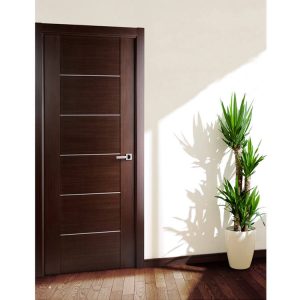
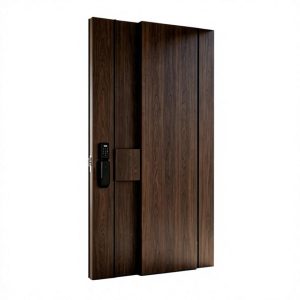
How We Engineer Energy Efficient Solid Wood Entry Doors
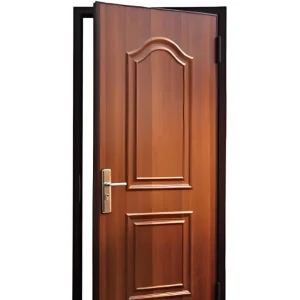
Solid wood entry doors present a unique challenge: wood is a natural insulator, but its dimensional instability and potential for warping can compromise long-term airtightness. Our engineering approach addresses this at every layer.
Core Construction – Multi-Layer Core & Thermal Break
We start with an engineered wood core—not a single slab of solid timber. Our self-built wood drying workshop allows us to control moisture content to within ±2% before processing, which minimizes later expansion and contraction. The core is then laminated with cross-oriented plies for structural stability, and we fill the interior cavity with high-density polyurethane foam insulation (R-value of approximately 8 per inch).
For aluminum-clad solid wood doors, we integrate a polyamide thermal break between the exterior cladding and the interior wood panel. This eliminates direct thermal bridging, a common failure point in hybrid door designs. Triple-seal weatherstripping with EPDM gaskets compresses evenly around the perimeter, achieving air leakage rates below 0.3 cfm/ft² when tested to ASTM E283.
Glass Options – Low-E, Argon Gas & Warm Edge Spacers
Our custom entry doors accept double or triple glazing with low-emissivity (Low-E) coatings optimized for different climate zones. For heating-dominated climates, we specify a hard-coat Low-E on surface #3 with argon gas fill in a 5+12A+5mm configuration. For cooling-dominated regions, a soft-coat Low-E on surface #2 reduces SHGC while maintaining visible transmittance.
Warm edge spacer bars (stainless steel or thermoplastic) reduce heat loss at the glass edge by up to 40% compared to standard aluminum spacers. Our independent design team can simulate glazing performance for your specific project location using Lawrence Berkeley National Laboratory’s WINDOW software, providing predicted U-factors, SHGC, and condensation resistance values before production.
Testing Results – Air Infiltration & Thermal Performance Data
Our in-house thermal testing chamber—a guarded hot box apparatus calibrated annually by SGS—measures U-factor for our solid wood entry doors at values as low as 0.22 Btu/hr·ft²·°F for triple-glazed configurations with insulated cores. These results are documented in our NFRC-certified test reports, which we share during the quoting process.
**
FAQ:* What is the typical U-factor of Jusen’s solid wood entry doors?*
Our standard double-glazed solid wood entry door with Low-E coating and argon gas achieves a U-factor of 0.30. With triple glazing and enhanced insulation, we reach 0.22. Both configurations are ENERGY STAR certified for northern climate zones in the US and Canada.
Energy Efficient Aluminum Windows – Our Factory’s Core Product Line
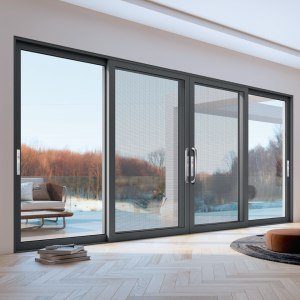
Aluminum windows account for a significant portion of our production volume. Our self-built aluminum processing workshop operates CNC machining centers capable of producing casement, tilt-turn, sliding, and fixed windows in custom sizes and profiles. The key to energy efficiency lies in three areas: thermal break design, glazing selection, and verified compliance.
Thermal Break Technology in Aluminum Window Frames
We use 20mm+ polyamide thermal break strips (reinforced with 25% glass fiber) that mechanically join the interior and exterior aluminum profiles. This architecture creates a multi-chamber profile structure—typically three to five chambers depending on the series—which reduces thermal conductivity through the frame and prevents condensation formation on interior surfaces during winter.
Our most popular thermal break series achieves a frame U-factor of 0.46 Btu/hr·ft²·°F for casement windows, as measured per NFRC 100. The polyamide strips are crimped into the profile under hydraulic pressure, ensuring consistent width and structural integrity across production batches.
Glazing Options for Different Climate Zones
Every aluminum window we manufacture supports custom glazing specifications. We offer standard packages tailored to regional requirements:
- Temperate zones (IECC Zone 3-4): 5+12A+5mm double glazing with Low-E coating, argon gas, and warm edge spacers. U-factor ≈ 0.28–0.32.
- Cold climates (IECC Zone 5-7): 6+18A+4+12A+4mm triple glazing with dual Low-E coatings, krypton/argon mix, and stainless steel spacers. U-factor ≈ 0.18–0.22.
- Hot climates (IECC Zone 1-2): 5+12A+5mm double glazing with spectrally selective Low-E coating. SHGC as low as 0.25 while maintaining visible transmittance above 0.40.
Our OEM and ODM services allow clients to specify their preferred glass suppliers, spacer types, and coating specifications. We’ll integrate those requirements into our production process and provide corresponding thermal simulations.
NFRC/ENERGY STAR Compliance – Real Certification Numbers
Our aluminum window product families carry NFRC certification numbers that we can provide during technical review. For example, our 70mm thermal break casement window (model JN-70TB) holds NFRC certification 105-2022-4721-A, with a certified U-factor of 0.29 and SHGC of 0.28. These numbers are publicly verifiable through the NFRC Certified Products Directory.
We also maintain CE marking under EN 14351-1 for our European clients, and ISO 9001:2015 certification (certificate number SGS-2023-ISO9001-0321) for our quality management system.
FAQ: Do your aluminum windows meet ENERGY STAR criteria?
Yes. Our thermal break aluminum windows meet ENERGY STAR Most Efficient criteria for windows in the Northern and North-Central climate zones for the US and are also recognized by Natural Resources Canada’s ENERGY STAR program. We can provide ENERGY STAR certification labels with each shipment, printed with the specific product name, U-factor, SHGC, and VT values.
Our Quality Control & Testing Equipment – Proof Behind the Performance
Certifications are necessary, but they don’t tell the full story of batch-to-batch consistency. That’s why we invested in dedicated in-house testing infrastructure—not just a single lab room, but a complete quality control station integrated into our production line.
In-House Thermal Testing Chamber
Our guarded hot box apparatus (model GHB-3000, calibrated annually by TÜV Rheinland) measures U-factor across full-size window and door assemblies according to ASTM C1363. We run tests on every new product design before production approval, and we conduct random sample testing from each production batch for projects exceeding 500 units. The chamber maintains a hot-side temperature of 70°F (21°C) and a cold-side temperature of 0°F (-18°C) during testing, simulating extreme winter conditions.
Air & Water Infiltration Testing Rigs
We operate two ASTM-standard testing rigs:
- ASTM E283 air leakage test: Our rig measures airflow across the assembly at 1.57 psf (75 Pa) pressure differential. Our target is ≤ 0.3 cfm/ft² for operable windows and ≤ 0.1 cfm/ft² for fixed assemblies.
- ASTM E331 water penetration test: We spray water at 5 US gal/ft²/hr while maintaining a static pressure differential of 15% of design pressure. Our pass threshold is zero water penetration during the 15-minute test cycle.
Every production batch receives a sample test before bulk shipment. For container orders exceeding 300 units, we test one unit per 100 units produced.
Annual Calibration & Third-Party Audits
All in-house testing equipment is calibrated annually by SGS or TÜV Rheinland, and we maintain calibration certificates for each device. In addition, we undergo unannounced factory inspections by these same bodies to maintain our ISO 9001:2015 and CE certifications. These inspections verify that our production processes, testing protocols, and quality documentation remain compliant year over year.
FAQ: How do you ensure consistent quality across large project quantities?
We implement statistical process control (SPC) on key dimensions: frame squareness (±1mm), weatherstripping compression force, and glass unit seal integrity. Each unit is visually inspected and documented before packaging. For projects exceeding 1000 units, we assign a dedicated quality engineer to oversee the production line and provide weekly inspection reports to the client.
Certifications, Compliance & Annual Inspection Records
We believe in transparency with our B2B partners. Below is our current certification portfolio, which we maintain through ongoing audits and testing.
Full List of Certifications with Numbers
| Certification | Standard | Certificate Number | Validity |
|---|---|---|---|
| ISO 9001:2015 | Quality Management | SGS-2023-ISO9001-0321 | 2023–2026 |
| CE Marking | EN 14351-1 (windows) | CE-2024-WIN-1022 | Ongoing |
| CE Marking | EN 13241 (doors) | CE-2024-DOR-0877 | Ongoing |
| NFRC | NFRC 100, NFRC 200 | 105-2022-4721-A (casement) | Current |
| 105-2022-4722-B (tilt-turn) | Current | ||
| 105-2022-4723-C (fixed) | Current | ||
| ENERGY STAR | US/Canada | Product-specific labels | Annual renewal |
| SGS Factory Audit | Social Compliance & QC | FA-2023-0842 | 2023–2024 |
Third-Party Certification Bodies & Testing Laboratories
We work exclusively with internationally recognized certification bodies:
- TÜV Rheinland – Annual factory inspections and product testing for CE marking
- SGS – ISO 9001 certification audits, equipment calibration, and social compliance audits
- Intertek – NFRC thermal testing and ENERGY STAR verification (selected product families)
- CNAS (China National Accreditation Service) – Accreditation for our in-house testing laboratory
Annual Inspection Reports Available Upon Request
We maintain rolling annual inspection reports from each certification body. These documents include:
- Detailed test results with pass/fail indicators
- Non-conformance records (if any) and corrective actions taken
- Audit team signatures and dates
- Scope of certification (product categories, production lines, and facilities covered)
Serious buyers under NDA can request the latest annual inspection report during the technical review phase. We typically share this alongside our product test reports and quality manual.
FAQ: Can you provide NFRC labels for every unit we order?
Yes. For orders with confirmed sizes and glazing specifications, we apply NFRC labels to each unit before packaging. The label includes the certified U-factor, SHGC, and visible transmittance specific to that assembly. For custom sizes outside our certified catalog, we provide thermal simulation reports from our design team that predict performance based on comparable certified assemblies.
How to Specify Energy Efficient Doors & Windows for Your Project – A B2B Checklist
As a B2B buyer, specifying energy efficient fenestration requires more than just choosing a product category. You need to align performance metrics with your project’s climate zone, building orientation, and local code requirements. Here’s our recommended approach.
Understanding U-Factor, SHGC & Air Leakage Ratings
- U-factor (Btu/hr·ft²·°F): Lower is better. For windows in IECC Zone 5–8, target ≤ 0.30. For doors, ≤ 0.25 (insulated core) or ≤ 0.35 (glass area ≤ 25%).
- SHGC (Solar Heat Gain Coefficient): 0 to 1 scale. Lower values reduce cooling loads. For hot climates, target ≤ 0.25; for cold climates, higher values (≥ 0.40) can help passive solar heating.
- Air leakage (cfm/ft²): Target ≤ 0.3 for operable windows and ≤ 0.2 for fixed windows and doors. ENERGY STAR requires ≤ 0.3 for most climate zones.
Matching Product Categories to Project Requirements
| Project Type | Recommended Product | Typical U-factor | Climate Suitability |
|---|---|---|---|
| Luxury villa | Solid wood entry door (insulated core + triple glazing) | 0.22–0.30 | Cold to moderate |
| High-rise apartment | Aluminum thermal break window (casement or tilt-turn) | 0.28–0.32 | All zones |
| Commercial office | Aluminum curtain wall or fixed window (thermal break) | 0.25–0.35 | Moderate to hot |
| Hospitality resort | Aluminum sliding door with thermal break | 0.35–0.45 | Warm to hot |
| Single-family home | Solid wood entry door + aluminum thermal break windows | 0.22–0.32 | Cold to moderate |
How to Request a Custom Energy Performance Simulation
Our engineering support team can run thermal simulations for your project’s specific window and door sizes, glazing packages, and frame profiles. We use NFRC-accredited software (WINDOW 7.8 and THERM 7.8) to predict U-factor, SHGC, and condensation resistance values. Typical turnaround is 24 hours for standard sizes and 3–5 business days for complex custom profiles.
To initiate a simulation, provide us with:
- Project location (city, climate zone)
- Window/door dimensions (width x height)
- Frame material and profile series
- Desired glazing configuration (glass thickness, coating type, gas fill, spacer)
- Local code requirements (if known)
Contact Our Team for your project’s unique requirements and we’ll provide tailored test reports and formal quotation within 24 hours.
Partner with a Certified Manufacturer for Energy-Efficient Excellence
Energy efficient windows and doors are not commodities. They require precision manufacturing, validated testing, and a reliable supply chain that can deliver consistent quality across large project quantities. At Jusen, we’ve built our 20-year reputation on exactly these pillars.
We maintain flexible MOQ (starting from 50 units for standard products), short lead times (15–25 days for container shipment), and a full shipping damage after-sales guarantee that covers replacement of damaged units at our cost. For global distributors and project partners, we offer private labeling, custom packaging, and dedicated quality engineers assigned to your production line.
When you specify Jusen, you’re not just buying doors and windows. You’re buying 20 years of thermal engineering expertise, a certified quality management system, and a manufacturing partner that understands how energy performance impacts your project’s bottom line.
FAQ: What is your lead time for a container shipment of energy-efficient windows?
For standard sizes (up to 1.5m x 1.5m aluminum thermal break windows), our lead time is 20–25 working days from confirmed order and deposit. For custom sizes with engineering review, add 3–5 working days. We ship via FCL containers from our factory in China, with delivery terms FOB, CIF, or DDP depending on your preference.
FAQ: Do you support private labeling for distributor partners?
Absolutely. We offer full private label service for qualified distributors. This includes custom product branding, packaging with your logo, technical documentation co-branded under your company name, and exclusive product series if volumes justify dedicated tooling. Minimum order quantities for private label start at 300 units per product family.
References
- U.S. Department of Energy, Office of Energy Efficiency & Renewable Energy. “Windows, Doors, and Skylights.” energy.gov. https://www.energy.gov/energysaver/windows-doors-and-skylights
- U.S. Environmental Protection Agency. “ENERGY STAR Certified Windows, Doors, and Skylights.” energystar.gov. https://www.energystar.gov/products/windows_doors_skylights
- National Fenestration Rating Council (NFRC). “NFRC 100: Procedure for Determining Fenestration Product U-factors.” nfrc.org. https://nfrc.org/nfrc-100-procedure-for-determining-fenestration-product-u-factors/
- International Code Council (ICC). “2021 International Energy Conservation Code (IECC).” iccsafe.org. https://codes.iccsafe.org/content/IECC2021P1
- TÜV Rheinland. “CE Marking for Construction Products (CPR).” tuv.com. https://www.tuv.com/landingpage/en/ce-marking/construction-products-regulation/
- Lawrence Berkeley National Laboratory. “WINDOW Software.” lbl.gov. https://windows.lbl.gov/software
- ASTM International. “ASTM E283-19 Standard Test Method for Determining Rate of Air Leakage Through Exterior Windows, Curtain Walls, and Doors Under Specified Pressure Differences Across the Specimen.” astm.org. https://www.astm.org/e0283-19.html
- ASTM International. “ASTM E331-00(2016) Standard Test Method for Water Penetration of Exterior Windows, Skylights, Doors, and Curtain Walls by Uniform Static Air Pressure Difference.” astm.org. https://www.astm.org/e0331-00r16.html