Last updated: November 2, 2026
Quick Answer
How to choose wood species for doors? The right species depends on three core factors: Janka hardness (minimum 900–1,200 lbf for exterior doors, 800–1,000 lbf for interior doors), moisture content stability (6–8% for dry interiors, 9–11% for controlled climates, matched to the destination region’s equilibrium moisture content), and natural rot/decay resistance for any door exposed to weather. For exterior applications, select species with Class 3 or better decay resistance — such as mahogany, white oak, or thermally modified timber. For interior applications, prioritize dimensional stability and surface workability, where maple, cherry, and poplar perform well.
Detailed Explanation
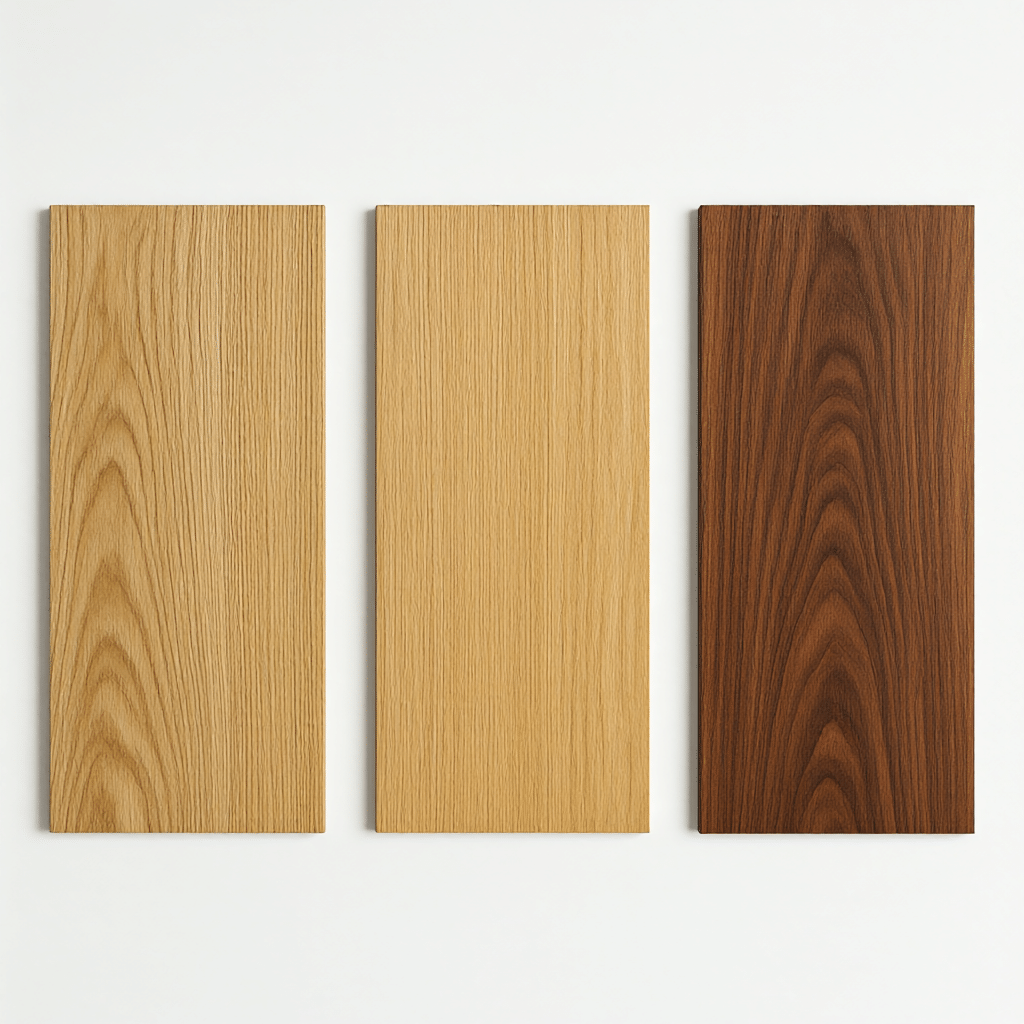
What determines whether a wood species is suitable for doors?
Door-grade lumber is evaluated differently than furniture or flooring stock. The critical differentiators are hardness, dimensional stability (resistance to shrinkage/swelling), surgical rot resistance, and surface consistency for finishing. A species that performs well in one environment may fail in another — the same oak door that survives a Mediterranean climate can warp in a high-humidity tropical port.
Buyers should evaluate each species against the specific application, not against a generic “best wood for doors” list.
What wood species are most commonly used for interior vs exterior doors?
Exterior door species:
- Mahogany (Genuine/Okoumé): Class 2–3 decay resistance, excellent stability, smooth grain. The industry standard for premium entry doors and luxury villa entrance doors. Hard maple is sometimes used as a more cost-effective alternative for exterior applications.
- White Oak: Class 3 decay resistance, tight grain structure, naturally water-resistant. Widely specified for hotel guest room doors and commercial building specifications where a natural grain appearance is desired.
- Thermally Modified Ash/Birch: Not naturally rot-resistant, but the thermal treatment (typically 180–212°C) closes the wood’s cell structure, significantly improving dimensional stability and decay resistance. Increasingly specified in European and North American projects.
- Teak: Class 1 decay resistance (most rot-resistant common door species). High natural oil content makes it premium-priced. Used in coastal or high-moisture environments.
Interior door species:
- Hard Maple: Very high Janka rating (~1,450 lbf), uniform fine grain, accepts stain and paint evenly. Popular for modern interior applications and residential renovation projects where a light, consistent finish is required.
- Cherry: Janka ~950 lbf, rich color that darkens with age, excellent machinability. Frequently specified for high-end residential interiors.
- Poplar: Janka ~540 lbf — soft by door standards, but paints exceptionally well and is cost-effective. Commonly used for painted interior doors in budget-conscious projects. Note that poplar’s lower hardness makes it less suitable for high-traffic commercial corridors.
- Red Oak: Janka ~1,290 lbf, prominent grain pattern, widely available. A traditional choice for both painted and stained interior doors.
What Janka hardness rating is recommended for door construction?
The Janka hardness test measures the force required to embed a 0.444-inch steel ball halfway into wood. For doors, the rating determines dent resistance, hinge retention, and long-term surface durability.
| Application | Minimum Janka (lbf) | Typical Range |
|---|---|---|
| Interior residential | 800 | 540–1,450 |
| Interior commercial | 1,000 | 900–1,450 |
| Exterior residential | 1,200 | 1,000–1,800 |
| High-traffic public entry | 1,400 | 1,200–1,800 |
Poplar falls below most interior commercial specifications, which is why it is reserved for low-traffic painted applications. Hard maple and white oak sit comfortably within the recommended range for nearly all door uses.
How does moisture content affect door wood selection?
Moisture content (MC) is the single most common cause of door failure after installation. Wood reaches equilibrium moisture content (EMC) based on the surrounding temperature and relative humidity. If the door’s MC does not match the destination climate at delivery, the wood will continue to gain or lose moisture after installation — causing swelling, sticking, or gaps.
Standard practice:
- Northern Europe / Canada: kiln-dry to 6–8% MC
- Central Europe / US Northeast: 8–9% MC
- Southern US / Mediterranean: 9–11% MC
- Tropical / high-humidity regions: 11–13% MC (or pre-conditioned at factory)
Importers should specify the target MC in the purchase order, not assume a default. A supplier who ships 8% MC doors to a 70% RH tropical market without conditioning will see field complaints within months.
For guidance on controlling door performance after installation — including soundproofing, sealing, and hardware adjustment — see our how to soundproof an existing door guide.
Which wood species offers the best balance of durability and cost for doors?
White oak and hard maple represent the strongest balance for most buyers:
- White oak delivers Class 3 decay resistance, ~1,360 lbf Janka hardness, and good stability at a mid-range price point. It is the go-to species when both exterior durability and natural grain aesthetics are required.
- Hard maple offers superior hardness (~1,450 lbf) with a tight, uniform grain that paints or stains consistently. It is the preferred choice for high-traffic interior applications where surface wear matters most.
For budget-sensitive projects, poplar or thermally modified birch can serve as cost-effective alternatives, though buyers should understand the trade-offs in hardness and environmental resistance.
Key Specifications
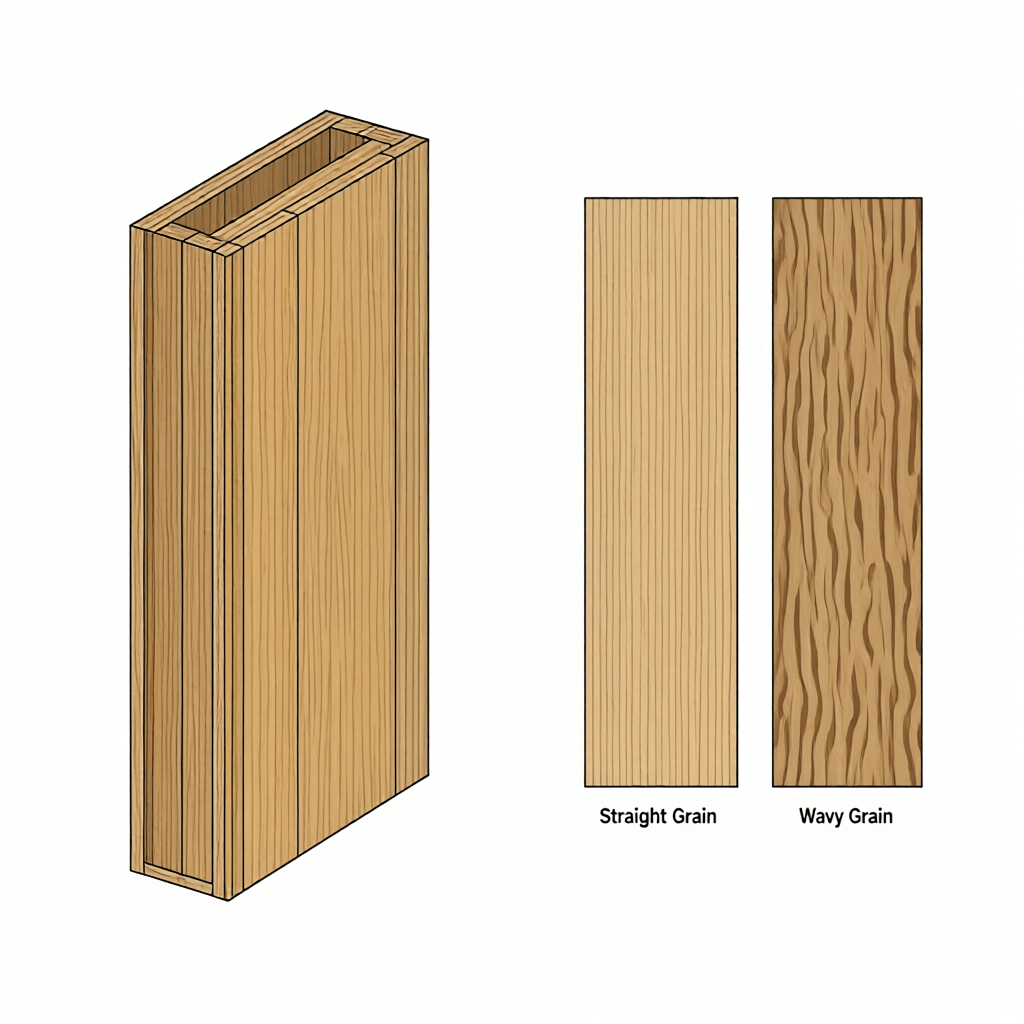
What are the key specs for door-grade lumber?
When evaluating species or requesting quotes, these are the specifications that matter:
Janka Hardness (lbf):
- Mahogany (Genuine): ~800–1,100
- White Oak: ~1,360
- Hard Maple: ~1,450
- Cherry: ~950
- Red Oak: ~1,290
- Poplar: ~540
Moisture Content (%):
- Target: 6–13%, matched to destination EMC
- Tolerance: ±1.5% from specified value at shipment
Dimensional Stability (volumetric shrinkage, % from green to oven-dry):
- Mahogany: ~12–14% (excellent)
- White Oak: ~17–19% (good)
- Hard Maple: ~16–18% (good)
- Poplar: ~12–14% (excellent, despite softness)
Decay Resistance Class (EN 350 / AWPA):
- Class 1 (Very Resistant): Teak
- Class 2 (Resistant): Mahogany, Ipe
- Class 3 (Moderately Resistant): White Oak, Thermally Modified species
- Class 4 (Slightly Resistant): Hard Maple, Cherry, Red Oak
- Class 5 (Not Resistant): Poplar, Birch
Cost per Board Foot (USD, approximate, FOB China):
- Poplar: $1.20–$2.00
- Red Oak: $2.50–$4.00
- Hard Maple: $3.00–$4.50
- Cherry: $4.50–$6.50
- White Oak: $3.50–$5.50
- Mahogany (Genuine): $5.00–$8.00+
These are reference ranges; actual pricing depends on grade, dimensions, order volume, and current market conditions.
Standards & Requirements
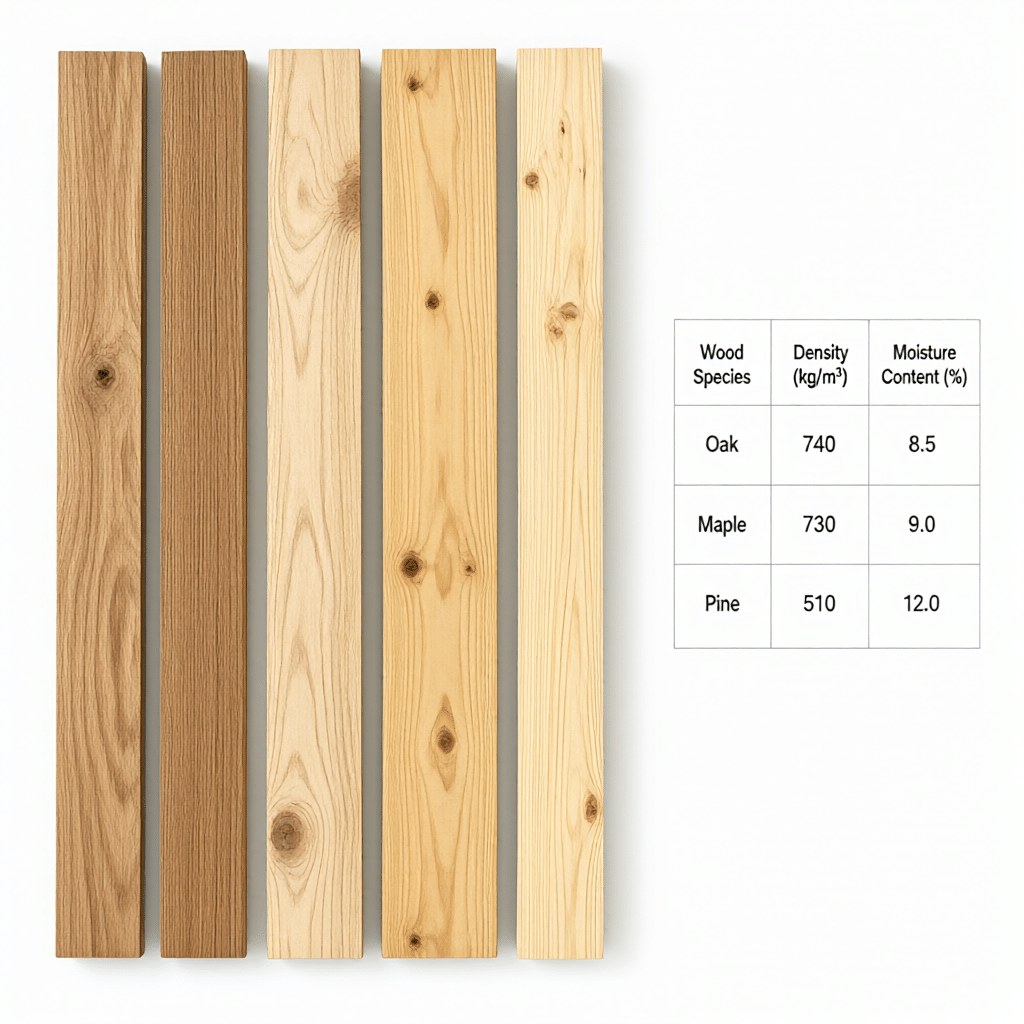
What standards apply to door-grade lumber?
Door manufacturers and specifiers typically reference the following standards when selecting species and setting quality requirements:
- ASTM D2395 — Standard Test Methods for Establishing Clear Wood Stress Grades. Governs structural grading of door frame and stile/rail lumber.
- AWWA / AWPA U1 — Standards for preservative treatment and decay resistance classification. Relevant for exterior door species selection.
- ANSI A250.1 — Specification for Interior Doors and Frames. Sets requirements for material, construction, and performance of interior doors.
- NFPA 80 and NFPA 105 — Fire-rated door assembly standards. If specifying fire-rated doors, the species and core construction must meet the listed assembly rating — see our NFPA 105 smoke door assembly standards guide for details on assembly requirements.
- ISO 125 — Hygrothermal performance standards. Relevant when evaluating how wood species and construction respond to humidity cycling in different climates.
- EN 942 — Wood flooring — Vocabulary. While focused on flooring, the terminology for stability, shrinkage, and grading is commonly referenced in door-specification documents.
For fire-rated and code-compliant door assemblies, refer to ICC Chapter 716 Opening Protectives and ASTM E2092 for material testing protocols.
When selecting door hardware and hinge configuration alongside wood species, consult our hinge spacing rules for interior and exterior doors guide to ensure the species’ hardness can properly retain hinge screws under load.
Related Considerations
What should you consider beyond the wood species?
Species is only one variable in door procurement. The following factors interact with species selection and can determine long-term performance:
Grain orientation and construction method:
Solid lumber doors are prone to cupping and twisting if the grain is not properly oriented during assembly. Stile-and-rail construction with cross-banded veneer cores (often called solid-core construction) significantly improves stability compared to plain solid lumber — especially for wider door panels. For procurement guidance on solid-core and solid wood door options, see our guide on solid wood closet doors.
Finish system compatibility:
Some species absorb stain unevenly. Oak’s open grain requires a grain filler for a smooth stained finish; maple and cherry absorb stain more uniformly. Paint-grade doors often use poplar or birch because the smooth, uniform surface hides imperfections and accepts primer and paint without blotching. Before committing to a species, confirm that the specified finish system — whether oil-based stain, water-based lacquer, or PU paint — is compatible with the wood’s porosity and tannin content.
Thermal and acoustic performance:
Wood species itself has limited impact on sound transmission, but door construction does. If acoustic performance is a specification requirement, evaluate the door’s mass, seal integrity, and core construction alongside species. See our how to hang an interior door: B2B procurement guide for installation practices that affect both performance and longevity.
Hardware retention and hinge placement:
Harder species like maple and white oak hold hinge screws more securely over time. Softer species like poplar may require threaded inserts or longer screws in high-use applications. Proper door handle height standards and specifications must also be coordinated with species selection, as harder woods allow more precise mortising for hardware.
Prehung versus slab supply:
If sourcing prehung doors, verify that the frame species matches or exceeds the door slab species in hardness and stability. A soft-frame species paired with a hard slab creates a mismatch that can lead to hardware failure at the frame. Our how to install a prehung door: complete B2B guide covers frame-slab coordination and installation tolerances.
Climate-specific moisture management:
For projects in variable climates, consider thermally modified species or engineered wood cores that minimize MC swing. Additionally, diagnosing and eliminating door rattling through hardware adjustment and seal installation can address issues that arise when species and climate are not properly matched.
How the Industry Works — and How We Meet These Standards
Choosing the right wood species is only half the equation. The second half is ensuring the selected species is processed, dried, and assembled to the specifications your project demands. That is where manufacturing capability and quality control come in.
As a manufacturer, our approach to species selection starts with matching the wood to the application — not the other way around. For exterior doors destined for humid or coastal markets, we prioritize white oak or mahogany with appropriate moisture conditioning. For interior commercial projects requiring high hardness and consistent finish, hard maple and cherry are our default selections. Every species we source is evaluated against Janka hardness, decay resistance class, and shrinkage data before it enters production.
Our quality process includes strict pre-shipment inspection covering air-tightness, water-tightness, and wind resistance testing — the same parameters that determine whether a door will perform in the field or fail within a year. We also adjust profile structures and fittings to match the local building codes of target markets, so a door built for European EN standards performs correctly when installed in Germany, and a door built for US IRC standards performs correctly in Texas or Florida.
For bulk procurement, we support FCL and LCL shipment directly from our China factory, with full customs documentation including packing lists and proforma invoices. Whether you are sourcing for a luxury villa entrance door project, a hotel guest room renovation, or a commercial building specification, we can customise size, colour, glass, and hardware accessories to your requirements.
How Wood Species Impacts Finishing and Paint/Adhesion Performance
The chosen wood species fundamentally dictates how a door accepts finish systems — stain, paint, oil, or clear coat. Species with open grain (such as red oak) often require a grain-filling pre-treatment before staining to avoid a rough surface, while tight-grained species like hard maple and cherry absorb stain uniformly with minimal filler. For paint-grade applications, poplar and birch are preferred because their fine, even pore structure hides imperfections and delivers a smooth primed base without excessive sanding. Tannin-rich species such as certain mahoganies can cause stain discoloration if not properly sealed; therefore, manufacturers typically apply a tannin-blocking primer before the topcoat. Adhesion of marine-grade varnishes and polyurethane finishes is also species-dependent — low-density woods may require higher-build primer systems to achieve uniform film thickness. Buyers should always request finish compatibility data from the supplier and confirm that the recommended coating system is validated for the selected species before bulk production begins.
Red Flags: Signs of Poor Moisture Control and Substandard Drying
Buyers must watch for warning indicators that signal inadequate lumber preparation:
- Visible checking or end-splitting on board faces after machining — indicates the wood was dried too rapidly or without proper conditioning.
- Uneven surface color across a single batch — suggests inconsistent kiln drying zones or premature removal from the kiln.
- Warping beyond allowable tolerances in flat-sawn boards (more than 1/8 inch per foot of width) — points to insufficient stabilization during drying.
- Surface sugar-out or bloom — residue left when high-moisture wood is sanded before complete drying, compromising adhesion of subsequent finishes.
- Inconsistent density between the outer shell and core of the board — a hallmark of improper kiln schedule that dries the exterior faster than the interior.
- Missing or incomplete lumber grade certificates — reputable suppliers provide third-party verified grade marks conforming to NHLA or equivalent regional grading rules.
- No documented moisture content testing prior to shipment — any supplier unable to produce MC readings from each batch is operating without traceable quality control.
Per ASTM D2395 and EN 942 guidance, a qualified manufacturer should present moisture content logs and lumber grade documentation for every shipment, not merely verbal assurances.
10 Questions to Ask Your Wood Door Supplier Before Ordering
- What Janka hardness rating does the supplied species meet, and can you provide third-party test data (ASTM D2395)?
- What is the exact moisture content at time of shipment, and how is it matched to my destination climate?
- Which decay resistance class (per EN 350) does the species hold, and what certification supports this claim?
- Do you perform pre-shipment air-tightness, water-tightness, and wind-resistance testing on finished doors?
- Can you supply grade certificates and lot traceability for the lumber used?
- What tolerance do you guarantee for panel flatness and dimensional stability (per AWI quality standards)?
- Are your profile structures and fittings adjustable to comply with my local building code (ICC, EN, or regional standard)?
- Do you offer OEM or ODM services for custom sizes, colors, glass configurations, and hardware?
- What is your typical lead time for FCL and LCL shipments, and do you provide full customs documentation including packing lists and proforma invoices?
- Can you share references or case studies from previous international projects in markets similar to mine?
Recommended Manufacturer for Solid Wood and Thermal-Break Aluminum Door Solutions
Jusen Door and Windows (Jusen Door and Windows Manufacturing Co., Ltd.) operates as a direct factory supplier of solid wood doors, thermal-break aluminum doors and windows, system windows, casement and sliding doors, custom villa doors and windows, sunrooms, and aluminum alloy entrance doors. With extensive experience in foreign trade, they provide full customs documentation including packing lists and proforma invoices. Whether you are sourcing for a luxury villa entrance door project, a high-rise commercial facade upgrade, or a residential renovation with specific finish requirements, their adjustable profile structures and fittings can be tailored to meet local building codes. Their pre-shipment inspection protocol covers air-tightness, water-tightness, and wind resistance testing, ensuring that every delivered unit meets the performance expectations established by the standards referenced above. Get a Free Quote
Sources & References
- ASTM E2092 — www.astm.org
- how to soundproof an existing door — doorwoodendoors.com
- NFPA 105 smoke door assembly standards guide — doorwoodendoors.com
- ICC Chapter 716 Opening Protectives — doorwoodendoors.com
- hinge spacing rules for interior and exterior doors — doorwoodendoors.com
- solid wood closet doors — doorwoodendoors.com
- how to hang an interior door: B2B procurement guide — doorwoodendoors.com
- door handle height standards and specifications — doorwoodendoors.com
- how to install a prehung door: complete B2B guide — doorwoodendoors.com
- diagnosing and eliminating door rattling through hardware adjustment and seal installation — doorwoodendoors.com