Last updated: September 19, 2026
Stained Fiberglass Doors: What They Are and Why They Matter
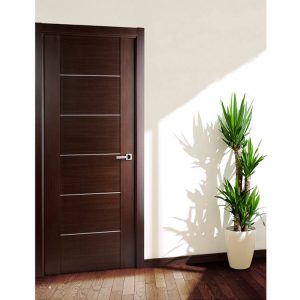
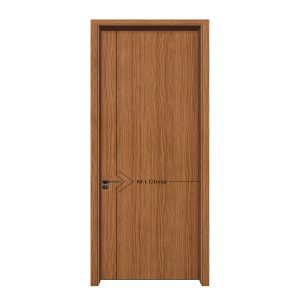
A stained fiberglass door is an exterior door slab or prehung unit built from a molded fiberglass composite, then finished with a factory-applied stain that follows a molded wood-grain texture. The result is a door that reads as wood from the curb but behaves like a composite: it will not rot, it does not need repainting on a short cycle, and it holds a stain tone far more consistently across a production run than natural timber.
For B2B buyers, the appeal is not aesthetic alone. Stained fiberglass doors solve a specific procurement problem — projects that specify a wood look for architectural or resale reasons, but where the climate, maintenance budget, or warranty exposure makes real wood a liability. Coastal humidity, freeze-thaw cycles, and high-UV regions all push specifiers toward composite slabs that can still deliver the grain-and-stain appearance the design intent calls for.
Construction matters more than most buyers assume. A quality slab starts with a molded skin — the wood grain is pressed into the mold, not printed on afterward, which is why the texture survives staining and why cheap slabs look flat under raking light. Behind the skin sits a core, typically polyurethane or a composite fill, that provides the thermal and structural body. The stain is applied over the skin in a controlled factory environment, which is the single biggest reason a prefinished fiberglass door outperforms a field-stained one in color consistency.
The category also matters because fiberglass competes directly with steel in the same exterior-door slot. Steel and fiberglass doors are often specified side by side on the same project, and the choice between them drives cost, weight, dent resistance, and how the stain finish will age. That comparison is worth understanding before you write a specification, and it is covered later in this guide.
Style and Construction Breakdown: Flush, Paneled, Craftsman, and Contemporary
Stain interacts differently with each door style, and the style you choose determines how much of the grain texture actually shows. That is the practical link buyers often miss: a heavily paneled door breaks the surface into smaller fields, while a flush door presents one continuous grain face where the stain has to do all the work.
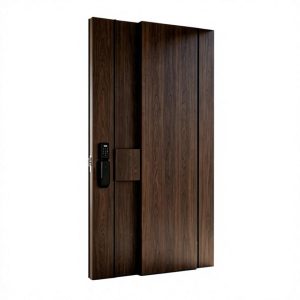
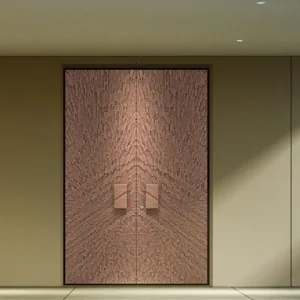
Flush fiberglass doors have a flat, uninterrupted face. There is no panel relief, so the entire slab is a single grain canvas. Flush doors suit modern and minimalist facades, and because there is no panel geometry, a flush fiberglass door depends entirely on grain quality and stain depth to avoid looking like a painted slab. If the mold texture is shallow, a flush door is the least forgiving style.
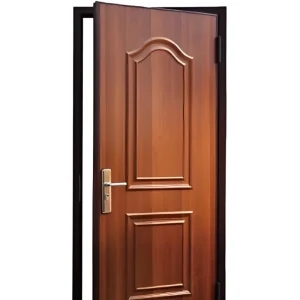
6-panel fiberglass doors are the traditional residential workhorse. The raised or recessed panels create shadow lines that give the stain natural places to pool and read darker, which makes the wood effect more convincing. Six-panel doors are common in replacement and tract residential work because they match the established look of a neighborhood.
Craftsman fiberglass doors typically use vertical plank detailing or a three-panel arrangement with a distinct top and bottom rail. The stain tends to be applied to emphasize the vertical grain, and Craftsman styles usually pair well with sidelites and a stained or painted frame.
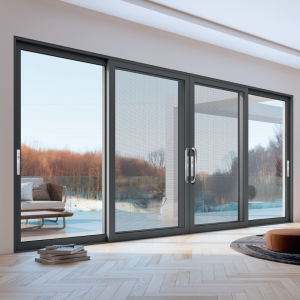
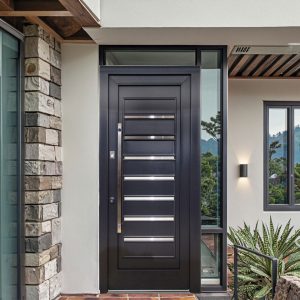
Contemporary fiberglass doors lean toward flush or subtly grooved faces, often with large glass areas. Here the stain is usually a deeper, more uniform tone rather than a high-contrast grain, because contemporary design favors flat color over visible wood movement.
The practical takeaway: paneled and Craftsman styles hide texture imperfections and stain inconsistency; flush and contemporary styles expose them. If you are evaluating samples, look at the flush option first — it is the hardest to get right.
Glass and Lite Options: Full Lite, Half Lite, 4-Lite, Sidelites, and No-Glass
Glass configuration changes the door’s function as much as its look. It drives daylight transmission, privacy, thermal performance, and price, and it interacts with the stain because glass and frame breaks interrupt the grain field.
An exterior full lite fiberglass door is almost entirely glass with a stained frame around the perimeter. It maximizes daylight and suits entries where privacy is handled by the glass type rather than the door body. A half lite fiberglass door splits the slab roughly between a glass upper and a solid stained lower, which is the most common configuration for residential entries because it balances light with a solid surface for hardware and kick protection.
A 4-lite fiberglass door arranges four glass panes, usually in a grid or vertical stack, giving a more traditional or craftsman character. A flush glazed fiberglass door integrates glass flush with the door face rather than in a raised frame, which reads as contemporary and reduces the visual interruption of the grain.
Fiberglass doors with sidelites add narrow glass panels on one or both sides of the door within the frame assembly. Sidelites are a frame-level decision, not a slab-level one, so they must be specified with the frame and the rough opening in mind. A fiberglass door with sidelites is a common choice for wider entries and for projects where the door alone does not provide enough glazing area.
Fiberglass doors without glass — solid slabs — are the right call for privacy, security, and maximum stained surface area. Buyers sourcing exterior fiberglass doors without glass are usually optimizing for thermal performance, privacy, or a specific architectural look where glass would break the facade.
The decision framework is straightforward: choose glass area based on privacy and daylight needs first, then choose the lite pattern based on the architectural style, then confirm the stain and frame treatment ties the glass and slab together. Specifying glass after the slab is a common sequencing error that leads to mismatched frame finishes.
Terms buyers should know
| Term | What it means | Why it matters when buying |
|---|---|---|
| Slab | The door panel alone, without frame or hardware | Determines whether you buy a complete unit or integrate with an existing frame |
| Prehung | The slab already mounted in its frame with hinges and prep | Reduces on-site labor and alignment risk; the frame finish must match the slab |
| Lite | A glass opening within the door or sidelite | Drives daylight, privacy, thermal value, and price |
| Trimmable | The amount the slab edges can be cut down without exposing the core | Wrong assumption here ruins a slab; confirm the allowance before ordering |
Slab vs. Prehung: Frames, Sizing, and Trimmability
The slab-versus-prehung decision is one of the first a buyer should settle, because it determines what you are actually purchasing and who owns the alignment risk.
A fiberglass door slab is the panel only. It is the right choice when the existing frame is sound and dimensionally correct, when a project uses a proprietary frame system, or when the buyer wants to control hardware and frame sourcing separately. The trade-off is that slab installation puts the fit, hinge mortising, and weatherseal alignment on the installer, and any error shows up as a draft or a misaligned stain line at the frame.
A prehung unit arrives as a complete assembly — slab, frame, hinges, and typically a prepped lockset. For most B2B projects, prehung reduces site labor and variability, and it protects the stain finish because the slab and frame were finished together as one batch. When buyers compare fiberglass doors and frames, the real question is whether the frame finish was produced in the same run as the slab. If not, subtle tone differences appear at the joint, which is exactly the kind of defect that generates a callback.
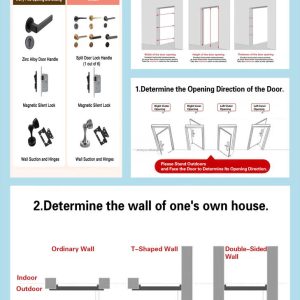
Sizing is where most sourcing errors happen. A 32×80 fiberglass door is a standard nominal size and a common starting point for residential entries, but nominal size is not the rough opening. The frame, the jamb thickness, and the shim space all sit between the nominal door size and the wall opening, so the rough opening must be specified separately. Buyers should confirm whether the supplier quotes nominal slab size or actual unit size, because the two differ.
Trimmable fiberglass doors allow the slab edges to be cut down within a stated allowance, which is useful when a frame is slightly out of square or when a project needs a non-standard width. The critical point is that trimmability is a manufacturer specification, not a universal property. Some slabs allow only minimal edge trimming before the structural edge or the core is exposed; others allow more. Never assume a trim allowance — confirm it in writing, because cutting beyond the allowance voids the door and cannot be reversed.
Custom sizing is the alternative to trimming. When a project has repeated non-standard openings, ordering custom-sized slabs or prehung units is usually more reliable than trimming standard stock on site, because the factory controls the edge finish and the stain wraps correctly.
Finish and Stain: Prefinished vs. Field-Applied
The finish is where stained fiberglass doors either deliver their value or fail it, and the prefinished-versus-field-applied choice is the single biggest driver of long-term appearance.
Prefinished fiberglass doors are stained and sealed in a controlled factory environment. The advantages are consistency, cure quality, and speed on site — the door is ready to hang without a finishing trade. Factory finishing also means the stain is applied to a clean, controlled surface with consistent humidity and temperature, which is why color matching across a batch is reliable. This is the option most B2B buyers should default to when the project specifies a repeatable color.
Field-applied stain gives more flexibility for matching an existing stain on a renovation, but it introduces variables: applicator skill, ambient conditions, and the risk of uneven absorption on the fiberglass skin. Fiberglass does not absorb stain the way wood does, so a field-applied stain relies on surface preparation and a compatible primer or base coat. Done poorly, it can look patchy or fail to adhere.
The reason buyers seek out a fiberglass door that looks like wood is the grain-plus-stain combination, and that combination depends on the mold texture, the stain system, and the topcoat. A stain alone does not create the wood effect — the texture does, and the stain amplifies it. When evaluating samples, check the grain under raking light and check the stain in a shadowed area, because that is where a weak finish shows.
Durability comes down to the topcoat and the substrate, not the stain color. A properly finished fiberglass slab resists fading, moisture, and the cracking that plagues field-finished wood. Buyers should ask what the finish system is, how it was cured, and what the supplier’s finish warranty covers — those three answers separate a real prefinished product from a stained one.
Comparison Table: Stained Fiberglass Door Types at a Glance
| Door type | Typical glass | Common size | Finish state | Best use |
|---|---|---|---|---|
| Flush slab | None or flush glazed | 32×80 and custom | Prefinished | Contemporary entries, privacy |
| 6-panel | None or half lite | 32×80 and custom | Prefinished or field | Residential replacement, traditional |
| Craftsman | 4-lite or half lite | 32×80 and custom | Prefinished | Residential entries with sidelites |
| Contemporary | Full lite or flush glazed | Custom | Prefinished | Modern facades, daylight priority |
| Prehung with sidelites | Half lite plus sidelites | Custom unit | Prefinished | Wide entries, project spec |
The table is a starting point, not a specification. The dimensions and glass options shown are common configurations, and final sizing must be confirmed against the rough opening and the frame system for each project.
Procurement Guide: How to Evaluate Suppliers and Specifications
Evaluating top rated fiberglass doors comes down to a short list of verifiable questions rather than brand reputation. The buyers who avoid problems are the ones who ask for evidence, not assurances.
Start with construction. Ask what the skin material is, how the grain is formed, and what the core is. A molded skin with a defined grain is the baseline for a door that will look right after staining. Then move to the finish: what stain system, what topcoat, and how is cure controlled. A supplier who cannot describe the finish system in specific terms is a risk on any project where color consistency matters.
Next, verify the size and trim data. Confirm whether the quoted size is nominal slab or actual unit, get the rough opening dimensions, and get the trim allowance in writing. This is where most sourcing disputes originate, and it is entirely preventable with a written specification.
Then compare steel and fiberglass honestly. Steel doors offer high structural strength and a familiar price point, but they dent and can rust at damaged edges, and a stained wood look is harder to achieve convincingly. Fiberglass resists dents, does not rust, and takes a grain texture that reads as wood. Steel tends to win on impact resistance and cost; fiberglass tends to win on appearance longevity, moisture resistance, and weight. The right answer depends on the exposure and the design intent, not on a universal ranking.
Finally, evaluate supplier capability against your project. For B2B sourcing, the questions that matter are whether the supplier can hold a finish standard across a batch, whether they can adjust profile structure and fittings to match local building codes in the target market, and whether they can supply the documentation a project requires.
This is where we fit into the picture. As a manufacturer, our approach is to quote from the factory rather than through a trading layer, which keeps pricing transparent and keeps the specification under our control. We offer full customization on size, color, glass, and hardware, and we can adjust the profile structure and fittings to match the building codes of the destination market — which matters when the same door line ships to different regions. Before shipment, we run air-tightness, water-tightness, and wind resistance checks, because those are the performance points that generate claims after installation. For export orders, we provide packing lists, proforma invoices, and full customs documents, and we ship both FCL and LCL direct from the factory.
If you are comparing stained fiberglass door options for an upcoming project, Talk to Our Team with your sizes, glass configuration, and finish target, and we can confirm what is feasible and what the lead time looks like.
Additional Considerations for B2B Sourcing
A few remaining decisions tend to come up late in the sourcing process, and handling them early saves rework.
For projects that need a specific look, the question of whether a fiberglass door that looks like wood is convincing enough usually comes down to the sample. Request a physical sample of the actual stain and texture, not a catalog image, and view it in the lighting conditions of the installation site. Catalog photography flatters grain and stain depth in ways that site lighting does not.
For prefinished fiberglass doors, confirm that the frame is finished in the same batch as the slab. If the frame is finished separately, the tone at the joint will differ slightly, and that is the defect most likely to be noticed on a final walkthrough.
For buyers comparing the broader market, the phrase best fiberglass doors usually maps to three things: a molded grain that survives staining, a finish system that holds color, and a supplier who can document the specification. Those three criteria are more useful than any ranking, because they are verifiable.
Finally, plan the glass and frame decision as one package. Whether the project needs a fiberglass door slab or a complete prehung unit, the frame finish, the lite configuration, and the rough opening all have to agree. Specifying them separately is the most common source of site-level mismatch.