Understanding Interior Doors for Mobile Homes
Interior doors for mobile homes are not identical to those used in site-built houses. Manufactured homes—whether HUD-code mobile homes or modular units—use different wall framing, typically thinner studs (2×3 rather than 2×4), and interior wall surfaces that may be paneling rather than drywall. These differences affect the rough opening dimensions, the jamb width required, and the hardware you can use.
The most important thing to understand before shopping for mobile home interior doors is that you are not limited to a narrow range of products. Standard prehung interior doors from major manufacturers often work, but you must verify the jamb width and rough opening against your existing framing. In many older mobile homes, wall thickness is around 3.5 inches, but it can vary from 2.75 to 4.5 inches depending on the year of manufacture and whether interior walls have been remodeled with added drywall.
Types of Interior Doors: Which One Fits Your Mobile Home?
Prehung doors come with the door slab already attached to the jamb frame. The entire unit is installed into the rough opening. For mobile homes, prehung units are generally the better choice because the jamb can be adjusted to match the thinner wall profile. Most prehung interior doors sold for mobile homes feature split jambs or adjustable jambs that accommodate wall thickness variations without custom milling.
Bypass doors are sliding doors that run on overhead tracks. They are common for closet openings in mobile homes, particularly in bedrooms and hallways where a swinging door would intrude on limited floor space. Bypass doors come in standard widths of 48, 60, and 72 inches for double-door openings.
Bi-fold doors are another space-saving option for closets and laundry areas. They fold in the middle and slide along a bottom pivot and top track. Standard bi-fold sizes for mobile home closets are typically 24, 30, 32, and 36 inches wide per opening.
For standard room-to-room passage doors, the most common types are:
- Hollow core doors — lightweight, inexpensive, and the default choice in most mobile homes. They consist of a cardboard honeycomb core sandwiched between two veneer skins. They are prone to denting and offer minimal sound insulation.
- Solid core doors — heavier with a particleboard or wood composite core. They provide better soundproofing, feel more substantial, and resist impacts better than hollow core units.
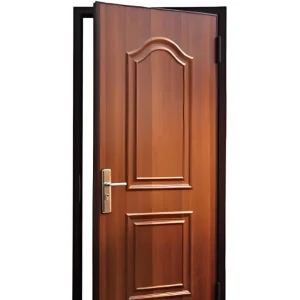
- Solid wood doors — the most expensive option. They offer the best durability and can be refinished multiple times, but require the jamb and hinges to support their additional weight.
For a mobile home interior door, the material choice depends on your priorities. If you are upgrading bedrooms for noise reduction, solid core doors make a noticeable difference. For bathrooms, consider moisture resistance—MDF-faced doors handle humidity better than hollow core units with thin veneers.
Sizing and Rough Openings: Getting the Measurements Right
Mobile home interior doors are not built to a separate national standard from regular residential doors, but the rough openings often differ due to wall construction. The door slab itself typically follows standard residential widths.
Standard interior door widths for mobile homes are 24, 28, 30, 32, and 36 inches. The most common passage door width is 30 inches, while 32 and 36 inches are used for larger openings or accessibility. Standard height is 80 inches (6 feet 8 inches), though some older mobile homes use 78-inch doors.
| Door Type | Common Widths | Standard Height |
|---|---|---|
| Passage (prehung) | 24″, 28″, 30″, 32″, 36″ | 80″ |
| Bi-fold closet | 24″, 30″, 32″, 36″ per panel set | 80″ |
| Bypass closet | 48″, 60″, 72″ (total opening) | 80″ |
The rough opening—the framed hole in the wall—should be approximately 2 inches wider and 2.5 inches taller than the door slab. For a 30-inch prehung door, expect a rough opening of about 32 inches wide and 82.5 inches high. However, mobile home wall framing is frequently not perfectly square or plumb, especially in older units that have settled.
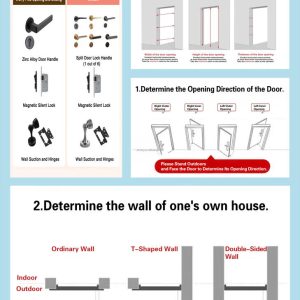
How to measure for a mobile home interior door replacement:
- Remove the existing interior trim (casing) on one side to expose the rough opening.
- Measure the width of the rough opening at the top, middle, and bottom. Record the narrowest measurement.
- Measure the height at the left, center, and right. Record the shortest.
- Measure the wall thickness at the door opening—this determines the jamb width you need.
- Check that the opening is square by measuring diagonally from corner to corner. A difference of more than 1/4 inch between the two diagonals means you will need to shim the door during installation.
A common mistake is ordering a prehung door based only on the slab size without verifying the jamb width. If your wall thickness is 3.5 inches but the prehung unit has a 4.5-inch jamb, you will need to rip down the jamb or use a jamb extension—neither is an ideal retrofit.
Prehung vs. Slab: What’s the Best Choice for Mobile Homes?
The prehung versus slab decision comes down to the condition of your existing frame and your skill level.
A prehung mobile home interior door includes the door, jamb, hinges, and pre-drilled latch bore. You install the entire unit into the rough opening. This is the recommended option for most mobile home replacements because:
- The jamb width is matched to your wall thickness (when ordered correctly).
- The door comes pre-hung and pre-bored, eliminating alignment issues.
- You can adjust the unit with shims to correct out-of-square openings.
A slab door is just the door itself, with no frame or hinges. You would use a slab only if you are reusing your existing jamb because it is in good condition and square. This is less common in mobile homes because the original jambs are often lightweight and not worth preserving.
| Factor | Prehung | Slab |
|---|---|---|
| Installation difficulty | Moderate—requires removing old frame | Lower—if existing frame is square |
| Cost | Higher (includes jamb and hardware) | Lower per door |
| Best for | Full replacement, damaged frames | Simple door swap, intact frames |
| Wall thickness adjustment | Built into jamb selection | Not applicable |
For mobile homes, prehung units are almost always the better investment because the wall framing tolerances are looser than in site-built construction. A prehung door with adjustable jambs compensates for the thin wall and any irregularities.
Cost Considerations and Budgeting
Mobile home interior door prices vary widely based on material, size, and whether you purchase a slab or prehung unit. Expect to pay within these general ranges for the door unit alone:
- Hollow core prehung: $50–$120 depending on width and finish
- Solid core prehung: $120–$250
- Solid wood prehung: $250–$600 or more
- Bi-fold and bypass doors: $80–$300 per opening
Installation labor, if you hire a contractor, typically adds $100–$250 per door. The higher end applies when the rough opening requires significant shimming, the old frame is difficult to remove, or the wall has sustained water damage that needs repair first.
Several factors push costs upward in mobile homes specifically:
- Non-standard wall thickness may require a custom jamb, adding $30–$80 per door.
- Older mobile homes often have rough openings that are not square, requiring more labor for shimming and leveling.
- Delivery fees for prehung doors are higher because the assembled units are bulky and cannot be stacked flat like slabs.
If you are replacing multiple doors, ask suppliers about volume pricing. Most manufacturers and distributors offer tiered discounts at 5, 10, or 20+ units, which matters for landlords, park managers, and renovation contractors.
How to Choose a Reliable Supplier or Installer
Finding a dependable source for mobile home interior doors requires more than a quick search for “interior doors mobile home near me.” You need to evaluate suppliers on several practical criteria.
What to check with a local supplier:
First, confirm they stock or can order prehung units with the correct jamb width for mobile home walls. Many big-box stores carry only standard 4.5-inch jambs for site-built homes. Ask specifically whether they can supply jambs sized for 3.5-inch or 4-inch walls. If they look confused, move on.
Second, verify their measurement policy. A reputable supplier or installer should measure the rough opening themselves or provide detailed instructions. For mobile homes, the wall thickness measurement is non-negotiable—getting it wrong means the door will not fit flush.
Third, ask about their experience with manufactured housing. Mobile home wall construction differs from stick-built homes, and an installer who has never worked with metal studs, paneling, or 2×3 framing may create more problems than they solve.
Common mistakes to avoid:
- Ordering a standard residential prehung door without verifying jamb width.
- Assuming all 80-inch doors are the same—some mobile home openings are 78 inches, and ordering the wrong height is a costly error.
- Removing load-bearing wall framing to enlarge an opening without professional assessment. Interior walls in mobile homes can carry roof loads, and cutting studs without proper headers can cause structural settling.
- Ignoring floor leveling issues. If the mobile home has settled unevenly, a new door will bind regardless of how well it is installed. Address floor leveling before installing new doors.
- Choosing doors that are too heavy for the existing wall framing. A solid wood door on a 2×3 stud wall with lightweight hinges may sag over time.
Look for suppliers who understand these nuances. Ask for references from other mobile home owners or park managers. If you are buying doors in bulk for a renovation project, request a sample unit first to verify fit and finish before committing to the full order.
Frequently Asked Questions
What are the standard sizes for interior doors in mobile homes?
The most common interior door size in mobile homes is 30 inches wide by 80 inches tall. Other standard widths are 24, 28, 32, and 36 inches. Some older units have 78-inch-tall doors. Closet openings typically use bi-fold or bypass configurations in widths from 48 to 72 inches.
What is the difference between a prehung interior door and a slab door for mobile homes?
A prehung door comes with the jamb frame, hinges, and door assembled as one unit, ready to install into the rough opening. A slab door is just the door panel itself, meant to be hung on an existing frame. For mobile homes, prehung doors are preferred because they allow you to match the jamb to the thinner wall profile.
How do I measure for a mobile home interior door replacement?
Measure the rough opening width at three heights and the height at three widths, recording the smallest dimensions. Measure the wall thickness at the door opening to determine the required jamb width. Check the opening for square by comparing diagonal measurements.
What materials are best for mobile home interior doors?
Hollow core doors are the budget standard but offer little soundproofing. Solid core doors provide better acoustics and impact resistance at a moderate price. Solid wood doors are the most durable but heavier, so verify your wall framing can support them. For bathrooms, choose MDF-faced or moisture-resistant doors.
How much do mobile home interior doors typically cost?
Hollow core prehung doors range from $50 to $120. Solid core units run $120 to $250. Solid wood doors start around $250 and can exceed $600. Professional installation adds $100 to $250 per door, with higher costs for difficult retrofits.
Can I install a mobile home interior door myself or should I hire a professional?
If you have basic carpentry skills and the rough opening is square, installing a prehung door is a manageable weekend project. However, older mobile homes often have out-of-square openings, thin walls, or settling issues that require shimming and adjustment. If you are unsure about your ability to level and plumb the unit correctly, professional installation avoids the cost of a misaligned door.
Where can I find prehung mobile home interior doors near me?
Search for building material suppliers that serve the manufactured housing market. Mobile home dealers and service centers often stock replacement doors. Online manufacturers that ship prehung units directly are another option, particularly if you need custom jamb widths. When ordering online, verify that the supplier can produce jambs to your exact wall thickness.
Get a Free Quote for Your Mobile Home Door Project
When you need prehung mobile home interior doors that match your exact wall thickness and rough opening, working directly with a manufacturer eliminates the guesswork of retail sourcing. As a factory-based manufacturer, our approach is straightforward: we build door units to your measured specifications rather than asking you to adapt to off-the-shelf sizes.
Here is how we meet the standards discussed above. We manufacture prehung interior doors with adjustable jamb profiles that accommodate the wall thickness variations common in mobile homes—whether you are working with 2×3 stud walls, added drywall layers, or paneling. Our production process includes full customization on door width, height, and jamb depth, so you do not need to settle for a standard unit that requires field modification.
For buyers managing multiple units—whether you are a park owner upgrading several homes, a landlord renovating rentals, or a contractor handling a retrofit project—we provide direct factory pricing without middleman markup. We handle OEM and ODM orders, can match existing door styles across a property, and support both FCL and LCL shipments with full export documentation.
Every door we ship undergoes pre-shipment inspection covering dimensional accuracy, hardware alignment, and finish quality. If you are sourcing doors for a project that must meet local building codes, our adjustable profile structure and fittings can be configured to comply with the requirements of your target market.
To get started, measure your rough opening and wall thickness using the guidelines above. Contact our team with those measurements, and we will confirm the correct jamb width and door configuration for your mobile home.
Jusen Door and Windows Manufacturing Co., Ltd.
Contact: Leon Wu — cyxs001@gmail.com
Website: https://doorwoodendoors.com/