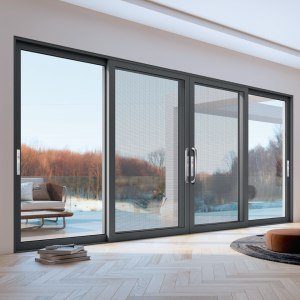
What Are Exterior Accordion Doors?
Exterior accordion doors are multi-panel folding systems designed for large openings in patios, terraces, and commercial storefronts. Unlike sliding doors, which stack panels to one side, accordion doors fold like a concertina, allowing the entire opening to be exposed. Each panel is hinged to the next and runs on a top track, with some systems also using a bottom guide for stability.
The key advantage is the opening ratio. A typical sliding door exposes 50% of the opening; an accordion door can expose 90% or more. This makes them the preferred choice when the goal is to blur the line between indoor and outdoor space. They are available in three primary material families: aluminum, wood, and aluminum-wood combinations. Each has distinct cost, durability, and aesthetic implications, which we will examine below.
Price Ranges for Exterior Accordion Doors
Pricing for exterior accordion doors varies significantly based on material, panel size, glass specification, and hardware grade. The figures below are decision-level ranges for 2026, based on manufacturer quotes and industry data. They represent the cost of the door system itself, excluding installation labor and structural preparation.
| Material & Configuration | Price Range per Square Foot (USD) | Typical Use Case |
|---|---|---|
| Aluminum, standard thermal break, single glazing | $35 – $55 | Residential patios, mild climates |
| Aluminum, thermal break, double glazing (Low-E) | $55 – $85 | Residential and light commercial, varied climates |
| Aluminum, high-performance (triple glazing, reinforced) | $85 – $130 | Coastal, high-wind, or extreme-temperature zones |
| Wood (mahogany, oak, teak) with single glazing | $50 – $80 | High-end residential, architectural projects |
| Wood with double glazing and aluminum exterior cladding | $80 – $120 | Premium villas, heritage-style renovations |
| Aluminum-wood hybrid (structural aluminum, interior wood) | $70 – $110 | Luxury residential, where interior aesthetics matter |
These figures assume standard configurations up to roughly 10 feet in height. Complex geometries, oversized panels, curved tracks, or custom colors add 10–25% to the base cost. Hardware is a significant cost driver: multi-point locking systems, concealed hinges, and motorized operation can add $50–$150 per panel depending on the brand and specification.
Key Specifications to Consider
When evaluating exterior accordion doors, the specification sheet matters more than the brochure. Here are the critical parameters to review before requesting a quote.
Panel Dimensions and Configuration
Standard panel widths range from 24 to 40 inches. Height is typically limited to 10 feet for aluminum systems, while wood systems can sometimes reach 12 feet with structural reinforcement. The number of panels determines the stacking depth when fully open. A useful rule: the more panels, the narrower each panel must be, or the track must be reinforced to handle the additional weight.
Glass Options
The glass specification often determines energy performance more than the frame material. For exterior applications, you should expect:
- Double glazing as the baseline for most climates, with Low-E coating to reduce solar heat gain.
- Triple glazing for extreme cold or heat, or for noise reduction near busy roads.
- Tempered or laminated glass for safety and security. Laminated glass is strongly recommended for ground-floor installations.
- Argon or krypton gas fill between panes to improve insulation values.
The U-factor (rate of heat transfer) and SHGC (solar heat gain coefficient) of the complete door system will be determined by the glass and frame combination. A reputable manufacturer should provide these figures for the assembled system, not just the glass unit.
Thermal Break and Frame Construction
For aluminum systems, a thermal break is essential. This is a polyamide strip that separates the interior and exterior aluminum profiles, preventing heat conduction. Without it, the frame becomes a thermal bridge that undermines the performance of even the best glazing. Check that the thermal break is present and that the frame depth is adequate—typically 2.5 to 4 inches for exterior-grade systems.
Hardware and Locking
Exterior accordion doors are a security consideration. Look for:
- Multi-point locking systems that engage at multiple points along the panel height, not just a single central lock.
- Concealed hinges that cannot be pried from the exterior.
- Shooting bolts at the top and bottom of the end panels to secure the entire assembly.
- Lift-and-slide or folding hardware from established manufacturers (e.g., Roto, GU, or equivalent), as hardware quality directly impacts operational lifespan.
Terms buyers should know
| Term | What it means | Why it matters when buying |
|---|---|---|
| U-factor | The rate of heat transfer through the entire door system. Lower is better for insulation. | Determines energy efficiency and heating/cooling costs. Compare this number, not just the glass type. |
| SHGC (Solar Heat Gain Coefficient) | The fraction of solar radiation that passes through the glass. Lower means less heat gain. | Critical for warm climates or west-facing openings. Too high means the space overheats in summer. |
| Thermal break | A non-metallic barrier between interior and exterior aluminum profiles. | Without it, aluminum frames conduct cold and heat, causing condensation and energy loss. |
| Wind load rating | The maximum wind pressure the door system is engineered to withstand, tested to a specific standard. | Essential for coastal or high-rise installations. Verify the rating matches your local building code requirements. |
Customization Options and MOQ
Exterior accordion doors are rarely off-the-shelf products. Almost every project requires some level of customization, which affects both cost and lead time.
What Can Be Customized
- Size: Panel widths, heights, and overall system width are engineered to the opening. There are no meaningful “standard sizes” in this product category—each system is fabricated to the project’s rough opening dimensions.
- Color: Aluminum frames can be powder-coated in virtually any RAL color. Wood can be stained or painted to match interior millwork.
- Glass: Beyond standard double glazing, you can specify tinted, frosted, patterned, or impact-resistant glass. Acoustic glass for noise reduction is also available.
- Hardware: Locking systems, handle styles, and hinge finishes can be selected. For commercial applications, panic hardware or access control integration may be required.
- Configuration: Doors can be designed to fold to one side, split in the center, or include an integrated entry door panel for daily use without opening the entire system.
MOQ and Lead Time
For factory-direct procurement from a manufacturer, the minimum order quantity is typically one complete door system, though this depends on the manufacturer’s production scheduling. A single residential project is usually acceptable. For commercial projects, expect to coordinate with the manufacturer’s production calendar.
Lead times for custom exterior accordion doors generally range from 4 to 10 weeks, depending on:
- Material availability: Aluminum profiles are usually stocked; exotic woods require longer lead times.
- Glass specification: Laminated or triple-glazed units take longer than standard double glazing.
- Production season: Peak construction seasons (spring and summer in temperate climates) can extend lead times.
- Order complexity: A standard configuration moves faster than a fully custom system with complex geometry.
Quality and Testing Standards
Exterior accordion doors are exposed to weather, wind, and UV radiation. A manufacturer’s quality control regime is the difference between a system that lasts 10 years and one that lasts 30. For exterior installations, three performance tests matter most:
- Air-tightness: Measures the amount of air leakage through the closed door system. Poor air-tightness leads to drafts, energy loss, and dust infiltration.
- Water-tightness: Tests resistance to water penetration under simulated rain and wind pressure. This is critical for exterior doors—a failure here means leaks during storms.
- Wind resistance: Evaluates the structural integrity of the system under high wind loads. This is non-negotiable for coastal properties or buildings above ground level.
These tests are conducted to established standards (such as those from ASTM or equivalent international bodies). When requesting quotes, ask which standards the manufacturer tests to and request the test reports. A manufacturer that cannot provide performance data for its systems is asking you to accept risk that should be theirs.
For coastal installations, pay particular attention to corrosion resistance. Standard aluminum hardware may fail within a few years in salt air. Specify stainless steel hardware and ask about the manufacturer’s experience with marine environments.
Shipping and Delivery
Exterior accordion doors are bulky, heavy, and fragile. Shipping is a significant part of the procurement process, and the logistics strategy affects both cost and risk of damage.
For international procurement, two shipping options are standard:
- Full Container Load (FCL): Your order occupies an entire container. This is cost-effective for large orders (typically 15+ door systems, depending on size) and reduces the risk of damage from other cargo.
- Less than Container Load (LCL): Your order shares a container with other shipments. Suitable for smaller orders, but requires robust packaging since the cargo is handled multiple times.
Doors should be crated or protected with heavy-duty packaging. Glass units need individual protection, and aluminum frames should be wrapped to prevent scratching. A factory with foreign trade experience will provide proper export packaging and the necessary documentation: packing list, proforma invoice, and customs documents.
The manufacturer should also be able to advise on whether the door system complies with the building codes of your target market. Structural requirements for wind load, egress, and safety glass vary by jurisdiction. An experienced export manufacturer will have adjustable profile structures and fittings to meet local codes, rather than offering a one-size-fits-all product.
How to Choose a Reliable Manufacturer
The specification sheet tells you what the door can do in ideal conditions. The manufacturer’s processes tell you whether you will actually get that performance. When evaluating suppliers, focus on these practical questions:
What testing does the factory perform before shipment? A manufacturer that conducts air-tightness, water-tightness, and wind resistance tests on its own products has a quality culture. One that only assembles components from catalogs is a middleman, not a manufacturer.
Can they handle the documentation and logistics? International procurement involves more than producing the door. Packing lists, proforma invoices, customs documentation, and coordination of FCL or LCL shipments are all part of the service. A factory with foreign trade experience will handle these seamlessly.
Are they willing to adapt to your local codes? Building codes differ significantly between markets. A manufacturer that offers adjustable profile structures and fittings to match local requirements demonstrates that they understand the regulatory landscape—not just the product.
What is the actual cost structure? Factory-direct pricing should eliminate middleman markups. But the lowest quote is not always the best value. Compare the full specification: glass quality, hardware brand, thermal break design, and testing protocols. A lower price achieved by downgrading hardware or skipping tests is not a saving.
As a manufacturer of exterior accordion doors, this is how we approach these requirements. Our factory produces aluminum, wood, and aluminum-wood hybrid systems, with full customization on size, color, glass, and hardware. Before shipment, every order undergoes air-tightness, water-tightness, and wind resistance testing—not as an optional extra, but as a standard step in our quality control process.
Our foreign trade team provides complete documentation, including packing lists, proforma invoices, and customs paperwork. We ship both FCL and LCL, with direct delivery from our factory in China. For buyers in markets with specific building code requirements, we adjust the profile structure and fittings to ensure compliance. This is not a premium service; it is the baseline for any manufacturer that sells internationally.
If you are evaluating exterior accordion doors for a project, the most efficient next step is to send your opening dimensions and performance requirements. We can provide a detailed specification and price for your specific configuration.