What Determines Closet Door Cost?
The total closet door cost typically ranges from $120 to $1,200 per opening, with the national average landing near $450 for a standard 60-inch wide double-door closet. This figure includes materials, hardware, and professional installation, but the final number depends on five primary variables:
- Door type and configuration — Bifold doors are the most economical, while sliding glass or custom panel designs command premium pricing.
- Material selection — Hollow-core MDF is the budget option; solid wood, aluminum-framed glass, and thermal-break systems sit at the top of the price scale.
- Size and number of panels — Wider openings require more material, heavier hardware, and often additional support framing.
- Finish and customization — Factory-painted doors cost less than site-finished ones. Custom colors, glass types, and hardware upgrades add 15–40% to the base price.
- Labor and site conditions — Installation fees vary by region and complexity. Replacing an old door involves removal and disposal costs that many first-time buyers overlook.
For B2B buyers sourcing multiple units, the cost structure changes significantly. Bulk orders reduce per-unit pricing, but custom specifications and compliance with local building codes become the dominant cost drivers. The table below breaks down typical ranges by door type.
Closet Door Cost by Type: A Detailed Comparison
The table below provides decision-level ranges for standard residential closet openings. Prices reflect 2026 market conditions in North America and include materials plus professional installation unless noted.
| Door Type | Typical Size (W x H) | Material Cost (per unit) | Installed Cost (per opening) | Notes |
|---|---|---|---|---|
| Standard Bifold (hollow core) | 24″–36″ per panel, 48″–72″ total | $40–$120 | $150–$350 | Most economical option; limited soundproofing and durability |
| Bifold (solid MDF or wood) | 24″–36″ per panel, 48″–72″ total | $120–$300 | $300–$600 | Better durability; paintable finish |
| Bifold Glass Doors | 24″–36″ per panel | $200–$450 | $450–$800 | Aluminum frame with tempered glass; heavier hardware required |
| Sliding Panel (2–3 panels) | 60″–96″ total width | $250–$700 | $500–$1,100 | Smooth operation; tracks add cost |
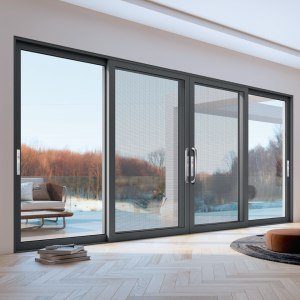
| Sliding Patio Door (exterior-grade) | 60″–72″ standard | $400–$1,200 | $800–$2,500 | Thermal-break frames and insulated glass for exterior use |
| Mirrored Sliding | 48″–72″ total width | $300–$600 | $550–$950 | Glass mirrors add weight; safety backing required |
| Pocket Door | 28″–36″ single | $150–$400 (frame included) | $600–$1,500 | Requires wall cavity modifications; highest labor cost |
| Custom Solid Wood | Any size | $500–$2,000+ | $900–$3,000+ | Premium material; longer lead times |
The bifold door cost ranges from $150 to $600 installed, making it the most common choice for standard closets. Bifold glass doors cost more—typically $450 to $800 installed—because the aluminum frame and tempered glass add material expense and require reinforced hinges.
For exterior applications, the cost of a sliding patio door starts around $800 and can exceed $2,500 for dual-pane, thermal-break models. These are not interior closet doors; they require weatherproofing, proper flashing, and often meet energy code requirements.
Standard Closet Door Sizes and How to Measure
Closet openings follow standardized widths in most residential construction. Knowing your exact dimensions prevents costly special orders.
Standard closet opening widths (finished frame):
- 24 inches (single bifold or hinged)
- 30 inches (single bifold or hinged)
- 32 inches (common for hinged single doors)
- 48 inches (double bifold or two sliding panels)
- 60 inches (double bifold or three sliding panels)
- 72 inches (three sliding panels or double sliding doors)
Standard heights: 80 inches (6’8″) is the industry standard, with 96 inches (8′) common in newer construction with taller ceilings.
How to measure for an accurate quote:
- Measure the finished opening width at three points—top, middle, and bottom. Use the narrowest measurement.
- Measure the height from the finished floor to the top of the frame at both sides. Use the shortest dimension.
- Measure the depth of the wall framing (typically 4.5″ or 5.5″) to confirm the door jamb depth.
- Check for squareness—measure both diagonals. A difference over 1/4″ indicates framing issues that will affect installation cost.
For bifold doors specifically, the rough opening must be perfectly plumb and level. If your opening is out of square by more than 1/8″, the bifold door will bind during operation. Budget for minor framing corrections if you discover this during measurement.

Custom sizes typically add 20–50% to the base door cost because manufacturers must cut non-standard panels and fabricate custom hardware. If your opening deviates from standard dimensions, confirm whether the gap can be shimmed or trimmed rather than ordering fully custom doors.
Bifold Doors vs. Sliding Patio Doors: Cost Considerations
Buyers often confuse interior bifold doors with exterior sliding patio doors because both use horizontal movement. The cost structures differ significantly, and choosing the wrong type for your application wastes money.
Bifold doors for interior closets:
- Panels fold inward, requiring no floor track
- Lower material cost—lighter frames, standard hinges
- Bifold door price ranges from $150–$600 installed for standard sizes
- Best for openings up to 72 inches wide
- Hardware is simpler and less expensive to replace
Sliding patio doors for exterior access:
- Panels glide on overhead or floor tracks
- Must meet building code requirements for egress and energy efficiency
- Cost of a sliding patio door starts at $800 and frequently exceeds $2,500
- Thermal-break aluminum frames and insulated glass are standard requirements
- Heavier hardware and structural reinforcement add cost
The bifold doors price advantage disappears if you need exterior-grade performance. Conversely, using a sliding patio door for an interior closet wastes money on thermal performance you do not need.
Key trade-off: Bifold doors with glass panels offer a middle ground—interior styling with natural light transmission—at roughly half the cost of an exterior-grade sliding door. If your project involves a closet that opens to an exterior wall, however, building codes may require the sliding patio door configuration regardless of cost.
Hidden Costs and Budgeting Tips
First-time buyers consistently underestimate the total project cost because they focus on the door itself. These costs apply to both single-door replacements and multi-unit B2B orders:
Removal and disposal: $50–$150 per door. Old doors, frames, and hardware require proper disposal. Some municipalities charge extra for construction waste.
Site preparation: $100–$400. Drywall repair, paint touch-ups, and adjusting the rough opening to accommodate new door dimensions.
Hardware upgrades: $20–$100 per door. Standard tracks and hinges work adequately, but soft-close mechanisms and premium rollers add cost and longevity.
Trim and casing: $50–$200. New doors often require matching trim to blend with existing millwork.
Structural modifications: $200–$800. Moving a wall stud, enlarging an opening, or correcting an out-of-plumb frame.
Contingency budget: Add 10–15% for unexpected findings during installation, particularly in older buildings where framing is rarely square.
For B2B buyers, these costs scale differently. Bulk door orders reduce per-unit pricing, but site preparation and installation labor are often contracted separately. When requesting quotes, ask suppliers to separate product cost from logistics and installation to compare bids accurately.
Budget formula for a single door replacement:
Door cost + Hardware ($20–$100) + Labor ($100–$300) + Removal/disposal ($50–$150) + Contingency (10–15%) = Total project cost
Terms buyers should know
| Term | What it means | Why it matters when buying |
|---|---|---|
| Rough opening | The framed opening in the wall before the door and jamb are installed | Measuring the rough opening rather than the finished opening causes ordering errors; always measure the finished opening for replacements |
| Pre-hung door | A door already mounted in its frame, ready to install as one unit | Simplifies installation and ensures proper alignment; costs more than a slab door but reduces labor time |
| Thermal break | A non-conductive barrier within an aluminum frame that reduces heat transfer | Essential for exterior sliding doors to meet energy codes; irrelevant for interior closet doors—paying for it unnecessarily inflates cost |
| Hollow-core | A door with a honeycomb cardboard interior between two thin skins | The budget option for interior doors; lightweight and inexpensive but offers minimal sound insulation and dents easily |
Frequently Asked Questions About Closet Door Costs
What is the average cost of a closet door?
The average installed cost for a standard 60-inch wide closet opening is $300–$600, covering a bifold or sliding door with basic hardware and professional installation. The door itself costs $80–$250; the remainder is labor and materials. Expect to pay more in urban areas and less in rural regions.
How much do bifold doors cost?
Standard bifold doors cost $150–$600 installed, depending on material and width. Hollow-core models for a 48-inch opening start around $150 installed. Solid wood or MDF bifold doors for a 72-inch opening typically run $400–$600 installed.
What is the price range for bifold glass doors?
Bifold glass doors cost $450–$800 installed for standard interior closet openings. The range reflects aluminum frame quality, glass type (tempered vs. laminated), and whether the glass is clear, frosted, or patterned. Custom sizes or specialty glass add 20–40% to these figures.
How much does a sliding patio door cost?
A sliding patio door costs $800–$2,500 installed for standard 60–72 inch openings. Entry-level models with aluminum frames and dual-pane glass run $800–$1,200. Premium thermal-break systems with low-E coatings and upgraded hardware reach $2,000–$2,500. Custom sizes and high-performance glass push costs higher.
What factors influence bifold door price?
Five factors drive bifold door pricing: material (hollow-core MDF is cheapest, solid wood is premium), width (wider openings require more panels and heavier hardware), glass versus solid panels, finish (factory-painted versus raw), and hardware quality (standard versus soft-close or self-balancing systems). Custom sizing adds 20–50% to base pricing.
How do I measure for a closet door to get an accurate quote?
Measure the finished opening width at the top, middle, and bottom—use the narrowest dimension. Measure height from the finished floor to the top of the frame on both sides—use the shortest. Verify the opening is square by comparing diagonal measurements. Provide these three numbers to your supplier; do not rely on nominal “standard” sizes.
How to Get Accurate Pricing for Your Project
The most reliable way to estimate closet door cost is to request itemized quotes from multiple suppliers. Provide your exact measurements, door type preference, and material requirements. For B2B buyers sourcing doors for multiple units or construction projects, accurate pricing depends on three factors: order volume, specification clarity, and logistics planning.
Bulk orders of 50+ units typically qualify for volume pricing, but only if the specifications are standardized. Changing door sizes or finishes mid-order resets pricing and extends lead times. Confirm your door schedule before requesting formal quotes.
For projects requiring compliance with local building codes, confirm that your door supplier can adjust profile structures and fittings to meet regional requirements. This is particularly relevant for exterior sliding doors, where energy codes and egress requirements vary by jurisdiction.
As a manufacturer supplying doors and windows for residential and commercial projects, we approach closet door costing from a different angle than a retailer or distributor. Our factory-direct model eliminates middleman markup, which matters when you are outfitting multiple units or an entire development. We offer full customization on size, color, glass, and hardware, and we can adjust profile structures and fittings to match local building codes in your target market.
Every order undergoes pre-shipment inspection for air-tightness, water-tightness, and wind resistance—tests that matter for exterior doors but also confirm that interior doors meet dimensional tolerances. We provide complete customs documentation for international orders and ship via FCL or LCL directly from our factory.
If you are estimating cost for a multi-unit project, comparing bulk pricing against your current supplier, or need doors that meet specific building code requirements, send us your door schedule and measurements. We will provide itemized pricing that separates product cost from logistics, so you can see exactly what you are paying for.
For more guidance on door selection and sizing, review our custom villa doors and windows guide or contact our team directly for project-specific recommendations.