What Is a Green Storm Door and Why Choose One?
A green storm door is an exterior door system installed in front of your primary entry door. It combines weather protection with a green finish—typically sage green, storm green, or a custom color—and often integrates a screen panel for ventilation. For commercial buyers, the value proposition is straightforward: it protects the main door from weather damage, improves energy efficiency by adding an insulating air barrier, and provides a security layer without replacing the existing door.
The practical benefits break down into three areas:
Energy efficiency. A storm door creates a buffer zone between the exterior and your primary door. This reduces air infiltration and heat transfer. For commercial buildings with high foot traffic, the savings on heating and cooling can be measurable, especially in climates with extreme seasonal swings. Look for models with low-E glass or insulated panels if energy performance is a priority.
Protection. The main door—whether wood, steel, or fiberglass—takes significant wear from sun, rain, and wind. A storm door shields it from direct exposure, extending its service life. This is particularly relevant for commercial properties where door replacement costs include labor, downtime, and disposal fees.
Aesthetics. Green finishes have moved beyond residential curb appeal. Sage green and storm green offer a muted, natural tone that works well on storefronts, office buildings, and multi-family housing. The color reads as intentional design rather than an afterthought, which matters for properties where first impressions affect business.
Green Storm Door Options: Materials, Colors, and Configurations
Material Choices
Aluminum is the dominant material for storm doors in commercial applications. It resists corrosion, handles high-frequency use, and requires minimal maintenance. Extruded aluminum frames can be powder-coated in virtually any color, including sage green and storm green, and the finish holds up well against UV exposure when applied correctly. Aluminum is lightweight, which simplifies installation and reduces strain on hinges over years of use.
Steel offers superior impact resistance. A steel storm door is harder to breach, making it a reasonable choice for ground-floor commercial entries or units in higher-crime areas. The trade-off is weight—steel doors require stronger hinges and more careful installation—and susceptibility to rust if the finish is scratched and left untreated. For coastal environments, aluminum is generally the safer recommendation.
Wood storm doors are rare in commercial settings. They require ongoing refinishing, expand and contract with humidity, and offer less security than metal options. For residential or light-commercial projects where period aesthetics matter, wood can be appropriate, but budget for maintenance labor.
Color Options: Sage Green vs. Storm Green
Color selection is not purely aesthetic—it affects maintenance visibility and long-term appearance.
Sage green is a muted, gray-green tone. It recedes visually, which works well when the door should not compete with other architectural elements. It also hides dust and minor scuffs better than darker shades, a practical advantage for high-traffic entries.
Storm green is deeper and more saturated. It reads as a deliberate design statement and pairs well with neutral building facades. The trade-off: surface imperfections show more readily, and the deeper pigment can fade faster if the powder coating or paint lacks adequate UV stabilizers.
When specifying a custom color, request documentation on the coating system. A quality powder coating with UV-resistant additives—typically polyester or polyurethane-based—will hold color significantly longer than a standard liquid paint. Ask the manufacturer for fade-test data or warranty terms that cover color retention.
Glass and Screen Configurations
The configuration determines how the door functions across seasons.
Full-view glass maximizes visibility and light transmission. It is the most common choice for commercial entries where staff need to see visitors before opening the door.
Half-screen with a glass top provides ventilation through the lower portion while maintaining visibility through the upper glass. This configuration is practical when the door is frequently opened and closed, as the screen section sees less wear than a full-screen design.
Retractable screens roll up into the door frame when not in use. They offer flexibility—full glass in winter, full screen in summer—but add mechanical complexity. For commercial applications with heavy daily use, a fixed screen panel is more durable and requires less maintenance.
Interchangeable glass and screen panels allow seasonal swapping. This is a cost-effective approach for multi-unit residential buildings where the same door model serves multiple units with different orientation and sun exposure.
Comparison Table: Green Storm Door Types at a Glance
| Attribute | Aluminum | Steel | Wood |
|---|---|---|---|
| Durability | High; corrosion-resistant | Very high; impact-resistant | Moderate; requires refinishing |
| Maintenance | Low; occasional cleaning | Low; touch up scratches promptly | High; periodic sanding and painting |
| Weight | Light to moderate | Heavy | Moderate to heavy |
| Cost (material only) | Mid-range | Higher | Variable; premium for quality lumber |
| Customization | Excellent; powder-coated colors | Good; factory-applied finishes | Good; site-finishing required |
| Security | Good; reinforced frames available | Excellent; inherently strong | Fair; depends on construction |
| Best Use | Commercial, coastal, high-traffic | Ground-floor security, high-risk areas | Residential, period restoration |
How to Choose the Right Green Storm Door for Your Project
Assess the Existing Door Frame and Swing Direction
Before comparing door models, measure the existing frame. Storm doors are sized to fit inside the existing door opening, and the tolerance is narrow—typically 1/8 to 1/4 inch clearance. For commercial projects, verify that the frame is square and plumb. Older buildings often have settled frames where a standard size will not fit properly.
Swing direction matters. A storm door must swing in the same direction as the primary door—or the opposite, depending on the configuration. Check whether the existing door is left-hand or right-hand swing, and confirm that the storm door hardware is compatible with the building’s traffic flow. For high-traffic commercial entries, consider a door that opens outward to avoid conflicts with interior space.
Define the Security Requirements
Security needs vary by building type. A ground-floor retail space in an urban area has different requirements than a residential unit on the third floor of a multi-family building.
For commercial applications, look for:
- Multi-point locking systems that secure the door at multiple points along the frame, not just at the handle.
- Reinforced frames with internal structural supports, typically aluminum or steel, that resist forced entry.
- Laminated or tempered glass that resists breakage. Tempered glass shatters into small, blunt pieces on impact, while laminated glass holds together even when cracked.
- Decorative security screens that combine a perforated metal mesh with the storm door function. These are available in sage green and storm green finishes and provide ventilation, visibility, and security in one unit.
Evaluate Glass Options for Energy Performance
Not all glass is equal. For energy-efficient projects, look for:
- Low-E (low-emissivity) glass that reflects heat back toward its source. In winter, it keeps interior heat inside; in summer, it blocks solar heat gain. The specific performance is measured by U-factor (heat transfer rate) and SHGC (solar heat gain coefficient). Lower U-factor means better insulation; lower SHGC means less solar heat enters the building.
- Double-pane or insulated glass that traps air between two panes, reducing heat transfer. This is heavier and more expensive but provides better year-round performance.
- Tempered or safety glass that meets building code requirements for doors. Most commercial codes require safety glass in door applications.
Factor in Installation and Maintenance Costs
The purchase price is only part of the total cost. Installation labor, ongoing maintenance, and expected service life all affect the true cost of ownership.
For aluminum doors, installation is straightforward—the frame is lightweight and adjustable. Steel doors require more effort due to weight, and the installation crew needs experience handling heavy units. Wood doors require the most ongoing maintenance, which is why they are rarely specified for commercial projects.
Choose A If… Choose B If…
For most commercial applications, aluminum is the default choice. It balances durability, cost, and customization. Choose steel when security is the primary concern and the building is in a higher-risk location. Choose wood only when the project demands a specific aesthetic that metal cannot achieve, and budget for the maintenance burden.
Frequently Asked Questions About Green Storm Doors
What is the difference between a storm door and a screen door combo?
A storm door is a full exterior door with glass panels (or a combination of glass and screen) that protects the primary door from weather. A screen door combo typically refers to a door that allows switching between glass and screen panels, or one that has both a fixed screen section and a glass section. The key difference is that a storm door provides insulation and protection, while a screen door prioritizes ventilation. A combination unit does both by allowing the user to switch configurations seasonally.
How do I choose between sage green and storm green finishes?
Sage green is lighter and more neutral—it blends with a wider range of building materials and hides surface dust better. Storm green is deeper and more saturated—it makes a design statement but shows scratches and fading more readily. For commercial buildings with high traffic, sage green is often the more practical choice. For projects where the door is a focal design element, storm green provides more visual impact. Request color samples and view them against the actual building facade before specifying.
What materials are best for a green storm door in commercial settings?
Extruded aluminum with a powder-coated finish is the strongest recommendation for commercial use. It resists corrosion, requires minimal maintenance, and the powder coating provides excellent color retention. Steel is appropriate when security requirements are higher, but factor in the additional weight and rust risk. Wood is generally not recommended for commercial settings due to maintenance demands.
Can I customize the size and color of a green storm door?
Yes. Most manufacturers offer custom sizing to fit non-standard openings, and powder coating allows for essentially any color match. For commercial projects with multiple units, custom sizing ensures consistent installation across varying frame dimensions. When requesting custom colors, ask for the coating system specification and any fade-resistance data.
What security features should I look for in a decorative security screen door?
Look for multi-point locking systems, reinforced frames, and security-grade mesh. The mesh should be welded or woven steel that resists cutting, and the frame should have internal reinforcement at the strike points. For commercial applications, consider doors that meet or exceed ASTM security standards for forced-entry resistance.
How much does a green storm door typically cost?
Pricing varies significantly by material, size, glass configuration, and security features. As a general range, aluminum storm doors start around several hundred dollars per unit for basic models and increase with customization, premium glass, and security upgrades. Steel doors are typically more expensive than aluminum. For bulk commercial orders, per-unit pricing decreases, but the exact figure depends on quantity, specifications, and shipping logistics. Request itemized quotes from manufacturers to compare accurately.
What is the best way to install a green storm door with an existing exterior door?
The storm door mounts to the exterior frame of the existing door opening. Accurate measurements of the opening width, height, and depth are essential—allow for the door frame thickness and any irregularities in the existing structure. The door must swing in the correct direction and have adequate clearance from walls, porches, or other obstructions. For commercial installations, professional installation is recommended to ensure proper sealing, alignment, and hardware function.
Additional Considerations: Decorative Security Screens and Door Combos
Beyond the standard storm door, two related products deserve attention for commercial buyers.
Exterior Decorative Security Screen Doors
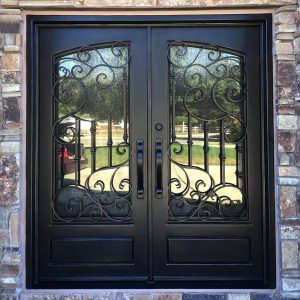
These doors combine a decorative metal mesh with a full door frame, offering ventilation, visibility, and security in one unit. Available in sage green, storm green, and custom colors, they serve as both a security barrier and a design element. The mesh patterns range from simple perforations to intricate scrollwork, and the frames are typically aluminum or steel with a powder-coated finish.
For commercial applications, decorative security screens are a practical choice for entries that need airflow without compromising security—such as ground-floor retail spaces that want to keep doors open during business hours. The mesh blocks direct sightlines while allowing air movement, and the reinforced frame resists forced entry.
Exterior Door with Screen Door Combo
A combo unit integrates the primary door and screen door into a single system. This is distinct from a storm door—it replaces the primary door entirely rather than mounting in front of it. For commercial projects, combo units are less common because they sacrifice the energy efficiency of a separate primary door and storm door. However, for applications where a single door system is preferred—such as interior courtyards or covered entries—a combo unit can simplify installation and reduce hardware costs.
The trade-off is flexibility. A separate storm door allows independent replacement of either component. A combo unit, if the screen or glass fails, requires repair or replacement of the entire system.
Sourcing Green Storm Doors: What to Look for in a Manufacturer
When you move from specification to procurement, the manufacturer’s capabilities determine whether your project runs smoothly or encounters delays, quality issues, or compliance problems. Here is how we meet the standards discussed above.
As a factory-based manufacturer, Jusen Door and Windows produces green storm doors, decorative security screen doors, and exterior door systems with full customization on size, color, glass, and hardware. Because we sell directly from our factory, there is no middleman markup—the pricing you receive reflects actual production costs, which matters when you are ordering multiple units for a commercial project.
Our customization capabilities cover the full range of specifications covered in this guide: powder-coated finishes in sage green, storm green, or custom-matched colors; glass options including low-E, tempered, and insulated panels; and security features such as multi-point locks and reinforced frames. If your project requires specific profile structures or fittings to match local building codes in your target market, our adjustable profile system accommodates those requirements.
Quality control is built into our process. Every order undergoes pre-shipment inspection covering air-tightness, water-tightness, and wind resistance testing. For commercial buyers, this means the units you receive have been verified against performance standards before they leave the factory—not discovered to be defective after installation.
We also handle the logistics side of international procurement. Our experience in foreign trade means we provide complete documentation: packing lists, proforma invoices, and full customs paperwork. Shipments are available in both FCL and LCL configurations, with direct delivery from our China factory to your project site or distribution point.
For projects that require OEM or ODM services, we can produce doors under your private label or adapt our designs to your specifications. Whether you need a standard size or a custom dimension for a non-standard opening, the manufacturing process accommodates the requirement.
If you are comparing suppliers for a green storm door order, the key criteria are: factory-direct pricing, customization capability, quality assurance processes, and logistics reliability. Those are the standards we hold ourselves to—and the ones you should apply to any manufacturer you evaluate.
Contact our team to discuss your project specifications and receive a detailed quotation.