Contemporary Wood Exterior Doors: What You Need to Know
Contemporary wood exterior doors are defined by clean lines, minimal ornamentation, and an emphasis on natural material expression. Unlike traditional paneled doors with heavy detailing, contemporary designs favor flat surfaces, geometric patterns, and expansive glass inserts. They serve as a primary architectural statement while meeting functional requirements for security, insulation, and weather resistance.
For B2B buyers, the selection process involves evaluating several variables simultaneously: wood species, construction method, glazing options, finish strategy, and dimensional specifications. The choices you make at the specification stage will affect not only the upfront cost but also the maintenance schedule and lifespan of the product.
Types of Contemporary Wood Exterior Doors
Modern Flat-Panel Doors
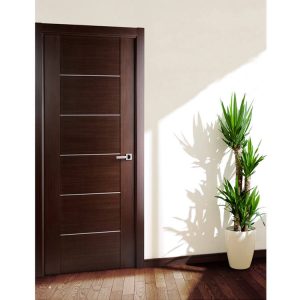
The quintessential contemporary style features a completely flat surface with no raised panels. These doors rely on the wood grain itself for visual interest. Species with pronounced grain patterns, such as oak or ash, are popular choices. When combined with concealed hinges and minimal hardware, flat-panel doors achieve a seamless, minimalist look favored in modern architecture.
Craftsman-Style Doors
Craftsman doors bridge traditional and contemporary aesthetics. They feature clean, straight lines with subtle geometric detailing, often incorporating a single large glass pane or a series of vertical lites. The hallmark is the use of through-tenon joinery and exposed hardware. While rooted in the Arts and Crafts movement, simplified craftsman designs fit comfortably within contemporary architectural contexts, particularly for homes with low-pitched roofs and overhanging eaves.
Double Door Configurations
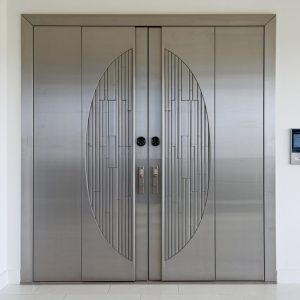
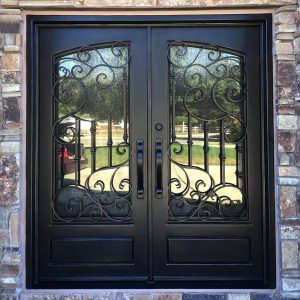
Contemporary double doors, also known as French or hinged patio doors, create a wide entry point and flood interiors with natural light. In modern designs, the meeting stile is often minimized or offset to create an asymmetrical appearance. Double doors require careful consideration of the rough opening width and the structural header needed to support the weight above. They are an excellent choice for projects where the entry serves as a visual connection between interior living spaces and outdoor areas.
Door Slabs vs. Pre-Hung Units
A door slab is just the door itself, without the surrounding frame or hinges. A pre-hung unit includes the door mounted in its frame with hinges, weatherstripping, and often the threshold already installed.
Slabs are appropriate when you are replacing an existing door and the current frame is in good condition. They require precise fitting and are generally used by contractors comfortable with carpentry work. Pre-hung units are the standard for new construction and major renovations. They ensure proper alignment between the door and frame, which is critical for weather sealing and hardware function. For contemporary wood exterior doors, pre-hung units are almost always the recommended choice because proper installation directly impacts energy performance and warranty validity.
Size and Configuration Options
Standard residential exterior door sizes are 32 inches by 80 inches and 36 inches by 80 inches. The 36-inch width is the modern standard for main entry doors, providing a more generous opening that accommodates furniture movement and wheelchair access. The 32-inch size remains common for side entries and secondary doors.
For contemporary designs, consider these dimensional factors:
- Rough opening: The framed opening must be approximately 2 inches taller and 2 inches wider than the actual door size to allow for shimming and leveling.
- Door thickness: Standard exterior doors are 1¾ inches thick. Some high-end contemporary doors use 2¼-inch thickness for enhanced insulation and a more substantial feel.
- Custom sizes: Contemporary architecture frequently calls for oversized doors. Many manufacturers accommodate custom heights up to 96 inches or more, but this requires engineering review for wind load and hardware weight.
Finishes and Materials: Wood vs. Faux Wood
Wood Species Selection
The wood species determines both appearance and performance characteristics:
| Species | Grain Appearance | Hardness (Janka) | Rot Resistance | Best Climate |
|---|---|---|---|---|
| Mahogany | Straight, fine | 800-900 | High | Humid, coastal |
| White Oak | Prominent, open | 1360 | Moderate-High | Cold, wet |
| Walnut | Straight, rich dark | 1010 | Moderate | Arid, temperate |
| Sapele | Interlocked, ribbon | 1410 | High | Humid, tropical |
| Douglas Fir | Straight, pronounced | 660 | Moderate | Arid, cold |
Janka hardness ratings provide a relative measure of dent and wear resistance. Higher values indicate harder wood. However, hardness alone does not determine exterior suitability. Rot resistance and dimensional stability are equally important. Mahogany and sapele, both tropical hardwoods, contain natural oils that resist moisture penetration and insect damage. White oak has closed pores that make it more water-resistant than red oak. Douglas fir is a softwood with acceptable exterior performance when properly finished, offering a more economical option.
Unfinished vs. Prefinished Doors
Unfinished wood exterior doors arrive at the job site ready for final coating. This option provides flexibility in color matching and is often selected when a project requires a specific stain or paint color. However, unfinished doors must be finished promptly after installation. Wood exposed to moisture before sealing can warp, check, or develop mildew.
Prefinished doors receive their factory-applied finish under controlled conditions. Multi-layer UV-cured finishes offer superior durability compared to field-applied coatings. Factory finishes typically include a sealer, color coat, and clear topcoat that withstands UV exposure and moisture better than site-applied alternatives. For exterior applications, prefinished doors generally provide longer finish life and reduce on-site labor costs.
Dark vs. White Finishes
Color choice affects more than aesthetics. Dark finishes absorb more solar heat, which can cause the door surface to reach higher temperatures. In direct sun exposure, dark colors accelerate finish degradation and can cause dimensional movement in the wood. This is particularly relevant for south-facing entries. White and light finishes reflect solar radiation, reducing thermal stress on the door surface.
If a dark finish is desired, specify a wood species with good dimensional stability and a finish system rated for high UV exposure. Some manufacturers offer specialized dark-color finishes with enhanced UV inhibitors to mitigate these issues.
Faux Wood Options
Faux wood exterior doors, typically constructed from steel or fiberglass with wood-grain embossing, offer an alternative to real wood. They provide superior dent resistance and require less maintenance. Modern embossing technology has improved significantly, with textured surfaces that convincingly replicate wood grain.
The trade-offs are tactile and aesthetic. Real wood offers depth, variation, and the ability to be refinished multiple times over its lifespan. Faux wood doors generally cannot be refinished to a different color successfully, and the grain pattern repeats across the surface. For projects where the door is a prominent design element viewed at close range, real wood remains the preferred choice despite higher maintenance requirements.
Glass Options for Contemporary Wood Doors
Glass is a defining feature of contemporary wood exterior doors. The size, configuration, and type of glazing significantly affect both aesthetics and performance.
Glass configurations range from full-lite designs (glass occupying most of the door surface) to narrow sidelites flanking a solid door, to geometric cutouts at the top or side. Contemporary designs often use vertical or horizontal rectangular lites that echo the door’s overall proportions.
Glazing types to specify:
- Double-pane insulated glass: Standard for exterior doors, providing improved thermal performance compared to single-pane.
- Low-E coatings: Applied to glass surfaces to reduce heat transfer. Low-E coatings reflect infrared radiation while allowing visible light to pass through.
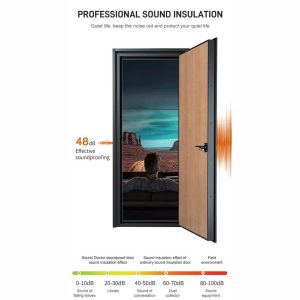
- Tempered or laminated glass: Required by building codes for doors and adjacent sidelites. Laminated glass provides additional security and sound insulation.
- Argon-filled units: Provide better insulation than air-filled units, with a modest cost increase.
Obscured or frosted glass: For entries requiring privacy, acid-etched or frosted glass diffuses light while obscuring visibility. Patterns range from subtle frits to bold geometric designs.
Performance consideration: Large glass areas reduce the door’s overall insulation value. A solid wood door with a 1¾-inch thickness provides an R-value around 3-4, while a full-lite door with double-pane Low-E glass will have a lower whole-door R-value. For energy-conscious projects, specify doors with smaller glass areas or high-performance glazing units.
Comparison Table: Key Features at a Glance
| Feature | Modern Flat-Panel | Craftsman | Double Door | Door Slab | Pre-Hung |
|---|---|---|---|---|---|
| Style | Minimalist, seamless | Geometric, detailed | Grand, symmetrical | Varies | Varies |
| Typical Sizes | 36×80, custom | 32×80, 36×80 | 60×80, 72×80 | All standard | All standard |
| Common Woods | Oak, walnut, mahogany | Oak, fir, mahogany | Mahogany, oak | Varies | Varies |
| Finish Options | Prefinished or unfinished | Prefinished or unfinished | Prefinished or unfinished | Unfinished typically | Prefinished typically |
| Glass Options | Full-lite, narrow sidelites | Single large pane, vertical lites | Multiple lites, full-lite | None (solid slab) | All options |
| Price Range | $$-$$$$ | $$-$$$ | $$$-$$$$$ | $-$$ | $$-$$$$ |
| Installation | Professional recommended | Professional recommended | Professional required | DIY feasible | Professional required |
| Best For | Modern architecture | Craftsman, transitional homes | Wide entries, grand entrances | Replacement projects | New construction |
Price ranges are relative indicators. Expect to pay more for premium wood species, larger sizes, high-performance glazing, and factory-applied finishes.
Terms Buyers Should Know
| Term | What it means | Why it matters when buying |
|---|---|---|
| Rough Opening | The framed opening in the wall where the door unit will be installed. It is larger than the door itself to allow for adjustment. | If your rough opening is not sized correctly, the door will not fit or will not operate properly. Always measure the rough opening, not the existing door. |
| Janka Rating | A hardness scale measuring the force required to embed a steel ball halfway into a wood sample. | A higher Janka rating indicates a more dent-resistant surface. However, it does not predict rot resistance or exterior durability. |
| Pre-hung Unit | A door that comes pre-assembled in its frame, with hinges and weatherstripping installed. | Pre-hung units ensure proper alignment for weather sealing and are recommended for exterior applications where performance matters. |
| Full-Lite | A door design where glass occupies most or all of the door surface. | Full-lite doors maximize natural light but have lower insulation values than solid doors. Specify high-performance glazing to offset this. |
How to Choose the Right Door for Your Project
Evaluate the Architectural Context
The door should complement the building’s architectural language. A minimalist flat-panel door suits modern and contemporary structures. Craftsman designs pair well with bungalow, cottage, and transitional architecture. Double doors work best on wide facades where the entry is a dominant feature.
Assess Climate and Exposure
Match the wood species and finish to your local climate:
- Humid, coastal regions: Choose mahogany or sapele for natural rot resistance. Ensure the finish system includes a moisture-resistant primer on all surfaces, including top and bottom edges.
- Arid, high-UV regions: Select species with good dimensional stability like white oak. Use light-colored finishes to reduce thermal stress.
- Cold, wet climates: White oak and mahogany perform well. Verify that the door includes a proper weatherstripping system and that the threshold provides adequate drainage.
- Variable climates with extreme temperature swings: Consider engineered wood construction, which uses laminated layers to resist warping and cupping.
Consider the True Cost of Ownership
Wood exterior doors require periodic refinishing, typically every 3-5 years depending on exposure and finish quality. This maintenance cost should factor into your decision. Prefinished doors with high-quality UV-cured finishes extend the interval between refinishing. In contrast, fiberglass and steel doors require minimal maintenance but cannot be refreshed as easily.
Over a 20-year period, a wood door with regular maintenance will likely require 4-6 refinishing cycles. At professional rates, this maintenance cost can approach or exceed the initial door price. Factor this into your budget comparison.
Verify Performance Specifications
For energy efficiency, request the whole-door U-factor and SHGC (Solar Heat Gain Coefficient) ratings from the manufacturer. These values are determined through NFRC testing and provide a basis for comparing products. Lower U-factors indicate better insulation.
Frequently Asked Questions
What are the most popular styles of contemporary wood exterior doors?
Flat-panel doors with minimal detailing and craftsman-style doors with clean geometric lines are the two dominant contemporary styles. Double door configurations are increasingly popular for main entries, particularly in modern and transitional homes.
What are the standard sizes for wood exterior doors?
The standard widths are 32 inches and 36 inches, with 80 inches as the standard height. Custom sizes are available up to approximately 96 inches in height for contemporary designs.
What is the difference between a door slab and a pre-hung door?
A slab is just the door panel. A pre-hung unit includes the door, frame, hinges, and weatherstripping assembled together. Pre-hung doors are recommended for exterior applications because they ensure proper alignment and weather sealing.
Should I choose unfinished or prefinished wood exterior doors?
Prefinished doors offer superior finish durability because factory-applied UV-cured coatings are more robust than field-applied finishes. Unfinished doors provide color flexibility but require prompt finishing after installation and may have shorter finish life.
What are the benefits of exterior double wood doors?
Double doors create a wider opening that enhances the visual grandeur of an entry, allows natural light to flood interior spaces, and facilitates moving large furniture or equipment. They are a strong design statement for contemporary architecture.
How do faux wood exterior doors compare to real wood?
Faux wood doors (steel or fiberglass) offer lower maintenance and higher dent resistance but lack the tactile depth and natural variation of real wood. Real wood doors can be refinished multiple times, while faux wood doors have more limited refinishing options.
What glass options are available for wood exterior doors?
Options include clear, frosted, obscured, and patterned glass. Performance options include double-pane insulated units, Low-E coatings, argon gas fills, and laminated glass for security. The configuration ranges from full-lite to narrow geometric accents.
Additional Considerations for Your Purchase
Matching Door Style to Architectural Scenarios
Mid-century ranch: A flat-panel door with a horizontal grain pattern and narrow sidelites complements the low, horizontal lines of ranch architecture. Walnut or white oak with a clear finish works well.
Scandinavian minimalist: Choose a light wood species like ash or birch with a white or pale gray finish. Full-lite glass maximizes the daylight that Scandinavian design emphasizes.
Industrial loft: A dark-stained mahogany door with a full-lite steel-framed glass panel aligns with the industrial aesthetic. Black hardware and concealed hinges complete the look.
Contemporary farmhouse: A modified craftsman door with a large glass pane and board-and-batten detailing bridges rustic and contemporary styles.
Evaluating Manufacturers and Suppliers
When assessing potential suppliers for contemporary wood exterior doors, focus on these criteria:
Construction quality: Inquire about the joinery method. Mortise-and-tenon construction is superior to dowel or staple construction for exterior doors. Look for engineered core construction that resists warping.
Glazing system: Ask how the glass is secured. Interior-glazed systems with structural silicone provide better weather resistance than exterior-glazed systems that can leak over time.
Testing and certification: Reputable manufacturers conduct air infiltration, water penetration, and structural wind load testing according to industry standards. Request test reports for the specific door model you are considering.
Customization capability: Confirm the manufacturer can accommodate your size, glass, and hardware specifications. Some manufacturers offer adjustable profile structures to meet regional building code requirements.
Export and logistics experience: For international projects, the supplier should provide proper export documentation, including packing lists and proforma invoices, and have experience with both FCL and LCL shipping.
Here is how we meet these standards at Jusen Door and Windows Manufacturing Co., Ltd. As a factory-direct manufacturer, we supply contemporary wood exterior doors with full customization on size, color, glass, and hardware accessories. Our pre-shipment inspection includes air-tightness, water-tightness, and wind resistance testing to verify performance before your order leaves our facility. We adjust profile structures and fittings to match local building codes in your target market, and our export experience ensures all customs documentation is handled properly. Whether you need FCL or LCL shipment, we coordinate direct delivery from our China factory.
For pricing and specifications tailored to your project requirements, contact our team. We provide detailed quotations based on your door dimensions, wood species preferences, glazing specifications, and finish requirements.