What Is a 15 Lite Door Interior?
A 15 lite door interior is a hinged interior door with 15 individual glass panes, called lites, arranged in a three-by-five grid within a solid wood or composite frame. The lites are typically separated by narrow muntin bars, giving the door a traditional, craftsman, or farmhouse appearance while still allowing natural light to pass between rooms.
The defining feature is the grid itself. Unlike a single-pane door or a door with a few large glass sections, the 15 lite configuration breaks the glazing into smaller, evenly spaced rectangles. This changes both the visual character and the practical behavior of the door. The muntin bars add structural rigidity to the glass area, and the smaller panes mean that if one piece of glass cracks, you replace only that lite rather than a full slab of glazing.
These doors are most commonly specified for interior applications where light transmission is desired but full privacy is not critical—think home offices, dining rooms, libraries, or hallway transitions. They are also popular in historic renovations because the multi-lite grid echoes late 19th and early 20th century architectural detailing.
Standard Dimensions and Lite Configurations
Interior door sizes follow a relatively fixed set of standards in North America, driven by rough opening framing conventions. The standard height for a 15 lite interior door is 80 inches (6 feet 8 inches), with widths typically ranging from 24 to 36 inches in 2-inch increments.
| Door Width (inches) | Door Height (inches) | Rough Opening Width (inches) | Rough Opening Height (inches) |
|---|---|---|---|
| 24 | 80 | 25.5 | 82.5 |
| 28 | 80 | 29.5 | 82.5 |
| 30 | 80 | 31.5 | 82.5 |
| 32 | 80 | 33.5 | 82.5 |
| 36 | 80 | 37.5 | 82.5 |
The rough opening dimensions account for the door slab, the jambs, and the necessary shim space for proper alignment. A 30-inch door, for example, requires a rough opening of about 31.5 inches wide. If you are replacing an existing door, measure the slab itself, not the opening, when ordering a prehung unit.
While 80 inches is the standard height, 84-inch (7-foot) and 96-inch (8-foot) doors are available for taller openings, particularly in luxury residential or commercial projects. These taller configurations may use the same 15 lite grid stretched vertically, or they may adjust the lite proportions to maintain visual balance.
The lite layout itself can vary. The most common arrangement is three columns by five rows, which gives the door a vertical emphasis. Some manufacturers offer a five-by-three orientation for wider doors, though this is less typical for standard interior widths. The muntin bar thickness also varies; thinner bars create a more delicate, traditional look, while thicker bars read as more rustic or craftsman in style.
Where to Use 15 Lite Interior Doors
The 15 lite door interior is a transitional design element. It is not purely traditional, nor is it fully contemporary. That flexibility makes it suitable for several specific contexts.
Home offices and studies. These rooms benefit from borrowed light. A 15 lite door allows hallway or adjacent window light to penetrate the workspace while providing acoustic separation. When closed, the door still offers visual connection, which can make a small office feel less isolated.
Dining rooms and formal living spaces. The grid pattern adds architectural interest without the heaviness of a solid wood door. In a dining room, the glass panes make the space feel open to the rest of the home during gatherings while allowing the room to be closed off when needed.
Historic renovations. If you are working on a Craftsman, Victorian, or Colonial Revival home, the multi-lite grid is period-appropriate. It reads as authentic in a way that a flush slab door or a single large lite does not.
Corridors and transitional spaces. In a hallway with multiple door openings, consistent 15 lite doors create rhythm and visual continuity. They are also practical for bathrooms or laundry rooms where you want to check if the light is on without opening the door.
What these doors are less suited for is situations requiring full privacy. A 15 lite door with clear glass offers no visual screening. If you need privacy, you must either select frosted or obscure glass, or choose a different door style entirely.
Comparing Interior Door Styles
When choosing an interior door, the 15 lite configuration competes with several other styles. The right choice depends on the architectural context, light requirements, and maintenance expectations.
15 Lite vs. Modern Interior Doors
A modern door interior typically means a flush slab—a flat, unadorned surface in wood veneer, MDF, or painted finish. Modern doors prioritize minimalism and clean lines. They do not have glass lites, which means they offer complete privacy and better sound insulation than any glazed door.
The trade-off is light. A modern flush door blocks all light transmission between rooms. A 15 lite door, by contrast, borrows light effectively. If your design language is contemporary but you have a dark hallway or interior room that needs light, a 15 lite door can bridge that gap. Choose a door with minimal muntin detailing and clear glass to keep the look cleaner than a traditional five-lite or nine-lite configuration.
15 Lite vs. Stained Doors Interior
A stained doors interior refers to the finish rather than the configuration. Stained doors highlight the natural wood grain, typically in oak, mahogany, walnut, or fir. A 15 lite door can absolutely be a stained door—the two are not mutually exclusive.
The decision here is about finish strategy across your project. Stained doors read as warmer and more traditional. Painted doors read as cleaner and more architectural. If you are matching existing stained trim or flooring, a stained 15 lite door will integrate seamlessly. If your millwork is painted white or a neutral tone, a painted 15 lite door with clear glass will feel lighter and more versatile.
15 Lite vs. Cedar Doors Interior
Cedar is a specific wood species with distinct characteristics. Cedar doors interior options are prized for dimensional stability, natural resistance to moisture and insects, and a straight, attractive grain. Western Red Cedar, in particular, is lightweight compared to oak or maple, which makes it easier on hinges over years of use.
Cedar takes stain beautifully but is more commonly specified for its natural appearance or with a clear finish. It is softer than hardwoods, so it dents more easily—a consideration for high-traffic areas. For a 15 lite cedar door, the softness matters less because the muntin grid adds rigidity to the overall structure. Cedar is an excellent choice in humid climates or coastal areas where other woods may warp or swell.
15 Lite vs. Double Hung Doors Interior
The term double hung doors interior can cause confusion because double hung typically refers to windows. In the door context, it may refer to a door with two independently operable panels, or it may be a mislabeling of a French door configuration.
If the comparison is between a 15 lite single door and a pair of doors (often called double doors or French doors), the difference is primarily width and swing. A 15 lite single door is used in a standard 30- to 36-inch opening. Double doors require a rough opening of 60 inches or more. The 15 lite grid can be applied to double doors, with each leaf carrying its own portion of the grid pattern.
The practical difference is traffic flow. Double doors allow wider passage for furniture or large equipment and create a more ceremonial entry. Single doors are more practical for standard room openings and cost less because there is half the hardware, half the glazing, and half the slab material.
Material and Glass Options for 15 Lite Doors
The frame material determines the door’s durability, weight, and maintenance profile. The glass type determines light transmission, privacy, and energy performance.
Wood Species
The wood you choose affects both appearance and performance:
- Oak is dense, durable, and takes stain evenly. It has a pronounced grain that reads well in traditional settings. It is heavier than most other options, so ensure your hinges are rated for the weight.
- Cedar offers natural moisture resistance and stability. It is lighter than oak and has a more subdued grain pattern. Cedar is a strong choice for coastal environments or any space with humidity fluctuations.
- Maple provides a smooth, tight grain that takes paint exceptionally well. If you are painting your 15 lite door, maple is a premium substrate because the finish remains smooth as the wood expands and contracts.
- Mahogany or Sapele are dense, stable hardwoods with rich reddish-brown tones. They are commonly used in higher-end applications where the door will be stained and the grain is meant to be a feature.
- Fir or Hemlock are more economical softwoods. They are lighter and easier to work with, but they dent and scratch more readily. They are best used in low-traffic areas or where the door will be painted.
Glass Types and Privacy
The glass specification matters more than most buyers initially realize. The glazing affects privacy, light quality, and energy performance.
- Clear glass maximizes light transmission and provides an unobstructed view. It offers no privacy. A door with clear lites in a home office means anyone in the hallway can see your desk.
- Frosted or obscure glass diffuses light while blocking clear vision. Frosted glass transmits roughly the same amount of light as clear glass but scatters it, creating a soft glow. This is the standard choice for bathroom or bedroom applications.
- Stained or decorative glass adds color and pattern. Stained glass lites are typically used in period homes or as a design statement. They reduce light transmission and increase cost significantly because each pane is individually crafted.
- Low-E glass has a microscopically thin metallic coating that reflects infrared energy. For interior doors, low-E glass is rarely necessary, but it becomes relevant if the door separates a conditioned space from an unconditioned area like a sunroom or garage.
Prehung vs. Slab
You can purchase a 15 lite door as a slab (just the door panel) or as a prehung unit (the door mounted in a frame with hinges already installed).
A prehung unit is easier to install correctly because the frame and door are aligned at the factory. It is the better choice if you are replacing an entire doorway or building new construction. A slab door is more appropriate when you are reusing the existing frame and jambs, provided the frame is square and in good condition.
How to Measure for a 15 Lite Door Replacement
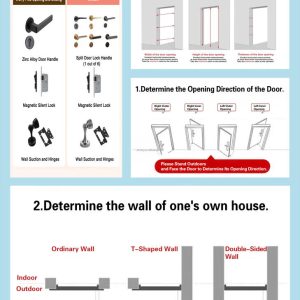
Accurate measurement prevents costly ordering errors. Measure the existing door slab, not the rough opening, if you are replacing an interior door in an existing frame.
Measure the width. Measure across the door at three points: the top, middle, and bottom. Record the narrowest measurement. Interior door slabs are typically 24, 28, 30, 32, or 36 inches wide, so round down to the nearest standard size.
Measure the height. Measure from the top of the door to the bottom edge at both the left and right sides. Use the shorter measurement. Standard height is 80 inches.
Measure the thickness. Interior door slabs are typically 1⅜ inches or 1¾ inches thick. The thicker slab is standard for prehung units and provides better sound insulation.
Check the swing. Stand in the doorway facing the door. If the hinges are on your left, it is a left-hand door. If the hinges are on your right, it is a right-hand door. This determines the handing of the prehung unit.
If you are installing into a new rough opening, use the table above to frame the opening correctly. The rough opening should be approximately 2 inches taller and 1.5 inches wider than the door slab to allow for jamb material and shimming.
Cost Factors and Customization
A 15 lite door interior costs more than a comparable flush slab door because the glazing and muntin construction add labor and material. The final price depends on several variables.
Material is the largest factor. A painted hollow-core slab with 15 lite styling will be the least expensive option. A solid oak or mahogany door with real divided lites will be substantially more. Cedar sits in the mid-range.
Glass specification matters. Clear glass is the baseline. Frosted glass adds a modest premium. Stained or beveled glass can double or triple the glazing cost.
Real divided lites vs. simulated. A door with true individual glass panes separated by muntin bars is more expensive than a door with a single pane of glass and snap-in grilles that simulate the 15 lite look. Real divided lites are more authentic and easier to clean individually, but simulated lites are more energy-efficient because there is a single continuous pane of glass.
Custom sizing. Standard 80-inch doors are the most economical. If you need a 7-foot or 8-foot door, expect a price increase of 30 to 50 percent over the standard height version.
Hardware. A 15 lite door with real glass is heavier than a hollow-core door. You will need heavier-duty hinges. Consider ball-bearing hinges to handle the additional weight smoothly over years of use.
Related Considerations for Interior Door Buyers
When evaluating styles of doors interior, a few practical factors should guide your decision beyond aesthetics.
Sound transmission. Any door with glass lites will transmit more sound than a solid door. If acoustic separation matters—for a home theater, a music room, or a ground-floor office—a solid door without glazing is the better choice. If you need both light and sound reduction, specify thicker glass or laminated acoustic glass.
Maintenance. Real divided lite doors require cleaning each individual pane. If you have 15 lites on each side of the door, that is 30 surfaces to clean per door. In a home with several 15 lite doors, this becomes a recurring chore. Simulated divided lites eliminate this issue entirely.
Building codes and egress. Interior doors generally do not have the same egress requirements as exterior doors, but if the door is in a path of travel or a fire-rated wall, check local codes. Some jurisdictions require fire-rated doors in specific locations, and glazing in fire-rated assemblies must meet specific ratings.
Finish durability. Painted doors will show wear at the edges and around the lites over time. Stained doors are more forgiving of minor scuffs. Cedar doors with a clear finish will gray naturally if exposed to sunlight, so consider a UV-blocking finish if the door receives direct light.
Swing direction and space. A hinged 15 lite door requires clearance for the swing arc. In tight hallways or small rooms, consider whether the door will block light switches or collide with furniture. Pocket doors or barn doors are alternatives, but they cannot accommodate a 15 lite configuration as easily because the glass and muntin structure is heavier and more complex to hang.
As a manufacturer, our approach to 15 lite interior doors is straightforward: we build them to the dimensional and performance standards that professional buyers expect. Our factory produces these doors in solid wood species including cedar, oak, and mahogany, with real divided lites or simulated grilles depending on your project requirements. We offer full customization on size, glass type, and finish, and we test our doors for air-tightness, water-tightness, and wind resistance before shipment. For international buyers, we handle the full export process including packing lists, proforma invoices, and customs documentation, with both FCL and LCL shipping options. If your project requires doors that meet local building codes, our adjustable profile structure and fittings can be configured accordingly. We supply OEM and ODM orders as well as bulk construction project quantities.
For a detailed quote on 15 lite interior doors for your specific project, Request Quote from our team. We can provide specifications, lead times, and pricing based on your exact dimensions and material requirements.
Frequently Asked Questions
What does “15 lite” mean in a door?
It refers to the number of glass panes in the door. A 15 lite door has 15 individual panes, usually arranged in a three-column by five-row grid. The panes are separated by muntin bars within the door frame.
Can a 15 lite door be used as an exterior door?
Yes, but with modifications. Exterior doors require tempered or laminated safety glass, proper weatherstripping, and a threshold system. The door must also meet local energy codes, which may require insulated glass units. A standard interior 15 lite door is not suitable for exterior use without these upgrades.
What is the difference between a 15 lite and a 6 lite door?
The number of glass panes. A 6 lite door typically has two columns by three rows of larger panes. The 15 lite configuration has smaller, more numerous panes, which creates a more traditional or craftsman appearance and provides more structural support through additional muntin bars.
Are 15 lite doors energy efficient?
For interior applications, energy efficiency is rarely a concern because both sides of the door are in conditioned space. If used in an exterior application, efficiency depends entirely on the glass specification. Look for double-pane insulated glass with a low-E coating and a U-factor appropriate for your climate zone.
How do I clean the glass in a 15 lite door?
Each lite must be cleaned individually. Use a soft cloth with a standard glass cleaner. For real divided lites, a small squeegee helps reach the corners. Cleaning all 30 surfaces (15 per side) takes roughly 10 to 15 minutes per door, which is why many buyers choose simulated divided lites for easier maintenance.
What is the cost range for a 15 lite interior door?
Pricing varies widely based on material, glass type, and whether the lites are real or simulated. A painted hollow-core version is the most economical, while a solid hardwood door with real divided lites and decorative glass sits at the premium end. For accurate pricing on your specifications, Contact Our Team with your door size, material preference, and quantity.