What Is a Shaker Door?
A shaker door is a door style characterized by a flat, recessed center panel surrounded by a solid outer frame of stiles and rails. It features clean, straight lines and minimal ornamentation, with no raised molding or decorative carving. The design originates from the Shaker religious community in 18th-century America, whose philosophy of simplicity and utility shaped their furniture-making—a principle that translates directly to door construction today.
When buyers ask “what is a shaker style door,” the answer lies in the joinery. The frame consists of two vertical stiles and two horizontal rails, typically joined with mortise-and-tenon construction. The center panel sits flush or slightly recessed within this frame. Unlike a flat-panel slab door that is one continuous piece, the shaker door’s five-piece construction provides structural stability and visual interest without sacrificing its minimalist aesthetic.
Shaker Door Anatomy and Materials
Understanding what a shaker door is made of matters more than its visual definition. The five-piece construction (two stiles, two rails, one panel) can be manufactured from several materials, each with distinct performance profiles for different environments.
Solid wood remains the traditional choice. Poplar, oak, maple, and mahogany are common. Solid wood offers the best acoustic performance and can be refinished multiple times over its lifespan. However, solid wood expands and contracts with humidity changes, which can cause the center panel to crack if not properly floated in the frame.
MDF (Medium-Density Fiberboard) is the most common engineered option. It provides a perfectly smooth surface for painting, resists warping better than solid wood, and costs significantly less. The trade-off is lower impact resistance and poor performance in consistently damp conditions—MDF swells permanently when exposed to standing water.
Plywood core with wood veneer balances cost and stability. The veneer provides the appearance of real wood grain, while the plywood core resists dimensional changes better than solid lumber. This option suits large formats like double doors where weight and stability become critical factors.
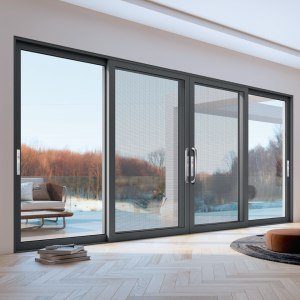
Aluminum and glass configurations adapt the shaker aesthetic to exterior or high-moisture applications. A thermal-break aluminum frame with a flat center glass panel mimics the shaker profile while delivering weather resistance and insulation that wood cannot achieve in exposed locations.
| Material | Best Use | Durability | Maintenance | Relative Cost |
|---|---|---|---|---|
| Solid wood | Interior bedrooms, offices | High; refinishable | Periodic sealing/painting | High |
| MDF | Painted interiors, dry climates | Medium; dent-prone | Touch-up paint | Low |
| Plywood core/veneer | Interior doors, stable climates | High; warp-resistant | Standard painting | Medium |
| Aluminum/glass | Exteriors, bathrooms, high-humidity | Very high | Minimal; occasional gasket check | High |
Shaker Door Dimensions and Configurations
Standard shaker door sizes follow established architectural conventions. Interior doors typically range from 24 to 36 inches in width, with 30 and 32 inches being the most common for bedrooms and bathrooms. Standard heights run 80 inches (6’8″), with 84 inches (7’0″) increasingly specified for modern ceiling heights.
Exterior shaker doors require thicker construction and different dimensions. A standard single exterior door measures 36 inches wide by 80 inches tall. Double exterior doors—often called French or patio configurations—typically span 60 to 72 inches total width, with each leaf measuring 30 to 36 inches.
| Application | Common Widths | Common Heights | Typical Thickness |
|---|---|---|---|
| Interior bedroom | 28″, 30″, 32″ | 80″, 84″ | 1-3/8″ (35 mm) |
| Interior bathroom | 24″, 28″, 30″ | 80″, 84″ | 1-3/8″ (35 mm) |
| Interior double doors | 60″–72″ total | 80″, 84″ | 1-3/8″ (35 mm) |
| Exterior single | 36″ | 80″, 84″ | 1-3/4″ (45 mm) |
| Exterior double | 60″–72″ total | 80″, 84″ | 1-3/4″ (45 mm) |
Note that these dimensions represent rough openings and pre-hung configurations. If you are replacing only the door slab, the actual slab dimension is typically 1/2 to 3/4 inch smaller than the rough opening to accommodate the jamb and clearance. Always measure the existing slab or the frame opening before ordering, and confirm whether your supplier ships pre-hung units or slabs only.
Shaker Doors for Interior and Bedroom Spaces
Shaker style doors interior applications dominate residential and hospitality specification because the design adapts to virtually any decor. The flat panel accepts paint uniformly, making it the default choice for white or off-white interiors. It also works with natural wood stains when specified in oak or walnut.
For shaker bedroom doors, the primary decision factor is acoustics. A solid-core shaker door (whether solid wood or engineered) provides noticeably better sound isolation than a hollow-core version. If bedrooms share walls with living areas or home offices, specify solid-core construction. For closet doors within a bedroom, lighter hollow-core options may suffice since acoustic separation is less critical.
Shaker style bedroom doors also raise the question of swing direction and hardware. The flat frame provides a wide, flat surface for lever handles or knobs, and the absence of raised panels means no interference with door stops or wall-mounted light switches. Pre-drilling for hardware is standard, but confirm the backset (typically 2-3/8″ or 2-3/4″) with your supplier to match existing locksets.
Exterior and Double Shaker Doors
Exterior shaker doors are a valid specification when the design intent demands continuity between interior and exterior openings. The challenge is that the traditional shaker five-piece wood construction performs poorly outdoors—moisture infiltration at panel joints leads to rot and warping within a few seasons.
For exterior applications, buyers should look for shaker-profile doors constructed from materials engineered for weather exposure. Aluminum-clad wood doors offer the interior warmth of wood with an exterior aluminum skin that resists moisture. Fully aluminum or fiberglass doors with a shaker-profile center panel provide the same clean lines with superior durability. If solid wood exterior doors are required, specify marine-grade adhesives, stainless steel hardware, and a full-length aluminum threshold to mitigate moisture damage.
Double shaker doors—two adjacent leaves that meet at the center—are commonly used for large closet openings, office entrances, or patio transitions. The shaker style works particularly well in this format because the clean frame lines align across both leaves without the visual interruption of ornate carvings. When specifying double shaker doors, decide whether you need an astragal (a vertical strip covering the gap between leaves) for acoustic or weather sealing, or whether a simple overlapping meeting stile suffices.
Related Considerations for Shaker Style Doors
Shaker vs. other door styles. The most common comparison is between shaker and raised-panel (also called craftsman or traditional) doors. Raised-panel doors feature a center panel that protrudes above the frame with angled edges, creating shadows and a more formal appearance. Shaker doors keep the panel flat or only slightly recessed, producing a contemporary or transitional look. Shaker doors also differ from slab doors, which have no frame at all—just a continuous flat surface. Slab doors are cheaper but lack the visual definition and structural rigidity of the shaker’s frame-and-panel construction.
Choosing between shaker styles for bedrooms. For shaker style bedroom doors, consider the room’s function. A home office or guest bedroom benefits from solid-core construction for privacy and noise reduction. A child’s bedroom might prioritize a paintable MDF surface that can be refreshed as decor changes. If the bedroom opens to a bathroom, consider a shaker door with a louvered or glass insert for ventilation and light—these variations maintain the flat-panel aesthetic while adding functionality.
Customization options. Shaker doors accept customization readily. Sizes can be adjusted to fit non-standard openings, typically in 1/8-inch increments. Paint colors are virtually unlimited, though factory-applied finishes generally outperform field painting. Glass options range from clear to frosted to textured patterns, set into the center panel for a modern twist on the traditional design. Hardware choices—hinges, handles, locks—are independent of the door style, giving you freedom to match existing fixtures throughout a building.
Measurement and installation considerations. Before ordering, verify the following: door width and height at three points (top, middle, bottom) since openings are rarely perfectly square; the jamb depth to confirm hinge placement; and the floor levelness for swing clearance. Account for flooring thickness—if you plan to add carpet or tile after installation, the door must be undercut accordingly. For pre-hung units, confirm the rough opening dimensions against the manufacturer’s specifications, as tolerances vary between suppliers.
Frequently Asked Questions
How much does a shaker door cost?
Costs vary widely by material, core type, and finish. Interior hollow-core MDF shaker doors are the most economical, while solid wood or aluminum exterior units cost several times more. Expect to pay a premium for factory-applied paint finishes, custom sizes, and pre-hung configurations. For accurate pricing, request quotes from multiple suppliers with your exact dimensions and material specifications.
Can shaker doors be painted or stained?
Yes. MDF and primed wood shaker doors take paint exceptionally well. Solid wood doors can be either painted or stained, though staining requires the wood species to be consistent across the frame and panel for a uniform appearance. Aluminum shaker doors are typically factory-finished in a powder-coated color and cannot be field-painted without special preparation.
Are shaker doors suitable for bathrooms?
Shaker doors work in bathrooms when the material matches the humidity level. Solid wood and MDF are poor choices for constantly damp environments—they will swell, warp, or degrade over time. For bathroom applications, specify a moisture-resistant core (often labeled MR MDF) or choose an aluminum or fiberglass shaker door that will not absorb moisture.
How do shaker doors compare to panel doors for soundproofing?
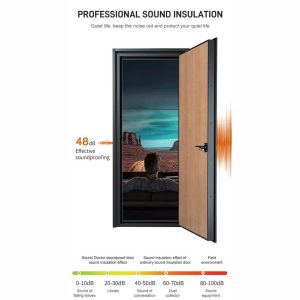
The acoustic performance of a shaker door depends on its core, not its style. A solid-core shaker door offers similar sound insulation to a solid-core raised-panel door of the same thickness. The style difference has negligible impact on acoustics. For maximum sound isolation, focus on door thickness (1-3/4″ performs better than 1-3/8″), perimeter sealing, and automatic door bottoms rather than the panel design.
As a manufacturer of doors and windows, we build shaker doors to the specifications that matter for real projects. Our factory produces solid wood, MDF, and thermal-break aluminum shaker doors for both interior and exterior applications. We offer full customization on dimensions, color, glass, and hardware, and we test our exterior units for air-tightness, water-tightness, and wind resistance before shipment. For international buyers, we handle FCL and LCL shipping with complete customs documentation, and we adjust profile structures and fittings to match local building codes in your target market.
If you are specifying shaker doors for a project and need accurate pricing or technical drawings, Contact Our Team with your dimensions and material preferences.