Sizing Reality: What “60 x 80” Actually Means
Before comparing materials or glass packages, understand what the label “60 x 80” represents. The nominal size refers to the door unit’s width and height in inches. A 60 x 80 French door is a pair of 30-inch-wide doors, each 80 inches tall.
The actual manufactured dimensions differ from the nominal size. Most pre-hung units measure approximately 59.5 inches wide by 79.5 inches tall, though this varies by manufacturer and jamb configuration. Some brands produce units at 59.75 inches wide. This distinction matters because the rough opening must accommodate the actual unit dimensions plus shim space, not the nominal size.
The rough opening for a 60 x 80 pre-hung French door typically ranges from 61.5 to 62.5 inches wide and 81.5 to 82.5 inches tall. The variance depends on jamb width, whether brickmold is attached, and the manufacturer’s specifications. For a 4-9/16 inch jamb (standard 2×4 wall construction), the rough opening usually falls around 61.5 inches wide. Thicker walls with 6-9/16 inch jambs require slightly wider openings.
Flooring height affects the vertical dimension. If you are installing over a subfloor that will receive tile, hardwood, or other finished flooring, add that thickness to your rough opening height calculation. Many installation failures trace back to forgetting this final floor elevation.
Materials Compared: Aluminum, Wood, and uPVC
Each material family presents distinct trade-offs across durability, maintenance, thermal performance, and aesthetic flexibility. Your choice should align with your climate, architectural style, and willingness to perform ongoing maintenance.
Aluminum and Thermal-Break Aluminum
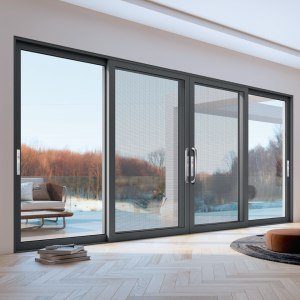
Aluminum exterior French doors offer structural rigidity with slim sightlines that maximize glass area. Standard aluminum conducts heat readily, making it a poor insulator in extreme climates. Thermal-break aluminum addresses this by inserting a polyamide strip between interior and exterior aluminum sections, interrupting the thermal bridge.
For living rooms opening to patios or gardens, thermal-break aluminum provides several practical advantages. The material resists corrosion and requires minimal maintenance beyond occasional cleaning of tracks and hardware. Powder-coated finishes resist fading and chalking for years. Aluminum’s inherent strength allows larger panels and slimmer profiles than uPVC, which appeals to homeowners seeking expansive views.
The primary drawback is thermal performance relative to wood or uPVC, even with thermal breaks. In very cold or very hot climates, aluminum frames may underperform unless paired with high-performance glazing. Condensation can form on interior aluminum surfaces in humid conditions if the thermal break quality is insufficient.
Wood
Solid wood French doors deliver timeless aesthetics and natural insulation properties. Wood’s cellular structure provides inherent thermal resistance superior to aluminum. It accepts paint or stain beautifully, allowing seamless integration with existing interior trim and architectural character.
The maintenance burden is substantial. Exterior wood doors require periodic refinishing, typically every one to three years depending on exposure. Moisture intrusion through failed finishes causes warping, swelling, and rot, particularly at bottom rails and joints where water collects. Engineered wood products, such as laminated veneer lumber or composite stiles and rails, mitigate some stability issues while preserving a wood appearance.
For living room applications with covered patios or protected entries, wood remains a strong choice where aesthetics carry priority. In fully exposed, rain-driven locations, wood demands vigilant maintenance that many homeowners underestimate.
uPVC
uPVC (unplasticized polyvinyl chloride) French doors offer excellent thermal performance at a lower price point. The material does not conduct heat readily, contributing to energy efficiency. uPVC frames require virtually no maintenance, never need painting, and resist moisture damage, rot, and corrosion.
The limitations are structural and aesthetic. uPVC’s lower strength necessitates thicker, bulkier profiles to achieve equivalent rigidity to aluminum. This reduces glass area and can appear visually heavy. Color options, while improved in recent years, remain limited compared to aluminum’s powder-coating palette or wood’s stainability. White uPVC tends to yellow or chalk over extended UV exposure, though modern formulations resist this better than older products.
uPVC suits moderate climates and applications where budget and maintenance reduction outweigh aesthetic refinement. For large opening widths or locations with high wind loads, aluminum or reinforced uPVC becomes necessary.
Glass and Glazing Options
The glass package often determines the door’s real-world performance more than the frame material. For exterior French doors, prioritize three characteristics: energy efficiency, safety, and sound transmission.
Double-pane insulated glass units (IGUs) are the practical minimum for exterior doors. Two panes separated by an air or argon gas gap reduce heat transfer significantly compared to single glazing. Argon gas, being denser than air, further reduces convective heat transfer within the cavity.
Low-emissivity (low-E) coatings represent the most consequential glazing choice. These microscopic metallic layers reflect long-wave infrared radiation while admitting visible light. In hot climates, low-E coatings with low solar heat gain coefficients (SHGC) reduce cooling loads. In cold climates, coatings designed to reflect interior heat back into the room reduce heating costs. Many manufacturers offer climate-specific low-E options, so specify your region when ordering.
Safety glazing requirements typically mandate tempered glass for doors. Tempered glass, when broken, shatters into small granular pieces rather than sharp shards, reducing injury risk. Building codes generally require tempered glass in door panels and adjacent sidelites within a specified distance from the floor. Laminated glass, which bonds a plastic interlayer between panes, provides additional security and sound attenuation. If the door is near a street or entertains noisy exterior spaces, laminated glass noticeably reduces sound transmission.
How the Right Door Functions in a Living Room Context
A living room French door serves as both a visual focal point and a functional entry to the outdoors. The door’s configuration affects furniture placement, traffic flow, and daylight penetration.
Consider the swing direction carefully. French doors typically swing inward for exterior applications, with the active leaf (the door you open regularly) determined by your space’s traffic patterns. If furniture sits near the door, an outward swing may be preferable, though this requires appropriate clearance and hardware rated for exterior exposure. Outward-swinging doors also reduce interior floor space consumption and often seal better against wind-driven rain since the pressure pushes the door against its frame.
Standard French doors operate as a pair, with one fixed leaf and one active leaf. For living rooms with frequent outdoor access, consider whether you need both leaves operable for full-width opening during gatherings or large furniture moves. Some configurations offer both leaves operable without a center mullion, though this requires more complex hardware and typically higher cost.
Installation and Weatherproofing Priorities
Proper installation determines whether your door performs to its specifications. The rough opening must be square, plumb, and level before installation begins. Out-of-square openings force the door frame into a twisted position, causing binding, air leaks, and premature hardware failure.
Flashing and weather-resistant barriers around the opening prevent water intrusion, the leading cause of premature door failure. The threshold must be properly sealed to the subfloor, and the pan flashing should direct water outward. Improper flashing allows water to reach the framing, causing rot, mold, and structural damage that may not become visible for years.
The gap between the door frame and rough opening should receive low-expansion foam insulation, not high-expansion foam that can bow the frame. Exterior trim and caulking complete the weather seal. For replacement installations, verify that the existing opening accommodates the new unit’s dimensions, particularly if the previous door used different jamb widths or if siding thickness varies.
Cost Considerations by Material and Configuration
Pricing for 60 x 80 exterior French doors varies widely based on material, glass package, hardware quality, and whether you purchase a pre-hung unit or a slab for existing framing. Expect a significant range across material families.
uPVC French doors generally occupy the entry-level price tier. Aluminum doors sit at a moderate price point, with thermal-break versions commanding a premium over standard profiles. Wood doors range from mid-tier to premium depending on species, with mahogany and other tropical hardwoods costing substantially more than domestic woods. Fiberglass, though not covered in depth here, offers a wood-like appearance with lower maintenance and typically prices between uPVC and premium wood.
The glass package adds meaningful cost. Upgrading from double-pane clear glass to low-E with argon gas typically increases price moderately. Laminated glass, decorative grids, or custom shapes add further cost. Hardware represents another variable: multi-point locking systems, premium handlesets, and upgraded hinges add to the total but improve security and longevity.
Maintenance Expectations and Durability
Your maintenance commitment should factor into the material decision as heavily as initial cost. Aluminum and uPVC require minimal ongoing maintenance, limited to cleaning frames and lubricating hardware annually. Powder-coated aluminum finishes typically last decades without refinishing.
Wood demands the most attention. Exterior-grade finishes degrade through UV exposure and moisture cycling. Expect to inspect and recoat wood doors regularly, with full refinishing intervals depending on your climate’s severity. Neglected wood doors deteriorate quickly, and repair costs often exceed the price difference you saved by choosing wood over aluminum.
Hardware durability varies with quality. Multi-point locking systems engage at multiple points along the door edge, improving security and weather seal but adding mechanical complexity. Choose hardware from established manufacturers with available replacement parts, as proprietary systems may become obsolete.
Additional Considerations for Living Room French Doors
Energy Efficiency Beyond the Glass
Frame material and glazing interact to determine overall door U-factor, a measure of heat transfer rate. Lower U-factors indicate better insulation. For living rooms occupied year-round, prioritize doors with U-factors appropriate to your climate zone. Whole-unit U-factor accounts for frame, glass, and edge spacers, providing a more accurate performance picture than glass-only ratings.
Customization Options and Their Impact
Manufacturers offer customization beyond nominal sizes. You can often adjust door height, configure different panel arrangements, select interior and exterior colors separately, and choose hardware finishes. These options affect performance only when they change structural elements. Taller doors require reinforced frames and heavier-duty hardware. Non-standard sizes increase cost and lead time but may be necessary for existing openings that cannot be modified.
Manufacturer and Supplier Selection Criteria
The quality difference between doors often lies in manufacturing tolerances and quality control rather than visible features. Assess potential suppliers on several dimensions.
Test data provides objective performance evidence. Look for air infiltration, water penetration, and structural wind load test results. Manufacturers who publish or provide these test reports demonstrate confidence in their products. Ask specifically how their doors perform under wind-driven rain, a common failure point for French doors where the two leaves meet.
Inspect hardware quality and warranty terms. A door is only as reliable as its locking mechanism and hinges. Verify that replacement parts will remain available and that the warranty covers both materials and labor.
For buyers sourcing internationally, consider the supplier’s experience with export documentation and shipping logistics. Factory-direct manufacturers can offer competitive pricing by eliminating distributor margins, but verify their quality control processes before committing.
How We Meet These Standards as a Manufacturer
As a factory-direct manufacturer of exterior French doors, our approach to these requirements centers on measurable performance rather than subjective claims. Every aluminum door unit undergoes pre-shipment testing for air tightness, water tightness, and wind resistance before leaving our facility. These tests verify that the door meets its rated performance specifications, not just its visual appearance.
Our thermal-break aluminum profiles incorporate polyamide strips sized to your climate conditions. We offer double-pane and triple-pane glass configurations with low-E coatings matched to your region’s heating or cooling demands. Tempered and laminated safety glazing options comply with building code requirements for door applications.
Because we control manufacturing directly, we accommodate full customization on dimensions, colors, and hardware selections without middleman markup. Our foreign trade team prepares complete export documentation including packing lists, proforma invoices, and customs paperwork. We arrange both FCL and LCL shipping from our China factory, and our profile structures and fittings can be adjusted to match local building codes in your target market.
If you are comparing suppliers for a 60 x 80 exterior French door project, send us your specifications. We can provide detailed performance data and a quotation based on your exact configuration requirements.