What You Need to Know First
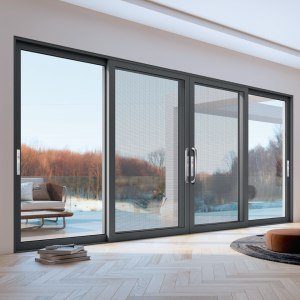
French doors with built-in blinds solve a persistent problem: how to get the classic double-door look without sacrificing light control or adding the maintenance burden of exposed window treatments. The blinds sit sealed between two or three panes of glass, protected from dust, damage, and the curious hands of children and pets.
For buyers evaluating these systems for a project, the main decision points come down to four variables: how the blinds operate, what frame material carries them, what glass package surrounds them, and whether the manufacturer can deliver the specific dimensions your openings require. This guide walks through each variable with an eye toward long-term performance, not just upfront cost.
How Built-In Blind Systems Work
Three distinct mechanisms exist for integrating blinds into French doors. Each has different trade-offs in reliability, cost, and repair complexity.
Between-glass blinds are the most common configuration. The blind sits inside the sealed insulating glass unit (IGU), suspended between the two panes. Operation happens through one of three methods:
- Manual slide control: A small slider on the door edge or frame tilts the slats mechanically. Simple, no power source needed, and the least expensive. The trade-off is a small protrusion on the door edge and a cord that can wear over time.
- Magnetic coupling: A magnet outside the glass moves a matching magnet inside, which rotates the slats. No penetration through the seal, which means better thermal performance and no mechanical wear point at the frame. Magnetic systems are generally the most reliable over a 10-year horizon.
- Motorized operation: A small motor inside the IGU tilts or raises the blinds via a wall switch, remote, or smart-home integration. Motorized units cost significantly more and introduce an electronic component that can fail. But for doors that are hard to reach, or for projects where automation is already in place, the convenience justifies the premium.
Internal blinds sit inside the door cavity but outside the sealed glass unit, typically in a channel or pocket behind an interior pane. These are easier to service because you can access the blind without breaking the glass seal, but they are less common in French doors because the cavity design adds depth to the door slab.
External blinds are mounted on the interior face of the door. These are not truly “built-in” and are mentioned only to clarify the distinction. They offer no protection from dust, require regular cleaning, and defeat most of the reasons buyers choose integrated systems.
The critical difference between these systems is repairability. Between-glass blinds require breaking the IGU seal to access the blind if it fails. That means removing the door, transporting the sash to a glass shop, and replacing the entire insulated unit. Budget-conscious buyers should weigh this repair cost against the likelihood of failure, which is highest in manual cord systems and lowest in magnetic designs.
Frame Materials: Aluminum, Wood, and uPVC
The frame determines structural performance, thermal efficiency, and maintenance requirements. There is no universal “best” — the right choice depends on whether these doors face exterior weather or serve as interior dividers.
Aluminum with thermal break dominates the commercial and high-end residential exterior market. The thermal break — a polyamide strip separating the interior and exterior aluminum profiles — prevents the frame from acting as a thermal bridge. Modern thermally broken aluminum achieves U-values comparable to uPVC while offering superior structural rigidity. This matters for French doors because the wide, unsupported span of a double-door opening creates significant wind-load stress. Aluminum’s high strength-to-weight ratio allows slimmer sightlines and larger glass areas without deflection. The trade-off is cost: thermally broken aluminum is the most expensive frame option.
Wood remains the aesthetic benchmark for interior French doors and for protected exterior applications like patios and courtyards. Solid wood offers natural insulation and timeless appearance, but it demands maintenance. Exterior wood doors require periodic refinishing to prevent moisture damage, and the frame’s dimensional stability depends on proper sealing. Clad wood options — wood interior with aluminum or vinyl exterior — solve the maintenance problem but cost more than either material alone.
uPVC offers the lowest upfront cost and excellent thermal performance. Its limitations are structural: uPVC has lower strength than aluminum, which means thicker profiles are needed to achieve equivalent rigidity. For standard 60 x 80 openings this is rarely an issue, but for oversized French doors or high wind-load zones, uPVC may not meet engineering requirements. uPVC is also limited in color options and can yellow over time in intense UV exposure.
For exterior French doors with built-in blinds, thermally broken aluminum is the most defensible recommendation. It handles structural loads, resists corrosion, accepts the deeper frames needed for between-glass blinds, and delivers the thermal performance modern energy codes demand.
Glass and Energy Efficiency
The glass package matters more than the frame for overall thermal performance. A French door is mostly glass; the IGU determines both the U-factor and the solar heat gain coefficient (SHGC).
Double glazing is the minimum standard for exterior doors. Two panes of glass with an argon or krypton gas fill between them, plus a Low-E coating, delivers U-factors in the 0.25–0.30 range depending on the specific coating and spacer system. Triple glazing improves this to approximately 0.15–0.20 but adds significant weight. French doors with triple glazing require heavier hinges and more robust framing, which increases cost.
For built-in blinds, the glass package has an additional consideration: the blind occupies space within the IGU, which means the overall unit is thicker than a standard double-glazed unit. A typical between-glass blind adds roughly 19–25 mm to the IGU depth. This affects the door frame design and the weight of the sash.
Condensation and fogging are the most common concerns with between-glass blinds. Fogging occurs when moisture enters the IGU and condenses on the interior surfaces. The causes are multifactorial: seal failure over time, extreme temperature differentials, and manufacturing defects in the sealant application. Low-E coatings help by keeping the interior pane closer to room temperature, reducing the temperature gradient that drives condensation. Desiccant-filled spacer systems absorb residual moisture during the unit’s life.
Buyers should understand that fogging is a manufacturing quality issue, not an inherent flaw of built-in blinds. Units from reputable manufacturers with proper sealant systems and quality control rarely fog within their warranty period. The warranty itself is your primary protection — look for IGUs warranted against seal failure for at least 10 years.
Tempered glass is a code requirement, not an option. French doors and any glazing within 24 inches of a door opening must use tempered glass under most building codes. Tempered glass breaks into small, rounded pieces rather than sharp shards. Laminated glass, which holds together when broken, is an upgrade for security and sound reduction but adds cost.
The 60 x 80 Configuration
The 60 x 80 size — 60 inches wide by 80 inches tall — corresponds to a standard exterior door height of 6 feet 8 inches. This is the most common French door configuration for patio and garden openings because it matches standard rough openings without framing modifications.
When evaluating 60 x 80 French doors with built-in blinds, understand that the 60-inch width typically refers to the total width of both doors combined, with each door leaf measuring approximately 30 inches. Some manufacturers also offer asymmetric splits, but the standard double-door configuration is two equal leaves.
For exterior applications, a 60 x 80 French door with built-in blinds is absolutely available, but consider two factors:
- Egress requirements: Building codes in most jurisdictions require at least one door leaf in a pair to provide a clear opening of at least 32 inches wide and 24 inches high. A 30-inch leaf with standard hardware may not meet this requirement. Verify your local code before specifying. Some manufacturers offer 60 x 80 configurations with one wider leaf (e.g., 36 inches + 24 inches) to satisfy egress.
- Weight: A 60 x 80 French door with between-glass blinds and double glazing weighs substantially more than a standard door. The hinges and frame must be engineered for the additional load. This is another reason thermally broken aluminum frames are preferred — they handle the weight without sagging over time.
For interior applications, the 60 x 80 size is less common but available. Interior French doors typically use thinner glass and lighter framing, which reduces cost.
Comparison Table: Key Features at a Glance
| Feature | Aluminum (Thermal Break) | Wood | uPVC |
|---|---|---|---|
| Frame material | Extruded aluminum with polyamide thermal break | Solid hardwood or clad wood | Extruded uPVC with steel reinforcement |
| Blind type available | Between-glass (manual, magnetic, motorized) | Between-glass (manual, magnetic); internal on some lines | Between-glass (manual, magnetic) |
| Size availability | Custom, including 60 x 80 and oversized | Custom, including 60 x 80 | Standard sizes; custom limited |
| Energy efficiency | Excellent (U-factor 0.25–0.30 with double glazing) | Good (U-factor 0.28–0.35) | Excellent (U-factor 0.22–0.28) |
| Price range | Highest | High | Lowest |
| Maintenance | Minimal — anodized or powder-coated finish | High for exterior — requires refinishing | Minimal — wash with mild soap |
| Structural strength | Highest — suitable for large spans and wind-load zones | Moderate | Moderate — thicker profiles required |
| Best use case | Exterior French doors, high-performance projects, oversized openings | Interior doors, protected exterior applications | Budget exterior projects, standard 60 x 80 openings |
Buying Checklist: Evaluating Manufacturers
When comparing suppliers for French doors with built-in blinds, use these criteria to separate capable manufacturers from assemblers with limited quality control:
Check the IGU warranty specifically. Many manufacturers warrant the frame for 20 years or more but only warrant the sealed glass unit for 5–10 years. Since the blind is inside the IGU, its lifespan is tied to the seal warranty. A manufacturer confident in its sealing process will offer a 10-year or longer IGU warranty.
Ask about blind replacement. Can the blind be replaced independently, or does the entire IGU need to be swapped? This affects long-term maintenance costs. Some manufacturers design their systems so the blind cassette can be removed and replaced without breaking the glass seal.
Verify test documentation. Air-tightness, water-tightness, and wind-resistance test reports should be available for the specific door model. These tests follow standards such as EN 12207, EN 12208, and EN 12210, or their regional equivalents. A manufacturer that cannot produce test reports for its products is a red flag.
Confirm customization capability. Projects rarely align perfectly with standard sizes. A manufacturer that can adjust profile dimensions and fittings to match your specific opening — and to comply with local building codes — is more valuable than one offering only fixed sizes.
Evaluate the blind mechanism’s track record. Ask which mechanism the manufacturer recommends for reliability and why. Magnetic systems generally have fewer failure points than mechanical cords because there is no physical connection through the frame to wear out.
Consider the supply chain. Direct factory sourcing eliminates middleman markup and provides clearer communication on specifications. For construction projects with bulk requirements, a factory-direct relationship also means more consistent quality control and better pricing on volume orders.
How We Meet These Standards
As a manufacturer of custom doors and windows, our approach to French doors with built-in blinds starts with the recognition that between-glass systems are only as good as their sealing and their mechanism. We use magnetic coupling as our standard blind operation because it eliminates the mechanical wear points that cause failures in cord-based systems. The blinds are suspended in a sealed IGU with desiccant-filled spacers, and each unit undergoes air-tightness, water-tightness, and wind-resistance testing before shipment.
Our thermally broken aluminum profiles are engineered to handle the weight of between-glass blinds and double glazing in 60 x 80 configurations and larger. We adjust profile structures and fittings to match local building codes — including egress requirements and tempered glass mandates — for the markets we serve. Since we operate as a factory-direct supplier, we can customize door dimensions, glass packages, blind types, and hardware finishes without the constraints of a distribution network. Every order ships with packing lists, proforma invoices, and full customs documentation, whether you are ordering a single set of doors or a construction project’s bulk supply.
For projects where the standard options do not fit, we provide OEM and ODM services to adapt the door system to your specifications. The cost advantage of direct factory sourcing is straightforward: you pay for the product and its engineering, not for a chain of intermediaries.
Frequently Asked Questions
Do French doors with built-in blinds fog up?
Fogging occurs when moisture enters the sealed IGU. It is caused by seal failure, not by the presence of the blind itself. Low-E coatings and desiccant spacers reduce the risk. A manufacturer’s IGU warranty is your protection — verify it covers seal failure for at least 10 years.
How do you clean French doors with built-in blinds?
You clean the exterior glass surfaces only. The blinds are sealed between the panes and never need dusting. A mild glass cleaner on the exterior panes is sufficient. Avoid abrasive cleaners or scrapers that could scratch the glass or damage the seal.
Can you repair or replace built-in blinds in French doors?
In most between-glass systems, the blind is integral to the IGU. If the blind fails, the entire insulated glass unit must be replaced. Some manufacturers design replaceable blind cassettes, but this is not universal. Ask about replacement options before purchasing.
Are French doors with built-in blinds energy efficient?
Yes, when properly constructed. The blind adds insulation value when closed, and the Low-E coating and gas fill provide year-round thermal performance. The blind itself does not compromise the IGU’s efficiency if the seal is intact.
How much do French doors with built-in blinds cost?
Pricing varies widely based on frame material, size, glass package, and blind mechanism. Thermally broken aluminum with magnetic controls and double glazing sits at the higher end of the market. uPVC offers the most budget-friendly entry point. For accurate pricing, request quotes with your specific dimensions and performance requirements.
Do built-in blinds break easily?
The mechanism is the vulnerable point. Manual cord systems experience wear over years of use. Magnetic systems have fewer moving parts and lower failure rates. Motorized systems introduce electronics that can fail but offer the most convenient operation.
Are built-in blinds worth the premium over standard French doors?
For most buyers, yes. The cost premium over a standard French door is offset by eliminating separate window treatments, reducing cleaning time, and protecting the blinds from damage. The sealed design also prevents the dust accumulation that affects exposed blinds.