French Door Blinds: What You Need to Know First
If you are looking for window coverings for French doors, the core decision comes down to three configurations: interior-mounted blinds that attach to the door frame, blinds sealed between two panes of glass, and retrofit insert units that fit inside the existing door frame. For most homeowners, the best choice depends on whether the doors are hinged or sliding, how often they are used, and whether you own or rent the property.
For hinged French doors that swing open, interior-mounted blinds are the most straightforward and affordable option, but they can interfere with the door swing. For sliding patio doors, blinds between glass offer the cleanest look with zero maintenance. Built-in blinds—factory-installed between the glass panes—are the most durable but come at a premium and cannot be repaired if the mechanism fails.
The remainder of this guide breaks down each type in detail, compares them side by side, and walks through the measurement and selection criteria that matter most.
Types of French Door Blinds Explained
Interior-Mounted Blinds
Interior-mounted blinds attach directly to the door panel or the surrounding frame. They are the most common retrofit solution and the easiest to install. You can choose from horizontal aluminum blinds, cellular shades, or vertical blinds depending on the door configuration.
For doors with divided lites (multiple small glass panes separated by mullions), you will need one blind per pane or a single blind covering the entire door. The latter is simpler but leaves gaps at the mullions where light leaks through.
The main advantage of interior-mounted blinds is cost. A basic aluminum blind for a standard door runs far less than factory-integrated options. They are also replaceable—if a slat bends or the cord snaps, you buy a new blind rather than replacing the entire door.
However, interior-mounted blinds have two significant drawbacks. First, they protrude from the door surface, which means they can catch on the door frame when the door swings open. Second, the cords and mechanisms are exposed, making them vulnerable to damage from pets and children. Cordless options mitigate the safety concern but do not solve the clearance issue.
Between-Glass Blinds (Sealed Units)
Between-glass blinds are installed inside the insulated glass unit (IGU) itself. The blind sits between two panes of glass, sealed at the factory. This configuration is available on new doors or as a replacement glass unit for existing doors, provided the frame can accommodate the thicker IGU.
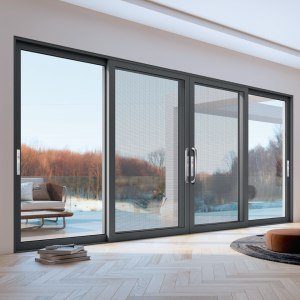
This is the best option for sliding French patio doors. Because the blind is fully enclosed, there is nothing to catch, no cords to tangle, and no dust to clean. The sealed unit also provides an additional layer of insulation, which can slightly improve the door’s thermal performance.
The trade-offs are significant. Between-glass blinds cannot be adjusted from both sides—the control mechanism is typically a small knob or magnetic slide on one side of the glass. If the mechanism fails, you cannot fix it; the entire sealed unit must be replaced. And because the blind is inside the sealed cavity, you cannot swap it for a different color or style without replacing the glass.
Cost is another factor. A between-glass blind unit typically costs two to three times more than a comparable interior-mounted blind, and the price increases with the number of door panels. For a multi-panel sliding door, this can add up quickly.
Built-In Blinds (Factory-Integrated)
Built-in blinds are manufactured as part of the door itself. The blind mechanism is integrated into the door frame or the glass unit during production, with controls discreetly placed on the edge of the door or the frame.
This is the premium solution. Built-in blinds offer the same protection as between-glass units—no dust, no cords, no damage—but with better-integrated controls and a cleaner aesthetic. They are particularly well-suited for French doors with mullions, where the blind can be sized to each individual pane during manufacturing.
The downsides are cost and permanence. Built-in blinds add a substantial premium to the door price, typically 15–30% depending on the manufacturer and the complexity of the configuration. They also lock you into a specific blind type—if you want to change from horizontal blinds to a different style, you must replace the entire door.
For commercial projects or custom homes where the doors are being manufactured to order, built-in blinds are often the best choice. For existing doors, they are not an option unless you are replacing the door entirely.
Retrofit Inserts
Retrofit inserts are pre-assembled blind units that fit inside the existing door frame, between the glass and the interior surface. They are designed for doors that already have a recessed frame or a sufficient gap between the glass and the door edge.
These inserts offer a middle ground. They provide the clean look of between-glass blinds without requiring a full glass replacement, and they can be removed for cleaning or replacement. However, they are only compatible with certain door frames, and the installation requires precise measurement.
Retrofit inserts are a good solution for rental properties where you cannot permanently modify the door, or for homeowners who want the aesthetics of integrated blinds without the cost of new glass units. The main limitation is availability—inserts are not universally sized, and finding one that matches your door’s exact dimensions can be challenging.
French Door Blinds Comparison Table
| Type | Pros | Cons | Cost | Best Use |
|---|---|---|---|---|
| Interior-Mounted | Low cost, easy to install, replaceable, wide style selection | Protrudes from door, catches on swing, exposed cords, dust accumulation | Low | Hinged doors with sufficient clearance, budget-conscious projects |
| Between-Glass (Sealed) | Zero maintenance, no cords, protected from damage, slight insulation benefit | Cannot repair mechanism, no style changes without glass replacement, higher cost | Medium-High | Sliding patio doors, high-traffic areas, dust-sensitive environments |
| Built-In (Factory) | Seamless integration, best aesthetics, durable, sized to each pane | Highest cost, permanent commitment, requires new door purchase | High | New construction, custom homes, commercial projects |
| Retrofit Inserts | Clean look, removable, no permanent modification | Limited compatibility, precise measurement required, fewer style options | Medium | Rental properties, existing doors with recessed frames |
How to Choose the Right French Door Blinds
Door Configuration
The first question is whether your French doors are hinged or sliding. Hinged doors need blinds that either clear the door swing or are mounted flush enough to avoid contact. Sliding doors have no swing issue, so the main concern is the track and the stacking panels.
For hinged doors, measure the distance between the door face and the frame when the door is fully open. If this clearance is less than the depth of a standard interior-mounted blind, you will need a low-profile option or a between-glass solution.
For sliding doors, consider how many panels stack. If the door has three or more panels, the stacked panels can obscure the blind controls on the end panels. Between-glass blinds with controls on each panel are easier to manage in this configuration.
Glass Type and Divided Lites
French doors with divided lites—multiple small panes separated by mullions—present a specific challenge. Interior-mounted blinds can cover the entire door, but the mullions create gaps where light leaks. Alternatively, you can install individual blinds on each pane, which looks cleaner but multiplies the cost and installation effort.
If you are ordering new doors with divided lites, specify between-glass blinds for each pane. This is the only way to achieve a fully integrated look without light gaps. The manufacturing cost is higher, but the result is significantly better.
For doors with a single large pane, the choice is simpler. Any blind type works, and the decision comes down to budget and maintenance preferences.
Operation and Accessibility
Consider how the blinds will be adjusted. Interior-mounted blinds have cords or wands that hang within reach. Between-glass blinds have a small control knob or magnetic slider on the glass surface. Built-in blinds integrate the control into the door frame.
If the doors are in a location where the controls are difficult to reach—behind furniture, in a narrow hallway, or above a counter—a motorized option may be worth considering, though it adds cost and complexity. For most applications, a simple manual control is sufficient.
Aesthetics and Light Control
Different blind types offer different levels of light control. Horizontal blinds allow you to tilt the slats for partial light or close them fully for privacy. Between-glass blinds offer the same adjustability but with the slats fully enclosed.
If light control is critical—for example, in a home theater or a bedroom facing east—choose a blind with a tight seal when closed. Between-glass blinds tend to have less light leakage than interior-mounted blinds because there are no gaps at the edges.
Measuring for French Door Blinds
Accurate measurement is essential, regardless of the blind type. The process differs depending on whether you are mounting inside the door frame or on the door surface.
For interior-mounted blinds on a single door panel, measure the width and height of the glass opening. Subtract a small allowance for the mounting hardware—typically 1/8 to 1/4 inch on each side, but check the manufacturer’s specifications, as tolerances vary. For doors with multiple panes, measure each pane individually, as frame irregularities can cause significant differences.
For between-glass replacement units, measure the existing glass dimensions and the frame depth. The replacement IGU must fit within the existing frame profile, and the blind mechanism adds thickness. If the frame is not deep enough, this option is not viable.
For retrofit inserts, measure the interior frame recess where the insert will sit. The insert must fit snugly but not so tightly that it cannot be removed for cleaning.
The most common mistake is assuming all doors are square. Measure at three points—top, middle, and bottom—and use the smallest dimension. A frame that is out of square by even a quarter inch will cause a blind to bind or leave noticeable gaps.
Quality Indicators and Warranty
When evaluating blinds, look for the following quality markers:
- Slat thickness: Thicker slats (0.008 inch or more for aluminum) resist bending and maintain their shape over time.
- Cord quality: Braided cords last longer than twisted cords and are less likely to fray.
- Mechanism smoothness: Operate the blind before installation. A quality mechanism should move smoothly without catching or jerking.
- Warranty coverage: Between-glass and built-in blinds should carry a warranty of at least five years on the mechanism. Interior-mounted blinds typically have shorter warranties, but a one-year warranty is the minimum you should accept.
For between-glass units, ask about the argon gas fill and the low-E coating. These affect the thermal performance of the unit, and a reputable manufacturer will provide the specifications in writing.
Frequently Asked Questions About French Door Blinds
Can I retrofit blinds into existing French doors?
Yes, but the method depends on your door’s construction. If your door has a single glass pane with sufficient frame depth, you can replace the glass with a between-glass blind unit. If the frame has a recessed interior channel, retrofit inserts may work. For doors with standard interior-mounted blinds, you can simply replace the existing blind with a new one—no door modification is needed.
The key limitation is frame depth. Between-glass units are thicker than standard IGUs, and not all frames can accommodate the additional thickness. Measure the frame depth before ordering.
What is the best blind option for French patio doors?
For sliding French patio doors, between-glass blinds are the best option. The sealed unit eliminates the maintenance issues that plague interior-mounted blinds on frequently used doors, and there is no risk of the blind catching on the sliding mechanism. The slight cost premium is justified by the durability and the clean appearance.
For hinged French doors that open onto a patio, the choice depends on the door swing. If the door opens inward and you have sufficient clearance, interior-mounted blinds work well. If clearance is tight or the door is used constantly, between-glass blinds are worth the investment.
Are built-in blinds worth the extra cost?
Built-in blinds are worth the cost when you are ordering new doors and you value the clean aesthetic and zero-maintenance operation. They are also a good choice for commercial projects where durability and appearance are priorities.
The main drawback is the permanence. If the blind mechanism fails—and it will eventually, as all mechanical systems do—you cannot repair it without replacing the glass unit or the entire door. Weigh this against the convenience of never having to dust or adjust a separate blind.
How do I measure for French door blinds?
Measure the width and height of the glass opening at three points: top, middle, and bottom. Use the smallest dimension to ensure the blind fits. For interior-mounted blinds, subtract the manufacturer’s recommended allowance for mounting hardware. For between-glass units, measure the frame depth as well as the glass dimensions.
Always check the manufacturer’s measurement specifications before ordering. Tolerances vary, and a blind that is too large will not fit, while one that is too small will leave gaps.
How do I maintain and clean French door blinds?
Interior-mounted blinds require regular dusting and occasional deep cleaning. Use a microfiber duster or a vacuum attachment with a brush head. For stubborn stains, wipe each slat with a damp cloth and mild detergent, then dry immediately.
Between-glass and built-in blinds require no cleaning—the sealed unit keeps dust out. The only maintenance is occasional lubrication of the control mechanism, if accessible. If the mechanism fails, the entire unit must be replaced.
What is the difference between blinds between glass and interior-mounted blinds?
Blinds between glass are sealed inside the insulated glass unit, while interior-mounted blinds attach to the door surface or frame. Between-glass blinds are protected from dust, damage, and cords, making them more durable and lower-maintenance. They also offer a cleaner appearance.
Interior-mounted blinds are less expensive, easier to install, and replaceable. They can be changed to match a new decor, while between-glass blinds are permanent. The choice comes down to whether you prioritize initial cost or long-term maintenance.
Additional Considerations for French Door Blinds
French Doors with Blinds Inside or Built In
When purchasing new French doors, you have the option to specify blinds that are built into the door during manufacturing. This is different from between-glass blinds—built-in units have the mechanism integrated into the door frame, while between-glass units have the blind sealed inside the glass.
For doors with multiple panes, built-in blinds can be sized to each individual pane, providing a uniform appearance without light gaps at the mullions. This is the preferred solution for French doors with divided lites, as it eliminates the visual disruption of separate blinds on each pane.
The cost premium for built-in blinds varies by manufacturer and configuration, but it is typically justified for projects where the doors are being custom-made anyway. The key advantage is that the blinds are designed for the specific door dimensions, eliminating the measurement issues that plague retrofit solutions.
French Door Blinds Inserts
Retrofit inserts are a practical solution for existing doors where you want the look of integrated blinds without replacing the glass or the door. These pre-assembled units fit into the frame recess and can be removed for cleaning or replacement.
The main limitation is compatibility. Inserts require a specific frame profile with sufficient depth and a clean, square opening. They are most commonly available for standard door sizes, so custom-sized doors may not have insert options.
For rental properties, inserts offer a compromise—you get the aesthetic benefit of integrated blinds without permanently modifying the door. When you move out, the inserts come with you.
French Patio Doors with Blinds Between Glass
For French patio doors, the between-glass configuration is particularly well-suited. The sealed unit protects the blind from the elements, and the lack of cords or exposed mechanisms makes it safe for high-traffic areas.
One consideration for patio doors is the temperature differential between the interior and exterior. Between-glass blinds are sealed in an insulated unit, which reduces condensation on the glass and helps maintain the blind’s condition over time. Interior-mounted blinds on patio doors are exposed to temperature fluctuations and may require more frequent replacement.
Evaluating Manufacturers for Custom or Bulk Orders
If you are sourcing French doors with integrated blinds for a construction project, the manufacturer’s capabilities matter more than the brand name. Here is how we approach this as a manufacturer.
When evaluating a supplier, ask about their glass unit production. Between-glass blinds require a specialized assembly process—the blind mechanism must be installed in a clean environment and sealed properly to prevent moisture ingress. A manufacturer that produces their own IGUs has better quality control than one that outsources glass fabrication.
Ask about the blind mechanism’s origin and warranty. Quality mechanisms come from established component manufacturers, and the warranty should cover the mechanism for at least five years. Get the warranty terms in writing before placing an order.
Confirm the manufacturer can accommodate your door configuration. French doors come in many configurations—hinged, sliding, bifold, with mullions, with transoms. Not all manufacturers can produce between-glass blinds for every configuration, so verify this early in the process.
Finally, ask about lead times and minimum order quantities. Custom glass units with between-glass blinds require longer lead times than standard doors, and some manufacturers have minimum order requirements for custom configurations. Understanding these constraints upfront prevents delays later.
As a manufacturer of custom doors and windows, we produce French doors with between-glass and built-in blinds to specification. Our factory handles the glass unit assembly in-house, which allows us to control the sealing process and ensure the blind mechanism is properly protected. We can adjust the profile structure and fittings to match local building codes, and we provide full customs documentation for international shipments. If you are planning a project that requires custom French door blinds, contact our team to discuss your specifications.