Quick Answer: What to Know Before Buying 32×80 Interior Doors
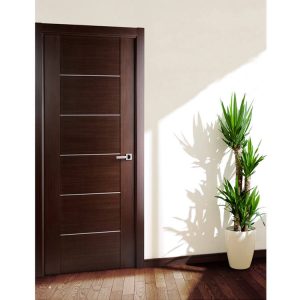
A 32×80 interior door refers to a door that is 32 inches wide and 80 inches tall. This is one of the most common standard sizes for residential interior passage doors in North America, typically used for bedrooms, bathrooms, and closets.
Before you buy, understand these three basics:
- Slab vs. Prehung: A slab is just the door panel. A prehung unit comes with the door already attached to a frame (jamb), with hinges installed. Prehung is the standard choice for new construction and most renovations because it ensures proper fit and alignment.
- Finished vs. Unfinished: Prefinished doors arrive with paint or stain already applied at the factory. Unfinished doors require you to paint or stain them on-site, which adds labor time and cost.
- Core Material: The inside of the door determines its weight, sound insulation, durability, and price. Options range from hollow core (light, cheap) to solid wood (heavy, premium).
The right choice depends on your project type, budget, and performance requirements. This guide breaks down each type so you can compare options side by side.
Types of 32×80 Interior Doors: Prehung, Prefinished, Solid Wood, and More
Prehung Doors
A prehung interior door includes the door slab, the jamb (the frame that installs into the wall), and the hinges, all assembled as one unit. The unit is then set into the rough opening and secured with shims and screws.
Why buyers choose prehung: The primary advantage is alignment. When the jamb and door come pre-assembled, the door gap is consistent and the hinges are correctly mortised. This eliminates the most common DIY problem—installing a slab into an existing frame that is out of square.
For contractors and property managers, prehung units speed up installation significantly. A skilled installer can set a prehung door in about 30–45 minutes, versus the time needed to fit a slab into an old frame that may require planing or frame repair.
Prefinished Doors
Prefinished means the door arrives with its final coating already applied—either factory-painted or factory-stained. This is distinct from primed doors, which have only a base coat and still require final painting.
The real cost question: Prefinished doors cost more upfront, but they save money on labor. A painter might charge $80–$150 per door to properly finish an unfinished slab, including sanding, priming, and two coats. Factory finishing is typically more durable because it is applied in a controlled environment with industrial-grade coatings that cure harder than field-applied paint.
For large projects with dozens of doors, the labor savings alone often justify the higher unit price. Factory finishes also avoid the risk of inconsistent color between doors—a common issue when painting in batches on site.
Solid Wood Doors
Solid wood doors are constructed entirely from natural wood. In the 32×80 interior door category, this typically means a solid core of stiles and rails (the outer frame pieces) with solid wood panels in the center.
What solid wood actually delivers: Weight and acoustic performance. A solid wood door typically weighs 60–90 pounds, compared to 20–30 pounds for a hollow core door. This mass provides noticeably better sound insulation and a more substantial feel when closing. Solid wood also allows for refinishing—you can sand and re-stain the door years later to change its appearance.
The trade-offs are cost and stability. Solid wood is the most expensive option and is more susceptible to seasonal movement (expansion and contraction) than engineered products. In climates with high humidity variation, solid wood doors may require occasional adjustment of the hinges or latch.
Dutch Doors
A Dutch door is split horizontally so the top and bottom halves can open independently. In the 32×80 configuration, the split typically occurs at a height of 36–42 inches from the bottom.
Where Dutch doors make sense: They are most commonly used in kitchens, home offices, and entryways to a mudroom or patio area. The top half opens to allow airflow and conversation while the bottom half keeps children and pets contained. In commercial settings, Dutch doors are occasionally used in reception areas or daycare facilities.
Dutch doors are almost always purchased as prehung units because the two halves must align perfectly. They also cost more than standard doors due to the additional hardware and the need for a specialized center latch.
Hollow Core vs. Solid Core vs. Engineered Wood
Beyond the basic categories above, you need to understand the internal construction:
- Hollow core: The door is a thin shell with a honeycomb cardboard interior. These are the cheapest 32×80 interior doors, typically found in production homes and rental properties. They offer minimal sound insulation and feel light and hollow when knocked.
- Solid core: The interior is filled with compressed wood fiber or particleboard. Solid core doors offer sound insulation close to solid wood at a lower price point. They are heavy but do not expand and contract like natural wood. Most “wood” doors sold for interior use at mid-range prices are actually solid core with a wood veneer surface.
- Engineered wood: This includes doors made from MDF (medium-density fiberboard) or HDF (high-density fiberboard) skins over a solid or hollow core. Engineered doors offer a smooth, paintable surface that does not show grain and is highly resistant to warping.
32×80 Interior Door Comparison Table
| Type | Material | Price Range (USD) | Pros | Cons | Best For |
|---|---|---|---|---|---|
| Hollow Core Slab | Cardboard core, wood veneer or MDF skin | $30–$60 | Lightweight, cheapest option, easy to trim | Poor sound insulation, feels flimsy, not refinishable | Closets, utility rooms, budget rentals |
| Solid Core Slab | Particleboard core, wood veneer skin | $80–$150 | Good sound insulation, heavy feel, paintable | Heavier to install, veneer can be damaged if trimmed incorrectly | Bedrooms, bathrooms, offices |
| Solid Wood Slab | Natural wood (oak, maple, poplar) | $150–$400 | Refinishable, premium appearance, durable | Expensive, seasonal movement, requires finishing | High-end homes, visible areas, custom projects |
| Prehung Hollow Core | Pre-assembled with jamb and hinges | $60–$120 | Fast installation, consistent alignment | Frame adds cost, still lightweight feel | New construction, multi-unit projects |
| Prehung Solid Core | Pre-assembled with jamb and hinges | $150–$300 | Sound insulation, fast install, factory finish available | Higher upfront cost | Bedrooms, home offices, condos |
| Prehung Solid Wood | Pre-assembled natural wood | $250–$600+ | Premium look, refinishable, excellent durability | Highest cost, heavy unit requires two installers | Custom homes, luxury renovations |
| Prehung Dutch Door | Pre-assembled split design | $300–$800 | Ventilation with security, charming aesthetic | Complex hardware, higher cost | Kitchens, offices, entry to patio areas |
How to Choose the Right 32×80 Interior Door for Your Project
Prehung vs. Slab: Which Is Best?
Choose a prehung door when:
- You are installing into a new wall or a rough opening with no existing frame.
- The existing frame is damaged, rotted, or out of square.
- You want the fastest, most reliable installation.
- You are managing a multi-door project where consistency matters.
Choose a slab door when:
- The existing frame and hinges are in good condition and square.
- You want to match an existing door style and only need to replace the panel.
- You have the tools and skill to mortise hinges and bore for the latch.
- You are on a tight budget and can do the finishing work yourself.
A common mistake is buying a slab to save money, then discovering the old frame is warped. By the time you plane the door, adjust the frame, and re-mortise the hinges, you have spent more in labor than the cost difference of a prehung unit.
Prefinished vs. Unfinished: Calculating the Real Cost
The factory finish on a prefinished door includes the edges (which are often exposed when the door is trimmed) and is applied before the door is cut to size. This means the finish wraps around all visible surfaces uniformly.
For unfinished doors, you must account for:
- Paint or stain materials: $20–$40 per door
- Labor (professional painter): $80–$150 per door
- Drying time between coats: 1–2 days minimum
- Risk of defects: drips, uneven coverage, or damage during handling
For a project with 20 doors, choosing unfinished over prefinished might save $500–$800 in material cost but add $2,000–$3,000 in finishing labor. Prefinished is almost always the better value for projects with three or more doors.
Solid Wood vs. Engineered Options
Solid wood is not automatically “better.” Consider the specific location:
- Bathrooms: The humidity changes from hot showers cause solid wood to expand and contract more than engineered cores. This can lead to sticking doors or cracked panels. A solid core door with a moisture-resistant MDF skin is often more practical.
- Bedrooms: Solid wood or solid core doors provide the acoustic privacy most homeowners expect. A hollow core door in a bedroom will transmit conversations and TV noise clearly.
- High-traffic areas: Solid wood dents and scratches over time. Engineered doors with a factory finish are often more resistant to daily wear in hallways and children’s rooms.
Understanding Rough Opening Dimensions
The rough opening is the framed gap in the wall where the door unit installs. For a 32×80 prehung door, the standard rough opening is 34 inches wide by 82.5 inches tall. This allows room for shims and leveling.
However, always verify against the specific manufacturer’s specifications. Some prehung units have different jamb widths or require different tolerances. The actual door slab measures approximately 31.75 inches by 79.75 inches—the 1/4-inch difference is the reveal gap that allows the door to swing freely.
When measuring an existing opening, measure the width at three points (top, middle, bottom) and the height at both sides. If the opening is out of square by more than 1/4 inch, you will need to adjust the framing or order a custom-sized door.
Installation Considerations for Prehung Doors
Professional installers follow a specific sequence that is worth understanding before you hire someone or attempt it yourself:
- Check for plumb: The jamb must be perfectly vertical. Use shims behind the hinge side first, then the latch side.
- Secure the hinge side first: Screw through the jamb into the rough opening framing, checking that the door swings freely before securing the latch side.
- Level the header: The top jamb must be level, or the door will swing open or closed on its own.
- Use the right screws: Most prehung units come with 2-inch screws for the jamb. For heavy solid wood doors, replace the hinge screws with 3-inch screws that reach the wall studs for additional support.
- Insulate the gaps: Fill the space between the jamb and the rough opening with low-expansion foam. Avoid over-filling, as the foam can bow the jamb.
The most common installation error is attaching the jamb to the framing before checking that the door is square within its own frame. Always check the diagonal measurements of the door panel itself first.
Frequently Asked Questions About 32×80 Interior Doors
What is the actual size of a 32×80 interior door?
The door slab itself measures approximately 31.75 inches by 79.75 inches. The “32×80” designation is the nominal size. The prehung unit, including the jamb, is larger—typically around 33.5 inches wide by 81.5 inches tall. The rough opening needs to be about 34 inches by 82.5 inches.
How much do cheap prehung interior doors cost, and what are the trade-offs?
Entry-level prehung hollow core doors in the 32×80 size range typically cost $60–$100 at retail. These are functional but offer minimal sound insulation and use thinner jambs that can flex over time. The trade-off is durability and acoustic performance. For rental properties or closets where these factors do not matter, they are a reasonable choice. For bedrooms or offices, the additional $50–$100 for a solid core door is usually worth the investment.
Are solid wood prehung interior doors better than engineered options?
Solid wood offers the ability to refinish and a premium appearance, but engineered solid core doors often outperform them in stability and sound insulation at a lower price. Solid core doors use dense wood fiber that does not expand and contract with humidity changes, so they are less likely to stick. If your priority is acoustic performance and long-term reliability, solid core is often the better technical choice. If you value natural wood grain and the ability to stain or re-stain, solid wood is the way to go.
What is a prehung interior Dutch door, and where is it commonly used?
A Dutch door splits horizontally into two independently operating halves. In the 32×80 size, the split is usually at about 36–40 inches from the bottom. The top half opens to allow airflow and visibility while the bottom half remains closed to contain pets or children. These are most commonly installed in kitchens, home offices, and mudrooms. Because the two halves must align precisely at the split, Dutch doors should always be purchased as prehung units.
How do I ensure the 32×80 size fits my doorway rough opening?
Measure the width and height of your rough opening at multiple points. The opening should be at least 34 inches wide and 82.5 inches tall for a standard 32×80 prehung door. If your opening is smaller, you can trim the jambs and door slightly, but only if the difference is less than 1/2 inch. If the opening is larger, you will need to add framing or shim material to close the gap. For non-standard openings, consider ordering a door sized to your exact specifications rather than forcing a standard unit to fit.
What should I look for when buying prehung interior doors in bulk for a construction project?
When purchasing for a multi-unit project, verify these specifications before ordering:
- Jamb width: The jamb must match your wall thickness (typically 4-9/16 inches for 2×4 walls with drywall, or 6-9/16 inches for 2×6 walls).
- Hinge placement: Standard is 3 hinges per door, but verify the height placement matches your other doors for consistency.
- Factory finish: Confirm that the finish is applied after the door is cut and that touch-up materials are available for field adjustments.
- Consistency: Order all doors from the same production batch to ensure color and grain match across the project.
- Lead time: Confirm the manufacturer’s production and shipping schedule against your construction timeline.
Additional Considerations: Budget, Customization, and Sourcing
Budget Planning Beyond the Door Price
The door itself is only part of the total installed cost. Plan for these additional items:
- Hardware: Hinges, latch, and door knobs typically cost $30–$80 per door. Higher-end lever sets can reach $150 or more.
- Casing and trim: The decorative molding around the door frame adds $15–$40 per side.
- Shims, foam, and fasteners: Approximately $10–$15 per door.
- Installation labor: Professional installation runs $100–$200 per prehung door, depending on your region and the complexity of the opening.
For a budget-conscious project, the cheapest path is a hollow core slab with minimal trim, installed by a capable DIYer. The most cost-effective path for quality is a prehung solid core door with factory finish, professionally installed.
Customization Options for 32×80 Doors
While 32×80 is a standard size, you can still customize significantly:
- Door style: From flush (smooth, flat) to paneled designs with 1, 2, 4, or 6 panels. The panel configuration changes the visual weight of the door.
- Glass inserts: Some 32×80 doors can be ordered with a glass lite for natural light transmission. This is common for office doors or pantry entrances.
- Color and finish: Factory finishes are available in a wide range of standard colors. Custom color matching is possible for larger orders.
- Jamb material: Match the jamb to your baseboards and casing for a cohesive look. Common options include poplar, pine, and MDF.
Sourcing from Manufacturers vs. Retail
The sourcing channel significantly impacts both price and customization flexibility.
Retail (big-box stores and lumberyards): These outlets stock standard 32×80 doors in limited styles and finishes. Prices are competitive for entry-level products, but you are limited to what is in stock or available from their catalog. Custom orders through retail typically take 2–4 weeks and offer limited flexibility on specifications.
Direct from manufacturers: Buying directly from a factory, especially an overseas manufacturer, offers different advantages:
- Price: Factory-direct pricing eliminates retail markup, which is typically 20–40% over wholesale.
- Customization: Manufacturers can produce doors to your exact specifications—specific wood species, custom finishes, modified dimensions, or special hardware requirements.
- Volume pricing: For projects requiring 50 or more doors, manufacturers offer tiered pricing that becomes significantly more attractive at scale.
- Quality control: A reputable manufacturer will provide pre-shipment inspection reports, including air-tightness and water-tightness tests where applicable.
The trade-off is lead time and logistics. Factory-direct orders require advance planning for production time (typically 2–6 weeks) and shipping (which varies by destination). You also need to manage customs clearance and inland freight, which a manufacturer’s export team can assist with.
Here is how we meet these standards as a manufacturer. Jusen Door and Windows Manufacturing Co., Ltd. produces 32×80 interior doors directly from our factory in China, supplying construction projects and distributors who need consistent quality at competitive pricing. Because we are the manufacturer, there is no middleman markup, and we offer full customization on size, color, glass, and hardware accessories—including private label and OEM production.
For bulk orders, we conduct strict pre-shipment inspections covering air-tightness, water-tightness, and wind resistance testing, and we provide complete export documentation including packing lists and proforma invoices. Our adjustable profile structures and fittings can be configured to match the building codes of your target market, and we ship via both FCL and LCL to match your project volume. If you are sourcing doors for a multi-unit development or need a custom run that standard catalogs cannot accommodate, our team can provide specifications and pricing for your specific project requirements.