Key Takeaways: Oak Interior Doors at a Glance
Oak interior doors are available in three primary constructions—solid, engineered, and veneered—each with distinct trade-offs in cost, stability, and appearance. White oak and red oak differ in grain pattern, color depth, and hardness, which affects both aesthetics and durability. Panel configuration (2-panel vs. 6-panel) is primarily a visual decision, while prehung vs. slab is an installation decision. Standard heights typically range from 78 to 96 inches, with widths from 18 to 42 inches, though custom sizing is common. For most residential and light commercial interior applications, engineered oak doors offer the best balance of stability and cost, while solid oak remains the premium choice for those prioritizing acoustic performance and the ability to refinish multiple times.
Types of Oak Interior Doors: Solid, Engineered, and Veneered
Understanding the construction difference is the first decision point, because it determines price, weight, dimensional stability, and how the door behaves over time.
Solid oak doors are constructed from solid oak stiles and rails, often with solid oak or engineered wood core panels. These are the heaviest option, typically weighing 60–100 pounds depending on size and thickness. They provide the best sound insulation and can be sanded and refinished many times over their lifespan. The trade-off is cost and weight—solid doors require heavier hinges and careful handling during installation. They are also more susceptible to seasonal movement; in climates with significant humidity swings, solid oak doors can expand or contract enough to affect fit.
Engineered oak doors (also called stile-and-rail with engineered core) use solid oak only for the visible stiles and rails, while the interior panels are made from MDF, particleboard, or a honeycomb core. The visible oak veneer is typically 2–4 mm thick, which still allows for one or two light refinishing sessions. These doors weigh 40–60 pounds, are dimensionally more stable than solid oak, and cost significantly less—often 30–50% less than comparable solid doors. The primary limitation is that the panels cannot be heavily sanded, and if the veneer is damaged deeply, repair is more complex than with solid wood.
Veneered oak doors (flush or paneled) consist of an engineered core—usually a hollow or semi-solid construction—completely covered with a thin oak veneer, typically 0.6–1.5 mm thick. These are the most affordable option and are commonly used in multi-unit residential projects or budget-conscious renovations. They are lightweight, dimensionally stable, and available in a wide range of finishes. However, the veneer layer is too thin for refinishing, and the door’s acoustic performance is noticeably inferior to solid or engineered options.
For commercial or high-traffic applications, engineered doors are often the practical default. For residential settings where the door is a design centerpiece, the premium cost of solid oak is easier to justify.
White Oak vs. Red Oak: Which One Fits Your Project?
The oak species determines the grain pattern, color undertone, and hardness—all factors that influence how the door looks in your space and how it holds up to daily use.
White oak has a tighter, more linear grain with a subtle, often slightly olive or gray undertone. Its color ranges from light tan to medium brown, and it takes clear finishes beautifully, making it a popular choice for modern, Scandinavian, and transitional interiors. White oak is also naturally more water-resistant due to its closed pore structure—a meaningful advantage in bathrooms or kitchens where moisture exposure is higher. Its Janka hardness rating is approximately 1,360 lbf, making it slightly harder than red oak.
Red oak has a more pronounced, dramatic grain with a pinkish to reddish-brown undertone. The grain is more open and porous, which means it absorbs stains differently and often requires a wood filler for a smooth painted finish. Red oak’s Janka rating is about 1,290 lbf—slightly softer than white oak but still well above most other hardwoods used in doors. Red oak tends to be more affordable than white oak due to its abundance in North American forests.
For interior doors specifically, the practical differences in hardness are negligible—both species are more than adequate for residential use. The real decision is aesthetic. If you want a clean, uniform look that pairs well with gray or neutral palettes, white oak is the stronger choice. If you prefer a warmer, more traditional appearance with visible grain character, red oak delivers that at a slightly lower cost.
One additional consideration: if you are matching existing trim, flooring, or cabinetry, the species should align with what is already in the space. Mixing white oak doors with red oak trim will be visually discordant.
Panel Styles: 2-Panel vs. 6-Panel Oak Doors
Panel configuration is the most visible design decision. While there are many variations—4-panel, 5-panel, arched top—the 2-panel and 6-panel styles dominate the market for oak interior doors.
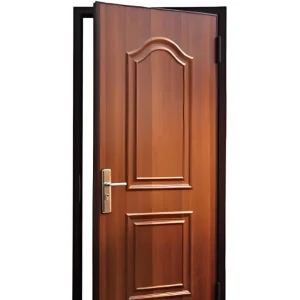
2-panel oak doors feature two large rectangular or arched panels, one above the other. This design reads as cleaner and more contemporary. It suits modern, craftsman, and minimalist interiors where visual simplicity is desired. The larger panels also showcase the oak grain more prominently, which is an advantage if you have selected oak specifically for its natural figure.
6-panel oak doors have six smaller panels arranged in the classic colonial configuration—two narrow panels on top, two wider in the middle, and two narrow at the bottom. This style is the traditional default in North American residential construction. It works well in colonial, farmhouse, traditional, and transitional interiors. The smaller panels break up the wood surface, making the door feel more formal and detailed. If your home has other traditional millwork details, 6-panel doors will feel more cohesive.
The practical differences between the two are minimal. Both are equally durable, and neither performs better acoustically or structurally. The decision is purely aesthetic and should be driven by the architectural style of the space. A useful rule of thumb: if you are unsure, look at the door casing and baseboard profiles. Simpler trim pairs better with 2-panel doors; more ornate trim pairs better with 6-panel.
Prehung vs. Slab: What’s the Difference?
A prehung door comes mounted in its own frame (jamb) with hinges already attached and pre-drilled holes for the lockset. The unit is installed as one piece into the rough opening. Slab doors are just the door itself—no frame, no hinges, no hardware.
Prehung doors are the recommended choice for most buyers, particularly for new construction or full renovations. They ensure proper alignment between the door and frame, which prevents binding, gaps, and air leakage. Prehung units also simplify installation for contractors, reducing labor time. The trade-off is that the jamb must match your wall thickness, and prehung units are bulkier and more expensive to ship.
Slab doors make sense in three situations: when you are replacing an existing door but keeping the current frame (provided the frame is square and in good condition), when you have a non-standard opening that requires a custom frame, or when you are purchasing in volume and plan to build your own jambs. Slab doors require precise measuring and experienced installation—a poorly fitted slab door will stick, rattle, or leave unsightly gaps.
For a buyer comparing oak interior doors, the decision comes down to project scope. Full renovation or new build: choose prehung. Simple door replacement with a sound existing frame: slab is viable. When in doubt, prehung is the safer option.
Single vs. Double Oak Interior Doors
Double doors, also called French doors in some configurations, consist of two door slabs side by side in a single opening. They are a significant investment, but they deliver functional and aesthetic value in specific applications.
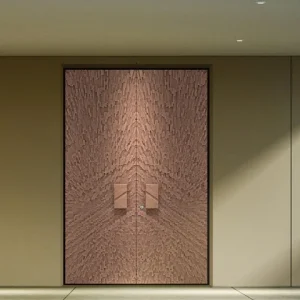
Double oak interior doors make sense for openings wider than 48 inches—typically 60 to 72 inches. They are commonly used for primary suites, home offices, formal living rooms, and spaces where you want to create a sense of grandeur or allow for a wider passage when both doors are open. Each leaf in a double-door configuration is typically narrower than a standard single door (24 to 36 inches per leaf), which means each door is lighter and easier to operate.
The investment is justified when the opening width genuinely benefits from two doors—for example, when you want to open the entire wall between two rooms, or when furniture needs to pass through regularly. For a standard 36-inch opening, a single door is almost always the more practical and economical choice. Double doors also require more wall space for the swing of both leaves, so they are not suitable for tight hallways or rooms where wall space is limited.
Cost-wise, double doors are roughly two to three times the price of a comparable single door, accounting for the additional slab, hardware, and installation complexity. They are worth the investment when the opening is wide enough to make them functional, not merely decorative.
Sizing Guide: Standard and Custom Dimensions (Including 18×80)
Interior door sizing follows regional conventions, but there is a useful universal framework for understanding what is available.
Standard heights are 78 inches (1981 mm), 80 inches (2032 mm), and 96 inches (2438 mm). The 80-inch height is the most common for residential interiors in North America. The 78-inch height is an older standard, still found in many pre-1960s homes. The 96-inch height is used for taller ceilings and is increasingly popular in new construction.
Standard widths for single doors range from 18 to 42 inches, in 2-inch increments: 18, 20, 24, 28, 30, 32, 34, 36. The most common interior door widths are 28, 30, and 32 inches. The 18×80 interior door size is a specialty dimension, typically used for closets, utility rooms, or narrow passages. It is less commonly stocked and often requires a special order.
Thickness is typically 1-3/8 inches (35 mm) for interior doors, though some commercial applications use 1-3/4 inches (45 mm).
When measuring for a slab door replacement, measure the actual door slab—not the opening. For prehung units, measure the rough opening: the framed opening in the wall where the door unit will be installed. The rough opening should be approximately 2 inches wider and 2.5 inches taller than the door slab dimensions.
Custom sizing is widely available from manufacturers, though it increases cost and lead time. For non-standard openings, it is often more economical to adjust the framing to accept a standard door size than to order a custom slab. However, for truly unusual openings—particularly in older homes—custom sizing is often the only practical option.
Comparison Table: Oak Interior Door Options
| Feature | Solid Oak | Engineered Oak | Veneered Oak |
|---|---|---|---|
| Construction | Solid oak stiles, rails, and panels | Solid oak stiles/rails with engineered core panels | Thin oak veneer over engineered core |
| Weight (approx.) | 60–100 lbs | 40–60 lbs | 30–50 lbs |
| Dimensional stability | Moderate; moves with humidity | High; minimal seasonal movement | High; minimal seasonal movement |
| Refinishing capability | Multiple times | 1–2 times | Not recommended |
| Sound insulation | Excellent | Good | Moderate |
| Cost | Highest | Mid-range | Lowest |
| Best use case | Premium residential, acoustic priorities | Most residential and light commercial | Budget projects, multi-unit |
How to Choose the Right Oak Interior Door
The selection process follows a logical sequence of decisions. Working through them in order prevents costly mistakes.
First, establish the budget. This determines whether solid, engineered, or veneered is realistic. If the budget only supports veneered doors, do not compromise on the veneer quality—a good veneer over a solid core is more durable than a poor-quality engineered door.
Second, assess the environment. High-humidity areas like bathrooms or laundry rooms favor engineered or white oak construction due to better moisture resistance. Solid red oak in a humid bathroom without adequate ventilation is a recipe for warping.
Third, determine the installation scope. Full renovation or new build points to prehung. Simple replacement points to slab—provided the existing frame is sound.
Fourth, match the style to the architecture. The panel configuration and species should complement the existing millwork, flooring, and overall design direction. A modern home with clean lines will look disjointed with 6-panel red oak doors; a traditional colonial will look incomplete with 2-panel white oak doors.
Fifth, verify the supplier’s quality control. Ask about moisture content testing, grain matching on veneers, and finish durability. A door that looks good in a showroom may not hold up if the manufacturer skips proper kiln drying or uses inconsistent veneer quality.
Finally, consider the total cost of ownership. A cheaper veneered door may need replacement in 10–15 years, while a solid oak door can last 50+ years with proper care. For a primary residence, the long-term value of solid or engineered oak often justifies the higher upfront cost.
Frequently Asked Questions
What is the difference between solid oak and engineered oak interior doors?
Solid oak doors are constructed entirely from oak lumber, making them heavier, more expensive, and capable of being refinished many times. Engineered oak doors use solid oak only for the visible frame pieces, with an engineered core for the panels. They are more dimensionally stable, lighter, and less expensive, but can only be refinished once or twice.
Which is better for interior doors: white oak or red oak?
White oak has a tighter grain, a more neutral color undertone, and better natural moisture resistance. Red oak has a more pronounced grain, a warmer reddish tone, and is typically less expensive. For most interior applications, the choice is aesthetic rather than performance-based. White oak suits modern and Scandinavian interiors; red oak suits traditional and rustic styles.
What are the pros and cons of 2-panel vs. 6-panel oak doors?
2-panel doors have a cleaner, more contemporary appearance and showcase the oak grain better. 6-panel doors have a more traditional, formal look that suits colonial and farmhouse styles. There is no structural or durability difference between them—the decision is purely visual.
Should I choose a prehung oak interior door or a slab door?
Choose prehung for new construction or full renovations—it ensures proper alignment and simplifies installation. Choose slab only if you are replacing an existing door in a sound, square frame. Slab installation requires precise measuring and carpentry skills.
What sizes are available for oak interior doors, including 18×80?
Standard heights are 78, 80, and 96 inches. Standard widths range from 18 to 42 inches in 2-inch increments. The 18×80 size is a specialty dimension for closets or narrow passages and typically requires a special order. Custom sizes are available from most manufacturers.
Are oak interior double doors worth the investment?
Yes, when the opening is 60 inches or wider and you want the ability to open the full passage. For standard 36-inch openings, a single door is more practical and economical. Double doors cost roughly two to three times a single door.
How do I maintain and care for oak interior doors?
Dust regularly with a soft cloth. Clean with a slightly damp cloth and mild soap when needed—avoid harsh chemicals or abrasive cleaners. Apply furniture polish or wax every few months to maintain the finish. Avoid prolonged exposure to direct moisture and maintain indoor humidity between 30–50% to prevent wood movement.
Additional Considerations for Your Purchase
Beyond the core construction and style decisions, several factors affect the final outcome of your oak door purchase.
Color and finish options matter more than many buyers expect. White oak interior doors are often specified with a clear or lightly pigmented finish to highlight the natural grain. Interior red oak doors are frequently stained to achieve a darker, richer tone—red oak’s open grain absorbs stain unevenly, so a wood conditioner is recommended before staining. Prefinished doors from a factory typically offer more consistent results than site-applied finishes.
Sustainability and sourcing are increasingly relevant procurement criteria. Look for doors certified by the Forest Stewardship Council (FSC) or the Programme for the Endorsement of Forest Certification (PEFC). These certifications verify that the oak was harvested from responsibly managed forests. If sustainability is a priority for your project, confirm the certification status with the supplier before ordering.
Acoustic performance is an underappreciated differentiator. Solid oak doors provide noticeably better sound insulation than hollow-core or veneered options. For bedrooms, home offices, or media rooms, the additional cost of solid or engineered construction is justified by the acoustic benefit alone.
Hardware compatibility should be confirmed before purchase. Solid oak doors are heavy—ensure your hinges are rated for the door weight. Most manufacturers pre-drill for standard locksets, but confirm the backset and bore size match your chosen hardware.
Lead time and availability vary significantly. Standard sizes in common styles are often stocked by distributors. Specialty sizes like 18×80, custom panel configurations, or specific species (white oak is less commonly stocked than red oak) typically require 4–8 weeks lead time from order.
Cost expectations depend on construction type, species, finish, and whether the door is prehung. Solid oak doors typically cost substantially more than engineered or veneered options. White oak commands a premium over red oak due to supply dynamics. Prehung units add the cost of the jamb and labor savings on installation. For accurate pricing, request quotes from multiple suppliers with your specific dimensions and specifications.
As a manufacturer of interior doors, we approach these standards through our factory-direct model. We produce solid, engineered, and veneered oak doors in both 2-panel and 6-panel configurations, with white oak and red oak options. Our pre-shipment inspection includes checks for dimensional accuracy, finish consistency, and structural integrity. We support OEM and ODM projects, and we can adjust profile structures and fittings to match local building codes in your target market. For volume orders, we provide full customs documentation and direct container shipping from our factory in China.
If you are comparing oak interior door options and need detailed specifications, pricing, or lead times for your project, contact our team directly.