Key Takeaways: What to Look for in a Door Construction Company
Choosing a door construction company for indoor oak doors or a golden oak door project comes down to four things: manufacturing capability, quality control, customization flexibility, and logistics reliability. A company that only installs doors cannot help you if you need custom sizing. A manufacturer that lacks testing protocols cannot guarantee performance. A supplier with poor shipping coordination will stall your project regardless of product quality.
Before comparing brands, separate the business models. Some companies manufacture doors, some only supply them, and others focus purely on installation. Each model has trade-offs. Manufacturers give you direct pricing and full customization. Suppliers offer broader catalogs but add a markup. Installation-only firms handle labor but have no control over product quality. For B2B buyers managing construction projects, the manufacturer-supplier hybrid model usually offers the best balance of control and cost.
Types of Indoor Oak Doors: Solid, Engineered, and Veneer
Oak doors are not a single product category. The construction method determines cost, stability, and appropriate application. You need to know which type fits your project before you start comparing companies.
Solid oak doors use thick oak lumber throughout the stiles and rails, with solid panels. These are heavy, durable, and can be refinished multiple times over their lifespan. They are the premium option for high-end residential and commercial interiors. The downsides are weight, cost, and sensitivity to humidity changes. In climates with significant seasonal moisture swings, solid oak can expand and contract noticeably. A good manufacturer accounts for this with proper joinery and moisture content control during production.
Engineered oak doors feature a solid oak frame with engineered core construction, typically using laminated veneer lumber or blockboard in the center. The exterior face is real oak veneer. This construction offers the look and feel of solid oak at a lower price point, with better dimensional stability. Engineered doors resist warping better than solid wood in most environments, making them the practical default for most B2B applications, including hotels, offices, and multifamily housing.
Oak veneer doors use a thin layer of real oak over a substrate such as MDF or particleboard. These are the most economical option. The veneer can be rotary-cut, giving a less distinctive grain pattern, or sliced for a more natural appearance. Veneer doors are lighter and cheaper, but they cannot be refinished. Once the veneer is damaged, replacement is the only realistic option. Use these for budget-conscious projects where durability requirements are moderate.
Here is a placeholder for an image comparing the edge profiles of solid, engineered, and veneer oak doors.
Your choice affects which door construction company you should work with. If your project requires solid oak, you need a manufacturer with kiln-drying capabilities and experience handling solid wood joinery. If engineered or veneer doors meet your needs, a broader range of suppliers becomes viable.
Golden Oak Door Finishes: Matching Style and Durability
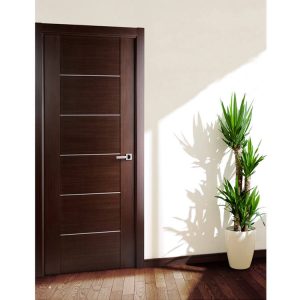
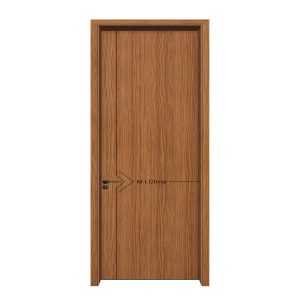
A golden oak door refers to a specific finish rather than a different wood species. The golden tone can be achieved through stains, tinted lacquers, or UV-cured finishes applied over the oak surface. The challenge is consistency across a project. If you order fifty doors, every single one must match the agreed color standard.
When specifying a golden oak door finish, you need to clarify several points with your supplier:
- Color matching standard: Ask for a physical sample board, not just a digital image. Screen colors vary. A physical finish sample is the only reliable reference.
- Finish type: UV-cured finishes offer better scratch and chemical resistance than conventional lacquers. They are more durable for commercial applications but cost slightly more.
- Sheen level: Matte, satin, and gloss levels change how the golden tone reads in different lighting. Satin is the most forgiving for interior doors.
- Open or closed pore: An open-pore finish leaves the oak grain texture visible. A closed-pore finish fills the grain for a smoother surface. This is an aesthetic decision, but it affects how the door feels and how it accumulates dust.
Here is a placeholder for a photo showing golden oak door finish samples at different sheen levels.
For B2B buyers, the critical question is how the manufacturer handles finish consistency across multiple production batches. If your project scales beyond a single production run, color drift between batches becomes a risk. A reliable door construction company maintains finish formulas and can reproduce the same color months later. Ask about this directly during supplier evaluation.
Door Construction Company Comparison: Capabilities, Quality, and Value
When comparing door construction companies, evaluate them against concrete criteria rather than marketing language. The table below outlines the factors that matter most for B2B oak door procurement.
| Criterion | What to Check | Why It Matters |
|---|---|---|
| Customization capability | Can they produce non-standard sizes, custom glass openings, or specific hardware prep? | Standard catalogs rarely fit real project requirements. Custom capability determines whether the door fits your opening. |
| Quality control process | Do they test for air-tightness, water-tightness, and wind resistance? Are there in-process inspections? | Pre-shipment testing identifies defects before you pay international freight. Third-party or documented in-house testing reduces your risk. |
| Lead time | What is the production cycle for custom orders? How does volume affect scheduling? | Construction schedules do not flex easily. A supplier who quotes 60 days when you need 45 creates project delays. |
| Pricing structure | Is pricing based on per-unit cost with separate tooling or setup fees? Are there volume breaks? | Understanding the cost structure helps you forecast total project cost, not just door price. |
| Export experience | Do they provide packing lists, proforma invoices, and customs documentation? | Inexperienced exporters cause customs delays. Documentation errors cost time and money. |
| Building code adaptability | Can they adjust profiles and fittings to meet your local building codes? | Fire ratings, accessibility requirements, and energy codes vary by region. A supplier who cannot adapt creates compliance problems. |
One approach that works well in practice is to evaluate how a door construction company handles the testing requirement. Air-tightness, water-tightness, and wind resistance tests are standard for exterior doors, but they also matter for interior doors in specific applications such as corridor doors in commercial buildings where acoustic and smoke control are relevant. A manufacturer with documented test procedures demonstrates that quality control is systematic rather than incidental.
How We Meet These Standards
As a manufacturer of oak doors and aluminum windows, Jusen Door and Windows operates with a direct-supply model. Our factory handles the full production process, which means we control both the customization parameters and the quality checks. When you request a golden oak door finish, we produce physical samples for approval before mass production begins. When your project requires specific sizes or hardware configurations, we adjust the profile structure and fittings to match your local building codes rather than forcing a standard product into your specification.
Our pre-shipment inspection includes the same air-tightness, water-tightness, and wind resistance tests that we apply to our exterior product lines. For B2B buyers, this reduces the risk of receiving non-compliant or defective doors after paying international freight. We also handle the export documentation side, providing packing lists, proforma invoices, and full customs paperwork so your logistics team does not have to chase down missing documents.
Because we sell directly from the factory, there is no middleman markup in our pricing. For construction projects with tight budgets, this direct model makes a measurable difference in per-unit cost.
How to Choose the Right Door Construction Company for Your Project
The procurement process for oak doors follows a predictable sequence. Understanding each stage helps you evaluate suppliers effectively and avoid common pitfalls.
Step 1: Define your technical specification. Before contacting any door construction company, document your requirements: door type (solid, engineered, veneer), dimensions, finish (including golden oak door color reference), hardware requirements, fire rating if applicable, and quantity. A vague inquiry generates vague quotes.
Step 2: Send a detailed RFQ. Provide your specification to multiple suppliers. Ask each for a per-unit price, tooling or setup costs, production lead time, and shipping options. Compare the responses on an apples-to-apples basis. If one supplier quotes significantly lower, ask how they achieve that price. Lower cost can come from thinner veneers, cheaper hardware, or less rigorous testing.
Step 3: Request samples. A finish sample board is non-negotiable for a golden oak door project. If the project involves custom sizing, request a sample of the door construction itself, or at minimum, a cutaway section showing the core and edge profiles. Samples cost money, but they are cheaper than correcting a full production run.
Step 4: Verify quality control procedures. Ask about testing protocols. A reliable manufacturer will have documented procedures for checking dimensions, finish consistency, and structural integrity. For projects with performance requirements, request test reports.
Step 5: Confirm logistics and documentation. For overseas orders, clarify whether the supplier handles export documentation. Ask about packing methods — doors need proper protection for sea freight. Confirm whether they can handle both FCL and LCL shipments depending on your order volume.
Step 6: Review the proforma invoice carefully. The proforma invoice should list all costs: product, packing, freight, and any applicable fees. Discrepancies between the quote and the proforma invoice are a red flag.
Common Pitfalls When Sourcing Oak Doors Overseas
Several recurring problems appear when B2B buyers source doors from overseas manufacturers:
Inconsistent finish color. Without a physical sample and clear finish standards, you risk receiving doors that do not match your golden oak door reference. Mitigation: approve a physical sample before production.
Hidden costs in customization. Non-standard sizes and custom hardware prep often trigger additional charges that appear only after the order is placed. Mitigation: request a complete cost breakdown in the RFQ stage.
Poor packing leading to transit damage. Oak doors are heavy and vulnerable to edge damage during sea freight. Inadequate packing causes visible damage on arrival. Mitigation: specify packing requirements in your purchase contract.
Unclear lead time commitments. Production delays happen, but a good supplier communicates them early. Mitigation: build buffer time into your construction schedule and require the supplier to commit to a delivery date in writing.
Documentation errors. Incorrect customs paperwork causes port delays and storage fees. Mitigation: verify that your supplier has export experience and can provide accurate packing lists and invoices.
Frequently Asked Questions About Sourcing Oak Doors
What should I look for when comparing door construction companies?
Evaluate customization capability, documented quality control, lead time accuracy, pricing transparency, export documentation experience, and the ability to adapt products to local building codes. Check these against your project requirements rather than comparing companies in the abstract.
What are the differences between solid oak, engineered oak, and oak veneer indoor doors?
Solid oak doors are made entirely from oak lumber, offering maximum durability and refinishing potential but at higher cost and weight. Engineered oak doors combine solid oak framing with an engineered core and oak veneer surface, providing stability at moderate cost. Oak veneer doors use a thin oak layer over MDF or particleboard, making them the most economical option with limited refinishing capability.
How do I ensure a golden oak door finish matches my project requirements?
Request a physical finish sample board before placing an order. Specify the finish type (UV-cured or conventional lacquer), sheen level, and pore style in your RFQ. Ask the supplier how they maintain color consistency across different production batches.
What quality tests should a reliable door construction company perform?
For exterior-rated products, air-tightness, water-tightness, and wind resistance testing are standard. For interior oak doors, dimensional accuracy checks, finish adhesion testing, and moisture content verification matter. Ask suppliers which tests they perform and request documentation.
How can I customize indoor oak doors for my specific project needs?
Customization options include non-standard dimensions, custom glass openings, specific hardware preparation, special finishes, and adjustments to meet local building codes. Each customization affects cost and lead time. Document your requirements clearly and confirm pricing for each modification before ordering.
What are typical lead times and shipping options for overseas door orders?
Lead times vary significantly based on order volume, customization level, and factory production schedules. Custom orders generally take longer than standard catalog items. Shipping options include FCL and LCL sea freight, with FCL being more cost-effective for large orders. Confirm lead times and shipping methods directly with your supplier during the RFQ process.
Additional Considerations: Indoor Oak Doors and Golden Oak Door Trends
Current demand patterns for indoor oak doors show a shift toward engineered construction for large-scale projects. Buyers want the aesthetic of oak without the cost and stability concerns of solid wood. Engineered oak doors now dominate the commercial interior market for this reason.
The golden oak door finish remains popular in specific market segments, particularly in hospitality and residential development. The warm tone suits transitional interior styles. However, the finish trend has shifted toward lower sheen levels. Matte and satin golden oak finishes are replacing high-gloss versions, as they show fewer fingerprints and scratches in high-traffic areas.
For B2B buyers, the practical implication is to verify that your door construction company can produce the finish you need at the sheen level your project requires. A supplier who only offers standard gloss finishes may not match current design specifications.
Sustainability considerations are also affecting procurement decisions. Buyers increasingly ask about wood sourcing and finish VOC content. If your project requires certified wood or low-VOC finishes, confirm this with your supplier during the RFQ stage rather than assuming compliance.
When you have defined your technical specification and compared suppliers against the criteria above, the next step is to request a detailed quote. For projects involving indoor oak doors or a golden oak door finish, working directly with a manufacturer gives you more control over customization, quality, and cost.
If you have specific questions about your project requirements, Contact Our Team directly to discuss your specifications.