Core Conclusions: What to Know Before Buying Oak External Doors
For construction projects, oak external doors are selected for their structural stability, natural weather resistance, and long service life. The key comparison factors are construction type (solid vs. engineered), core material, glazing specifications, and finish system. These four variables determine the door’s price, thermal performance, and maintenance interval.
The most important purchasing distinction is between solid oak and engineered oak. Solid oak doors are milled from a single timber section, offering authentic grain and the ability to be re-finished multiple times. Engineered oak doors use a laminated or veneered construction with a stable core, which resists warping better in central heating environments. For most modern construction projects, engineered doors are the pragmatic choice; solid oak suits period renovations or high-end specifications where authenticity outweighs cost.
Energy efficiency and security are not inherent to the wood itself but are determined by the door’s construction and ironmongery. A 44mm solid oak door with a single-glazed panel will perform significantly worse than a 68mm engineered door with a triple-glazed unit and compression seals. Evaluate the whole door assembly, not just the timber.
Types of Oak External Doors: Solid, Engineered, and Contemporary
Solid Oak External Doors
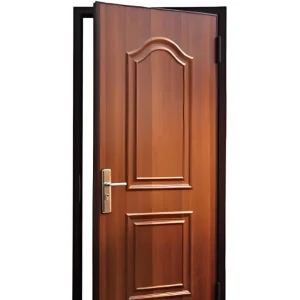
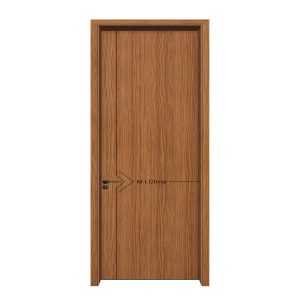
Solid oak doors are constructed from joined timber staves, typically 44mm to 68mm thick. The grain runs continuously across the door leaf, and the edges can be finished with a matching oak lipping. These doors offer the highest level of acoustic insulation and a premium, heavy feel when closing.
The trade-off is dimensional stability. Solid timber responds to humidity changes; in a centrally heated house, the internal face can dry faster than the external face, causing the door to cup or bow. This is manageable with proper acclimatization and a quality micro-porous finish, but it requires more maintenance than engineered alternatives. Expect to re-coat a solid oak door every 12 to 18 months depending on exposure.
Engineered Oak External Doors
Engineered doors feature a solid oak veneer (typically 4mm to 6mm thick) bonded to a multi-ply or laminated timber core. The core layers run in alternating directions, which cancels out the natural movement of the wood. This construction is dimensionally stable, making it the preferred choice for double doors, wide openings, and south-facing elevations with high solar gain.
The practical benefit is reduced warping and fewer issues with sticking or binding. Engineered doors can also accommodate larger glazed panels without the frame twisting. The main disadvantage is that the veneer can only be sanded and re-finished a limited number of times. Once the veneer is penetrated, the door cannot be restored to its original appearance.
Contemporary External Oak Doors
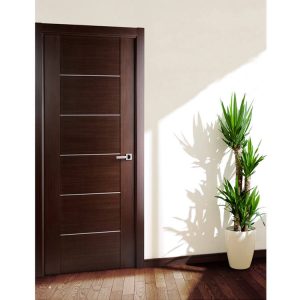
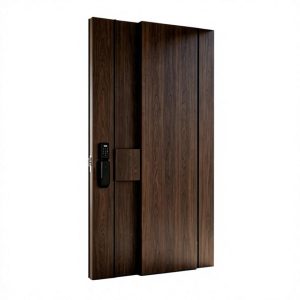
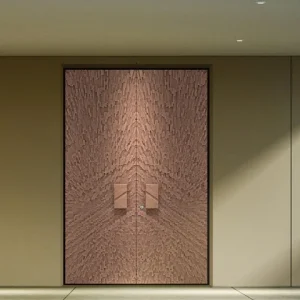
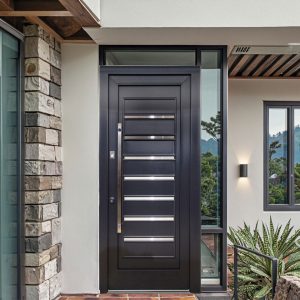
Contemporary oak external doors depart from traditional paneled designs. They feature clean, flush surfaces, slim sightlines, and large expanses of glazing. The oak is often specified in a horizontal grain orientation or with a brushed, matte finish rather than a high-gloss lacquer.
The design intent is to maximize natural light while retaining the warmth of timber. From a procurement perspective, contemporary doors require more precise manufacturing tolerances because the minimal framing leaves less room for error in fitting. Look for doors with concealed hinges and multi-point locking systems that integrate flush with the slim profile. The thermal performance of contemporary doors depends heavily on the glazing unit; a 24mm double-glazed unit will not meet modern building regulations in most climates, so specify triple glazing or a warm-edge spacer system.
Comparison Table: Oak External Door Options at a Glance
| Criterion | Solid Oak Door | Engineered Oak Door | Contemporary Oak Door |
|---|---|---|---|
| Construction | Joined solid timber staves | Oak veneer over multi-ply core | Engineered core with flush oak face |
| Dimensional stability | Moderate; moves with humidity | High; minimal warping risk | High; suitable for wide spans |
| Thermal performance | Depends on thickness and glazing | Better; allows for thicker core insulation | Best; designed for slim double/triple glazing |
| Maintenance | Re-finish every 12–18 months | Re-finish every 3–5 years | Similar to engineered; careful with edges |
| Cost range | Highest material cost | Moderate | Varies; glazing drives price |
| Best application | Period properties, renovation | New builds, standard openings | Modern architecture, high light requirements |
| Glazing options | Limited; smaller panels | Flexible; can fit larger panels | Large fixed panels, minimal frames |
| Security hardware | Standard; can fit multi-point locks | Multi-point locks standard | Concealed multi-point locks typical |
How to Choose the Right Oak External Door for Your Project
Assess the Opening and Exposure
Measure the structural opening accurately. For openings wider than 1200mm, specify an engineered door to avoid sagging. For south or west-facing elevations with direct sun, engineered construction is safer because the temperature differential across the door face will be significant. North-facing, shaded openings are more forgiving and can accommodate solid oak.
Evaluate Glazing Requirements
The glazing unit determines the door’s U-value and its acoustic performance. A standard double-glazed unit achieves approximately 1.4 W/m²K. A triple-glazed unit with argon fill drops to around 0.8 W/m²K. For passive house projects or compliance with strict energy codes, specify the glazing unit independently of the door leaf. Ensure the glazing beads are oak, not plastic, to maintain the aesthetic and prevent thermal bridging at the edge.
Check the Finish System
The factory-applied finish is the first line of defense against moisture. A quality micro-porous stain allows the wood to breathe while repelling water. Opaque paints, while durable, hide the grain and can trap moisture if not applied correctly. For external doors, specify a UV-resistant finish with a water-repellent additive. Ask the supplier whether the finish is applied before or after glazing; pre-glazed finishing is superior because it protects the rebates.
Verify Hardware Compatibility
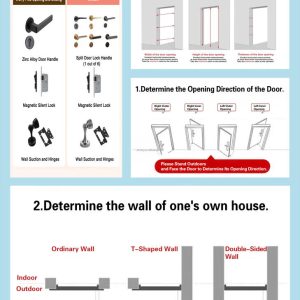
Oak is a dense hardwood, so hinge and lock placement requires pre-drilling and precise alignment. For heavy door leaves, specify three hinges rather than two to prevent sagging. Multi-point locking systems should be specified to meet local security standards. Confirm that the door leaf thickness is compatible with the chosen lock case depth; some high-security locks require a 68mm door thickness.
Additional Considerations: Contemporary Styles and Customization
Contemporary external oak doors are not limited to standard panel configurations. Manufacturers can produce doors with horizontal grain orientation, flush oak surfaces, or a combination of oak and slim aluminum glazing beads. These options are specified at the drawing stage and require the manufacturer to adjust the production line.
When customizing, consider the following:
- Glass specification: Specify the glass type (clear, frosted, textured) and the safety standard. All glazing in doors must be tempered or laminated to meet building codes in most jurisdictions.
- Color matching: Oak can be stained to match interior joinery or architectural features. Request a sample board before production to verify the color under natural light.
- Ironmongery finishes: Specify the finish for handles, hinges, and locks (e.g., brushed stainless steel, matte black, bronze). Ensure the finish is compatible with external use; some interior-grade finishes will corrode in outdoor conditions.
- Door frames and sidelights: External oak doors are often specified with matching oak frames and sidelights. Confirm that the frame profile includes a weather bar and a drip groove to shed water away from the threshold.
For projects requiring a consistent architectural language, consider specifying all external doors from a single manufacturer to ensure color consistency and matching profiles across the property.
Supplier Evaluation: What to Look for in a Manufacturer
When sourcing oak external doors for a construction project, the supplier’s manufacturing process is as important as the product itself. Evaluate suppliers on the following criteria:
Quality control and testing. A reputable manufacturer should conduct pre-shipment inspections for air-tightness, water-tightness, and wind resistance. Ask for the test reports for the specific door model you are considering. These tests verify that the door assembly performs under real-world conditions, not just in static display.
Customization capability. Confirm the manufacturer can adjust profile structures and fittings to match your local building codes. This is particularly important for international projects where door dimensions, glazing requirements, or security standards differ from the manufacturer’s domestic market.
Production lead time. Oak doors are typically made to order. Lead times vary with the complexity of the specification; a standard door may take several weeks, while a fully customized contemporary door with triple glazing may take longer. Clarify the lead time before placing an order and factor it into your construction schedule.
Logistics and documentation. For bulk orders, the supplier should provide a packing list, proforma invoice, and full customs documentation. Confirm whether they ship FCL (full container load) or LCL (less than container load) and whether the packaging is suitable for sea freight.
Sample and approval process. Before committing to a bulk order, request a production sample or a pre-production mock-up. This allows you to verify the finish, hardware quality, and overall workmanship. A supplier who is unwilling to provide samples should be treated with caution.
As a manufacturer, our approach to these requirements is straightforward. We supply oak external doors directly from our factory, which removes the middleman markup and allows us to offer competitive pricing on bulk orders. We offer full customization on size, color, glass, and hardware accessories, and we adjust our profile structures and fittings to match the building codes of your target market. Our pre-shipment inspection includes air-tightness, water-tightness, and wind resistance tests, and we provide complete export documentation for FCL and LCL shipments. If you are evaluating suppliers for a construction project, we are happy to discuss your specifications.
Frequently Asked Questions About Oak External Doors
What are the differences between solid oak and engineered oak external doors?
Solid oak doors are milled from a single timber section, offering authentic grain but requiring more maintenance and being prone to movement. Engineered oak doors use a veneer over a stable core, resisting warping and requiring less frequent re-finishing. Choose solid oak for period renovations and engineered oak for modern construction.
What are the benefits of contemporary external oak doors?
Contemporary oak doors maximize natural light with slim frames and large glazed panels. They offer a clean, minimalist aesthetic that suits modern architecture while retaining the warmth and durability of oak. They are typically engineered for stability, making them suitable for wide openings.
How do I compare oak external doors for durability and energy efficiency?
Compare the construction thickness, core material, and glazing specification. A thicker engineered door with triple glazing will outperform a thinner solid door with single glazing. Check the U-value of the complete door assembly and verify that the finish is suitable for external exposure.
What should I look for in a supplier of oak external doors for bulk orders?
Verify the manufacturer’s quality control procedures, including pre-shipment testing for air-tightness, water-tightness, and wind resistance. Confirm their customization capabilities and whether they can adjust profiles to meet local building codes. Review their lead times and logistics options for FCL and LCL shipments.
Can oak external doors be customized in size, glass, and hardware?
Yes. Reputable manufacturers offer full customization on door dimensions, glass type and configuration, and hardware finishes. Specify your requirements at the drawing stage and request a sample to verify the final appearance before bulk production.
What are the typical lead times and shipping options for oak external doors?
Lead times vary with the complexity of the specification. Standard doors may ship within a few weeks, while fully customized contemporary doors take longer. Shipping options include FCL and LCL, depending on order volume. Confirm the lead time with your supplier before placing an order.
How do I ensure compliance with local building codes when importing oak doors?
Work with a manufacturer who understands international building regulations and can adjust profile structures and fittings accordingly. Specify the required glazing safety standards, fire ratings, and security certifications in your purchase order. Request documentation that verifies compliance with the relevant codes.