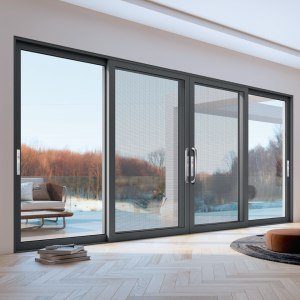
Core Conclusion: Fiberglass vs. Vinyl — Which Sliding Door Wins?
If you are specifying doors for a project, the choice between a fiberglass sliding door and a sliding vinyl door comes down to a trade-off between upfront cost and long-term performance. Vinyl is the budget-friendly workhorse. Fiberglass is the premium upgrade that offers superior structural rigidity, better paintability, and a longer service life in demanding conditions.
There is no universal “best” option. The correct choice depends on your project’s climate, building codes, and budget horizon. If you are managing a high-end residential build or a commercial project in a coastal or high-wind zone, the fiberglass sliding door justifies its higher price tag. For large-scale multifamily developments or projects with strict cost-per-unit targets, sliding vinyl doors remain a reliable, code-compliant choice.
This guide breaks down the technical and financial differences so you can match the material to the project’s real requirements, not just the initial bid.
Fiberglass Sliding Doors: Key Features and Benefits
A fiberglass sliding door uses a frame made from glass-fiber-reinforced polymer. This composite material is what drives most of its performance advantages.
Structural Integrity and Dimensional Stability
Fiberglass has a low coefficient of thermal expansion. This means the frame does not expand and contract significantly with temperature swings. In practical terms, the door remains square and true over time. The sashes do not warp, twist, or bow, which is a common failure point for other materials. This stability is critical for maintaining a consistent seal around the perimeter of the door, preventing air and water infiltration as the building settles and ages.
Thermal Performance
The material itself is a poor conductor of heat. When combined with a multi-chambered frame design and a factory-installed polyamide thermal break, a fiberglass frame can achieve excellent U-factor ratings. The frame’s dimensional stability also protects the integrity of the glazing unit. Because the frame does not flex, the pressure on the insulated glass unit (IGU) remains even, reducing the risk of seal failure and the resulting fogging between panes.
Aesthetics and Finishing
Unlike vinyl, the color is not just a surface layer. Fiberglass frames can be factory-finished with a high-performance coating or painted to match a specific architectural color palette. The material accepts paint well, and the finish adheres durably. This makes it a strong choice for projects where the door must match a specific exterior color scheme or mimic the look of painted wood without the maintenance.
Weight and Handling
Fiberglass is heavier and denser than vinyl. While this contributes to a more solid, premium feel during operation, it also means the hardware—rollers, tracks, and hinges—must be specified for the additional weight. For large sliding panels, this is a factor to consider in both structural support and daily usability.

Sliding Vinyl Doors: Key Features and Benefits
Sliding vinyl doors are constructed from polyvinyl chloride (PVC) extrusions. They are a dominant force in the residential market for several clear reasons.
Cost-Effectiveness
Vinyl is significantly less expensive to manufacture than fiberglass. The raw material is cheaper, and the extrusion process is fast and highly automated. This price advantage is passed directly to the buyer, making it the default choice for projects where budget per unit is a primary constraint.
Inherent Insulation and Low Maintenance
The cellular structure of vinyl provides decent thermal insulation. Modern vinyl profiles include multiple air chambers to improve energy efficiency without adding cost. The material is impervious to moisture, so it will not rot, corrode, or peel. It never needs painting. Cleaning is a matter of wiping down the frame with soapy water. There is no ongoing maintenance cost beyond periodic lubrication of the rollers.
Consistent Quality
Vinyl is a mature, highly engineered product. The manufacturing process is precise, resulting in consistent dimensions and a uniform finish. This consistency can be an advantage for large projects where you need predictable installation and performance across hundreds of units.
Limitations to Consider
The primary drawback of vinyl is its structural limitations. It has a higher coefficient of thermal expansion than fiberglass. In extreme climates, significant temperature swings can cause the frame to expand and contract enough to affect the seal or cause the sashes to stick. It is also less rigid. Large, heavy panels of glass can cause a vinyl frame to sag or flex over time, which is why you will often see reinforcement (aluminum or steel) inside the vinyl extrusion for larger sizes. Finally, vinyl cannot be painted successfully. The color is integral to the material, so your color options are limited to what the manufacturer extrudes.

Fiberglass vs. Vinyl Sliding Doors: Side-by-Side Comparison Table
This table summarizes the key decision criteria for procurement and specification.
| Criterion | Fiberglass Sliding Door | Sliding Vinyl Door |
|---|---|---|
| Material | Glass-fiber-reinforced polymer composite | Polyvinyl chloride (PVC) extrusion |
| Durability | High; resistant to warping, rotting, and corrosion; maintains shape under stress | Moderate; can warp or sag with extreme temperature swings or heavy glass loads |
| Energy Efficiency | Excellent; low thermal conductivity, stable frame protects IGU seals, supports triple glazing | Good; multi-chamber profiles provide solid insulation, but frame movement can compromise seals over time |
| Maintenance | Low; requires periodic cleaning, paint finish is durable but may need touch-up over decades | Very low; never needs painting, only cleaning |
| Cost | Higher initial investment | Lower initial investment |
| Customization | High; factory-painted in custom colors, can match wood aesthetics, diverse hardware options | Limited; color is integral to the material, typically white, tan, or brown |
| Structural Strength | High; can support larger, heavier glass panels without reinforcement | Lower; may require internal reinforcement for large sizes, limiting maximum panel dimensions |
| Lifespan | Can exceed 30 years with minimal performance loss | 15-25 years depending on climate and UV exposure |
How to Choose the Right Sliding Door for Your Project
Move beyond the material debate and evaluate your project against these four criteria.
1. Climate and Exposure
This is the most critical factor. For projects in coastal regions, high-humidity areas, or places with extreme temperature differentials (e.g., desert climates), fiberglass is the safer engineering choice. Its dimensional stability prevents the seal failures and operational issues that can plague vinyl in these conditions. For moderate climates, vinyl’s performance is often entirely sufficient.
2. Performance Specifications and Building Codes
Review the project’s required U-factor (thermal transmittance) and SHGC (solar heat gain coefficient). Check the local building code for wind load requirements, especially for commercial or high-rise applications. Fiberglass frames generally achieve higher performance ratings and are better suited to meet stringent energy codes (e.g., ENERGY STAR Most Efficient criteria) or handle high wind pressures. If your project requires a specific performance label, verify the manufacturer’s test data for both materials.
3. Size and Configuration
Determine the maximum door panel size you need. Vinyl doors can be manufactured in large sizes, but they often require internal steel or aluminum reinforcement, which adds cost and weight. Fiberglass, being inherently stiffer, can accommodate larger expanses of glass with less reinforcement. If the design calls for expansive 8-foot or 10-foot tall panels, fiberglass is often the more robust solution.
4. Total Cost of Ownership (TCO)
Do not just compare the unit price. Calculate the TCO over the building’s expected life. Include the cost of energy loss (based on U-factor and local energy rates), the cost of any maintenance (repainting for fiberglass is rare, but not zero), and the replacement cost. In a high-energy-cost market, the better thermal performance of a fiberglass door can offset its higher initial price within a few years.
Additional Considerations: Fiberglass Sliding Doors and Sliding Vinyl Doors in Practice
The Glazing Package is the Real Performance Driver
The frame material is only half the equation. The glass package you specify has a greater impact on energy efficiency than the frame. For both fiberglass and vinyl, you must select the right insulated glass unit (IGU). Key specifications include:
- Low-E Coating: A low-emissivity coating reflects heat back to its source. Choose a coating based on your climate—a “low-E” for cold climates to keep heat in, or a “solar control” low-E for hot climates to keep heat out.
- Gas Fill: Argon or krypton gas between the panes reduces heat transfer.
- Pane Count: Triple glazing is available for both material types, but the weight is a factor. A fiberglass frame handles the additional weight of triple glazing more gracefully than a vinyl frame.
Hardware and Roller Quality
For a sliding door, the hardware determines the daily user experience. Look for:
- Rollers: Specifiy ball-bearing rollers with nylon or stainless steel wheels. For heavy fiberglass panels, ensure the roller rating matches the panel weight.
- Multi-Point Locks: A multi-point locking system pulls the door tight against the frame on all sides, improving both security and the weather seal. This is a standard feature on higher-end fiberglass doors and a worthwhile upgrade on vinyl.
Supply Chain and Lead Times
Custom fiberglass doors, especially with custom paint colors, often have longer lead times than standard vinyl units. For large B2B orders, confirm the manufacturer’s production schedule and capacity before finalizing your project timeline. Vinyl, being a more commoditized product, is often available faster and in larger quantities.
FAQ: Answering Your Top Sliding Door Questions
What are the main differences between fiberglass sliding doors and sliding vinyl doors?
The main differences are material composition, structural rigidity, and customization. Fiberglass is a composite that is stronger, more dimensionally stable, and can be painted. Vinyl is a plastic that is cheaper, requires zero maintenance, but is less rigid and offers fewer color options.
Which material offers better durability and longevity: fiberglass or vinyl?
Fiberglass is the more durable material. Its resistance to warping, expansion, and contraction means it maintains its structural integrity and seal performance for a longer period. Vinyl is durable against moisture and rot, but it is susceptible to warping in extreme heat and can become brittle in extreme cold over many years.
How do fiberglass and vinyl sliding doors compare in terms of energy efficiency?
Both can be energy-efficient, but fiberglass frames provide a more stable and consistent thermal envelope. Because the frame does not flex, the seal around the glass remains intact, preventing air leakage and maintaining the IGU’s performance over time. Vinyl is a good insulator, but frame movement can compromise the seal.
What is the cost difference between fiberglass and vinyl sliding doors, and how does it affect long-term value?
Fiberglass doors typically cost 30% to 50% more than comparable vinyl units. However, the long-term value is found in lower energy bills (due to better performance) and a longer lifespan, which avoids the cost of premature replacement. For a project with a 30-year horizon, fiberglass often has a lower total cost of ownership.
Can fiberglass sliding doors be customized to match my project requirements?
Yes. This is a key advantage. Fiberglass doors can be factory-painted in virtually any color to match an architectural specification. They also offer a wider range of hardware finishes and can be manufactured in a larger variety of sizes and configurations than vinyl.
What should I look for in a sliding door manufacturer for B2B supply?
You should evaluate a manufacturer on three fronts: engineering capability, quality control, and logistics. Confirm their test data for air, water, and structural performance. Ask about their quality control process for pre-shipment inspection. Verify their ability to handle your order volume and provide the necessary customs documentation for international shipping.
How We Meet These Standards as a Manufacturer
As a factory that supplies both fiberglass sliding doors and sliding vinyl doors, we understand that the choice depends on your project’s specific parameters. Our role is to provide the engineering flexibility and supply chain reliability to execute your specification, regardless of which material you select.
Engineering and Customization
We offer full customization on size, color, and hardware. For fiberglass doors, this means we can match a specific architectural color with a durable factory finish. For both material types, we can adjust the profile structure and fittings to comply with the local building codes of your target market. This is not a generic “one-size-fits-all” approach; it is an engineering process to ensure the door meets the required wind load or thermal performance for your location.
Quality Control and Compliance
Our manufacturing process includes strict pre-shipment inspections covering air-tightness, water-tightness, and wind resistance. These are not just claims; they are test procedures that verify the assembled door performs to the specified standard. This is critical for B2B buyers who need to avoid on-site failures and callbacks.
Procurement and Logistics
We understand the demands of project procurement. We provide full documentation, including packing lists, proforma invoices, and complete customs documents. We handle both FCL and LCL shipments, delivering directly from our factory to your site. This direct supply model removes the middleman markup and ensures you are working with the entity that controls the manufacturing quality.
If you have a project in mind and need to compare specific specifications or get a detailed quote, our team can help you evaluate the best material for your application.