Content Menu
● 1. Fiberglass vs. Wood Doors at a Glance
● 2. 7 Factors to Compare Before You Choose
● 3. When to Choose Fiberglass and When to Choose Wood
● 4. How to Evaluate Door Suppliers: A Procurement Framework
● 5. Key Takeaways for Your Next Project
● 6. Frequently Asked Questions
11 min read
A project manager for a 40-unit coastal development called me last spring. The architectural spec called for solid mahogany entry doors. The maintenance budget did not. That conversation — balancing the architect’s aesthetic vision against a 15-year operational cost projection — is exactly where most door procurement decisions get stuck.
This guide compares fiberglass and wood doors through the lens of total cost of ownership, technical performance, and procurement logistics. The goal is to give you a defensible framework for 2026 specifications, not a generic pros-and-cons list.
Fiberglass vs. Wood Doors at a Glance
The table below summarizes the key differences between fiberglass and solid wood entry doors. Use it as a quick reference during internal discussions with architects or clients who have strong material preferences.
| Attribute | Fiberglass | Solid Wood |
|---|---|---|
| Initial Cost (unit) | $500–$2,500 | $800–$5,000+ |
| Lifespan Expectancy | 30–50+ years | 15–30 years (climate-dependent) |
| Maintenance (annual hours) | 0–1 hour | 3–6 hours (repainting/refinishing) |
| Energy Efficiency (R-value) | R-5 to R-7 (polyurethane core) | R-2 to R-3 |
| Impact & Scratch Resistance | High (composite skin) | Low to moderate (dents, scratches easily) |
| Rot/Warping Susceptibility | None | High in humid or wet climates |
| Aesthetic Versatility | Paint or factory stain; embossed grain | Natural wood grain; transparent stain |
| Customization Flexibility | High (sizes, colors, glass lites) | Moderate (species-dependent) |
Key takeaway: Fiberglass wins on lifecycle cost, maintenance, and energy performance. Wood wins on authentic material character and traditional mass.
7 Factors to Compare Before You Choose
1. Upfront Cost vs. Total Cost of Ownership
Fiberglass doors typically cost 30–50% less than premium hardwood doors at the point of purchase. A mid-range fiberglass unit with a polyurethane core runs $800–$1,500. A comparable solid oak or mahogany door runs $1,500–$4,000 depending on species and veneer quality.
But the real financial divergence appears in year three of ownership. Solid wood doors exposed to direct sunlight and rain require repainting or refinishing every 1–3 years. At $200–$400 per door per refinishing cycle (labor included), a 40-unit project accrues $8,000–$16,000 in recurring maintenance costs every few years.
Fiberglass doors with factory-applied finishes carry warranties of 5–10 years on the finish itself. The cost per year of service life for a $1,200 fiberglass door over 30 years is $40. For a $2,500 wood door over 15 years (with refinishing costs added), the cost per year exceeds $200.
2. Durability and Structural Performance
Wood doors move. They expand and contract with humidity changes, which causes finish failure, warping, and seal gaps. The bottom rail is particularly vulnerable — moisture wicks up from the threshold and causes rot, especially in climates with standing water or snow melt.
Fiberglass doors use a composite skin bonded to an engineered core (usually polyurethane foam). This structure resists denting, does not rot, and maintains dimensional stability across temperature extremes. The coefficient of thermal expansion for fiberglass is close to that of aluminum frames, which means the door and frame move together — reducing weatherstripping failure.
In ASTM wind-load testing, fiberglass door skins survive repeated pressure cycles that crack wood veneers or loosen stile-and-rail joints.
3. Energy Efficiency and R-Value
What exterior door has the best R-value? Doors with a polyurethane foam core — which means fiberglass or steel — achieve the highest insulation values. A quality fiberglass door reaches R-5 to R-7, while solid wood typically measures only R-2 to R-3.
For specifiers, the distinction between R-value and U-value matters. R-value measures thermal resistance; U-value measures heat transfer rate. The lower the U-value, the better the insulation. A fiberglass door with a thermal-break frame system can achieve a U-value of 0.20–0.30, which helps meet 2026 International Energy Conservation Code (IECC) requirements.
Wood’s dimensional instability undermines its thermal performance over time. As the door bows or twists, gaps form along the perimeter, and conditioned air escapes regardless of the material’s intrinsic R-value.
4. Aesthetics and Design Flexibility
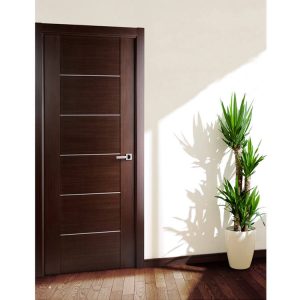
Wood’s appeal is undeniable. The natural grain, the weight, the acoustics — a solid wood door closes with a deep thud that signals quality. For heritage restorations or luxury villas where the client demands authentic materials, wood is the only choice.
Fiberglass has closed much of the aesthetic gap. Modern rotocasting techniques produce embossed wood grain that mimics oak, mahogany, or fir — visible on close inspection but convincing at normal viewing distance. Factory finishes can replicate stained wood tones with surprising depth.
For B2B buyers, fiberglass offers a practical advantage: color consistency across a large development. Matching a specific RAL color across 100 wood doors is difficult because wood grain varies naturally. Fiberglass doors can be finished uniformly, which matters for brand-consistent multi-building projects.
5. Maintenance and Labor Costs
The maintenance cycle for exterior wood doors is unforgiving. North-facing doors may last 3–4 years between refinishing. South- or west-facing doors — exposed to direct UV and rain — often need attention every 12–18 months. The process involves sanding, scraping, priming, and two coats of high-quality exterior paint or varnish.
For property managers, the logistics of scheduling maintenance crews for second-story doors adds scaffolding costs and liability exposure. A single refinishing cycle for a multi-story building can cost $500–$1,000 per door when access equipment is factored in.
Fiberglass maintenance is limited to washing with soap and water. If the factory finish is damaged, the door can be repainted with any exterior-grade paint. Most fiberglass door warranties cover the door structure for 25+ years and the finish for 5–10 years — far longer and less conditional than wood door warranties, which often void coverage if the finish fails due to inadequate sealing.
6. Security and Impact Resistance
Fiberglass skins withstand impacts that dent or splinter wood. A kicked-in wood door is a realistic scenario; the same force against a fiberglass door typically damages the frame before the door skin. This matters for insurance liability in rental properties and commercial applications.
Both materials can be reinforced with steel cores for high-security installations. Fiberglass is more predictable for this modification because the engineered core accepts reinforcement consistently, whereas wood’s variable density can affect screw-holding and structural integrity.
Hardware integration — hinges, locks, deadbolts — works well in both materials, provided the door’s edge is solid enough to hold screws. Fiberglass doors use a dense edge material (often a composite or wood core at the stiles) to ensure hardware performs identically to wood.
7. Lead Time, Sourcing, and Logistics
Solid wood door sourcing depends on lumber availability, species sustainability, and kiln-drying consistency. Premium species like mahogany or teak face supply fluctuations driven by logging regulations and international trade restrictions. Lead times can shift by weeks without warning.
Fiberglass manufacturing uses consistent composite materials with predictable supply chains. Production schedules are stable, and custom sizes are feasible without the material waste inherent to cutting solid wood.
Weight is a decisive factor for international shipping. A solid hardwood door weighs 80–120 lbs (36–54 kg). A comparable fiberglass door weighs 50–70 lbs (23–32 kg). For a container shipment of 100 doors, fiberglass reduces freight weight by 3,000–5,000 lbs, translating to meaningful shipping cost savings.
When to Choose Fiberglass and When to Choose Wood
Choose fiberglass if:
- The project is in a coastal climate with salt air or a high-humidity zone
- The building is a rental property or multi-family complex where maintenance costs directly impact operating margins
- Door formats exceed 8 feet in height, where wood is prone to warping
- The project must meet strict energy codes, such as passive house standards
- You are shipping internationally and want to minimize freight weight
Choose wood if:
- The project is a historical restoration requiring authentic materials
- The architect specifies a unique exotic species for a signature statement
- The client demands the acoustic and tactile quality of solid wood
- The budget explicitly includes a professional maintenance schedule
A hybrid approach works well for many projects: fiberglass for exterior exposure where weather resistance matters, wood for interior doors where climate control reduces stress on the material.
An honest caveat: Fiberglass doors are not always the right answer. In a climate-controlled interior environment, a well-maintained wood door will outlast a fiberglass door aesthetically and functionally. And for a client who values the patina of aging wood, no composite material will satisfy that preference.
How to Evaluate Door Suppliers: A Procurement Framework
What Standards Should Any Manufacturer Meet?
A reputable door manufacturer — whether domestic or overseas — should provide documented evidence of:
- Pre-shipment inspection reports covering air-tightness, water-tightness, and wind resistance (per ASTM E283, E547, and E330 standards respectively)
- Material certifications for the door skin, core, and frame components
- A warranty policy that clearly states coverage terms and exclusions
- Full export documentation, including packing lists, proforma invoices, and certificates of origin
The tension for B2B buyers is real: competitive pricing, customization flexibility, and rigorous quality control rarely come from the same source. Domestic suppliers offer quality assurance but at higher unit costs. Overseas suppliers offer lower prices but require trust in their quality processes.
The Procurement Checklist: Questions to Ask Before Ordering
- What is the door’s tested U-value? Request the actual test report, not just a marketing specification.
- What is the warranty on the door structure versus the finish? These are separate warranties with different terms.
- Can the manufacturer match local building codes? For US projects, ask about ASTM compliance. For European projects, ask about EN standards. A manufacturer that cannot adapt is a risk.
- What is the MOQ for custom sizes and colors? Some factories require high minimums for non-standard specifications.
- What does the pre-shipment inspection cover? Air-tightness, water-tightness, and wind resistance testing should be standard, not optional.
- What documentation will accompany the shipment? Packing lists, proforma invoices, and full customs documentation are the baseline for international procurement.
Avoid Suppliers Who…
- Cannot provide test reports for energy performance or structural integrity
- Quote prices significantly below market average without explaining the cost difference
- Offer no pre-shipment inspection or refuse third-party inspection
- Have vague warranty terms that exclude common failure modes
- Cannot provide references from projects similar to yours
How Our Factory Meets These Standards
As a door and window manufacturer serving international clients, our approach to the fiberglass-versus-wood decision is straightforward: we produce both, and we tell buyers which material fits their project parameters better.
Our factory in China operates as a direct supplier, which means the pricing structure for bulk orders excludes the middleman markup that inflates costs in multi-tier distribution chains. For a 100-door housing development, that difference is substantial — often 15–25% of the total door budget.
On customization, we offer full flexibility on size, color, glass lites, and hardware accessories. More importantly for international buyers, our profile structures and fittings are adjustable to match the building codes of your target market. A door destined for an ASTM-regulated US project is configured differently than one for an EN-standard European build. We handle both.
Quality assurance is built into our process before shipping, not after problems arise. Every order undergoes pre-shipment inspection covering air-tightness, water-tightness, and wind resistance. Test reports accompany the shipment documentation, so your import process is smooth and your quality expectations are verified before the container leaves port.
For logistics, we handle both FCL and LCL shipments with direct delivery from our factory. The export documentation — packing lists, proforma invoices, customs forms — is prepared by our in-house foreign trade team, which has years of experience shipping to North American and European markets.
If you are evaluating fiberglass versus wood for a 2026 project, we can provide lifecycle cost analysis and physical samples before you commit to a specification.
Key Takeaways for Your Next Project
- Fiberglass is the logical default for performance and lifecycle cost; wood is a specialty choice for projects where authentic material character justifies higher maintenance
- Verify R-value claims with actual test data — energy performance is measurable, not subjective
- Calculate total cost of ownership including maintenance labor over 15+ years, not just the unit price
- Confirm your supplier can provide the documentation needed for import compliance and building code approval
- Request physical samples to test impact resistance and inspect finish quality before placing a bulk order
Frequently Asked Questions
Is a fiberglass door cheaper than a wood door?
Initially, yes — typically 30–50% cheaper than premium hardwoods at the unit level. The real cost difference is in maintenance. Over a 20-year lifecycle, fiberglass is significantly cheaper due to no required repainting and higher energy efficiency. For B2B projects, the labor cost savings alone often justify the choice.
What exterior door has the best R-value?
Doors with a polyurethane foam core — which means fiberglass or steel — achieve the highest insulation values. High-quality fiberglass doors reach R-5 to R-7, while solid wood typically measures R-2 to R-3. For maximum efficiency, specify a door with a thermal-break frame system to minimize heat transfer at the edges.
Is there a downside to fiberglass doors?
The primary downside is the loss of authentic heft and natural grain — purists can tell the difference. Fiberglass can be painted but does not accept transparent stain like real wood. In extreme cold, the skin can feel colder to the touch than wood, though the insulation value is superior.
What is the life expectancy of a fiberglass door?
With proper installation, a fiberglass door lasts 30 to 50 years or more. Because the material does not rot or warp, the components that wear out are hinges, weatherstripping, and hardware — all easily replaceable. This lifespan is roughly double that of a solid wood door exposed to the elements.
Can fiberglass doors be customized to look like specific wood species?
Yes. Advanced manufacturing techniques create embossed wood grain patterns that mimic oak, mahogany, or fir. Factory-applied glazes replicate the depth of stained wood. For a true, one-of-a-kind wood texture that only nature produces, solid wood remains the only option.
Are fiberglass doors suitable for commercial buildings?
Absolutely. They are preferred for commercial applications due to high-traffic durability, lower insurance liability from impact resistance, and energy code compliance. Their lighter weight reduces installation strain on commercial framing systems.
Choose Fiberglass If… Choose Wood If…
Choose fiberglass if your project prioritizes energy efficiency, low maintenance, and long service life. Coastal climates, rental properties, and energy-code-strict jurisdictions all favor fiberglass.
Choose wood if the project demands authentic material character, the client accepts a maintenance schedule, and the application is interior or climate-protected.
References
- U.S. Department of Energy. (2025). Energy-Efficient Door Selection Guide. https://www.energy.gov/energysaver/energy-efficient-doors
- ASTM International. (2024). ASTM E283 – Standard Test Method for Determining Rate of Air Leakage Through Exterior Windows, Skylights, Curtain Walls, and Doors Under Specified Pressure Differences Across the Specimen. https://www.astm.org/e0283-19.html
- International Code Council. (2026). 2026 International Energy Conservation Code. https://www.iccsafe.org/products-and-services/i-codes/2026-i-codes-iec/
- Andersen Windows. (2025). Fiberglass vs. Wood Entry Doors: Material Comparison. https://www.andersenwindows.com/
- U.S. Forest Service. (2024). Wood Handbook: Wood as an Engineering Material. https://www.fpl.fs.usda.gov/products/publications/wood-handbook.php