Core Conclusion: What You Need to Know Before Buying Double Glass Doors
Double glass doors are a significant purchase, and the right choice depends on three factors: application, configuration, and glazing. For interior projects, a double-pane glass door with aluminum or wood frames balances light transmission with sound control. For exterior installations, you need insulated glass units (IGUs), thermal-break aluminum or uPVC frames, and tempered or laminated safety glass to meet building codes. Commercial projects add durability and high-traffic hardware requirements. Swing configurations suit wide openings and classic aesthetics; sliding systems save space and cost less to operate. Budget ranges vary widely—from roughly $800 for a basic interior sliding unit to over $3,000 for a thermally broken exterior swing door with low-E glass. Frame material, glass type, and hardware quality drive most of the price difference, not the door size alone.
Double Glass Doors by Application: Interior, Exterior, and Commercial
Interior Double Glass Doors
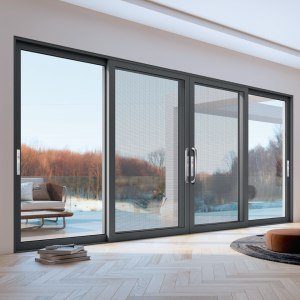
Interior double glass doors are used between living rooms, offices, dining areas, and patios that connect to conditioned spaces. Their primary jobs are light transmission, visual openness, and sound attenuation between rooms. Because they are not exposed to weather, interior units can use simpler frames and thinner glass.
For interior use, standard double-pane glass (two panes with an air gap) provides adequate sound reduction and thermal separation between rooms with different temperatures. If noise control matters—for example, a home office next to a living area—look for glass thickness of 5mm to 6mm per pane and a wider air gap. Laminated glass adds acoustic damping and safety if the door is near a floor-level opening.
The frame choice for interior doors leans toward aluminum for slim sightlines or wood for a warmer aesthetic. Aluminum frames for interior use do not need thermal breaks, which keeps costs lower. Wood frames require periodic refinishing but offer a traditional look that many residential buyers prefer.
[Image: Interior double glass doors between a living room and home office]
Exterior Double Glass Doors
Exterior double glass doors face weather, temperature swings, and security requirements. The glass must be insulated—typically double-pane with low-E coating and argon gas fill—to prevent condensation and heat transfer. The frame must have a thermal break: a polyamide strip separating the interior and exterior aluminum profiles to stop thermal bridging.
Safety glass is mandatory for exterior doors in most jurisdictions. Tempered glass resists impact and shatters into small granules rather than sharp shards. Laminated glass adds a PVB interlayer that holds the pane together if broken, providing better security against forced entry. Many building codes require tempered or laminated glass in doors, sidelites, and any glazing within 18 inches of the floor.
For exterior applications, uPVC frames offer excellent insulation at a lower cost than aluminum, though they are less rigid and can sag in large spans. Aluminum with thermal breaks is stronger, slimmer, and more durable over time but costs more. Wood exterior doors require significant maintenance and are less common for double glass configurations unless the project demands a specific heritage aesthetic.
Commercial Double Glass Doors
Commercial double glass doors serve offices, retail stores, medical facilities, and hospitality venues. The requirements differ from residential in three ways: traffic volume, code compliance, and hardware durability.
High-traffic entrances need doors rated for frequent cycling. Commercial-grade hinges, closers, and panic hardware are built for tens of thousands of openings per year. The glass should be tempered or laminated, and the frame must withstand impacts from carts, equipment, and heavy foot traffic.
Commercial projects also face stricter building codes. Fire-rated glazing may be required in certain corridor or stairwell locations. Accessibility standards (ADA in the US) dictate door widths, threshold heights, and operating force. Energy codes in many regions set maximum U-factor and solar heat gain coefficient (SHGC) values for exterior commercial doors.
For commercial applications, aluminum frames dominate because of their strength, low maintenance, and ability to accommodate large glass panels. Some projects use all-glass doors with minimal aluminum framing for a premium look, but these require thicker tempered glass and more robust hardware.
[Image: Commercial double glass doors at a retail storefront]
Swing vs. Sliding: Which Configuration Fits Your Space?
The swing versus sliding decision affects space planning, cost, and user experience.
Swing Double Glass Doors
Swing doors operate on hinges and open inward or outward. They provide a full-width opening when both panels are open—useful for moving furniture, equipment, or creating a seamless indoor-outdoor transition. Swing doors also seal better than sliders because the compression of the gasket against the frame creates a tighter air and water seal.
The main trade-off is clearance. A double swing door needs roughly the combined width of both panels in front of the door for the doors to open fully. In tight spaces, this wasted floor area is a problem. Swing doors also require stronger framing and hinges because the entire door weight is cantilevered on the hinge side.
Choose swing doors when: you have adequate clearance, you want the best possible seal for exterior installations, or you need a full-width opening.
Sliding Double Glass Doors
Sliding doors run on tracks, with one or both panels moving horizontally. They do not require swing clearance, making them ideal for narrow hallways, small rooms, or spaces where furniture sits close to the door. Sliding doors are also easier to automate, which is why they are common in commercial entrances.
The trade-offs are sealing and opening width. Sliding doors cannot achieve the same air and water tightness as swing doors because the seal is along a horizontal track, not a compressed gasket. They also open only half the door width at a time—a 72-inch slider opens to 36 inches, while a 72-inch double swing opens to 72 inches.
Choose sliding doors when: space is tight, you want automated operation, or the door is interior where sealing is less critical.
[Image: Sliding double glass doors in a compact entryway]
Double Pane Glass and Frame Materials: A Technical Breakdown
Glass Options Explained
The glass is the most important component of a double glass door. Here is what each option does:
Double-pane glass (insulated glass units): Two panes separated by a spacer and sealed to create an air gap. The gap is typically 6mm to 16mm and may be filled with argon or krypton gas for better insulation. Double-pane glass reduces heat transfer by 40–50% compared to single-pane glass, depending on the gap width and coatings.
Tempered glass: Heat-treated to be four to five times stronger than annealed glass of the same thickness. When it breaks, it crumbles into small, rounded pieces. Tempered glass is required for safety in most door applications.
Laminated glass: Two or more panes bonded with a PVB or EVA interlayer. If the glass breaks, the interlayer holds the fragments in place. Laminated glass provides better security, sound insulation, and UV protection than tempered glass alone.
Low-E coating: A microscopically thin metallic layer applied to the glass surface that reflects infrared radiation while allowing visible light through. Low-E coatings reduce heat gain in summer and heat loss in winter. The coating placement (inner or outer pane) depends on climate—check the U-factor and SHGC ratings.
Tinted or reflective glass: Reduces glare and solar heat gain but also reduces visible light transmission. Useful for south-facing exterior doors in hot climates.
For most projects, the practical combination is double-pane tempered glass with a low-E coating on the exterior pane and an argon fill. Laminated glass is worth the upgrade for security-sensitive applications or high-noise areas.
Frame Material Comparison
Aluminum (thermal break): The most common choice for exterior and commercial doors. Thermal-break aluminum uses a polyamide strip between interior and exterior profiles to interrupt heat flow. Aluminum frames are strong, slim, corrosion-resistant, and available in a wide range of powder-coated colors. They cost more than uPVC but last longer and hold large glass panels better.
Aluminum (non-thermal break): Suitable for interior doors where thermal performance is irrelevant. Cheaper and lighter than thermal-break versions but will condense and transfer heat if used outside.
uPVC: A plastic frame with excellent insulation properties at a lower cost than aluminum. uPVC frames are common in residential exterior doors, especially in Europe. The downsides are lower structural rigidity (large panels can sag), limited color options, and a bulkier profile. uPVC is also less recyclable than aluminum.
Wood: Offers the best aesthetics and natural insulation but requires regular maintenance. Wood frames expand and contract with humidity, which can compromise seals. For exterior double glass doors, wood frames need a protective finish and careful detailing at the glass-to-frame junction. Best suited for interior applications or high-end residential projects where maintenance is acceptable.
The table below summarizes the trade-offs:
| Frame Material | Insulation | Durability | Maintenance | Cost | Best For |
|---|---|---|---|---|---|
| Aluminum (thermal break) | Good | Excellent | Low | High | Exterior, commercial |
| Aluminum (non-thermal break) | Poor | Excellent | Low | Moderate | Interior |
| uPVC | Excellent | Moderate | Low | Low-Moderate | Residential exterior |
| Wood | Good | Moderate | High | High | Interior, high-end residential |
Comparison Table: Double Glass Door Types at a Glance
| Type | Application | Glass Type | Frame Material | Pros | Cons | Price Range (per door, installed) |
|---|---|---|---|---|---|---|
| Interior swing | Home office, living room | Double-pane, 5-6mm | Aluminum or wood | Full-width opening, good sound control, classic look | Needs swing clearance | $800 – $1,800 |
| Interior sliding | Closets, room dividers | Double-pane, 5-6mm | Aluminum | Space-saving, easy operation | Half-width opening, less soundproof | $600 – $1,400 |
| Exterior swing | Patio, balcony, entry | Tempered, low-E, argon-filled IGU | Thermal-break aluminum or uPVC | Best seal, full-width opening, energy efficient | Expensive, needs clearance | $1,800 – $4,000 |
| Exterior sliding | Patio, deck | Tempered, low-E, argon-filled IGU | Thermal-break aluminum | Space-saving, large glass areas | Weaker seal than swing | $1,500 – $3,500 |
| Commercial swing | Retail, office entry | Tempered or laminated | Aluminum | Durable, code-compliant, high traffic | High cost, hardware adds expense | $2,500 – $6,000 |
| Commercial sliding | Storefront, automatic entry | Tempered or laminated | Aluminum | Automation-ready, space-efficient | Higher maintenance on tracks | $2,000 – $5,000 |
Price ranges are estimates and vary significantly by region, hardware quality, glass specifications, and installation complexity. Always request itemized quotes from at least three suppliers.
How to Choose the Right Double Glass Door: A Step-by-Step Guide
Step 1: Define the Application and Climate
Start with the basics. Is the door interior or exterior? If exterior, what is your climate zone? Cold climates require low U-factor (below 0.30 for most energy codes). Hot climates require low SHGC (below 0.25 for south-facing installations). Mixed climates need a balance. Check your local energy code requirements before specifying.
Step 2: Determine the Opening Size and Configuration
Measure the rough opening width and height. For swing doors, verify there is enough clearance for the door to open fully. For sliding doors, confirm the track length and wall space for the stationary panel. Consider how the door will be used—daily traffic, large item movement, or occasional access—to decide between swing and sliding.
Step 3: Select the Glass Package
For interior doors, double-pane glass with standard clear glass is sufficient. Add laminated glass if sound reduction matters. For exterior doors, specify tempered double-pane glass with low-E coating and argon fill. Upgrade to laminated glass if security is a concern or the door is in a windstorm-prone area. Verify that the glass meets local safety glazing codes.
Step 4: Choose the Frame Material
Match the frame to the application. Interior doors: aluminum or wood. Exterior doors: thermal-break aluminum or uPVC. Commercial doors: aluminum with heavy-duty hardware. Consider the weight of the glass—larger panels need stronger frames to prevent deflection.
Step 5: Specify Hardware
Hardware is where projects often under-specify. For exterior doors, choose multi-point locking systems for security. For high-traffic commercial doors, select hinges and closers rated for heavy cycling. For sliding doors, check the roller quality—nylon rollers with sealed bearings last longer than basic steel rollers.
Step 6: Get Quotes and Compare
Send your specifications to at least three suppliers. Compare not just price but also glass certifications, frame warranties, and hardware brands. Ask for the U-factor and SHGC ratings of the complete door assembly, not just the glass. A door with a good frame but poor glazing will underperform.
Additional Considerations: Customization, Compliance, and Supplier Selection
Reading Energy Performance Ratings
When comparing exterior double glass doors, look for two numbers: U-factor and SHGC. U-factor measures heat loss—lower is better for cold climates. SHGC measures solar heat gain—lower is better for hot climates. The National Fenestration Rating Council (NFRC) label on the door assembly provides these values. Do not rely on the glass rating alone; the frame and spacer contribute significantly to overall performance.
Building Code Compliance
Safety glazing requirements vary by location and application. In the US, the International Building Code (IBC) and International Residential Code (IRC) mandate tempered or laminated glass in doors and hazardous locations. Commercial projects may require fire-rated glazing in specific areas. Always verify compliance with your local building department before ordering.
Measuring for Custom Doors
If you are ordering custom double glass doors, measure the rough opening width and height at three points (top, middle, bottom) and use the smallest dimension. Check that the opening is square by measuring diagonals—the difference should be less than 1/4 inch. Account for the frame thickness and installation clearances. For exterior doors, also verify the threshold height and flashing requirements.
Installation Overview
Installation is a professional job for exterior doors. The frame must be anchored, leveled, and flashed to prevent water intrusion. The threshold must be sealed, and the surrounding wall opening must be insulated. For interior doors, installation is simpler but still requires accurate framing and shimming. Improper installation voids most warranties and causes air and water leaks regardless of the door quality.
Maintenance Requirements
Double glass doors require minimal maintenance but not zero. Clean the glass with non-abrasive cleaners. Lubricate hinges, rollers, and tracks annually. Check and replace weatherstripping when it compresses or cracks. For wood frames, refinish every 2–3 years. For aluminum frames, clean the powder-coated surface with mild soap and water to prevent oxidation.
Evaluating Suppliers
When comparing suppliers, focus on four criteria:
- Certifications and compliance: Ask for test reports for air infiltration, water penetration, and structural wind load resistance. These tests (per ASTM or EN standards) confirm the door meets performance claims.
- Customization capability: Verify the supplier can adjust profiles and fittings to match your local building codes. Some manufacturers only offer standard sizes, which may not fit your opening or meet local requirements.
- Quality control: Ask about pre-shipment inspection procedures. A reputable manufacturer tests for air-tightness, water-tightness, and wind resistance before shipping.
- Logistics and documentation: For international orders, confirm the supplier provides packing lists, proforma invoices, and customs documentation. Check whether they handle both FCL and LCL shipments.
As a manufacturer of double glass doors, our approach at Jusen Door and Windows is to meet these standards directly. We supply thermal-break aluminum, wood, and uPVC double glass doors for interior, exterior, and commercial projects. Our factory offers full customization on size, color, glass, and hardware, and we adjust profile structures and fittings to match the building codes of your target market. Every order undergoes pre-shipment inspection for air-tightness, water-tightness, and wind resistance. We handle FCL and LCL shipments with complete customs documentation, and our pricing reflects direct factory supply without middleman markup.
If you are comparing suppliers for a project, send us your specifications for a detailed quote. Contact Our Team to discuss your requirements.
Frequently Asked Questions About Double Glass Doors
What is the difference between double glass doors and single glass doors?
Double glass doors have two door panels, each with glass panes. They are also called double doors or French doors. Single glass doors have one panel. Double doors provide a wider opening, which is useful for moving large items and creating a more dramatic entrance. They cost more because they require two panels, more hardware, and a wider frame.
What are the benefits of double pane glass in doors?
Double-pane glass provides three benefits: thermal insulation (reducing heat transfer by 40–50% compared to single-pane), sound reduction (typically 30–35 dB depending on glass thickness and gap), and reduced condensation on interior surfaces. Double-pane glass also allows for low-E coatings and gas fills that further improve performance.
How do I choose between interior and exterior double glass doors?
Interior doors prioritize light transmission, sound control, and aesthetics. They do not need insulated glass or weather-resistant frames. Exterior doors must have insulated glass, thermal-break frames, and safety glazing to meet building codes and withstand weather. Choose based on the door’s location and the conditions it will face.
What are the key differences between swing and sliding double glass doors?
Swing doors open on hinges and provide a full-width opening with a better seal. They require clearance in front of the door. Sliding doors run on tracks and save space but open only half the width and have a weaker seal. Swing doors are better for exterior installations; sliding doors work well for interior spaces and automated commercial entrances.
What frame materials are best for double glass doors?
Thermal-break aluminum is the best all-around choice for exterior and commercial doors due to its strength, durability, and insulation. uPVC offers better insulation at a lower cost but is less rigid. Wood provides the best aesthetics but requires regular maintenance. For interior doors, non-thermal aluminum or wood works well.
What glass options are available for double glass doors?
The main options are double-pane insulated glass, tempered glass, laminated glass, low-E coatings, and tinted or reflective glass. For most projects, tempered double-pane glass with low-E coating and argon fill is the standard. Laminated glass adds security and sound insulation. Tinted glass reduces glare and solar heat gain.
How much do double glass doors typically cost?
Interior double glass doors range from $600 to $1,800 installed. Exterior doors range from $1,500 to $4,000 installed. Commercial doors range from $2,000 to $6,000 installed. Prices vary by frame material, glass specifications, hardware quality, and regional labor rates. Custom sizes and premium glass packages add 20–40% to the base price.
What should I look for in a double glass door supplier?
Verify that the supplier provides test reports for air infiltration, water penetration, and wind resistance. Confirm they can customize profiles and fittings to meet your local building codes. Ask about pre-shipment inspection procedures and whether they provide full customs documentation. For international orders, confirm their shipping capabilities for both FCL and LCL loads.