Rustic Front Door: What You Need to Know First
A rustic front door is an entry door designed with natural, weathered, or handcrafted aesthetics—typically featuring wood textures, wrought iron accents, or distressed finishes—that conveys a warm, country, or farmhouse style while providing security and insulation.
For a project buyer, the rustic category is broader than it appears. It includes solid wood doors, metal doors with rustic finishes, wood-clad options, and composite designs that mimic aged materials. The common thread is visual: these doors are meant to look like they have a history, even when brand new.
What separates a good rustic door from a problematic one is not the style but the engineering underneath. A door that looks perfectly weathered can still fail on air infiltration, water penetration, or structural rigidity. Buyers should evaluate rustic doors on the same performance criteria as any other entry door—thermal break, gasketing, locking hardware, and frame construction—while separately judging whether the rustic aesthetic will hold up to real-world exposure in their climate.
The other key consideration is that “rustic” is a spectrum. A reclaimed barn wood door in a dry mountain climate performs very differently from the same door installed on a coastal property with salt air and high humidity. The style is the entry point; the material and finish determine whether the door remains functional and attractive five years after installation.
Types of Rustic Entry Doors: A Closer Look
Solid Wood Doors
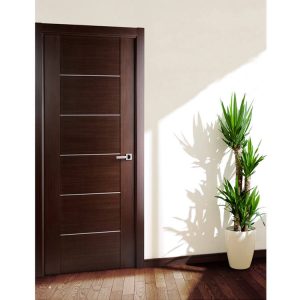
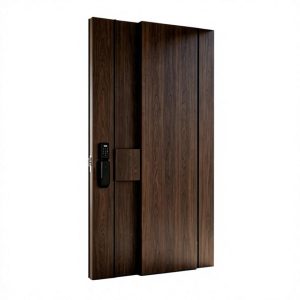
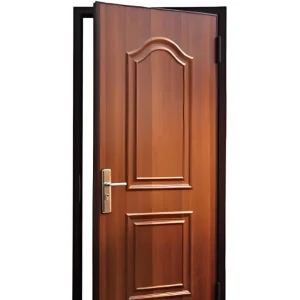
Solid wood is the classic rustic choice. Oak, mahogany, cedar, and fir are common species, each with distinct grain patterns and natural durability. Cedar and redwood offer natural rot resistance; oak and mahogany provide density and strength.
The main advantage of solid wood is authenticity. No manufactured material replicates the depth of natural grain, the way light plays across the surface, or the way the door ages gracefully. For high-end residential projects or commercial buildings where the entrance sets the tone, solid wood remains the benchmark.
The trade-offs are weight and maintenance. A solid wood door is heavy, requiring robust hinges and a properly reinforced frame. It also expands and contracts with humidity changes, which means the fit must accommodate seasonal movement without compromising the seal. Finish maintenance is ongoing—typically refinishing every two to three years, depending on sun exposure and climate.
Wood-Clad and Engineered Wood Doors
Wood-clad doors use an engineered core—often laminated veneer lumber or a honeycomb structure—with a real wood veneer on the exterior surface. These doors capture the rustic wood look while reducing weight and improving dimensional stability.
For buyers in extreme climates, this is often the more practical choice. The engineered core resists warping better than solid wood, and the veneer can be finished to match any rustic aesthetic. The cost is typically lower than solid wood, though the door still requires the same finish maintenance on the exterior surface.
The limitation is authenticity at close range. A veneer, even a thick one, does not have the same tactile quality as solid wood. If the door will be inspected up close—common in high-end residential or hospitality projects—the difference is noticeable. For most commercial applications, however, wood-clad doors deliver the rustic look with fewer performance risks.
Metal Doors with Rustic Finishes
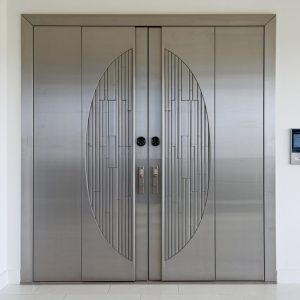
Steel and aluminum doors with rustic finishes have gained significant ground in recent years. These doors use textured paints, faux wood grain, or distressed metal finishes to achieve a rustic appearance without any wood content.
The durability advantage is substantial. Metal doors do not rot, warp, or split. They offer superior security—steel is far harder to breach than wood—and require minimal maintenance. Modern finishing techniques have improved dramatically, with some faux wood finishes being difficult to distinguish from real wood at a distance.
The trade-off is thermal performance and aesthetic warmth. Metal conducts heat, so a quality metal door must include a thermal break—a polyamide strip between interior and exterior metal layers—to prevent condensation and heat loss. And while faux finishes have improved, they still lack the depth of natural materials. For a true rustic country aesthetic, metal doors can feel slightly cold or industrial, particularly in residential settings.
Composite and Fiberglass Doors
Fiberglass and composite doors are engineered to mimic wood grain while offering superior insulation and zero maintenance. These doors are molded from real wood patterns, producing a textured surface that closely resembles painted or stained wood.
The practical advantages are significant. Fiberglass does not dent, rust, or corrode. It offers excellent insulation values, often outperforming both wood and metal. The finish is baked into the surface, so repainting is optional rather than required. For coastal or high-humidity environments, fiberglass is often the most reliable choice.
The aesthetic limitation is the same as with metal: at close range, the surface lacks the warmth of real wood. However, for projects where maintenance reduction is a priority—multi-unit residential, commercial buildings, rental properties—fiberglass rustic doors offer the best balance of appearance and lifecycle cost.
Rustic Front Door Comparison: Materials, Durability, and Cost
| Material | Durability | Insulation | Maintenance | Relative Cost |
|---|---|---|---|---|
| Solid Wood | Good, but susceptible to warping and rot without proper finish | Moderate; depends on thickness and core | High; refinishing every 2–3 years | Highest |
| Wood-Clad | Good; engineered core resists warping | Moderate to good | Medium; exterior finish requires periodic care | Medium-high |
| Steel with Rustic Finish | Excellent; no rot, warp, or split | Good, with thermal break | Low; occasional repainting | Medium |
| Aluminum with Thermal Break | Excellent; corrosion-resistant with proper coating | Good, with thermal break | Low | Medium |
| Fiberglass/Composite | Excellent; no rot, corrosion, or denting | Excellent | Very low; finish is baked in | Medium |
Durability depends heavily on the specific product and installation. A well-built solid wood door with proper overhangs and finish can last decades. A poorly installed fiberglass door with gaps in the weatherstripping will underperform regardless of material. The table above reflects typical behavior, not absolutes.
Cost ranges vary significantly by region, species, finish, and hardware. Solid wood doors typically command the highest price, particularly in exotic species or with custom carving. Wood-clad and fiberglass doors sit in the middle, with steel and aluminum usually the most economical. However, installation costs and long-term maintenance should be factored into the comparison—a cheaper door that requires frequent refinishing may cost more over a ten-year horizon than a higher-priced fiberglass door with no maintenance.
How to Choose the Right Rustic Front Door for Your Project
Assess the Climate and Exposure
The local climate is the first filter. Coastal environments demand corrosion-resistant materials—fiberglass, aluminum with marine-grade coatings, or wood with exceptional rot resistance. High-altitude or desert climates with intense UV exposure require finishes that resist fading and cracking. Cold climates demand doors with proper thermal breaks to prevent condensation and ice formation on interior surfaces.
Define the Performance Requirements
Entry doors must meet specific performance criteria: air infiltration, water penetration, and wind load resistance. These are tested according to standards such as ASTM E283 (air leakage), ASTM E547 (water penetration), and ASTM E330 (structural performance). Buyers should request test reports from manufacturers and compare the ratings against local requirements.
For commercial projects, the door must also meet fire rating requirements and accessibility standards. Rustic aesthetics do not exempt a door from these obligations—the door must be engineered to comply while maintaining the desired appearance.
Match the Door to the Opening and Frame
Rustic doors are available in standard sizes, but non-standard openings are common in older buildings or custom architecture. This is where customization becomes critical. A manufacturer must be able to produce a door that fits the exact opening dimensions, including the frame and threshold, without compromising performance.
Before ordering, measure the rough opening carefully. Account for the frame thickness, shimming space, and the threshold height. If the opening is significantly non-standard, confirm that the manufacturer can adjust the door size without changing the design proportions. A door that looks stretched or compressed loses the rustic charm that motivated the choice.
Evaluate Hardware and Accessories
Rustic doors typically pair with specific hardware: wrought iron hinges, strap hinges, heavy-duty handles, and decorative locksets. These are not just aesthetic choices—they affect security and function. A heavy solid wood door requires hinges rated for the door weight, and the lockset must meet security standards for the application.
Hardware finish should also be considered for durability. Wrought iron with a proper powder coat resists rust far better than bare iron. Brass and bronze develop a patina over time, which can enhance the rustic look or appear unkempt, depending on the desired aesthetic.
Rustic Country vs. Modern Rustic: Finding Your Style
The rustic category splits into two distinct design directions: rustic country and modern rustic.
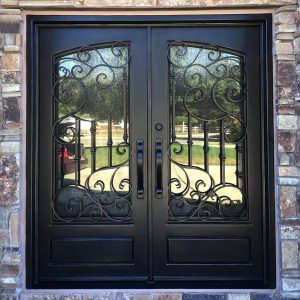
Rustic country is the traditional farmhouse aesthetic. It features heavily grained wood, visible joinery, wrought iron details, and a worn or distressed finish. These doors often have paneled designs, arched tops, or decorative elements like carved motifs. They suit projects where the goal is warmth and nostalgia—rural residences, lodges, cabins, and country-style commercial spaces.
Modern rustic is a more restrained interpretation. It uses the same natural materials—wood, metal, stone—but with cleaner lines, simpler profiles, and a more subdued finish. The wood may be lightly brushed rather than heavily distressed. Hardware is simpler, often in matte black or oil-rubbed bronze. These doors suit contemporary homes, urban infill projects, and commercial spaces that want warmth without the overtly nostalgic character of country style.
The choice between the two is largely about the surrounding architecture. A rustic country door looks out of place on a sleek modern facade; a modern rustic door can feel sterile in a traditional log cabin. Buyers should evaluate the door in the context of the full elevation, not in isolation.
What to Look for in a Rustic Door Manufacturer
Selecting a manufacturer is as important as selecting the door itself. The right manufacturer can deliver a custom product that meets performance requirements, while the wrong one can produce a door that looks right but fails in service.
Verify Testing and Compliance
Ask for test reports that verify the door’s performance against recognized standards. Air-tightness, water-tightness, and wind resistance tests are the baseline for entry doors. If the manufacturer cannot provide these reports, or if the reports do not match the specific door configuration being quoted, that is a red flag.
Building code compliance is another critical check. The manufacturer should be able to adjust the profile structure and fittings to match local building codes in the target market. This is particularly important for international buyers, where code requirements differ significantly from the manufacturer’s domestic standards.
Evaluate Customization Capability
Rustic doors are often specified for unique openings or with custom design elements. The manufacturer should offer full customization on size, color, glass, and hardware accessories. Confirm that customization does not invalidate the performance ratings—a door tested at one size may not perform identically at a significantly different size.
Assess Logistics and Documentation
For international buyers, the manufacturer’s ability to handle export logistics is critical. This includes providing packing lists, proforma invoices, and full customs documentation. The manufacturer should be experienced with both FCL (full container load) and LCL (less than container load) shipments, and should be able to deliver directly from the factory.
Pre-shipment inspection is another consideration. A manufacturer that conducts rigorous inspections before shipment—verifying dimensions, finish, hardware function, and seal integrity—reduces the risk of receiving a defective product. Buyers should ask about the inspection process and whether third-party inspection is available.
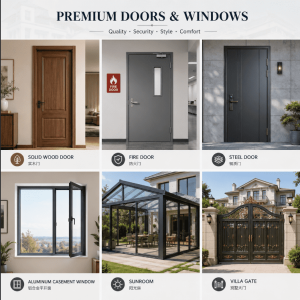
Here is how we meet these standards. As a factory-direct manufacturer, Jusen Door and Windows produces solid wood doors, thermal-break aluminum doors and windows, and custom villa doors and windows. Our position as a direct supplier means we control the entire production process, from profile selection to final assembly, which allows us to maintain competitive pricing without the markup of intermediaries.
Our approach to the requirements above is straightforward: we offer full customization on size, color, glass, and hardware, and our profile structures and fittings can be adjusted to match local building codes in your target market. Before shipment, every door undergoes strict inspection for air-tightness, water-tightness, and wind resistance—the same performance criteria we recommend buyers verify with any manufacturer.
For international buyers, we handle the logistics directly. We provide packing lists, proforma invoices, and full customs documentation, and we ship via both FCL and LCL directly from our factory in China. This means you deal with one party from quotation to delivery, rather than coordinating between a trading company, a freight forwarder, and a manufacturer.
If you are evaluating rustic front doors for a project and need a manufacturer that can meet performance standards while delivering a custom aesthetic, we can provide specifications, test reports, and a quotation tailored to your opening and design requirements.
Or contact our team directly: Send Inquiry
Frequently Asked Questions About Rustic Front Doors
What are the main types of rustic front doors?
The main types are solid wood, wood-clad, metal with rustic finishes (steel or aluminum), and composite/fiberglass. Solid wood offers authentic grain and warmth but requires the most maintenance. Wood-clad provides a balance of appearance and stability. Metal doors with rustic finishes offer durability and security with low maintenance. Fiberglass and composite doors provide the best insulation and the lowest lifecycle maintenance.
How do solid wood and metal rustic doors compare in durability and maintenance?
Solid wood is durable when properly finished and maintained, but it is susceptible to warping, rot, and insect damage if the finish fails. It requires refinishing every two to three years. Metal doors do not rot, warp, or split, and they offer superior security. They require minimal maintenance—typically occasional cleaning and repainting if the finish is damaged. However, metal doors must include a thermal break to prevent condensation and heat loss in cold climates.
What is the typical price range for rustic entry doors?
Pricing varies significantly based on material, size, customization, and hardware. Solid wood doors are typically the most expensive, followed by wood-clad and fiberglass, with steel and aluminum generally the most economical. For accurate pricing, request a quotation based on your specific dimensions and design requirements. Be aware that installation costs and long-term maintenance should be factored into the total cost of ownership.
Can rustic front doors be customized to fit non-standard openings?
Yes, most manufacturers offer custom sizing for non-standard openings. The key is to confirm that the manufacturer can adjust the door dimensions without compromising the design proportions or the performance ratings. Provide accurate rough opening measurements, including frame and threshold requirements, when requesting a quotation.
What should I check before ordering a rustic front door from a manufacturer?
Verify the manufacturer’s test reports for air-tightness, water-tightness, and wind resistance. Confirm that the door configuration being quoted matches the tested configuration. Ask about the inspection process before shipment. For international orders, confirm that the manufacturer can provide the necessary export documentation and handle the logistics.
How do I ensure my rustic door meets local building codes?
Building codes vary by jurisdiction and cover fire ratings, accessibility, energy performance, and structural requirements. The manufacturer should be able to adjust the profile structure and fittings to match local codes in your target market. Provide the manufacturer with the relevant code requirements, and request confirmation that the door configuration can comply. For commercial projects, verify that the door meets the specific fire rating and accessibility standards applicable to your building type.