Types of Metal Front Doors: Steel vs. Aluminum
The metal front door market splits into two primary material categories. Understanding their distinct properties is the first step in any buying decision.
Steel Front Doors
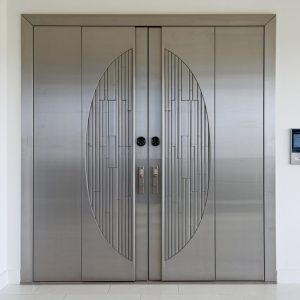
Steel doors are the traditional workhorse of the metal entry door market. They are constructed from galvanized steel sheets formed over a rigid frame, with the core typically filled with polyurethane foam for insulation.
- Security and Durability: A 24-gauge or 22-gauge steel skin provides a high level of forced-entry resistance. The material does not crack, warp, or rot. For high-crime areas, a steel door with a reinforced frame and multi-point locking system is a strong deterrent.
- Performance: The polyurethane foam core provides excellent thermal insulation, but the steel skin is a conductor. A quality door will incorporate a thermal break—a non-metallic barrier between the interior and exterior skins—to prevent heat transfer and condensation.
- Maintenance: The main vulnerability is the bottom edge and any scratches. If the galvanized layer is breached, rust can form. Regular inspection and touch-up paint are required, especially in coastal or high-moisture environments.
Aluminum Front Doors
Aluminum doors are increasingly popular for modern and minimalist designs. They are not typically solid metal slabs; rather, they are systems of extruded aluminum frames that hold glass or insulated panels.
- Design Flexibility: Aluminum’s strength-to-weight ratio allows for slimmer frames and larger glass expanses than steel. This makes it the go-to choice for metal and glass front doors with a contemporary look.
- Corrosion Resistance: Aluminum naturally forms a protective oxide layer, making it inherently more corrosion-resistant than steel. This is a critical advantage for coastal properties or areas with high humidity and salt air.
- Thermal Performance: This is aluminum’s biggest challenge. Bare aluminum is a highly conductive material. To compete with steel on energy efficiency, a premium aluminum door must use a thermally broken frame, where a polyamide or similar material separates the interior and exterior frame sections. This is a key specification to verify with any supplier.
- Denting: Aluminum is softer than steel and can be more prone to dents from impacts. The risk is mitigated by the frame design, but it is a factor to consider for high-traffic family homes.
Black Metal Front Doors: Style and Performance
The “black metal front door” trend is not a fad; it is a durable design choice. The color is applied as a powder coating, a dry finishing process where finely ground pigment is electrostatically charged and sprayed onto the door, then cured under heat to form a hard, scratch-resistant skin.
- Does black cost more? The color itself is not a premium add-on. The price difference you see between a standard white door and a black one usually reflects the quality of the coating system and the door’s underlying construction, not the pigment. A high-quality black finish should be a standard option, not a luxury upgrade.
- Performance and Heat: A common concern is that black absorbs heat. In direct sunlight, the surface of a black door will get hotter than a white one. This can cause slight expansion, which is why a proper installation with adequate clearance is important. It does not significantly impact the interior temperature if the door has a proper thermal break, but it can accelerate paint fading on lower-quality coatings. Look for a powder coat with high UV resistance.
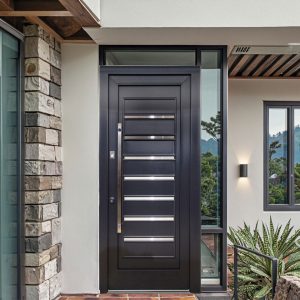
- Style Versatility: Black serves as a neutral anchor for a wide range of architectural styles, from modern farmhouse (black steel front door with barn hardware) to ultra-contemporary (black aluminum with clear glass). It provides a high-contrast focal point that makes hardware and surrounding trim stand out.
Metal and Glass Front Doors: Combining Light and Security
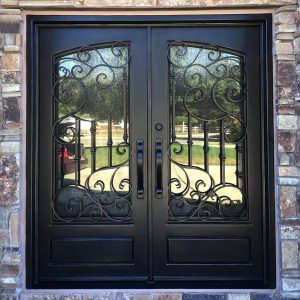
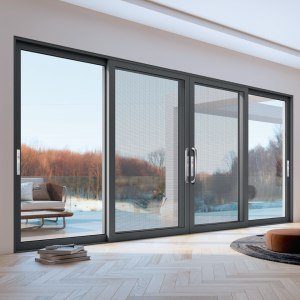
Integrating glass into a metal front door is a strategic way to bring natural light into an entryway while maintaining the security benefits of a metal frame. This is a customization, not a standard product.
- Glass Types and Ratings: The glass is a critical security and efficiency component. For residential entry doors, look for:
– Tempered Glass: Required by most building codes for safety, as it shatters into small, granular pieces rather than jagged shards.
– Laminated Glass: This is the security upgrade. It consists of two glass panes bonded with a plastic interlayer. If broken, the glass adheres to the interlayer, holding its shape and preventing easy penetration.
– Low-E Coating: A microscopically thin, metallic coating that reflects heat while allowing light to pass through. It significantly improves the door’s energy efficiency, particularly in climates with extreme temperatures.
– Insulated Glass Units (IGUs): Double or triple-pane glass with argon gas fill between the panes provides the best thermal insulation.
- Frame Design Matters: The mullions (vertical bars) and transoms (horizontal bars) dividing the glass panels are not just decorative. They add structural rigidity to the door and prevent the glass from being pried out. A well-designed metal and glass door will have a robust internal frame structure that meets security standards without looking bulky.
Comparison Table: Steel vs. Aluminum vs. Metal-and-Glass
This table provides a practical comparison for procurement decisions. Note that performance varies significantly based on the specific product’s construction quality, not just its material category.
| Attribute | Steel Door | Aluminum Door | Metal-and-Glass Door |
|---|---|---|---|
| Security | High (dent-resistant, strong) | High (structural frame, but softer skin) | Variable; depends on frame and glass type (laminated is best) |
| Insulation | Good to Excellent (with thermal break) | Fair to Excellent (requires thermal break) | Fair to Excellent (depends on frame break and IGU rating) |
| Corrosion Resistance | Fair (requires protective coating) | Excellent (naturally resistant) | Depends on frame material (aluminum preferred) |
| Design Flexibility | Moderate (limited to panel designs) | High (slim frames, large glass) | High (customizable glass shapes and layouts) |
| Maintenance | Moderate (repaint if scratched) | Low (powder coat is durable) | Low to Moderate (clean glass and tracks) |
| Relative Cost | Mid-range | Higher (for premium thermal systems) | Highest (due to glass and frame complexity) |
| Best Fit For | Security-focused homes, traditional styles | Modern architecture, coastal climates | Contemporary design, maximizing natural light |
How to Choose the Right Metal Front Door
Selecting the right door is a systematic process, not a preference-based choice. Use this framework to evaluate your options.
1. Assess Your Climate and Location
This is the most critical factor. For a coastal property, the corrosion resistance of aluminum is a decisive advantage. For a cold-climate home, the thermal break’s quality and the door’s overall U-factor (how well it prevents heat from escaping) are paramount. For a high-crime urban area, a steel door with a high-security locking system is the logical choice. Your environment defines your performance requirements.
2. Calculate the Total Cost of Ownership
The initial purchase price is only one part of the equation. Consider these factors:
- Installation: Professional installation is not optional for a security door. A poorly hung door compromises the locking mechanism and weather seal. Factor in the cost of labor and potential modifications to the rough opening.
- Energy Costs: A door with a better U-factor will cost more upfront but can reduce heating and cooling bills over its lifetime. Calculate the payback period for the energy-efficient upgrade.
- Maintenance: Steel may need repainting every few years if scratched. Aluminum and high-quality powder coats require less upkeep. Choose a material that fits your maintenance capacity.
3. Verify Building Code Compliance
Building codes are not suggestions; they are legal requirements. You must verify that your chosen door meets:
- Energy Codes: Most jurisdictions now adopt the International Energy Conservation Code (IECC), which sets maximum U-factor and Solar Heat Gain Coefficient (SHGC) requirements for fenestration. Your supplier should provide certified performance data for their products.
- Egress Requirements: Your entry door must meet minimum clear opening dimensions (typically 32 inches wide and 24 inches high) to serve as an emergency exit.
- Impact Resistance: In hurricane-prone regions, doors must meet specific impact-resistance standards (e.g., Miami-Dade County protocols). This requires specialized glass and frame construction.
4. Specify Customization Carefully
Customization is where you control the final product. Be precise in your specifications:
- Size: Accurate measurements are critical. A custom size is a common requirement for renovations and new builds with non-standard openings.
- Color: Specify the exact powder coat color code (e.g., RAL or custom). Confirm the finish’s UV resistance rating.
- Glass: Choose the glass type based on your security and energy needs. Laminated glass for security, Low-E for efficiency, and tinted or frosted for privacy.
- Hardware: The locking system is your primary security feature. A single deadbolt is insufficient for a high-security application. Specify a multi-point locking system that engages the door at multiple points along the frame.
Frequently Asked Questions About Metal Front Doors
What is the typical lifespan of a metal front door?
A well-maintained metal door, whether steel or aluminum, has a lifespan of 30 to 50 years or more. The primary factors affecting longevity are the quality of the finish (to prevent corrosion), the condition of the weatherstripping (which should be replaced periodically), and the stability of the structure it is installed into.
How much does a metal front door cost?
Costs vary widely based on material, size, glass, and hardware. As a guideline, you can expect a significant investment for a quality unit. The final price is influenced by the door’s thermal performance rating, the type of glass, and the complexity of the installation. It is always more cost-effective to invest in a superior door upfront than to replace a cheaper one in a decade.
Can I customize a metal front door with glass panels?
Yes, this is a standard capability for reputable manufacturers. You can customize the number, shape, and position of glass panels. The critical customization is the glass type itself. For a secure and efficient door, specify laminated or tempered, Low-E insulated glass units. The frame design must be engineered to support the glass and maintain the door’s structural integrity.
How do I ensure my metal front door meets building codes?
You must request and review the manufacturer’s performance certifications. Ask for the door’s U-factor and SHGC ratings, which indicate its energy efficiency. Confirm the hardware meets local egress requirements. For hurricane zones, verify the door has a valid impact-resistance certification. A reputable supplier will have this documentation readily available for your local building department.
What should I look for in a metal front door manufacturer?
Look for a manufacturer that can provide specific performance data, not just marketing claims. Key indicators of a reliable supplier include:
- Transparent specifications: They can provide detailed technical drawings, thermal performance values, and material specifications.
- Customization capability: They offer flexibility in size, color, glass, and hardware, rather than a rigid catalog.
- Quality control processes: They can explain their inspection procedures for air-tightness, water-tightness, and wind resistance—the core performance indicators for exterior doors.
- Export and logistics experience: If sourcing internationally, they must handle documentation, packing, and shipping efficiently.
Why Work with a Factory-Direct Manufacturer
Once you have established your requirements and a framework for comparison, the question becomes: where to source the product? The industry structure offers a clear advantage to buyers who work directly with the factory.
As a manufacturer of metal doors and windows, we understand the specification process from the inside. Our approach is designed to meet the standards we have just outlined.
- Meeting Performance Standards: We ensure every door is subject to strict pre-shipment inspection for air-tightness, water-tightness, and wind resistance. This is not a check-box exercise; it is a verification of the product’s ability to perform in real-world conditions. We provide the data you need for building code compliance.
- Engineering for Your Market: Local building codes and climate conditions vary significantly. Our profile structures and fittings are adjustable to match the specific requirements of your target market, whether that is an energy code in a cold region or an impact-resistance standard in a coastal zone.
- Full Customization, Directly: We provide full customization on size, color, glass, and hardware accessories. As a direct supplier, you work with our engineers to specify the exact product you need, without a middleman altering the specifications or inflating the cost.
- Transparent Sourcing and Logistics: We have extensive experience in foreign trade. We provide complete documentation, including packing lists, proforma invoices, and customs paperwork, for both FCL and LCL shipments. This ensures your project timeline is not delayed by logistics issues.
Choosing a metal front door is a significant procurement decision. It is a balance of security, efficiency, aesthetics, and budget. By understanding the materials, the performance metrics, and the compliance requirements, you can make a confident choice.
If you have a project in mind and need a partner who can deliver a code-compliant, custom-engineered door, talk to our team. We can provide the technical specifications and a quote based on your exact requirements.