What to Look for in a Garage Entry Door with Window
A garage entry door with a window is a practical upgrade that brings natural light into a space often treated as an afterthought. The right choice depends on three factors: whether the door leads to the exterior or connects the garage to the house, your security requirements, and the local climate. For attached garages, an interior door with a window can brighten a mudroom or laundry transition. For detached garages or exterior entrances, the door must handle weather exposure and meet stricter building codes.
The most common mistake buyers make is choosing a door based on appearance alone. The glass specification, core material, and frame construction determine how long the door lasts and how well it performs. This guide breaks down the material options, glazing choices, security considerations, and cost factors so you can match the door to your actual use case.
Types of Garage Entry Doors with Windows
Interior vs. Exterior Garage Entry Doors
The installation location determines the performance requirements.
Interior garage entry doors separate the garage from living spaces. They function as a fire and carbon monoxide barrier, so most building codes require a solid core door with a self-closing hinge mechanism. Windows are permitted, but the glass must be tempered or wired glass, and the door must maintain its fire rating. These doors do not need weatherstripping or insulation against outdoor temperatures, which gives you more freedom in material selection.
Exterior garage entry doors face the outdoors. They must resist moisture, temperature swings, and attempted forced entry. The National Fenestration Rating Council (NFRC) ratings matter here — look for a low U-factor (below 0.30 for colder climates) and a high R-value in the door body. The window glazing should be dual-pane with low-E coating to prevent condensation and heat loss.
Material Options
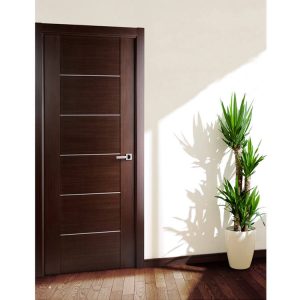
Solid wood remains the traditional choice for its appearance and natural insulation properties. Mahogany, oak, and fir are common species. Wood doors require periodic refinishing — typically every two to three years — and they expand and contract with humidity changes. A wood door with a window needs careful sealing around the glass to prevent moisture infiltration.
Solid core doors have a wood or engineered wood frame filled with a dense composite material, then veneered with wood or fiberglass. They offer the look of solid wood at a lower cost with better dimensional stability. Solid core construction is standard for interior fire-rated doors.
Steel doors use a galvanized steel skin over an insulated foam core. They offer the highest security and lowest maintenance of any option. Steel dents on impact, and the paint finish can chip, exposing bare metal to rust. A steel door with a window requires a thermal break in the frame to prevent condensation.
Fiberglass doors have a composite skin over an insulated core. They mimic wood grain convincingly, resist dents and rust, and handle temperature extremes well. Fiberglass is the most dimensionally stable option — it will not warp, swell, or shrink. It costs more than steel but less than high-end wood.
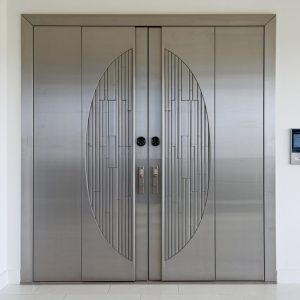
Aluminum doors are less common for residential entry applications but appear in modern architectural designs and commercial settings. Aluminum is lightweight, corrosion-resistant, and allows for slim sightlines around glass panels. The downside is high thermal conductivity — aluminum frames need a thermal break to meet energy codes, and the material dents more easily than steel.
Solid Wood vs. Solid Core vs. Other Materials: A Detailed Comparison
The distinction between solid wood and solid core matters more for garage entry doors than for any other door type because of fire safety requirements.
Solid wood doors are milled from a single piece or staved construction of wood. They offer the most authentic appearance and can be refinished indefinitely. A solid wood garage entry door with a window will cost more and requires ongoing maintenance. The wood itself provides natural insulation, but the door’s R-value depends on thickness and species.
Solid core doors have a hollow or honeycomb interior filled with particleboard, mineral fiber, or foam, then covered with a veneer. The term “solid core” is misleading — the door is not solid wood, but the interior is fully filled rather than hollow. This construction provides fire resistance, sound dampening, and dimensional stability at roughly half the cost of solid wood.
For an interior garage entry door, building codes in most jurisdictions require a fire-rated door — typically 20-minute or 45-minute ratings. Solid core doors meet these ratings; hollow-core doors do not. A solid wood door can also meet fire ratings if thick enough, but solid core is the standard, cost-effective solution.
For an exterior garage entry door, the choice between wood, steel, and fiberglass depends on your priorities:
- Budget: Steel is the most affordable. Fiberglass is mid-range. Solid wood is the premium option.
- Maintenance: Steel and fiberglass need minimal upkeep. Wood requires regular refinishing.
- Durability: Fiberglass resists dents and moisture best. Steel resists forced entry best. Wood is the most vulnerable to both.
- Appearance: Wood is unmatched for warmth and grain. Fiberglass mimics wood convincingly. Steel reads as industrial.
Comparison Table: Key Features at a Glance
| Feature | Solid Wood | Solid Core | Steel | Fiberglass | Aluminum |
|---|---|---|---|---|---|
| Typical Cost Range | Highest | Moderate | Lowest | Moderate-High | High |
| R-Value (Door Body) | 2.5–3.5 | 3.0–4.0 | 5.0–10.0 | 5.0–7.5 | Low without thermal break |
| Maintenance | High (refinish every 2–3 years) | Low | Low (touch-up paint) | Very Low | Low |
| Dent Resistance | Moderate | Moderate | Low (dents easily) | High | Low |
| Moisture Resistance | Low | Moderate | Moderate (rust risk) | High | High |
| Fire Rating Available | Yes (thick species) | Yes (standard) | Yes | Yes | No |
| Security | Moderate | Moderate | High | High | Moderate |
| Appearance Options | Natural wood grain | Wood veneer | Flat or embossed | Wood grain texture | Slim modern lines |
| Weight | Heavy | Moderate | Moderate | Light-Moderate | Light |
How to Choose the Right Garage Entry Door: A Step-by-Step Guide
Step 1: Determine Interior or Exterior Placement
Check whether the door connects the garage to living space or opens to the outside. Interior doors need fire ratings and self-closing hardware. Exterior doors need weather resistance and insulation.
Step 2: Assess the Garage Usage Scenario
How the garage is used changes the door specification:
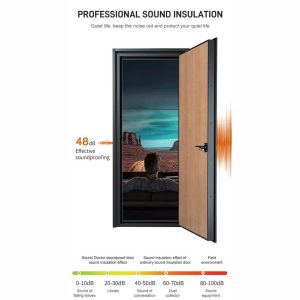
- Workshop or hobby space: Prioritize sound dampening and insulation. A solid core door with dual-pane glass reduces noise from tools and keeps the space comfortable year-round.
- Home gym: Ventilation matters. Look for a door with operable window options or a transom that can open.
- Storage only: A basic steel door with a small window is sufficient. Spend budget elsewhere.
- Frequent entry (mudroom transition): Choose a durable, low-maintenance surface. Fiberglass or steel with a kick plate handles heavy traffic.
Step 3: Select the Glazing
The window is the weakest point in any door — for both energy efficiency and security. Your options, from least to most protective:
Single-pane glass: Cheapest, but poor insulation and easy to break. Only acceptable for interior doors in mild climates.
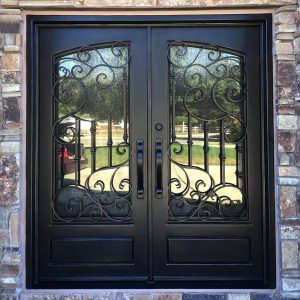
Dual-pane (insulated) glass: Two panes with an air or argon gas gap. Reduces heat transfer and condensation. The standard choice for exterior doors.
Low-E coating: A microscopic metallic layer that reflects infrared heat while admitting visible light. Low-E dual-pane glass cuts heat loss by 30–50% compared to uncoated dual-pane.
Tempered glass: Heat-treated to shatter into small, dull pieces rather than sharp shards. Required by code for doors in most jurisdictions.
Laminated glass: Two glass layers bonded with a plastic interlayer. Holds together when broken, resisting forced entry. Adds meaningful security without changing appearance.
Polycarbonate: A clear, impact-resistant plastic. Virtually unbreakable but scratches easily and yellows over time. Rarely used in residential doors.
For exterior doors, dual-pane low-E tempered glass is the baseline. For interior doors, tempered single-pane is usually sufficient. If security is a concern, upgrade to laminated glass — it adds minimal cost relative to the door price and significantly increases forced-entry resistance.
Step 4: Evaluate Security Features
Beyond the glass, examine the door’s security components:
- Locking hardware: A deadbolt with a minimum 1-inch throw and a hardened steel bolt. ANSI/BHMA Grade 1 is the highest residential rating.
- Hinges: Look for heavy-gauge steel hinges with non-removable pins on exterior doors.
- Frame reinforcement: A steel or wood frame with a metal strike plate anchored into the wall studs. Many standard frames use short screws that leave the strike plate vulnerable to kick-in attacks.
- Glazing bead: The interior trim that holds the glass in place should be screwed, not clipped. Clipped beads allow a burglar to remove the glass and reach the lock.
Step 5: Check Building Codes and Compliance
Building codes affect garage entry doors with windows in three ways:
Fire ratings (interior doors): Most U.S. jurisdictions require a 20-minute fire-rated door between an attached garage and living space. The door must be self-closing and cannot be hollow-core. Check your local code — some areas require 45-minute ratings.
Egress requirements: If the garage is a habitable space, windows in the door may need to meet egress size requirements. Check the International Residential Code (IRC) for your jurisdiction’s specific dimensions.
Safety glass: Glass in doors and adjacent sidelites must be tempered or laminated in most locations. The Consumer Product Safety Commission requires safety glazing in hazardous locations, which includes doors.
Energy codes: Exterior doors must meet local energy efficiency requirements. The International Energy Conservation Code (IECC) specifies maximum U-factors by climate zone. A dual-pane low-E glass door typically meets these requirements in most zones.
Step 6: Plan for Installation and Maintenance
Installation: A prehung door unit — the door, frame, and hinges assembled at the factory — is the practical choice. It installs in a few hours with proper tools. A slab door (door only) requires existing frame reuse and precise fitting, which is harder for a door with a window because the frame must be perfectly square to avoid glass binding.
Maintenance by material:
- Wood: Sand and refinish every 2–3 years. Check the glass seal annually for cracks.
- Steel: Touch up scratches immediately to prevent rust. Check the bottom sweep for wear.
- Fiberglass: Clean with mild soap and water. No refinishing needed unless the finish is damaged.
- Aluminum: Clean with non-abrasive cleaner. Check the thermal break for deterioration.
Additional Considerations: Garage Front Doors, Interior Entry Doors, and More
Garage front door is a common search term for the door that leads from the garage to the backyard or driveway. This is an exterior application — treat it as a full exterior door with weatherstripping, insulated glass, and a threshold seal.
Entry door for garage typically refers to a man-door installed beside a large overhead garage door. This door allows pedestrian access without opening the overhead door. The same selection criteria apply, but the door’s exposure to vehicle exhaust and potential impact from cars makes durability a priority.
Interior garage entry door connects the garage to the house. Fire rating and self-closing hardware are non-negotiable in most codes. A window in this door helps you see if the garage door is closed and brings light into a windowless space.
Solid wood garage entry door and solid core garage entry door are the two material options most often compared. The distinction matters for fire ratings and budget. Solid wood is premium and maintenance-heavy; solid core offers fire resistance at a lower price point.
Exterior garage entry doors must handle full weather exposure. If the door faces prevailing winds or receives direct rain, fiberglass or steel with a factory-applied finish is the low-maintenance choice.
Frequently Asked Questions
What are the differences between solid wood and solid core garage entry doors?
Solid wood doors are milled entirely from wood. They offer authentic grain and can be refinished repeatedly but require ongoing maintenance and cost more. Solid core doors have a wood frame filled with dense composite material and covered with a veneer. They provide fire resistance and dimensional stability at lower cost, but the veneer limits refinishing to a few times before replacement.
What are the best glass options for a garage entry door with window?
For exterior doors, dual-pane low-E tempered glass is the baseline. It provides insulation, reduces UV damage, and meets safety glazing requirements. For security-sensitive applications, upgrade to laminated glass — it resists forced entry better than tempered glass. For interior doors, tempered single-pane glass is sufficient.
How do I choose between an interior and exterior garage entry door?
Check the door’s location. Interior doors (garage to house) must meet fire ratings and often require self-closing hardware. They do not need weatherstripping or insulation. Exterior doors face weather and require insulated glass, weatherstripping, and corrosion-resistant hardware.
What are the key security features to look for?
A deadbolt with a 1-inch throw and ANSI/BHMA Grade 1 rating, heavy-gauge steel hinges with non-removable pins, a metal strike plate anchored into wall studs, and screwed (not clipped) glazing beads around the window. Laminated glass adds forced-entry resistance.
How much does a garage entry door with window typically cost?
Cost varies significantly with material, size, glazing, and hardware. Steel doors with a small window start at the low end of the range. Fiberglass with dual-pane glass sits mid-range. Solid wood with custom glazing reaches the high end. Installation adds labor costs, and custom sizes increase the price further. Get quotes from multiple suppliers and compare the complete package — door, frame, hardware, and delivery.
Can I customize the size, color, and glass of my garage entry door?
Yes, most manufacturers offer customization. Standard sizes are 32, 34, and 36 inches wide by 80 inches tall, but non-standard sizes are available. Color options depend on material — steel and fiberglass come in factory-applied finishes, while wood can be stained or painted. Glass options include clear, frosted, obscure, and decorative patterns, with single, dual, or triple panes.
What building codes and compliance issues should I consider?
Interior garage entry doors need a fire rating (typically 20-minute) and self-closing hardware. Exterior doors must meet local energy codes for U-factor. Safety glass (tempered or laminated) is required for glass in doors. If the garage is habitable space, egress window requirements may apply. Always verify with your local building department before ordering.
How We Meet These Standards as a Manufacturer
The selection criteria above represent the industry baseline for a quality garage entry door with a window. As a manufacturer, our approach at Jusen Door and Windows Manufacturing Co., Ltd. is built around these same standards.
We produce solid wood, thermal-break aluminum, and system doors that meet the specifications discussed in this guide. For buyers who need custom sizes — which is common for garage entry doors, since garage wall openings rarely match standard residential dimensions — we offer full customization on size, color, glass, and hardware accessories. Our adjustable profile structure and fittings can be matched to local building codes in your target market, which matters for both domestic use and international projects.
Every door undergoes pre-shipment inspection covering air-tightness, water-tightness, and wind resistance testing. We ship FCL and LCL directly from our factory, and we provide full export documentation including packing lists, proforma invoices, and customs paperwork. For buyers comparing suppliers, this means you can verify product performance before shipment and receive the documentation needed for smooth import clearance.
If you are evaluating manufacturers for a garage entry door project, we can provide specifications, test data, and samples. Send an inquiry with your door size, material preference, and glass requirements to get a quote.