Key Takeaways: What You Need to Know About Full Glass Exterior Doors
A full glass exterior door is a significant architectural and financial decision. It can transform the light and feel of an entryway, but it introduces trade-offs in privacy, energy efficiency, and security that a solid or partially glazed door does not. The market offers several distinct configurations — from the classic 3/4 light door to double-door systems — and each serves a different functional and aesthetic purpose.
Before you specify a door, understand that the glass itself is the most critical component. The difference between a single-pane unit and a properly specified double-glazed, low-E assembly is not a minor upgrade; it fundamentally changes the door’s thermal performance, condensation resistance, and long-term operating cost. Buyers should evaluate the entire door assembly — frame, glass package, and hardware — as a system, not as separate parts.
Types of Full Glass Exterior Doors
The term “full glass” covers a range of configurations. The percentage of glass relative to the total door surface, and the arrangement of that glass, defines the door type.
3/4 Glass Doors are the most common full glass style. The glass panel occupies the upper three-quarters of the door, with a solid bottom rail typically 8 to 12 inches tall. This design provides substantial natural light while offering a solid kick zone at the base, which is practical for durability and cleaning. The bottom rail also provides a mounting surface for hardware and protects the glass from impacts from carts, shoes, or weather.
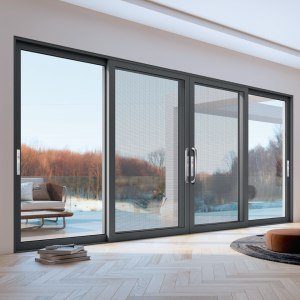
Full-Lite Doors have glass spanning nearly the entire door surface, with only a slim perimeter frame. These offer maximum light and unobstructed views. They are often used where the door is not the primary entry point, such as a side door to a patio or a garden room. The trade-off is that the entire surface is vulnerable to impact, and there is no solid area for mounting accessories or concealing the threshold transition.
6-Panel Glass Doors are a hybrid. The door is divided into six rectangular sections, some or all of which are glazed. A common configuration uses glass in the upper four panels and solid material in the lower two. This offers a traditional aesthetic with the benefit of a solid lower half.
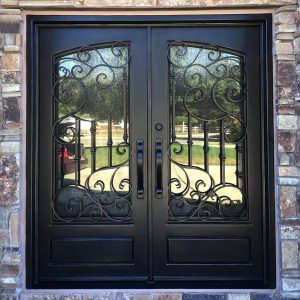
Double Glass Doors (often called French doors) consist of two hinged panels that meet in the middle. Each panel can be full-lite or 3/4 glass. This configuration creates a wide opening and is popular for transitions to patios, decks, or garden spaces. Double doors require careful attention to the meeting stile — the vertical edge where the two doors close — to ensure proper sealing and security.
Oval Glass Doors feature a single oval-shaped glass insert, typically in the upper half of the door. This is a traditional style that offers a moderate amount of light while maintaining significant solid surface area. It is a conservative choice for buyers who want some glass but are concerned about privacy or energy performance.
Decorative and Leaded Glass Doors use glass that is patterned, textured, beveled, or assembled from multiple pieces with lead or zinc cames. These are less about maximizing light and more about creating a visual statement. They can be specified with clear, frosted, or colored glass. Leaded glass is a craft-intensive option and generally carries a higher cost.
Glass Options Compared: Clear, Frosted, Privacy, and More
The glass specification determines the door’s performance in four areas: light transmission, privacy, energy efficiency, and safety.
Clear Glass maximizes light and visibility. It is the baseline option. For exterior doors, clear glass must be tempered or laminated for safety. The primary disadvantage is the lack of privacy — anyone outside can see directly into the home.
Frosted Glass is created by acid-etching or sandblasting one surface of the glass. It diffuses light, allowing brightness to pass through while obscuring shapes and details. Frosted glass is a good middle-ground for privacy. It is important to note that the frosting is a surface treatment; it can show fingerprints and requires regular cleaning. Also, the frosted surface can be susceptible to scratching if abrasive cleaners are used.
Privacy Glass is a broader category that includes frosted glass but also encompasses patterned or textured glass that obscures visibility. This includes rain glass, hammered glass, and other decorative patterns. These textures distort images rather than simply blurring them. Some privacy glass options are manufactured with the pattern embedded in the glass, making them more durable than surface-etched options.
Decorative Glass includes beveled, stained, or leaded designs. These are chosen for aesthetics. Performance characteristics vary widely depending on the construction. A single-pane decorative glass unit will have poor thermal performance compared to a double-glazed unit.
Performance characteristics to compare:
| Glass Type | Light Transmission | Privacy | Relative Cost | Maintenance |
|---|---|---|---|---|
| Clear | High | None | Low | Low |
| Frosted | High | Good | Medium | Medium (fingerprints) |
| Privacy/Patterned | Medium-High | Good-Excellent | Medium | Medium |
| Decorative/Leaded | Variable | Variable | High | High (lead cames need care) |
Energy Performance: The glass type is only one factor in energy performance. The number of panes, the presence of a low-E coating, and the type of gas fill between panes are far more significant. A single-pane clear glass door will have a U-factor around 1.0 or higher. A double-glazed, low-E unit with argon fill can achieve a U-factor of 0.30 or lower. This difference translates directly into heating and cooling costs. For a standard 3-foot door, the difference in annual energy cost between these two extremes can be significant in a cold climate.
Safety Glass: In almost all jurisdictions, glass in a door must be safety glass — either tempered or laminated. Tempered glass is heat-treated to be several times stronger than annealed glass. When it breaks, it crumbles into small, rounded pieces rather than sharp shards. Laminated glass has a plastic interlayer that holds the glass together when broken, providing resistance to forced entry and preventing fall-out from the frame. For exterior doors, laminated glass is often the better choice for security, though it is more expensive than tempered.
Full Glass vs. No Window: Which Is Right for Your Project?
The decision between a full glass door and a solid door without windows is a trade-off between light and performance.
Advantages of full glass:
- Natural light reduces the need for artificial lighting during the day.
- Provides a view of the exterior, which can make a space feel larger.
- Aesthetic appeal; modern and traditional designs both incorporate glass.
Disadvantages of full glass:
- Lower insulation value than a solid door, even with high-performance glass.
- Privacy is compromised.
- The glass surface is a potential security vulnerability.
- Condensation can form on the interior surface in cold weather if the glass package is inadequate.
Solid doors without windows offer the highest insulation value and the best security. A solid wood or insulated metal door with no glass will have a U-factor that is difficult to match with any glazed unit. They also offer complete privacy and require no glass maintenance.
The middle ground: A door with a smaller glass lite — such as an oval or a single small rectangular window — can capture some light while mitigating the performance drawbacks. This is often the practical choice for primary entry doors in cold climates.
The choice should be guided by the door’s location and role. A north-facing door that receives no direct sunlight and is a primary entry point may be better with a solid or partially glazed configuration. A south-facing door to a patio, where light and view are desired, is a better candidate for full glass.
Sizing and Configuration: 32-Inch, 36-Inch, Double, and Custom
Standard residential exterior door widths are 32 inches and 36 inches. The standard height is 80 inches (6 feet 8 inches). The 36-inch width is the most common for a primary entry door, as it provides a comfortable opening for moving furniture and meets accessibility requirements in many jurisdictions. The 32-inch door is common for secondary entrances and spaces with narrower framing.
The standard 36 x 80 door is a baseline. Beyond this, door systems are available in custom sizes to fit non-standard openings. When considering a full glass door, the size has a direct impact on glass performance. A larger glass area increases heat loss and solar heat gain. It also increases the weight of the door, which affects hinge selection and the structural requirements of the frame.
For double glass doors, each leaf is typically 30 to 36 inches wide, creating a total opening of 60 to 72 inches. The weight of each leaf, combined with the glass, requires heavy-duty hinges and a carefully installed frame to prevent sagging over time.
Important consideration for sizing: The rough opening must accommodate the door frame, not just the door slab. When replacing an existing door, the rough opening dimensions determine what can be installed without structural modification.
Comparison Table: Full Glass Door Options at a Glance
| Feature | 3/4 Glass | Full-Lite | 6-Panel Glass | Double (French) | Oval Glass |
|---|---|---|---|---|---|
| Light Transmission | High | Maximum | Moderate | High | Moderate |
| Privacy | Low-Moderate | Low | Moderate | Low | Moderate |
| Security | Good (solid bottom) | Lower (all glass) | Good (solid lower panels) | Moderate (meeting stile) | Good |
| Energy Efficiency | Moderate | Lower | Moderate-Higher | Moderate | Higher |
| Typical Use | Entry doors | Patio/side doors | Traditional entry | Patio/garden | Traditional entry |
| Relative Cost | Medium | Medium | Medium-High | High | Medium |
How to Choose the Right Full Glass Exterior Door
Selecting a full glass door requires evaluating the frame material, the glass package, and the door’s intended performance.
Frame Materials
Aluminum frames are strong, lightweight, and resistant to corrosion. They are common in commercial applications and modern residential designs. The critical issue with aluminum is thermal conductivity. Without a thermal break, an aluminum frame will conduct heat and cold rapidly, leading to condensation and energy loss. A properly designed thermal-break aluminum frame — where a plastic or other low-conductivity material separates the interior and exterior aluminum sections — mitigates this. For full glass doors, a thermal-break aluminum frame is the standard for energy-efficient performance.
Wood frames offer a classic aesthetic and naturally better insulation than non-thermal-break aluminum. The trade-offs are maintenance — wood requires periodic painting or staining — and the potential for rot, particularly at the bottom of the door and the threshold. Wood is also more susceptible to warping than metal or fiberglass.
Steel frames are the strongest option and are often used in security-focused applications. They are less common in residential full glass doors due to their industrial appearance and the same thermal conductivity issues as aluminum, unless they are thermally broken.
Glass Package Selection
The glass package is the most important performance decision. Specify the following:
- Number of panes: Double-glazed is the minimum for most climates. Triple-glazed is available for extreme cold climates but adds significant weight and cost.
- Low-E coating: This microscopically thin coating reflects infrared radiation, keeping heat inside in winter and outside in summer. It is an essential component of an energy-efficient door.
- Gas fill: Argon or krypton gas between the panes reduces heat transfer compared to air.
- Spacer system: The spacer at the edge of the glass unit affects condensation resistance. Warm-edge spacers reduce heat loss at the glass edge and minimize condensation.
Energy Performance Data
When comparing doors, look for the whole-assembly U-factor and Solar Heat Gain Coefficient (SHGC). These are measured under the National Fenestration Rating Council (NFRC) protocol. A door with a U-factor of 0.30 or lower is considered high-performance. The SHGC tells you how much solar heat passes through the glass. In a cold climate, a higher SHGC can be beneficial for passive solar heating; in a hot climate, a lower SHGC reduces cooling load.
Security Considerations
Full glass doors are inherently less secure than solid doors. The glass itself is a potential entry point. Laminated glass is significantly more resistant to forced entry than tempered glass. The locking hardware is also critical. A multi-point locking system, which engages bolts at multiple points along the door edge, is strongly recommended for full glass doors. The hinge side is also a vulnerability; hinge bolts that cannot be removed from the outside are a security feature.
Condensation and Thermal Bridging
Condensation on the interior surface of a glass door occurs when the glass surface temperature drops below the dew point of the indoor air. This is a function of the glass U-factor, the frame material, and the indoor humidity level. A high-performance glass package with a warm-edge spacer will have a higher interior surface temperature and be less prone to condensation. The threshold — the bottom of the door — is a common location for thermal bridging and condensation. A well-designed threshold with a thermal break is important.
Installation and Maintenance
Installation is a professional task, not a DIY project. A full glass door is heavy and the frame must be installed perfectly plumb and square to ensure proper operation and sealing. Poor installation will negate the performance of even the best door. The air leakage around the door — measured in cubic feet per minute per square foot of door area — is a significant factor in energy performance.
Maintenance requirements vary by frame material. Aluminum frames require minimal maintenance — occasional cleaning. Wood frames require regular refinishing. The glass requires cleaning with non-abrasive cleaners; avoid harsh chemicals that can damage low-E coatings or frosted surfaces.
Cost Factors
The cost of a full glass exterior door varies widely based on the frame material, glass package, size, and hardware. As a general framework:
- A basic 36 x 80 door with an aluminum frame and double-glazed clear glass is the entry point.
- Upgrading to a low-E, argon-filled glass package adds to the cost.
- Laminated glass for security adds more.
- A wood frame is generally more expensive than aluminum.
- Double doors cost roughly double a single door of the same quality.
- Custom sizes and decorative glass add a premium.
Labor costs for installation vary significantly by region. The total installed cost is often 1.5 to 2 times the cost of the door itself.
Decision Framework
Choose a 3/4 glass door with laminated, low-E, double-glazed glass if you need a primary entry door that balances light with security and energy performance.
Choose a full-lite door with clear, double-glazed glass for a patio or garden access point where light and view are the priority and the door is not the main entry.
Choose a solid or partially glazed door if the door faces a public area, is in a cold climate, and energy performance and privacy are paramount.
Choose decorative or leaded glass only when the aesthetic is a specific requirement and you are prepared for the higher cost and maintenance.
How We Meet These Standards
As a manufacturer of exterior doors, we understand that a full glass door is a system of interdependent components. Our thermal-break aluminum frames are engineered to minimize thermal bridging, and we offer glass packages — from double-glazed low-E units to laminated safety glass — that meet the performance criteria discussed above. We understand that local building codes vary, and our profile structures and fittings can be adjusted to comply with the requirements of your target market.
For procurement professionals, we provide full documentation, including packing lists, proforma invoices, and customs paperwork, and we ship via FCL or LCL directly from our factory. Our pre-shipment inspections include air-tightness, water-tightness, and wind resistance tests, verifying that the door performs to specification before it leaves our facility.
If you are specifying a full glass exterior door for a project and need a manufacturer that can meet your size, glass, and performance requirements, contact our team to discuss your specifications.