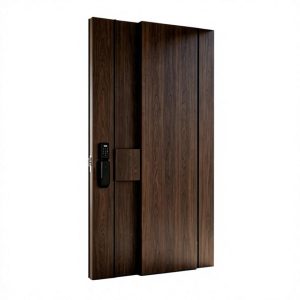
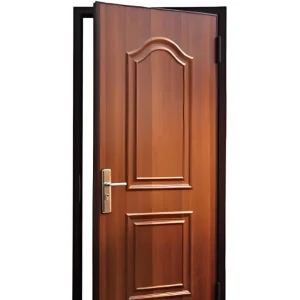
Solid Oak Exterior Doors: Strength and Classic Appeal
When buyers say “solid oak exterior door,” they typically mean a door constructed from solid wood stiles and rails, often with solid wood panels. The most common species used is red oak (Quercus rubra), which is widely available, relatively affordable, and machines well.
What Solid Oak Offers
Solid oak doors provide a substantial, heavy feel that signals quality. The natural grain patterns are pronounced, and the door can be refinished multiple times over its lifespan. A well-maintained solid oak door can last 30 years or more, though the finish will need attention every 2–3 years in exposed locations.
The Structural Reality of Solid Wood
Solid wood moves. Oak has a tangential shrinkage rate of roughly 8–10% from green to oven-dry, and radial shrinkage of about 4–5%. In practice, this means a solid oak door will expand and contract across its width with seasonal humidity changes. A 36-inch-wide door can move several millimeters between winter and summer.
This movement is manageable if the door is properly acclimated before installation and if the finish seals all six sides. However, if a solid oak door is installed with insufficient clearance or without proper edge sealing, it can bind, warp, or develop cracks at the panel joints.
When Solid Oak Makes Sense
Solid oak is a strong choice for:
- Covered entryways protected from direct rain
- Climate-controlled environments with moderate humidity swings
- Projects where the owner values the traditional weight and feel of solid wood
- Historic renovations where matching existing joinery matters
The main trade-off is maintenance. Solid oak doors in direct sun or exposed to rain will require more frequent refinishing than engineered alternatives. If you are specifying for a commercial project with limited maintenance staff, factor in the lifecycle cost of finish renewal.
Light Oak Exterior Doors: Bright and Modern Aesthetic
“Light oak” is ambiguous in the door industry. It can mean:
- A door made from white oak or European oak, which naturally has a lighter, more golden color
- A door made from red oak with a light-toned stain or whitewash finish
- A door with a light oak veneer over an engineered core
Understanding which of these you are specifying is critical, because the performance characteristics differ dramatically.
The Finish Question
If a supplier offers a “light oak exterior door,” ask specifically: what is the wood species beneath the finish? A light stain over red oak will not change the wood’s natural durability. Red oak is not rated for exterior use without a high-quality finish system because it has open pores that absorb moisture readily. White oak, by contrast, has tyloses that block water movement through the grain, making it naturally more water-resistant.
Light Finishes and UV Stability
Light-colored finishes reflect more solar radiation than dark finishes, which helps reduce surface temperature and slows finish breakdown. However, light stains and whitewashes can be more difficult to maintain evenly. When they wear, the contrast between worn and unworn areas is more visible than with darker finishes.
Performance Considerations
A light oak door can perform excellently if:
- The core species is white oak or another naturally durable hardwood
- The finish system includes UV inhibitors
- The door is properly sealed on all edges
If the “light oak” is a heavily sanded or bleached red oak, expect shorter finish life and more frequent maintenance. For exterior use, the species matters more than the color.
White Oak Exterior Doors: Elegance and Durability
White oak (Quercus alba) is the professional’s choice for exterior doors, and for good reason. Its combination of natural durability, dimensional stability, and attractive appearance makes it the premium option.
Why White Oak Excels Outdoors
White oak’s cellular structure contains tyloses—bubble-like growths that block the vessels. This makes the wood naturally water-resistant and more resistant to rot and decay than red oak. It is the same reason white oak is used in boatbuilding and whiskey barrels.
White oak also has a tighter grain pattern and a slightly higher density than red oak (about 47 lbs/ft³ vs. 44 lbs/ft³ at 12% moisture content). This density translates to better screw-holding strength and a harder, more dent-resistant surface.
Dimensional Stability
White oak shrinks and swells less than red oak across its width. While the difference is modest—perhaps 10–15% less movement—it matters in a door that must maintain a consistent fit within its frame through seasonal changes.
Appearance
White oak has a lighter, more consistent color than red oak, ranging from light tan to medium brown with a subtle olive cast. The grain is pronounced but not as wild as red oak. It accepts both clear finishes and stains well, and it is an excellent candidate for the light, modern finishes currently in demand.
The Cost Premium
White oak commands a premium over red oak—typically 20–40% more for the raw lumber, depending on grade and market conditions. This translates directly to a higher door price. For projects where the door is a focal point and the budget allows, the premium is justified by reduced maintenance and longer service life.
Oak Exterior Door Comparison Table
| Attribute | Solid Oak (typically Red Oak) | Light Oak | White Oak |
|---|---|---|---|
| Natural durability | Moderate; requires quality finish | Depends on species beneath finish | High; naturally rot-resistant |
| Dimensional stability | Moderate; noticeable seasonal movement | Varies with core species | Good; less movement than red oak |
| Appearance | Pronounced grain, warm reddish-brown | Bright, contemporary, lighter tones | Subtle grain, light-to-medium brown |
| Relative cost | Moderate | Varies; finish adds cost | Premium (20–40% higher than red oak) |
| Maintenance frequency | Every 2–3 years in exposed locations | Same as underlying species | Every 3–5 years in most climates |
| Best use | Covered entries, traditional designs | Modern architecture, interiors with natural light | Exposed entries, coastal areas, high-humidity climates |
| Refinishing capability | Excellent; multiple cycles | Good; light finishes show wear more visibly | Excellent; stable base for any finish |
Buying Guide: How to Select the Right Oak Door
Step 1: Assess the Installation Environment
Start with the physical conditions the door will face:
- Sun exposure: South- and west-facing doors receive intense UV radiation that breaks down finishes faster. Choose white oak and a high-quality UV-resistant finish.
- Rain exposure: Doors with minimal roof overhang or in wind-driven rain zones need the most water-resistant species. White oak is the safest choice.
- Humidity swings: Coastal environments and climates with dramatic seasonal humidity changes demand dimensional stability. White oak performs best.
Step 2: Understand Construction Types
Solid oak is not the only option. Engineered oak doors use a solid oak veneer over a laminated or staved core. These doors offer the appearance of solid oak with significantly better dimensional stability. For exterior use, an engineered door with a white oak veneer is often the best practical choice—it moves less than solid wood and is less prone to warping.
If your project requires solid wood for aesthetic or specification reasons, confirm the door is built with proper joinery (mortise and tenon) and that all panels are floated to allow for movement.
Step 3: Specify the Finish System
The finish determines how long the door lasts. A high-quality exterior finish system includes:
- A penetrating sealer on all six sides
- A UV-blocking primer or base coat
- Multiple topcoats with UV inhibitors
Ask your supplier for the specific finish system they use and its expected service life. Avoid doors finished only with a single coat of stain—these will fail quickly in exterior service.
Step 4: Check Moisture Content and Acclimation
Doors should be manufactured at a moisture content of 10–14%, depending on your climate. Before installation, the door should acclimate to the building environment for at least 48–72 hours. If the door is delivered sealed in plastic, remove the wrapping and allow air circulation.
Step 5: Consider Glazing and Hardware
Oak doors can be fitted with glazing units for natural light. Double-glazed units with low-E coatings improve energy efficiency. If you need specific U-values, these depend on the glazing specification, not the wood itself. Hardware—hinges, locks, handles—should be specified for the door’s weight. Solid oak doors are heavy; a 36-inch solid oak door can weigh over 100 lbs, so heavy-duty hinges are essential.
Frequently Asked Questions
What is the difference between solid oak and white oak exterior doors?
Solid oak refers to the construction method—the door is made from solid wood rather than veneered over an engineered core. White oak refers to the species. A solid oak door can be made from white oak or red oak. White oak is the more durable species for exterior use due to its natural rot resistance and tighter grain structure.
Are light oak exterior doors as durable as solid oak?
Durability depends on the species beneath the finish, not the color. A light oak door made from white oak is highly durable. A light oak door made from red oak with a light stain is less durable and will require more frequent maintenance. Always verify the species, not just the finish color.
Which oak exterior door is best for exterior use in harsh weather?
White oak is the best choice for harsh weather. Its natural resistance to moisture and rot, combined with better dimensional stability, makes it the most reliable species for exposed installations. For coastal or high-humidity environments, white oak is strongly recommended.
How much do oak exterior doors typically cost?
Pricing varies widely based on species, construction, size, glazing, and hardware. Solid red oak doors are generally the most affordable. White oak commands a 20–40% premium. Engineered oak doors with veneer construction are often priced between solid red oak and solid white oak. Custom sizes, specialty glass, and high-end hardware add to the cost. Request itemized quotes from multiple suppliers to compare fairly.
Can I customize the size and finish of an oak exterior door?
Yes. Most manufacturers offer custom sizing, and finish options are extensive—from clear natural finishes to custom stains and paints. For exterior doors, ensure any custom finish includes UV protection and is specified for exterior use. Glazing options and hardware configurations are also customizable.
What should I look for in a supplier of oak exterior doors?
Evaluate suppliers on four criteria: (1) species verification—can they document the wood species and moisture content? (2) finish quality—what finish system do they use and what service life do they expect? (3) construction standards—do they use proper joinery and floating panels? (4) pre-shipment inspection—do they test for air-tightness, water-tightness, and wind resistance before shipping?
How do oak exterior doors compare to other wood or composite options?
Oak offers a natural appearance that composites cannot replicate, but it requires more maintenance. Steel and fiberglass doors are more energy-efficient and require virtually no maintenance, but they lack the warmth and character of wood. Oak doors have a higher upfront cost than steel but a longer service life when properly maintained. The cost-per-year-of-service for a well-maintained oak door is competitive with premium fiberglass over a 30-year horizon.
Additional Considerations for B2B Buyers
Building Codes and Fire Ratings
Exterior door requirements vary by jurisdiction. Some commercial and multi-family projects require fire-rated doors with specific ratings (e.g., 30-minute or 60-minute). Solid oak doors can achieve fire ratings, but the specific construction and hardware must be tested and certified. Always confirm local code requirements before specifying. Do not assume a standard solid oak door meets fire-rating requirements without verification.
Door Orientation and Site Conditions
The same oak door will perform differently based on orientation. A north-facing door in a shaded location sees less UV and rain exposure than a west-facing door in an open area. When specifying for multiple units, consider each door’s exposure individually. A door that performs well in a protected entryway may fail prematurely in an exposed position.
Energy Efficiency
Oak is a natural insulator, but the overall U-value of the door depends primarily on the glazing and the door’s construction. Solid wood doors with single glazing will have poor energy performance. Specify double or triple glazing with low-E coatings for energy-efficient assemblies. Ask suppliers for U-value data specific to the glazing configuration, not generic claims about wood’s insulating properties.
Lifecycle Cost Analysis
When comparing oak to steel, fiberglass, or other hardwoods, calculate cost-per-year-of-service. Include:
- Initial purchase price
- Installation cost
- Finishing and refinishing cycles (every 2–5 years depending on exposure)
- Expected service life (20–50+ years for oak with proper maintenance)
A premium white oak door at $3,000 with a 40-year service life and refinishing every 4 years at $300 per cycle costs less per year than a $1,800 red oak door that needs refinishing every 2 years and lasts 25 years.
Supplier Evaluation for Bulk Orders
For construction projects and bulk supply, evaluate suppliers on:
- Pre-shipment inspection: Do they test for air-tightness, water-tightness, and wind resistance? These tests matter for exterior doors in demanding climates.
- Customization capability: Can they adjust profile structures and fittings to match your local building codes?
- Documentation: Do they provide packing lists, proforma invoices, and full customs documentation for international shipments?
- Logistics: Can they handle both FCL and LCL shipments with direct delivery from the factory?
How We Meet These Standards
As a manufacturer of oak exterior doors, our approach aligns with the technical requirements outlined above. We supply solid wood and engineered oak doors directly from our factory, which means we control the species selection, moisture content, and finish quality from the start. Our white oak doors are manufactured from verified white oak lumber, and our solid oak options are available in both red and white oak to match your project budget and performance requirements.
We support full customization on size, color, glass, and hardware accessories, so whether you need a light oak finish over white oak for a coastal project or a solid red oak door for a covered entryway, we can build to your specification. For international buyers, we provide pre-shipment inspection including air-tightness, water-tightness, and wind resistance testing, and we adjust profile structures and fittings to match your local building codes.
Our foreign trade experience means we handle the logistics—packing lists, proforma invoices, customs documentation, and FCL or LCL shipments direct from our China factory. If you are evaluating suppliers for a construction project or bulk order, we can provide the technical documentation and sample specifications you need to make an informed decision.
For detailed specifications, sizing guidance, or to discuss your project requirements, contact our team.