Content Menu
● 1. What Are the Main Dutch Door Material Options Available?
● 2. How Does Glass and Hardware Integration Affect Dutch Door Material Selection?
● 3. What Are the Quality and Performance Factors for Dutch Door Materials?
● 4. How to Evaluate Dutch Door Material Options Suppliers
● 5. What Standards and Certifications Apply to Dutch Door Materials?
● 6. Dutch Door Material Cost Comparison and Decision Framework
● 7. How We Meet These Standards at Jusen Door and Windows
13 min read
A procurement manager once told me the hardest part of sourcing Dutch doors wasn’t finding a factory. It was convincing the factory that the split-line design needed different engineering than standard doors. Most manufacturers treat a Dutch door as a regular door with a saw cut. That approach fails within two years.
Dutch door material options determine whether that split line holds up under daily use, weather exposure, and security demands. This guide provides a technical comparison framework for importers, distributors, and contractors evaluating Dutch door material options against project requirements, local building codes, and budget constraints.
What Are the Main Dutch Door Material Options Available?
The four primary Dutch door material options are solid wood, thermal-break aluminum, uPVC (vinyl), and composite/fiberglass. Aluminum and uPVC dominate commercial applications, while wood remains preferred for premium residential projects.
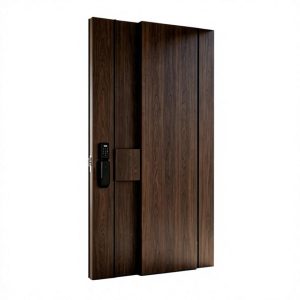
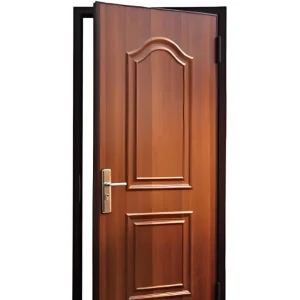
Wood Dutch Doors
Solid wood Dutch doors have been manufactured since the 17th century. The material choice matters because the horizontal split creates unique structural demands that standard doors don’t face.
#### Wood Species and Performance Data
| Species | Density (kg/m³) | Dimensional Stability | Rot Resistance | Typical Grade |
|---|---|---|---|---|
| Mahogany | 545–640 | High | Excellent | FAS |
| White Oak | 755 | Medium-High | Good | FAS |
| Western Red Cedar | 350–420 | Medium | Excellent | Select |
| Meranti | 450–650 | Medium | Good | FAS |
| Pine | 400–500 | Low-Medium | Poor (requires treatment) | #1 Common |
Denser woods resist warping better at the split line but are heavier and harder to machine. Hinge and frame specifications must be adjusted accordingly. Engineered options like laminated veneer lumber (LVL) cores offer superior dimensional stability over solid timber for wide panels.
#### Construction Methods
Stile-and-rail construction uses mortise and tenon joinery with floating panels. This accommodates natural wood movement without cracking at the split line. Flush construction veneers over an engineered core, which suits painted finishes but requires moisture-barrier edge sealing.
The mid-rail design requires a specially profiled weatherstrip channel and interlocking hardware plate. Not all wood door manufacturers offer this as a standard option.
#### Finishing Requirements
Factory-applied UV-cured polyester or catalyzed lacquer finishes reduce on-site finishing risk. Request kiln-dried stock at 8–12% moisture content to minimize post-installation movement. Wood Dutch doors typically run 20–35% more expensive than aluminum equivalents at comparable specification levels.
Aluminum Dutch Doors
Aluminum Dutch doors represent the engineered solution for high-performance applications. The material’s strength-to-weight ratio makes it ideal for the independent operation of both door halves.
#### Thermal Break Technology
Thermal break profiles use polyamide strips or polyurethane foam injection to create a barrier between interior and exterior aluminum surfaces. U-factors of 1.0–2.2 W/m²K are achievable with thermal break profiles, depending on glass specification [1].
The split line doubles the thermal bridge risk. Thermal break profiles are essential for energy-code compliance in most commercial applications. Reference standard EN ISO 10077-2 covers thermal transmittance calculation for door profiles.
#### Alloy Grades and Profile Design
6063-T5 and 6063-T6 are industry standards for architectural aluminum. T5 offers good formability; T6 provides higher strength with yield strength around 170 MPa versus roughly 110 MPa for T5. European standard EN 755-2 recommends minimum 1.4 mm wall thickness for door frames and 1.6–2.0 mm for door leaves [2].
Multi-chamber profiles with 3–5 chambers improve both thermal performance and structural rigidity at the split line.
#### Surface Finishing Options
- Anodizing: 15–25 micron coating; excellent for architectural applications
- Powder coating: 60–120 micron thickness; full RAL color range; better scratch resistance
- PVDF (fluoropolymer) coating: 25–35% PVDF resin content; superior UV resistance for coastal projects
- Wood-grain finish: Sublimation or thermal transfer printing achieves realistic wood texture
uPVC Dutch Doors
uPVC offers the most cost-effective Dutch door material option for volume projects. The material has naturally low thermal conductivity at 0.16 W/mK compared to 160 W/mK for aluminum, delivering excellent U-factors without thermal breaks.
#### Structural Requirements
Multi-chamber extrusions with 5–7 chambers provide structural rigidity and drainage channels. Dutch door halves, especially the lower half, typically require galvanized steel reinforcement inserts to meet wind load and security requirements. Reference standard EN 12608 covers unplasticized polyvinyl chloride profiles [3].
#### Weld Quality at the Split Line
Corner welding quality is critical because Dutch doors have additional frame members at the split line. Clean weld seams should be flush, smooth, and free of voids. Steel inserts must run continuously through the mid-rail section to prevent flexing at the split.
#### Color and Finish Limitations
Standard white is the most cost-effective option. Laminated finishes with acrylic or PVC foil offer wood-grain and solid colors at 10–15% higher material cost. Co-extruded colors run through the profile wall thickness for better durability but have limited color range.
uPVC Dutch doors typically cost 15–25% less than aluminum equivalents.
Composite and Hybrid Systems
Composite Dutch doors combine material strengths for specific performance requirements.
Fiberglass composite doors use glass fiber reinforced polymer with polyurethane foam core. They offer high dimensional stability, excellent dent resistance, and no corrosion concerns. U-factors of 0.8–1.5 W/m²K are achievable. Fiberglass doors weigh 30–50% less than equivalent wood doors, reducing hinge and frame stress.
Wood-clad aluminum systems pair an aluminum structural frame with wood interior cladding. These systems typically cost 25–40% above all-aluminum options.
Steel-reinforced hybrid systems use steel frames with aluminum or uPVC cladding. They meet forced-entry resistance standards RC2/RC3 per EN 1627 without solid steel weight [4]. Steel reinforcement through the mid-rail provides exceptional rigidity at the split line.
How Does Glass and Hardware Integration Affect Dutch Door Material Selection?
The upper half of a Dutch door typically incorporates glazing, and hardware requirements differ from standard doors because each half operates independently.
Glass Specification by Performance Need
| Glass Type | U-Factor (W/m²K) | SHGC | Safety Rating | Typical Application |
|---|---|---|---|---|
| Single tempered | 5.8 | 0.82 | Safety glass | Interior, mild climates |
| Double low-E (argon-filled) | 1.6–2.0 | 0.30–0.40 | Tempered or laminated | Standard exterior |
| Triple low-E (krypton-filled) | 0.8–1.2 | 0.25–0.35 | Tempered | Cold climates, passive house |
| Laminated (acoustic) | 2.7–3.0 | 0.60–0.70 | Laminated safety | Noise-sensitive locations |
Many building codes require tempered or laminated glass in door applications regardless of height. The upper half’s glass must be specified for both safety and thermal performance.
Hardware Requirements for Split Door Operation
Upper and lower halves require separate locking mechanisms. Multipoint locks are recommended for both halves. Dutch door hinges must support each half’s weight independently — three hinges per half is standard for typical heights.
Mid-rail hardware includes interlocking latch systems, flush bolts, and weatherstripping at the split line. Precise alignment is essential. Hardware brand and model must be specified before frame fabrication, not after.
Reference standards include ANSI/BHMA A156.115 for door hardware and EN 1529 for cylinder security [5].
Weatherstripping and Sealing Systems
Compression seals using EPDM or silicone bulb gaskets are most effective for Dutch doors. Magnetic seals provide good airtightness but require higher closing force, making them unsuitable for frequently used Dutch door halves.
Adjustable aluminum thresholds with thermal breaks prevent air and water infiltration at the bottom of the lower half. Request air infiltration testing per ASTM E283 and water penetration testing per ASTM E547 for the complete Dutch door assembly [6].
What Are the Quality and Performance Factors for Dutch Door Materials?
Dutch door material options must be evaluated against specific performance criteria that differ from standard doors. The split line creates unique stress points that affect material selection.
Structural Integrity at the Split Line
The mid-rail is the most common failure point in Dutch doors. Material must resist torsion and warping where the two halves meet. Dense woods like mahogany and oak perform well but require proper joinery. Aluminum and steel-reinforced systems offer the highest rigidity.
Thermal Performance Considerations
Dutch doors inherently have lower thermal performance than equivalent single-piece doors because the split line doubles the perimeter seal length. A well-specified aluminum Dutch door can achieve U-factors of 1.0–2.0 W/m²K, comparable to standard doors.
Moisture and UV Resistance
Coastal and high-humidity environments demand materials with low water absorption rates. Aluminum and composite materials excel here. Wood requires proper finishing and maintenance. UV exposure can cause differential expansion between the two halves, affecting the split-line seal.
How to Evaluate Dutch Door Material Options Suppliers
Supplier evaluation requires a systematic approach. The material choice matters, but the manufacturer’s capability determines whether the door performs as specified.
Factory Qualification Checklist
- Production capability: Confirm the factory produces Dutch doors as a standard product line, not as custom one-off items. Ask how many Dutch door units they produce monthly.
- Testing equipment: In-house capability for air, water, and wind testing is preferable to third-party-only testing. Ask to see their testing facility during a factory audit.
- Quality control process: Request the QC checklist used for pre-shipment inspection. Verify that split-line alignment, gasket compression, and hardware function are included.
- Export documentation: Confirm the factory can provide packing list, proforma invoice, and full customs documentation for your destination country.
Questions to Ask Before Ordering
- What is your standard production lead time for Dutch doors in [material]?
- Can you provide test reports for the exact profile system, glass configuration, and hardware being supplied?
- What is your MOQ for standard versus custom specifications?
- How do you package Dutch doors to protect the split line during shipment?
- Can you adjust profiles and fittings to match building codes in my target market?
- What is your defect rate on Dutch door production over the past year?
- Do you offer OEM/ODM services for private label branding?
Red Flags to Avoid
- Generic test certificates: Test reports must match your exact specification. Generic certificates are not acceptable.
- Unwillingness to customize: Dutch doors require specialized mid-rail profiles. A factory that only offers standard door designs with a saw cut lacks Dutch door expertise.
- No split-line testing: The factory should test the complete Dutch door assembly, not just individual components.
- Vague lead time commitments: Production schedules should be specific and documented.
What Standards and Certifications Apply to Dutch Door Materials?
Dutch doors must meet the same standards as standard doors, plus additional requirements for the split-line construction.
Key Industry Standards
- ASTM E330: Wind load testing for exterior doors [7]
- ASTM E283: Air infiltration testing [6]
- ASTM E547: Water penetration testing [6]
- ASTM F588: Forced-entry resistance [8]
- ANSI/BHMA A156.115: Door hardware standards [5]
- EN 1627: Burglar resistance ratings (RC1–RC6) [4]
- EN ISO 10077-2: Thermal transmittance calculation [1]
- EN 12608: uPVC profile standards [3]
Certification Documentation to Request
- Material test reports (density, thermal conductivity, strength)
- Performance test certificates (air, water, wind load)
- Hardware certification (lock cylinders, hinges)
- Glass certification (tempered, laminated, low-E)
- Fire-rating certificates (if applicable)
Dutch Door Material Cost Comparison and Decision Framework
Material selection ultimately comes down to project requirements, budget, and target market conditions.
Indicative Price Ranges (FOB, per complete Dutch door unit, 900mm × 2100mm)
- uPVC: $180–$350
- Aluminum (thermal break): $280–$550
- Wood (solid hardwood): $350–$700
- Composite/fiberglass: $400–$650
Volume pricing scales down 10–20% for container-quantity orders of 20+ units. Factor in hardware costs of $80–$250, glazing of $40–$150, and logistics when comparing material options.
Performance Comparison Matrix
| Criterion | Wood | Aluminum (Thermal Break) | uPVC | Composite |
|---|---|---|---|---|
| Thermal Performance (U-factor) | Good (2.0–2.8) | Excellent (1.0–2.2) | Excellent (0.8–1.5) | Excellent (0.8–1.5) |
| Durability (20-year horizon) | Moderate | Excellent | Good | Excellent |
| Wind Load Resistance | Good | Excellent | Moderate | Excellent |
| Security Rating | Moderate | High | Moderate-High | High |
| Maintenance | High | Low | Low | Low |
| Aesthetic Flexibility | High | High | Moderate | High |
| Relative Cost | High | Medium-High | Low-Medium | High |
| Lead Time (typical) | 4–8 weeks | 3–6 weeks | 2–4 weeks | 4–6 weeks |
Decision Guide
Choose uPVC if: Budget is the primary constraint, the project is in a moderate climate, and the installation is residential.
Choose aluminum if: The project requires high wind load resistance, commercial-grade security, or coastal durability. Aluminum offers the best balance of performance and cost for most B2B applications.
Choose wood if: The project demands premium aesthetics for high-end residential or hospitality use, and the client accepts maintenance requirements.
Choose composite if: The project is in an extreme climate, requires maximum dimensional stability, or demands high security with reduced weight.
How We Meet These Standards at Jusen Door and Windows
As a factory-direct manufacturer, our approach to Dutch door production follows the procurement framework outlined above. We produce Dutch doors in solid wood, thermal-break aluminum, and aluminum-wood hybrid configurations, allowing buyers to match material selection to project requirements.
Manufacturing Capability
Our production process covers profiles, fabrication, glazing, hardware integration, and testing under one roof. This single-source accountability means buyers have one point of contact for quality and delivery. We offer complete customization on size, RAL colors, wood-grain finishes, glass specification, and hardware accessories.
For importers shipping to different markets, our adjustable profile structure and fittings can be modified to match local building codes — whether shipping to North America, Europe, Australia, or the Middle East. We also support OEM and ODM arrangements with private labeling options.
Quality Assurance and Export Support
Every order undergoes strict air-tightness, water-tightness, and wind resistance testing before leaving our factory. We provide test documentation with your shipment. With extensive experience in international export, we provide complete documentation including packing lists, proforma invoices, and customs paperwork.
We support both FCL and LCL shipments with direct delivery from our China factory. Factory-direct pricing eliminates middleman markup, which is especially impactful on container-quantity orders. Our production capacity supports construction project bulk supply, from residential developments to commercial installations.
If you’re evaluating Dutch door material options for an upcoming project, we can provide samples, test reports, and pricing for your specific specification. Contact Our Team to discuss your requirements.
Conclusion
Dutch door material selection is a multi-factor decision. Thermal performance, structural rigidity at the split line, security, maintenance, and cost all interact. Aluminum and uPVC offer the best performance-to-cost ratio for most projects. Wood remains the premium aesthetic choice. Composites excel in demanding climates.
The split-line design demands specialized manufacturing expertise. Verify test reports, customization capability, and export documentation before committing to a supplier. A factory that produces Dutch doors as a standard product line — with the engineering and testing to prove it — will deliver doors that perform for decades.
Ready to source Dutch doors for your next project? Send us your specifications, and we’ll provide material recommendations, pricing, and lead time information tailored to your requirements.
Frequently Asked Questions
Q1: What is the best material for a Dutch door in a coastal environment?
Aluminum with thermal break profiles and PVDF or marine-grade powder coating is the most durable option for coastal environments. Aluminum does not absorb moisture, will not rot or warp, and the PVDF finish resists salt-spray corrosion. If wood aesthetics are required, consider wood-clad aluminum systems that combine an aluminum exterior with a wood interior finish.
Q2: How does the thermal performance of a Dutch door compare to a standard single-piece door?
Dutch doors inherently have lower thermal performance than equivalent single-piece doors because the split line doubles the perimeter seal length and creates an additional thermal bridge. To compensate, specify thermal break profiles, high-performance glazing, and compression weatherstripping at the mid-rail. A well-specified aluminum Dutch door can achieve U-factors of 1.0–2.0 W/m²K.
Q3: What is the typical lead time for a container order of Dutch doors from a factory?
Typical production lead time is 3–6 weeks depending on material, customization level, and factory capacity. uPVC doors are generally fastest at 2–4 weeks, followed by aluminum at 3–6 weeks and wood at 4–8 weeks. Custom profiles, special finishes, or non-standard hardware can extend lead times by 1–2 weeks.
Q4: Can Dutch doors meet security requirements equivalent to standard entry doors?
Yes, but the specification must address the split line. Both halves need independent multipoint locking systems, reinforced mid-rail construction, and hinge sets rated for each half’s weight. Steel-reinforced aluminum or composite systems can achieve RC2/RC3 forced-entry resistance ratings per EN 1627. Verify that your supplier provides security test documentation for the complete assembly.
Q5: What customization options are typically available for Dutch doors from manufacturers?
Standard options include door dimensions, split position, material and finish, glass specification, hardware brands, and mid-rail profile design. Some manufacturers offer fully custom profiles for large-volume orders. Always confirm customization scope and MOQ requirements with your supplier before committing.
Q6: How should Dutch doors be packed for container shipment to prevent damage?
Dutch doors require edge protection at the split line, the most vulnerable area during transit. Reputable manufacturers use foam or cardboard edge protectors, plastic film wrapping, and wooden crates or palletized packing. For FCL shipments, doors should be upright or properly braced to prevent shifting.
Q7: What documentation should I request from a Dutch door manufacturer before placing an order?
Request material test reports, performance test certificates, hardware certification, glass certification, fire-rating certificates if applicable, and export documentation samples. Verify that all documents match your exact specification — generic certificates are not acceptable.
References
[1] ISO 10077-2:2017 Thermal performance of windows, doors and shutters — Calculation of thermal transmittance. https://www.iso.org/standard/69595.html
[2] EN 755-2:2016 Aluminium and aluminium alloys — Extruded rods/bars, tubes and profiles — Mechanical properties. https://www.en-standard.eu/bs-en-755-2-2016-aluminium-and-aluminium-alloys-extruded-rods-bars-tubes-and-profiles-mechanical-properties/
[3] EN 12608:2003 Unplasticized polyvinylchloride (PVC-U) profiles for the fabrication of windows and doors. https://www.en-standard.eu/bs-en-12608-2003-unplasticized-polyvinylchloride-pvc-u-profiles-for-the-fabrication-of-windows-and-doors-classification-requirements-and-test-methods/
[4] EN 1627:2011 Pedestrian doorsets, windows, curtain walling, grilles and blinds — Burglar resistance. https://www.en-standard.eu/bs-en-1627-2011-pedestrian-doorsets-windows-curtain-walling-grilles-and-blinds-burglar-resistance-requirements-and-classification/
[5] ANSI/BHMA A156.115-2021 American National Standard for Hardware Preparation in Steel Doors and Steel Frames. https://webstore.ansi.org/standards/bhma/ansibhmaa1561152021
[6] ASTM E283-19 Standard Test Method for Determining Rate of Air Leakage Through Exterior Windows, Skylights, Curtain Walls, and Doors Under Specified Pressure Differences Across the Specimen. https://www.astm.org/e0283-19.html
[7] ASTM E330/E330M-14 Standard Test Method for Structural Performance of Exterior Windows, Skylights, Doors and Curtain Walls by Uniform Static Air Pressure Difference. https://www.astm.org/e0330_e0330m-14.html
[8] ASTM F588-17 Standard Test Methods for Measuring the Forced Entry Resistance of Window Assemblies, Excluding Glazing Impact. https://www.astm.org/f0588-17.html