How to Find a Reliable Service
The most direct way to find a reliable shed door replacement service is to treat it like a small construction project, not a handyman errand. Start by asking neighbors with similar sheds who they used. Then cross-reference those names with Google Maps reviews and local builder forums. Look for providers who have been operating in your area for several years and who specialize in exterior doors or outbuildings rather than general odd-job services.
Credentials matter more than you might expect. A legitimate service should carry liability insurance and, depending on your state or municipality, a contractor’s license. Ask for proof of both before scheduling an estimate. Workers’ compensation coverage is equally important—if an installer is injured on your property and the service lacks this coverage, you could be held liable. A reliable provider will volunteer these documents without hesitation.
Experience with shed-specific doors is another key filter. Sheds often have non-standard openings, uneven thresholds, and weathered framing. A contractor who primarily installs residential entry doors may not know how to account for a settling foundation or a warped jamb. Ask how many shed doors they have replaced in the past year and request photos of completed work.
Evaluating Coverage & Service Area
Local does not automatically mean good, but it does mean faster response times and lower travel fees. When evaluating a service, ask directly about their coverage area and how far they travel. A provider who covers a multi-county region may be spreading themselves thin, while one who only serves a few neighborhoods is likely to respond quicker if issues arise after installation.
Response time is a practical indicator of reliability. Call two or three providers and note how long it takes them to return your message. A service that responds within one business day is generally more organized than one that takes a week. Also ask whether they offer a free on-site assessment or whether they quote from photos. On-site assessments are preferable for shed doors because the installer can measure the opening, check the framing, and identify rot or pest damage that affects the fit.
What to Expect From the Process
A professional shed door replacement follows a clear sequence: assessment, quote, installation, and inspection. Understanding this flow helps you spot providers who cut corners.
During the assessment, the contractor should measure the door opening, evaluate the condition of the surrounding frame, and check for level and plumb. They should also ask about your usage—whether the shed stores lawn equipment, vehicles, or chemicals—because that affects material recommendations.
The quote should be itemized. A reliable provider will list the cost of the door itself, hardware, disposal of the old door, and labor separately. If they give you a single lump sum without explanation, ask for a breakdown. The quote should also state the timeline, including how long the door will take to arrive if it is custom-made.
Installation for a standard single shed door typically takes a few hours. The contractor should remove the old door, inspect the frame for damage, make necessary repairs, and hang the new door with proper shimming and sealing. They should also test the door to ensure it opens and closes smoothly without binding.
The inspection is your opportunity to verify the work. Check that the door swings freely, that the latch aligns, and that there are no visible gaps around the edges. A professional will walk you through the work before leaving and explain any maintenance requirements.
How to Compare Providers
When comparing multiple providers, focus on four dimensions: qualifications, warranties, reputation, and customer support.
Qualifications include licensing, insurance, and manufacturer certifications. Some door manufacturers require installers to complete training before offering extended warranties on their products. Ask if the provider holds such certifications.
Warranties differ between the door manufacturer and the installer. The manufacturer covers defects in the door itself, while the installer covers workmanship. Ask both questions: “What does the door warranty cover, and what does your labor warranty cover?” A typical workmanship warranty lasts one to two years, but terms vary widely.
Reputation is best judged through third-party review sites and local building supply stores. A provider who has good relationships with local suppliers is usually more established. Also check for unresolved complaints with your local Better Business Bureau.
Customer support is about how the provider handles problems after installation. Ask how they handle callbacks and whether they have a dedicated service team. A provider who routes all issues through a general phone line may not prioritize your follow-up.
Cost Factors & Getting Quotes
The cost of shed door replacement varies with the door material, size, hardware quality, and labor rates in your region. Below is a general range to help you evaluate quotes. These figures are estimates, not guarantees—actual prices depend on your specific situation and local market conditions.
| Door Type | Material Cost (Installed) | Durability | Best For |
|---|---|---|---|
| Wood | Moderate to High | Moderate; requires periodic painting or sealing | Aesthetic match to a home or garden |
| Metal (steel or aluminum) | Low to Moderate | High; resistant to pests and rot | Security and low maintenance |
| Vinyl/PVC | Moderate | High; does not rot or corrode | Humid or coastal climates |
| Composite | High | Very High; mimics wood without maintenance | Long-term durability with curb appeal |
Labor typically accounts for 30–50% of the total cost. If you receive a quote that seems unusually low, ask what materials are included. Cheap doors often use thin-gauge metal or low-grade wood that will need replacement sooner.
To get accurate quotes, prepare a brief description of your shed: approximate door dimensions, the material of the existing door, and any issues with the frame. Send the same description to three providers. This ensures you are comparing like-for-like. Ask each provider to confirm their quote includes removal and disposal of the old door, as some services charge extra for this.
Questions to Ask Before Hiring
Before signing anything, run through this checklist with each provider:
- Are you licensed and insured? Can you provide proof of both?
- How many shed door replacements have you completed in the past year?
- Do you offer an on-site assessment, or do you quote from photos?
- What door materials do you stock, and which do you recommend for my climate?
- Is the quote itemized? What is not included?
- What does your workmanship warranty cover, and for how long?
- Will you handle disposal of the old door?
- What is your timeline for completion, and what causes delays?
Also ask about local building codes. Most jurisdictions do not require a permit for replacing a shed door, but some do if the shed is attached to a dwelling or exceeds a certain size. A knowledgeable provider will know the rules in your municipality and will pull any necessary permits. Be wary of anyone who says permits are never needed—this is a red flag.
A Note on Choosing the Right Door Material
The material you choose affects both the upfront cost and the long-term maintenance. Wood looks traditional but demands annual sealing or painting. Metal is secure and low-maintenance but can dent and may rust if scratched. Vinyl resists moisture but can become brittle in extreme cold. Composite offers the best balance of durability and appearance but costs more.
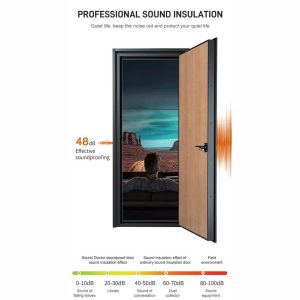
If your shed is unheated and stores sensitive items, consider insulation. A standard metal door has little insulating value. If you live in a region with extreme temperatures, ask about insulated steel doors or adding foam board to the interior of the door.
How We Fit Into This Picture
As a manufacturer of doors and windows, we see the results of poor installation choices regularly. When buyers choose a local service, they often ask us for guidance on what to specify. Our view aligns with the standards above: the best installations start with a properly measured opening, a door matched to the local climate, and a contractor who stands behind their work.
We supply shed and utility doors directly to homeowners and construction projects, with full customization on size, material, and hardware. Our factory in China ships globally, and we provide complete documentation for customs clearance. For buyers working with local installers, we can adjust profile structures and fittings to match your region’s building codes. If you are planning a replacement and want to compare door specifications before committing to a contractor, our team can help you understand what to ask for.
Contact our team if you need help evaluating door specifications for your project.