What Counts as a Discount Exterior Door
A discount exterior door is simply an entry door sold below its typical retail price. That reduction can come from several legitimate sources: seasonal sales, overstock from manufacturers, outlet locations, or factory-direct wholesale channels. The discount does not necessarily mean lower quality—it often means you are buying through a more direct supply chain or during a clearance window.
For B2B buyers—contractors, property managers, and builders—the term usually implies purchasing at wholesale volume rather than retail. For homeowners, it often means catching a sale at a local showroom or buying an in-stock unit rather than placing a custom order.
Price Ranges for Exterior Doors by Material and Type
The material of the door slab is the single largest factor in price. Each material offers different trade-offs between cost, durability, insulation, and maintenance.
| Material | Typical Price Range (Door Only) | Key Characteristics |
|---|---|---|
| Steel | $200 – $800 | Most affordable; dent-resistant but can scratch; good insulation with foam core |
| Fiberglass | $300 – $1,200 | Mid-range; resists dents, scratches, and moisture; can mimic wood grain |
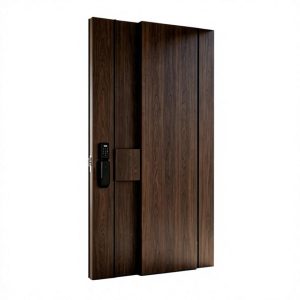
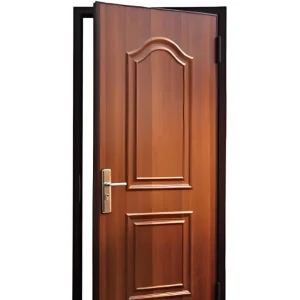
| Wood | $400 – $2,000+ | Premium appearance; requires ongoing maintenance; best for historic or high-end projects |
These ranges reflect average retail pricing for standard sizes. Local variation is significant—labor costs, regional material availability, and building code requirements all shift the numbers. A steel door in the Southeast will typically cost less than the same model in the Northeast due to shipping and distribution factors.
What Drives the Price Up
Beyond the core material, several specifications raise the cost:
- Insulation core: Polyurethane foam cores outperform polystyrene and cost more. Look for the door’s R-value or U-factor if energy efficiency is a priority.
- Glass inserts: A half-lite or full-lite door adds $100–$400 depending on whether the glass is double-glazed, low-E coated, or filled with argon gas.
- Pre-hung vs. slab: A pre-hung unit (door attached to a frame with hinges and weatherstripping) costs more than a bare slab but saves installation labor.
- Hardware: Quality deadbolts, handlesets, and hinges add $50–$300. Commercial-grade hardware costs more than residential.
- Custom sizing: Non-standard widths or heights require custom manufacturing, which typically adds 20–40% to the base price.
For a complete installed cost, budget an additional $300–$800 for labor, framing adjustments, and disposal of the old door, depending on your region and the condition of the existing rough opening.
Standard Sizes and Specifications: The 32 x 80 Standard
The most common exterior door size in North American residential construction is 32 inches wide by 80 inches tall. This is the standard for single-entry doors in homes built after the 1950s. Other common widths include 30, 34, and 36 inches, all at the standard 80-inch height.
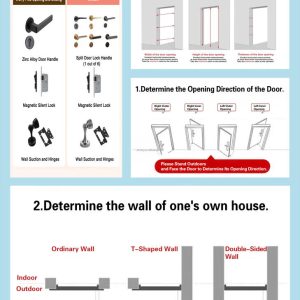
When measuring for a replacement, you need two sets of numbers:
- The door slab dimensions—measure the existing door itself, not the frame.
- The rough opening—measure the framed opening in the wall, from stud to stud and from floor to header.
A common mistake is measuring only the door and assuming the rough opening matches. If your existing door is 32 x 80, the rough opening is typically 34 x 82 to accommodate the frame and shimming space. For pre-hung units, you need the rough opening dimensions, not the door slab dimensions, to order correctly.
If your opening is non-standard—common in older homes—your options are custom sizing or adjusting the framing. Adjusting a rough opening is structural work that requires a contractor and may need a permit in many jurisdictions.
Where to Find Discount Exterior Doors: Sales, Outlets, Showrooms, and Wholesale
Seasonal Sales and Clearance Events
Retailers and manufacturers typically discount exterior doors during specific windows: end-of-summer clearance, post-holiday sales, and fiscal year-end inventory clearing. If you can time your purchase, these events often yield 15–30% off retail. Signing up for supplier newsletters or checking with local showrooms about upcoming promotions is the most direct way to catch these windows.
Outlet Locations and In-Stock Options
Outlet stores and the clearance sections of building material suppliers carry discontinued models, overstock, and customer-returned units. The trade-off is limited selection—you take what is available in your size and style. In-stock doors, even at full retail, offer the advantage of immediate availability. No lead time means no production delay, which matters for projects on a tight schedule.
Showrooms
A showroom lets you see and handle the actual product before buying. This is valuable for assessing finish quality, checking the weight and feel of the door, and verifying that the color matches your expectations. Showrooms typically carry display models that may be sold at a discount when new inventory arrives.
Wholesale and Factory-Direct
For contractors, property managers, or anyone purchasing multiple doors, wholesale pricing is where the real savings are. Buying directly from a manufacturer eliminates the retail markup. Most factories have minimum order quantities (MOQs) for wholesale pricing, often starting around 10–20 units for standard sizes. Lead times for factory-direct orders typically range from 2–6 weeks depending on production load and whether the doors are in stock or made to order.
New vs. Used Exterior Doors: What Buyers Should Consider
Used exterior doors can be found through salvage yards, architectural reuse centers, and online marketplaces. They offer significant savings—often 50–70% below new retail—but they come with real risks.
What to check on a used door:
- Warping: Lay a straightedge across the door face. Any gap indicates warping that may prevent proper sealing.
- Rot and water damage: Check the bottom edge and corners, especially on wood doors. Probe with a screwdriver—soft spots indicate rot.
- Glass condition: Check for seal failure in insulated glass units, which shows as fogging or condensation between panes.
- Frame condition: If buying a pre-hung unit, inspect the frame for damage and verify it is square.
- Hardware function: Test hinges and locks for smooth operation.
The critical limitation of used doors is the lack of warranty. A new door typically carries a 5–10 year warranty against defects. A used door is sold as-is, and installation labor costs are the same whether the door is new or used. If the used door fails within a year, you have paid installation twice.
For most buyers, the value proposition favors new doors unless the used unit is in exceptional condition and the savings are substantial.
How to Choose Between Steel, Fiberglass, and Wood
The right material depends on your priorities:
- Choose steel if: Budget is the primary constraint, the door is in a sheltered location, and you can tolerate occasional dents. Steel offers the best security and lowest cost, but it conducts heat and cold unless it has a good foam core.
- Choose fiberglass if: You want low maintenance, resistance to dents and moisture, and better energy efficiency than basic steel. Fiberglass is the most versatile choice for coastal or high-humidity environments.
- Choose wood if: Appearance is paramount and you are willing to maintain the finish. Wood offers the most premium look and can be refinished, but it requires periodic painting or staining and is vulnerable to moisture.
For energy efficiency, check the U-factor—the lower the number, the better the insulation. ENERGY STAR-certified doors typically have a U-factor of 0.30 or lower in northern climates. These doors may qualify for local utility rebates, though programs vary by region and year, so verify current offerings through your utility provider.
How to Evaluate a Supplier for Bulk or Wholesale Orders
When purchasing multiple doors for a construction project or ongoing maintenance, supplier reliability matters as much as price. Here is what to verify before committing to a wholesale order:
Quality control and testing. Ask whether the manufacturer tests for air-tightness, water-tightness, and wind resistance. These tests matter because a door that fails on air infiltration will cost you more in energy bills over its lifetime than you saved on the purchase price.
Customization capability. If your project requires non-standard sizes, specific glass configurations, or particular hardware, confirm the supplier can accommodate these without excessive lead time or cost premiums.
Documentation and export experience. For international buyers, the supplier should provide proper packing lists, proforma invoices, and customs documentation. A factory experienced in foreign trade will handle this smoothly.
Shipping options. Confirm whether the supplier can handle both full container load (FCL) and less-than-container load (LCL) shipments, and whether they deliver directly from the factory.
Code compliance. Building codes vary significantly between regions. A good supplier can adjust profile structures and fittings to match the local building codes of your target market.
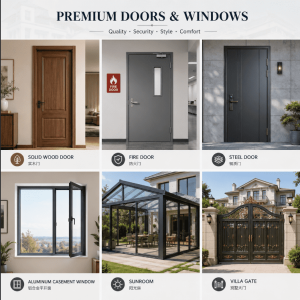
Here is how we meet these standards. As a factory-direct manufacturer, Jusen Door and Windows supplies steel, fiberglass, and wood exterior doors directly to contractors and project buyers without middleman markup. Our production facility supports full customization on size, color, glass, and hardware, and we can adjust profile structures to meet local building codes. Every order undergoes pre-shipment inspection for air-tightness, water-tightness, and wind resistance, and we provide complete export documentation including packing lists and proforma invoices. For bulk orders, we ship via FCL or LCL directly from our China factory.
Request a Quote for Your Exterior Door Project
Whether you are replacing a single 32 x 80 door or sourcing for a multi-unit development, the key to getting a fair price is comparing quotes from multiple suppliers. When requesting a quote, provide your door dimensions, preferred material, glass configuration, hardware requirements, and quantity. This allows suppliers to give you an accurate price rather than a ballpark estimate.
For wholesale quantities, ask about MOQs and current lead times. A reputable factory will give you clear production timelines and shipping estimates.