What Are Aluminum Screen Doors?
Aluminum screen doors are exterior entry systems with a structural aluminum frame and a woven mesh panel. They allow airflow and natural light while blocking insects and debris. For commercial buyers, the appeal is straightforward: aluminum resists corrosion better than steel, holds its shape under temperature swings better than wood, and requires less maintenance than either.
The size system for these doors is standardized around a few common rough openings, but the actual fit depends on whether you are buying a pre-hung unit (frame included) or a screen door that mounts to an existing frame. Understanding that distinction before you measure will save you from ordering the wrong product.
Standard Aluminum Screen Door Sizes
Standard aluminum screen door sizes follow the same nominal dimensions used across the residential and light commercial door industry. The width and height refer to the outer frame dimensions of the door unit itself, not the rough opening in the wall.
| Standard Size (Width x Height) | Common Application | Typical Frame Depth |
|---|---|---|
| 30″ x 80″ | Narrow single entry, mobile homes | 1″ to 1-1/4″ |
| 32″ x 80″ | Standard single entry door | 1″ to 1-1/4″ |
| 34″ x 80″ | Wider single entry, some commercial | 1″ to 1-1/4″ |
| 36″ x 80″ | Standard double-width entry, ADA-compliant openings | 1″ to 1-1/4″ |
| 48″ x 80″ | Double doors, patio entries | 1-1/2″ to 2″ |
| 72″ x 80″ | Sliding patio door replacement | 1-1/2″ to 2″ |
Frame depth matters more than most buyers realize. A deeper frame accommodates thicker screen mesh, double-pane glass inserts, and more robust hinges. Standard residential frames run 1 inch to 1-1/4 inches deep. Commercial-grade units with reinforced corners and heavier extrusions often use 1-1/2 inch to 2 inch frames.
Height variations exist beyond the standard 80 inches. Some manufacturers offer 78-inch and 82-inch heights for older homes or custom commercial openings. Widths can run from 28 inches up to 96 inches for commercial double-door applications, though anything beyond 48 inches typically requires custom engineering to prevent frame flex.
How to Measure for a Pre-Hung or Custom Aluminum Screen Door
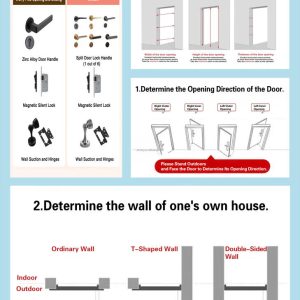
The measurement process differs depending on whether you are replacing an existing screen door or installing one into a new opening. For commercial buyers managing multiple units, establishing a consistent measurement protocol prevents costly errors.
Measuring for a Pre-Hung Screen Door
A pre-hung aluminum screen door comes with its own frame. You are measuring the rough opening in the wall. Use a tape measure at three points: the top, middle, and bottom of the opening for width; and the left, center, and right for height. Record the smallest measurement in each direction. The door unit you order should be roughly 1/2 inch smaller than the rough opening on each side to allow for shimming and leveling.
For example, if your rough opening measures 36-1/2 inches wide and 81-1/4 inches high, you would order a 36-inch by 80-inch pre-hung unit. The gap allows for proper installation without forcing the frame.
Measuring for a Screen Door That Mounts to an Existing Frame
If you are installing a screen door into an existing door frame (common in retrofit commercial projects), measure the inside dimensions of that frame. Measure width at the top, middle, and bottom; measure height on both sides and the center. Use the narrowest width and the shortest height. The screen door should be about 1/8 inch smaller than these dimensions on all sides to allow for hinge and latch clearance.
Critical Measurement Considerations
- Check for square: Measure both diagonals of the opening. If they differ by more than 1/4 inch, the opening is out of square and you will need a door with adjustable hinges or a custom unit.
- Floor condition: For exterior doors, measure the threshold height. A high threshold may require a door with an adjustable bottom sweep.
- Header clearance: Confirm there is enough space above the opening for the frame header and any required clearance for the door swing.
- Jamb depth: For pre-hung units, the jamb depth must match your wall thickness. Standard residential walls are 4-9/16 inches; commercial walls can be 6 inches or more.
Aluminum Screen Door vs. Storm Door: What’s the Difference?
The terms are often used interchangeably, but they describe different products with different purposes.
An aluminum screen door is primarily a ventilation product. The frame holds a mesh screen that allows airflow while keeping insects out. It is lightweight, typically used in mild climates, and is not designed to provide significant insulation or weather protection.
A storm door is a full-glazed or partially glazed exterior door installed in front of a primary door. It provides insulation, protects the primary door from weather, and often includes a retractable or removable screen panel. Storm doors with aluminum frames (often called storm doors aluminum) are heavier, use thicker extrusions, and include weatherstripping and a self-storing glass panel.
For commercial buyers, the decision comes down to function:
- If the goal is ventilation and insect control in a covered or mild environment, an aluminum screen door is the right product.
- If the goal is energy efficiency and weather protection for an exterior entry, a storm door is the appropriate choice.
Some hybrid products combine both functions, with a screen panel and a glass insert that can be swapped seasonally. These are more expensive but offer year-round utility.
Customization and Frame Options
Frame Colors and Finishes
Powder-coated finishes dominate the market because they resist chipping, fading, and corrosion better than painted surfaces. Brown storm doors with screens remain a perennial favorite for commercial buildings with traditional architecture, but white, black, bronze, and silver are equally common. Custom colors are available from most manufacturers, though they typically require a minimum order quantity.
Screen Mesh Types
The mesh itself is a decision point that buyers often overlook. Two primary options exist:
- Fiberglass mesh: Flexible, resistant to dents, and less expensive. It does not corrode and is suitable for most applications.
- Aluminum mesh: Stiffer, more rigid, and provides better visibility. It is more resistant to tearing but can dent if struck. In coastal environments, aluminum mesh should be specified with a protective coating to resist oxidation.
Mesh opening size also varies. Standard insect screening has 18×16 openings per square inch. Pet-resistant mesh uses heavier wire with smaller openings. For commercial applications where security is a secondary concern, a heavier gauge mesh is available.
Glass Inserts
Many aluminum screen doors accept glass inserts for winter use. These can be full-view, half-view, or divided-light panels. For commercial buildings, double-pane storm doors offer measurable energy benefits by creating an insulating air gap between the storm door and the primary door. The actual energy savings depend on the U-factor of the glass and the climate zone, but double-pane units consistently outperform single-pane options in heating and cooling load reduction.
Related Considerations: Pre-Hung, Decorative, and Double-Pane Options
Pre-Hung Screen Doors
A pre-hung screen door includes the frame, hinges, and door assembled as one unit. This is the preferred configuration for new construction and major renovations because it ensures proper alignment and simplifies installation. For retrofit projects, a door-only configuration (sometimes called a “screen door with aluminum” frame) that mounts to an existing jamb is more practical.
Decorative Aluminum Screen Doors
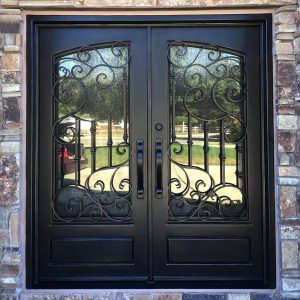
Decorative aluminum screen doors use ornamental extrusions, scrollwork, or custom grille patterns in the frame design. These are commonly specified for commercial projects with architectural character requirements, such as historic renovations or hospitality properties. The decorative elements are typically welded into the frame structure rather than applied as surface trim, which maintains the door’s structural integrity.
Double-Pane Storm Doors
For commercial buyers prioritizing energy efficiency, double-pane storm doors are the standard recommendation. The insulated glass unit reduces heat transfer, minimizes condensation, and provides better sound attenuation than single-pane alternatives. When specifying double-pane units, confirm the glass thickness and whether low-E coating is available for additional thermal performance.
Frame and Screen Specifications
When writing a specification for aluminum screen doors, include the following:
- Alloy and temper: 6063-T5 is the industry standard for architectural aluminum extrusions.
- Finish: Powder coating with a minimum thickness of 2 mils (0.002 inches).
- Corner construction: Mechanically joined with corner keys or welded for commercial-grade units.
- Screen mesh: Specify material (fiberglass or aluminum), mesh count, and whether a pet-resistant or security-grade option is required.
- Hardware: Hinges should be ball-bearing for smooth operation; latches should be keyed alike for multi-unit installations.
- Weatherstripping: Required on all edges for pre-hung units to prevent air and water infiltration.
Frequently Asked Questions
What are the standard sizes for aluminum screen doors?
Standard widths are 30, 32, 34, and 36 inches, with 80 inches as the standard height. Double-door and patio configurations use 48-inch and 72-inch widths. Custom sizes are available from most manufacturers, though lead times and costs increase for non-standard dimensions.
How do I measure for a pre-hung aluminum screen door?
Measure the rough opening in three places for both width and height. Use the smallest measurements. Order a pre-hung unit that is approximately 1/2 inch smaller than the rough opening on each side. For retrofit installations, measure the inside of the existing frame and order a door approximately 1/8 inch smaller on all sides.
What is the difference between an aluminum screen door and a storm door?
An aluminum screen door is a lightweight ventilation product with a mesh panel. A storm door is a heavier, insulated door with glass panels and weatherstripping, designed for energy efficiency and weather protection. Storm doors may include a screen panel, but they are not primarily screen doors.
Can I get custom aluminum screen doors with specific frame colors like brown?
Yes. Powder-coated finishes are available in a wide range of standard colors, including multiple shades of brown, bronze, black, white, and custom-matched colors. Custom colors typically require a minimum order quantity.
What are the benefits of double-pane storm doors?
Double-pane storm doors provide better insulation than single-pane units, reducing heat transfer and improving energy efficiency. They also reduce condensation, provide better sound attenuation, and increase the overall durability of the door assembly.
Are decorative aluminum screen doors available for commercial projects?
Yes. Decorative aluminum screen doors with ornamental extrusions and custom grille patterns are available from most manufacturers. These are commonly used in historic renovations, hospitality properties, and commercial buildings with specific architectural requirements.
How to Source Quality Aluminum Screen Doors from a Factory
The size and measurement information above gives you a framework for specifying the correct product. The next step is finding a supplier who can execute that specification consistently across multiple units. Here is how we meet those standards as a manufacturer.
We are Jusen Door and Windows Manufacturing Co., Ltd., a factory-direct supplier of aluminum doors and windows. Because we operate the factory, we control the full production process from extrusion to final assembly. That means the frame depths, mesh specifications, and finish requirements you specify are built to your exact measurements rather than selected from a limited catalog of stock sizes.
For commercial buyers, our approach covers the practical concerns that matter most:
- Custom sizing: We manufacture to your measurements, whether you need standard 36×80 units or non-standard dimensions for irregular openings.
- Finish options: Our powder-coating line supports custom colors, including brown, bronze, and black, with consistent finish quality across large orders.
- Pre-shipment inspection: Every order undergoes air-tightness, water-tightness, and wind resistance testing before it leaves the factory. This is particularly important for coastal or high-wind installations.
- Export documentation: We provide packing lists, proforma invoices, and full customs documentation, with FCL and LCL shipping options from our China factory.
- Compliance support: Our profile structures and fittings can be adjusted to match local building codes in your target market.
If you are sourcing aluminum screen doors for a commercial project, send us your opening measurements and specifications. We can confirm whether your dimensions fall within standard sizes or require custom production, and provide a quote based on your exact requirements.
For more guidance on related products, see our guides on choosing storm doors and custom door sizing.