Patio Door Sizes: Standard and Custom Dimensions
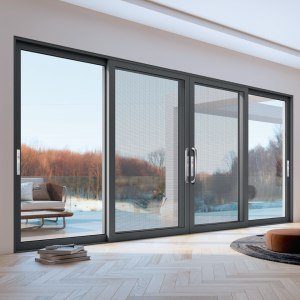
Patio doors do not follow a single universal sizing standard. Manufacturers produce them in a range of standard widths and heights, but the actual dimensions that matter for your project are the rough opening (RO) dimensions — the framed hole in the wall where the door unit will be installed. When you order from a patio door supplier, you will specify either the rough opening size or the exact door frame dimensions, depending on the manufacturer’s system.
Here are the most common standard patio door sizes in inches for sliding and multi-slide configurations:
| Configuration | Common Widths (inches) | Common Heights (inches) |
|---|---|---|
| 2-panel sliding door | 60, 72, 96 | 80, 96 |
| 3-panel sliding door | 108, 120 | 80, 96 |
| 4-panel multi-slide | 144, 168, 192 | 80, 96 |
| 9ft sliding door (3 panels) | 108 | 80, 96 |
| Oversized multi-slide | 192, 216, 240+ | 96, 108 |
The 9ft patio door (108 inches) is a common request for residential and light commercial projects because it fits a standard three-panel layout. Oversized patio doors — anything above 16 feet (192 inches) wide — typically require engineered framing and heavier glass, which affects both price and lead time.
Heights above 96 inches are considered non-standard for most residential projects. If you need a 108-inch or 120-inch door height, expect a custom quote and longer production time. Commercial projects often use these taller configurations, and a capable supplier should be able to accommodate them.
How to Measure for Patio Doors: A Step-by-Step Guide
Accurate measurement is the single most important step before ordering. A mistake here means a door that does not fit, a delayed project, and a costly reorder. Follow this process for any patio door size, including 9ft and oversized units.
Step 1: Measure the rough opening width. Measure at three points: the top, middle, and bottom of the opening. Record the smallest measurement. The door frame must fit within this dimension.
Step 2: Measure the rough opening height. Measure at the left, center, and right of the opening. Again, use the smallest measurement. Check that the floor is level and the header is straight; if not, note the variance for the supplier.
Step 3: Check for square. Measure both diagonals of the opening. If they differ by more than 1/4 inch, the opening is out of square. You will need to correct this before installation, or order a door with adjustable framing to compensate.
Step 4: Account for clearance. The door frame should be 1/2 to 3/4 inch smaller than the rough opening on all sides to allow for shimming, leveling, and expansion. Do not order a door that matches the rough opening dimension exactly.
Step 5: Verify the exterior conditions. For oversized doors, check the exterior wall structure. A 16-foot or wider door may require a structural header or steel reinforcement to carry the load above the opening. This is a building-code issue, not a door specification issue, but it affects whether your chosen door can be installed at all.
Common measurement mistakes include measuring the finished opening instead of the rough opening, assuming the opening is square without checking, and ignoring the floor slope. If you are unsure, send the supplier your measurements and photos; most experienced suppliers will flag obvious problems before you order.
Patio Door Types: From Sliding to Accordion and Multi-Slide
The type of patio door you choose affects the opening width, the glass-to-frame ratio, the hardware complexity, and the price. Here is how the main types compare from a procurement perspective.
Sliding patio doors are the most common and the most cost-effective. Two or three panels slide horizontally on tracks. They offer a large fixed glass area and a simple operating mechanism. The trade-off: only half (or one-third) of the opening is usable, and the track can accumulate dirt over time. For most projects, this is the default choice.
Multi-slide doors (also called multi-panel sliding doors) have two or more movable panels that stack to one or both sides. A 4-panel multi-slide door can open up to 75% of the wall, which makes it popular for projects where indoor-outdoor flow matters. The hardware is more complex — each panel has its own rollers, locks, and weatherstripping — so these doors cost more and require more maintenance.
Accordion patio doors (sometimes spelled “accordian”) fold back in a concertina pattern. They offer the widest opening of any patio door type — up to 95% of the wall can open. They are common for commercial spaces, restaurants, and large residential openings. The hinges and tracks are load-bearing, so quality matters significantly. Accordion doors are the most expensive per square foot and have the most moving parts to maintain.
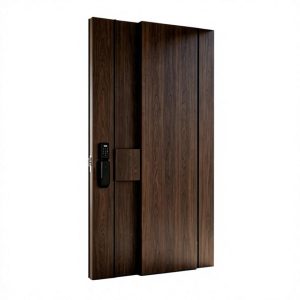
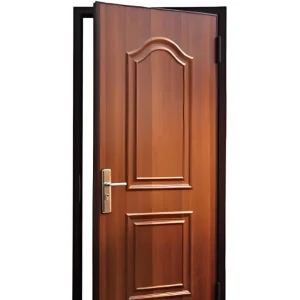
Exterior wood patio doors are used when the design calls for a natural material aesthetic. Wood offers excellent insulation and a premium look, but it requires more maintenance than aluminum or uPVC — periodic sealing, painting, or staining. Wood doors are typically heavier and more expensive, and they may not be suitable for high-humidity or coastal environments unless engineered with aluminum cladding on the exterior.
| Door Type | Max Opening Width | Relative Cost | Maintenance Level |
|---|---|---|---|
| Sliding | ~50% of wall | Low | Low |
| Multi-slide | ~75% of wall | Medium-High | Medium |
| Accordion | ~95% of wall | High | High |
| Wood (hinged or sliding) | Varies | High | High |
Patio Door Prices: What Affects Cost and Typical Ranges
Patio door prices vary widely based on material, size, glass specification, hardware quality, and whether you are buying retail or wholesale. For B2B buyers, the price you pay per unit depends on order volume, customization level, and the supplier’s production efficiency.
Material is the largest price driver. Aluminum frames are generally the most affordable for large openings, followed by uPVC, with wood and aluminum-clad wood at the premium end. Thermal-break aluminum — where the frame is split with a polyamide strip to reduce heat transfer — costs more than standard aluminum but is required for energy-efficient projects in colder climates.
Glass specification is the second major factor. Double glazing costs more than single glazing; triple glazing costs more still. Low-E coatings, argon gas fills, and tempered or laminated safety glass all add cost. A basic double-glazed unit might add 30-40% over single glazing, while a high-performance triple-glazed unit with Low-E can double the glass cost.
Size and configuration matter as well. A 9ft patio door costs more than a 6ft door, not just because there is more material, but because the glass panels are larger and require thicker frames to maintain structural integrity. Oversized doors above 16 feet wide require reinforced frames and heavier hardware, which increases cost disproportionately to the size increase.
Hardware — locks, handles, rollers, hinges — ranges from basic to high-security, multi-point locking systems. Multi-point locks are standard for most modern patio doors and add a modest cost premium. For commercial projects, panic hardware or access control integration may be required, which adds more.
As a general reference, wholesale pricing for aluminum patio doors in standard sizes typically falls in these ranges:
| Configuration | Wholesale Price Range (USD per unit) |
|---|---|
| 2-panel sliding, 6ft | $400 – $800 |
| 3-panel sliding, 9ft | $700 – $1,400 |
| 4-panel multi-slide, 16ft | $1,500 – $3,000 |
| Accordion door, per square foot | $50 – $120 |
These are market ranges, not fixed quotes. They vary with aluminum grade, glass specification, hardware brand, and order quantity. For accurate pricing, request a quote with your exact specifications.
Wholesale Patio Doors: Buying in Bulk for Projects
Wholesale patio doors are priced for volume buyers — contractors, developers, glazing companies, and distributors. The key differences from retail buying are minimum order quantities (MOQs), unit pricing, and lead times.
Most manufacturers have an MOQ for wholesale pricing, typically starting around 10-20 units per order, though this varies. Below the MOQ, you pay a higher per-unit price. Above it, you gain access to tiered pricing — the more you order, the lower the unit cost. Shipping also becomes more efficient with full container loads (FCL) versus less-than-container loads (LCL), which reduces the landed cost per door.
Lead times for wholesale orders are longer than retail because production runs are scheduled in batches. A typical timeline for a custom wholesale order from a Chinese manufacturer is 2-4 weeks for production, plus 2-5 weeks for shipping, depending on destination. If you are working on a construction schedule, factor this in from the start.
When buying wholesale, specify your exact requirements in writing: sizes, glass specification, hardware brand, color (including both interior and exterior finishes if different), and packaging requirements. A professional supplier will provide a proforma invoice with all specifications, a packing list, and full customs documentation for international shipping.
Choosing a Patio Door Supplier: Key Criteria
Selecting a patio door supplier is a procurement decision, not a brand preference. You need a supplier who can meet your technical specifications, deliver on schedule, and provide documentation that satisfies your local building codes and customs requirements. Here is a checklist of what to verify before placing an order.
Certifications and testing. Ask whether the supplier tests their doors for air-tightness, water-tightness, and wind resistance. These tests are critical for exterior doors, especially in coastal or high-wind regions. A supplier who performs these tests before shipment and can provide the results is more reliable than one who does not.
Building code compliance. Building codes vary by location. A door that meets European standards may not meet U.S. or Australian standards. A good supplier should be able to adjust the profile structure and fittings to match the local building codes of your target market. Ask about this capability directly.
Customization capability. Can the supplier produce custom sizes, custom colors, and custom glass configurations? For construction projects, standard sizes rarely fit perfectly. The ability to manufacture to your exact dimensions — without significant price premiums or extended lead times — is a key differentiator between a manufacturer and a middleman.
Communication and documentation. For international procurement, you need a supplier who can provide packing lists, proforma invoices, and full customs documents. You also need responsive communication — a supplier who answers technical questions clearly and quickly is more likely to handle production issues well.
Warranty and after-sales support. Warranty terms vary by manufacturer. Ask what is covered, for how long, and what the claims process looks like. A supplier who stands behind their product with a clear warranty policy is preferable to one who offers vague assurances.
How We Meet These Standards as a Manufacturer
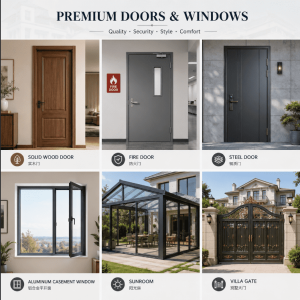
As a factory-based manufacturer of thermal-break aluminum doors and windows, solid wood doors, and system windows, we approach these requirements from the production side. We do not resell other brands’ products — we manufacture the doors ourselves, which means we control the quality, the customization, and the pricing.
Our pre-shipment inspection includes air-tightness, water-tightness, and wind resistance testing on every order. This is not a checkbox exercise; it is the verification that the doors you receive will perform as specified in your local climate conditions. If your project requires compliance with specific building codes, we can adjust the profile structure and fittings to match those requirements.
We offer full customization on size, color, glass, and hardware accessories. Whether you need a 9ft patio door, an oversized 20-foot multi-slide configuration, or a custom color match for a specific architectural palette, we can produce it. Our OEM and ODM capabilities mean you can order under your own brand if you are a distributor or contractor building a product line.
Because we are a direct factory supplier, there is no middleman markup in our pricing. We ship FCL and LCL directly from our factory in China, and we provide packing lists, proforma invoices, and full customs documentation with every order. For international buyers, this simplifies the logistics process significantly.
If you are evaluating suppliers for a construction project, we are happy to provide a quote with your exact specifications. Send us your sizes, glass requirements, and target quantity, and we will respond with pricing and lead time.
Frequently Asked Questions
What are the standard patio door sizes in inches?
The most common standard patio door sizes are 60, 72, and 96 inches wide for 2-panel sliding doors, and 108 or 120 inches for 3-panel configurations. Standard heights are 80 and 96 inches. Oversized doors range from 144 to 240 inches wide and may have heights up to 108 inches or more, but these are custom products.
How do I measure for a 9ft patio door or oversized patio door?
Measure the rough opening at three points for both width and height, use the smallest measurements, and subtract 1/2 to 3/4 inch on each side for clearance. Check that the opening is square by comparing the diagonals — a difference above 1/4 inch indicates an out-of-square opening that must be corrected before installation.
What is the price range for patio doors, including wholesale prices?
Wholesale prices for aluminum patio doors typically range from $400-$800 for a standard 6ft sliding door, $700-$1,400 for a 9ft sliding door, and $1,500-$3,000 for a 16ft multi-slide configuration. Prices vary with glass specification, hardware quality, aluminum grade, and order volume. Accordion doors are priced per square foot and typically range from $50-$120.
What are the differences between accordion, multi-slide, and sliding patio doors?
Sliding doors have two or three panels with one or two movable panels that slide horizontally. Multi-slide doors have multiple panels that stack to one side, opening up to 75% of the wall. Accordion doors fold back in a concertina pattern, opening up to 95% of the wall. Accordion doors are the most expensive and have the most moving parts; sliding doors are the most economical and lowest-maintenance.
Where is the best place to buy patio doors for a construction project?
For construction projects, buy directly from a manufacturer rather than a distributor or retailer. A factory-direct supplier offers lower pricing, full customization, and the ability to adjust products to meet local building codes. Verify that the supplier performs pre-shipment testing and can provide the necessary export documentation.
Can I get custom-sized patio doors from a supplier?
Yes, most manufacturers offer custom sizes. The key is finding a supplier who can produce custom dimensions without excessive price premiums or extended lead times. Ask about their customization capabilities — size, color, glass, and hardware — before committing to an order.