What Are Farmhouse Exterior French Doors?
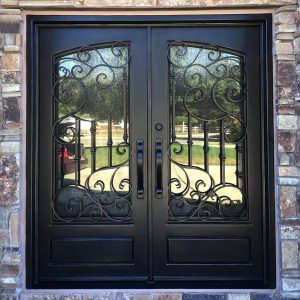
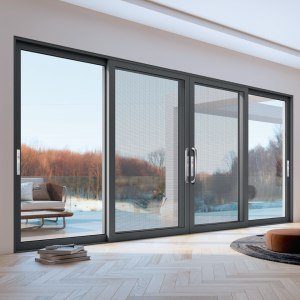
Farmhouse exterior French doors are double-door systems featuring large glass panes framed in materials like aluminum, wood, or steel. They are defined by their aesthetic—typically black metal or iron frames that evoke rustic or modern farmhouse architecture—and by their function: providing a wide, light-filled entry to patios, porches, or backyards.
The core question buyers ask is about sizes and styles. Here is the direct answer: standard exterior French doors range from 60 to 72 inches wide and 80 to 96 inches tall, with 8-foot heights (96 inches) readily available from most manufacturers. Styles vary primarily by frame material (aluminum, wood, steel), finish (black metal, black iron, bronze), and configuration (hinged or sliding). The right choice depends on your opening dimensions, climate, and the architectural tone of your home.
Standard Sizes and Custom Dimensions
Exterior French doors are sold in a predictable set of standard sizes, but custom dimensions are common for renovations and new construction. The table below shows the most common configurations.
| Configuration | Common Widths | Common Heights | Typical Use |
|---|---|---|---|
| Single French Door | 30″–36″ | 80″–96″ | Side entries, narrow openings |
| Double French Doors | 60″–72″ (total) | 80″–96″ | Patios, decks, primary entrances |
| Extra-Tall Double Doors | 72″–96″ (total) | 96″–120″ | Great rooms, vaulted ceilings |
| Sliding French Doors | 72″–144″ (total) | 80″–96″ | Wide openings, space-limited areas |
The most common double door size is 72 inches wide by 80 inches tall (each leaf is 36 inches). For farmhouse aesthetics, 8 ft exterior French doors (96 inches tall) are increasingly popular because the added height makes the entry feel more grand and allows for larger glass panes.
Custom size exterior French doors are the norm rather than the exception in this category. Manufacturers can typically produce doors in 1-inch increments for width and height. The trade-off is lead time: custom sizes generally add 2–4 weeks to production compared to stock sizes. For B2B buyers ordering in volume, custom sizing is rarely a problem, but it does affect scheduling and pricing.
Material and Finish Options: Black Metal, Iron, and Modern Styles
The material of the frame determines durability, maintenance, and appearance. The finish—most commonly black—drives the farmhouse aesthetic.
Black Metal vs. Black Iron French Doors
These terms are often used interchangeably, but they refer to different products.
Black metal typically means aluminum or steel frames with a powder-coated black finish. Aluminum is lightweight, corrosion-resistant, and requires minimal upkeep. It is the most common material for modern exterior French doors because it can accommodate large glass panes without excessive weight.
Black iron refers to wrought iron or steel frames. True wrought iron is heavier, more expensive, and requires regular painting to prevent rust. In practice, most “black iron” doors sold today are steel frames with a textured black finish that mimics the look of wrought iron. Steel offers superior strength and a thinner profile than aluminum, which means more glass and a more traditional French door appearance.
For most buyers, aluminum is the practical choice. It performs well in coastal and high-humidity environments, resists corrosion, and requires no ongoing maintenance. Steel is stronger and allows for slimmer sightlines, but it is heavier, more expensive, and can rust if the finish is compromised.
Modern Exterior French Doors
Modern farmhouse style has shifted the traditional French door aesthetic. Instead of many small divided lites, modern exterior French doors use large, uninterrupted glass panes with a single horizontal mullion or no mullion at all. This maximizes natural light and views while maintaining the clean black frame that defines the farmhouse look.
The finish options beyond black include bronze, dark gray, and white. Black remains the dominant choice for farmhouse applications because it contrasts well with white, gray, or wood siding and reads as a deliberate design element rather than a functional afterthought.
How to Measure for Exterior French Doors
Accurate measurement is the single most important step in ordering French doors. Mistakes here are expensive and time-consuming to correct. Follow this sequence:
- Measure the width at three points: top, middle, and bottom of the rough opening. Use the narrowest measurement.
- Measure the height at both the left and right sides, from the finished floor to the top of the rough opening. Use the shorter measurement.
- Check for square by measuring both diagonals. If they differ by more than 1/4 inch, the opening is out of square and will require framing adjustments.
- Measure the wall thickness (jamb depth). Standard is 4-9/16 inches for 2×4 framing and 6-9/16 inches for 2×6 framing. Custom homes may have thicker walls.

For custom size exterior French doors, provide the rough opening dimensions, not the door dimensions. The manufacturer will subtract the appropriate clearances for the door frame and operating clearance. A common rule is to order doors 1/2 inch smaller than the rough opening width and height, but this varies by manufacturer and frame system.
If you are replacing existing doors, measure the door slab itself and the frame separately. The frame dimensions are what matter for the new installation unless you are also replacing the framing.
Choosing the Right Configuration: Hinged vs. Sliding
The configuration affects both the look and the functionality of your French doors.
Hinged French doors swing open, typically outward or inward. They provide full-width access to the opening, which is ideal for moving furniture, entertaining, or connecting indoor and outdoor spaces. The downsides are that they require clearance for the swing arc and that the hardware—hinges, handles, multi-point locks—must be robust enough to support the door weight over years of use.
Sliding French doors (also called sliding patio doors with a French aesthetic) move on tracks and do not require swing clearance. They are the better choice for areas with limited interior or exterior space, such as a narrow patio or a room with furniture near the door. They also offer better weather sealing in some designs because the sliding panel compresses against the frame. The trade-off is that only half of the opening is usable at any time, and the track mechanism adds a component that can wear over time.
For farmhouse applications, hinged doors are more traditional and visually authentic. Sliding configurations are a practical compromise when space is tight. If you are choosing between them, consider how you will use the door: full access favors hinged, daily convenience and space efficiency favor sliding.
Energy Efficiency and Glass Considerations
Exterior French doors are a significant thermal weak point in a building envelope. The large glass area means that glass performance is the primary driver of energy efficiency.
The two ratings that matter are U-factor (how well the door prevents heat transfer—lower is better) and SHGC (solar heat gain coefficient—how much solar radiation passes through). For cold climates, look for a U-factor of 0.30 or lower. For hot climates, prioritize a low SHGC to reduce cooling loads.
Glass options include:
- Double glazing with low-E coating: the baseline for energy-efficient exterior doors. The low-E coating reflects heat while allowing visible light through.
- Triple glazing: adds an additional pane and gas fill for maximum insulation. It is heavier and more expensive but justified in extreme northern climates.
- Argon or krypton gas fill: inert gases between panes that reduce heat transfer. Argon is common; krypton performs better but costs more.
- Tempered or laminated glass: required by code for doors (tempered) and recommended for security (laminated). Laminated glass holds together when shattered, making it harder to breach.
For farmhouse French doors, the divided-lite aesthetic (grids or mullions) can conflict with energy efficiency. True divided lites (individual glass panes in separate frames) are less efficient than simulated divided lites (grids applied to a single large pane). If energy performance is a priority, choose simulated divided lites.
Customization and Procurement for Builders and Contractors
For B2B buyers—builders, contractors, and developers—the procurement process for farmhouse exterior French doors involves more than selecting a style. You need to align the product with local building codes, project timelines, and budget constraints.
Key procurement considerations:
- Building codes: Energy codes vary by region and are updated periodically. Confirm that the door’s U-factor and SHGC meet your local requirements before ordering. Wind load ratings matter for coastal and high-wind areas.
- Lead times: Custom sizes and finishes extend production time. Build them into your project schedule. Stock sizes ship faster but may not fit your openings.
- Volume pricing: Manufacturers price differently for single-door and project-scale orders. If you are sourcing for multiple units, request project pricing rather than unit pricing.
- Documentation: For international shipments, you will need packing lists, proforma invoices, and customs documentation. Confirm that your supplier can provide these.
As a manufacturer, our approach to these requirements is straightforward. We produce farmhouse exterior French doors in aluminum, steel, and wood, with full customization on size, color, and glass. Our factory direct model means you are working with the producer, not a distributor, which simplifies communication and pricing. We adjust profile structures and fittings to match the building codes of your target market, and we provide complete export documentation for FCL and LCL shipments.
For builders managing multiple projects, we offer OEM and ODM services, allowing you to specify your own hardware, finish, and even private labeling. Pre-shipment inspections cover air-tightness, water-tightness, and wind resistance, so the doors you receive meet the performance claims we make.
If you are sourcing farmhouse exterior French doors for a project and need to verify dimensions, glass options, or code compliance, Get a Free Quote and we will work through the specifications with you.
Frequently Asked Questions
What are the standard sizes for exterior French doors?
The most common standard sizes are 60, 64, 68, and 72 inches wide by 80 inches tall for double doors. Each leaf is typically 30 to 36 inches wide. Single French doors range from 30 to 36 inches wide. Heights of 96 inches (8 feet) are available as a standard option from many manufacturers.
Can I get 8 ft tall exterior French doors?
Yes. 8 ft exterior French doors (96 inches) are a standard option in most product lines. They are increasingly popular for farmhouse designs because the added height creates a more dramatic entry and allows for taller glass panes. Some manufacturers offer heights up to 120 inches for custom applications.
What is the difference between black metal and black iron french doors?
Black metal refers to aluminum or steel frames with a black powder-coated finish. Black iron typically means steel or wrought iron with a textured black finish. Aluminum is lighter and corrosion-resistant; steel and iron are stronger and allow slimmer profiles but require more maintenance. For most exterior applications, aluminum is the more practical choice.
How do I measure for custom size exterior french doors?
Measure the rough opening width at the top, middle, and bottom, and use the narrowest measurement. Measure the height on both sides from the finished floor. Check that the diagonals are within 1/4 inch of each other. Provide the rough opening dimensions to the manufacturer—they will subtract the necessary clearances for the frame and operating gap.
What are the benefits of modern exterior french doors over traditional styles?
Modern exterior French doors use larger glass panes with fewer mullions, which maximizes natural light and unobstructed views. They also typically feature thermally broken aluminum frames, which perform better for energy efficiency than traditional wood frames. The clean, minimal aesthetic pairs well with both contemporary and farmhouse architecture.
What glass options are available for energy efficiency?
The main options are double glazing with low-E coating (baseline), triple glazing (maximum insulation), and gas fills like argon or krypton. Tempered glass is required by code for doors, and laminated glass adds security. For divided-lite aesthetics, simulated divided lites are more energy-efficient than true divided lites.