Core Conclusion: Why Choose Doors with Blinds Inside?
A door with blinds inside integrates the blind mechanism between panes of glass or within the door structure itself. The primary advantage is simple: you get adjustable light control and privacy without a separate blind that collects dust, gets tangled, or requires cleaning. Because the blinds are sealed, they are protected from damage and require virtually no maintenance beyond wiping the glass.
For commercial buyers and project managers, the appeal is more specific. These doors reduce ongoing maintenance costs, eliminate the safety hazard of dangling cords, and present a cleaner architectural line than a door with an external blind or curtain. They also reduce the risk of damage during transport and installation, since there is no protruding hardware to break.
The trade-off is cost. An integrated blind door costs more than a standard door with an external blind. You are paying for precision glass fabrication, a sealed unit, and a mechanical control system that must work reliably for years. The decision comes down to whether the long-term operational savings justify the higher upfront price.
Types of Doors with Built-in Blinds: A Detailed Breakdown
Integrated blinds are available across several door categories, each with different performance requirements.
Entry Doors and French Doors
For exterior entry doors, the integrated blind is almost always housed within a double or triple-glazed unit. The blind sits between the glass panes, and the control mechanism is mounted on the interior face of the door. These are commonly used on front doors with sidelights or on patio French doors where a full-height glass panel would otherwise compromise privacy.
The critical consideration for exterior doors is thermal performance. The blind itself provides a layer of insulation, but the glass unit must be properly sealed to prevent condensation and argon gas leakage. Look for a low-E coating on the glass and a warm-edge spacer system to reduce heat transfer at the frame edge.
Sliding Patio Doors
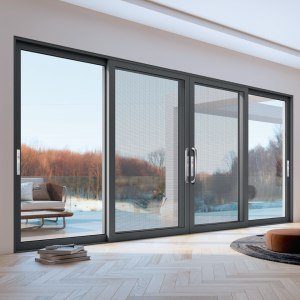
Sliding doors with built-in blinds are a popular choice for large openings. The blind mechanism must be slim enough to fit within the sliding panel’s frame profile, which can limit the blind’s maximum width. Most manufacturers offer blinds up to about 48 inches wide per panel, so a typical 6-foot sliding door will have two panels, each with its own blind.
The control mechanism on sliding doors is usually a magnetic slider on the interior surface. This is more reliable than cord systems, which can snag or break during the sliding motion. Some premium systems offer motorized blinds controlled by a wall switch or remote, which is worth considering for hard-to-reach panels.
Casement and Awning Windows in Doors
Many doors incorporate fixed or operable windows within their design — a casement window beside a door, or an awning window above it. These can also be fitted with integrated blinds. The technology is identical to door-integrated blinds, but the frame profile is usually smaller, so the blind mechanism must be more compact.
These are a good option when you want light control in a sidelight without adding a separate window treatment. However, the blind will be narrow, and the control mechanism can feel cramped if the window is less than 12 inches wide.
Interior Doors with Glass Panels
Interior doors with glass lites — common in offices, conference rooms, and some residential designs — can also be specified with integrated blinds. For interior applications, the thermal performance requirements are lower, so a double-glazed unit without low-E coating is usually sufficient. This reduces cost.
The main decision for interior doors is the blind type. Aluminum blinds are more durable and offer better light control, while PVC blinds are cheaper and quieter to operate. For interior doors where noise is a concern, such as a conference room, the quieter PVC option is often preferred.
Comparison Table: Blinds Inside Door Options
| Feature | Entry Door | Sliding Patio Door | Interior Glass Door | Casement Sidelight |
|---|---|---|---|---|
| Typical Glass | Triple or double glazed, low-E | Double glazed, tempered | Double glazed | Double glazed |
| Blind Material | Aluminum or PVC | Aluminum | PVC or aluminum | Aluminum |
| Control Type | Magnetic slider or crank | Magnetic slider | Cord or magnetic | Magnetic |
| Best For | Privacy and thermal control | Large openings, patio access | Office privacy, light diffusion | Narrow sidelights beside doors |
| Maintenance | Minimal — sealed unit | Minimal — sealed unit | Minimal — sealed unit | Minimal — sealed unit |
| Relative Cost | High | High | Medium | Medium |
Buying Guide: How to Select the Right Door with Integrated Blinds
Choosing the right door with built-in blinds requires evaluating several technical factors. Here is what matters.
Glass Type and Insulation
The glass unit is the most important component. For exterior doors, always specify at least double glazing with a low-E coating. Triple glazing is worth considering in colder climates, as it significantly reduces heat loss. The blind itself acts as an additional insulating layer, but only when it is closed — an open blind does little for thermal performance.
Check the glass warranty. A sealed unit that fails will develop condensation between the panes, and the entire glass package must be replaced. Reputable manufacturers offer a 5- to 10-year warranty on the sealed unit. The blind mechanism inside is a separate component with its own warranty, typically 1 to 3 years.
Blind Material and Light Control
Aluminum blinds are the industry standard for durability. They resist moisture and temperature changes without warping. They also offer precise light control — you can tilt the slats to direct light exactly where you want it. The downside is that aluminum slats can rattle slightly when the door is closed firmly.
PVC blinds are quieter and cheaper, making them a good choice for interior doors. However, PVC can yellow over time when exposed to direct sunlight, and the slats are less rigid than aluminum. For exterior doors with heavy sun exposure, aluminum is the safer choice.
Control Mechanism: Manual vs. Magnetic vs. Motorized
Manual cord systems are the cheapest but least reliable. The cord passes through the seal between the glass panes, creating a potential failure point. Over time, the cord can fray or the seal can leak.
Magnetic systems are the most common for modern doors. A magnetic slider on the interior surface moves the blind mechanism inside the sealed unit without penetrating the glass. This is more reliable and creates a better seal. The trade-off is that magnetic systems can be slightly stiff to operate, especially on wider blinds.
Motorized systems are the premium option. They use a small motor inside the door frame, controlled by a switch, remote, or smart home system. These are the most convenient and are worth considering for large sliding doors or hard-to-reach windows. The additional cost is significant — typically several hundred dollars per unit — and the motor adds a component that can fail over time.
Size and Customization
Integrated blind doors are almost always custom-manufactured. Standard door sizes are available, but the blind mechanism must be sized to fit the glass opening precisely. When specifying, provide the exact opening dimensions — not the rough opening or the door frame size. A 1/8-inch tolerance is typical; the blind mechanism requires a few millimeters of clearance on each side to operate smoothly.
Color options for the blind are usually limited to white, silver, and bronze. If you need a specific color to match interior finishes, confirm availability with the manufacturer before ordering. Some manufacturers offer custom blind colors at a premium.
Frequently Asked Questions
What are the main benefits of having blinds inside a door?
The primary benefits are reduced maintenance, improved safety, and better durability. Sealed blinds never need dusting or cleaning, have no cords that pose a strangulation hazard, and cannot be damaged by pets or children. They also provide a clean, integrated appearance.
How do doors with built-in blinds compare to traditional doors with external blinds?
External blinds are cheaper, but they require regular cleaning, are prone to damage, and can interfere with the door’s operation if not properly mounted. Integrated blinds are protected from dust and damage, require no maintenance, and present a cleaner appearance. The trade-off is cost — integrated blind doors typically cost 20% to 50% more than a standard door with an external blind.
What factors affect the cost of doors with blinds inside?
The main cost drivers are glass type (double vs. triple glazing), blind material (aluminum vs. PVC), control mechanism (manual vs. magnetic vs. motorized), and door size. Motorized controls and triple glazing add the most to the price. Custom sizes also carry a premium, but the cost increase is usually modest.
How do I maintain and clean blinds that are sealed inside a door?
You do not need to clean the blinds themselves — they are sealed and protected. The only maintenance is cleaning the glass surfaces. Use a standard glass cleaner and a soft cloth. Avoid abrasive pads or ammonia-based cleaners, which can damage the seal over time. The control mechanism may need periodic adjustment if it becomes stiff, but this is rare.
Can I customize the size, color, and blind type for a door with blinds inside?
Yes. Most manufacturers offer full customization of door dimensions, glass type, blind material, and control mechanism. Blind color options are typically limited to white, silver, and bronze, but custom colors are available on request. Always confirm the blind’s maximum width for your door type — some styles have size limits.
Additional Considerations: Doors with Blinds Inside Them
Safety and Code Compliance
For doors in commercial or public buildings, check local building codes regarding window coverings. Many jurisdictions require cordless options for child safety, which integrated blinds satisfy by design. For egress doors — doors that serve as fire exits — ensure the blind mechanism does not interfere with the door’s operation or locking hardware. Magnetic and motorized systems are generally compliant, but manual cords can be problematic.
Installation and Lead Times
Integrated blind doors are more complex to manufacture than standard doors, so lead times are longer. Expect 4 to 8 weeks for custom orders, depending on the manufacturer’s capacity and the complexity of the unit. Installation is no more difficult than a standard door, but the glass unit is heavy — plan for two-person installation.
Manufacturer Selection Criteria
When evaluating suppliers, focus on three things: glass unit warranty, blind mechanism reliability, and the manufacturer’s track record with export or large-scale projects. Ask for the warranty terms on the sealed unit and the blind mechanism. Request samples of the control mechanism to test the action. And verify that the manufacturer can provide proper export documentation if you are shipping internationally.
Choosing Between Options
Choose a door with integrated blinds if you want a maintenance-free solution with a clean appearance and are willing to pay a premium. Choose a traditional door with external blinds if budget is the primary constraint and you are prepared to handle ongoing cleaning and potential damage. For large sliding doors or entry doors in high-traffic areas, integrated blinds are almost always worth the investment — the reduced maintenance cost offsets the higher upfront price within a few years.
How We Meet These Standards
As a manufacturer of custom doors and windows, our approach to integrated blinds follows the criteria above. We produce doors with blinds inside using double or triple-glazed units with low-E coating and warm-edge spacers for thermal performance. Our standard blind options include aluminum and PVC, with manual, magnetic, and motorized controls.
We recognize that every project has different requirements, which is why we offer full customization on size, color, glass type, and hardware. Our factory-direct model eliminates middleman markup, which helps offset the inherent cost of integrated blind systems. For international buyers, we provide complete export documentation, including packing lists, proforma invoices, and customs paperwork.
Before shipment, every unit undergoes air-tightness, water-tightness, and wind resistance testing. The profile structure and fittings can be adjusted to match local building codes in your target market. If you are planning a project and need a specific blind configuration, we can work with your specifications to ensure the unit performs as required.
If you have a project in mind, contact our team to discuss your requirements. We can provide a detailed quote based on your door size, glass specification, and blind type.