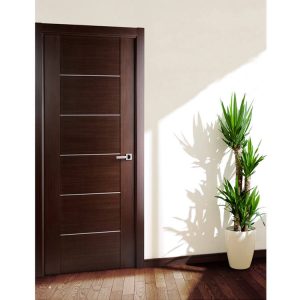
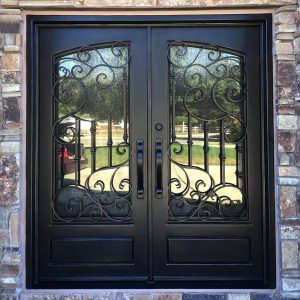
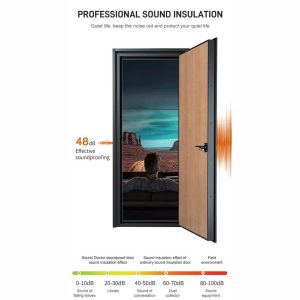
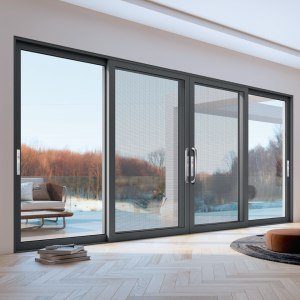
There is no single “best” interior door for every project. The right choice depends on construction quality, room function, finish, dimensions, hardware preparation and the level of sound and durability performance required.
Instead of choosing a brand name first, compare the characteristics that actually affect the finished installation.
What makes an interior door a good choice?
For most projects, the most useful criteria are:
- Correct dimensions and frame compatibility
- Appropriate core construction
- Stable face and finish
- Reliable hinge and lock preparation
- Suitable privacy and glass configuration
- Consistent quality across the order
- Availability of replacement components and finishes
A door can look excellent but still be a poor fit if the dimensions or frame specification are wrong.
Interior door construction
Hollow-core doors are lightweight and economical. Solid-core doors provide more mass and are often preferred when sound control and a substantial feel matter.
Wood and engineered-wood doors offer different combinations of appearance, stability and customization. For commercial or multi-unit projects, consistency across a large batch can be more important than a single premium specimen.
How to compare interior door brands
When comparing interior door brands or suppliers, ask for:
- Product specifications
- Actual dimensions
- Core construction
- Finish options
- Available sizes
- Hardware preparation
- Frame options
- Lead time
- Warranty
- Sample availability
Do not compare brands using marketing claims alone. A useful comparison connects the stated performance to a measurable specification.
Best door for each situation
For economical residential projects: lightweight construction can be practical when acoustic performance is not a priority.
For bedrooms and offices: solid-core construction is often worth considering when privacy and sound reduction matter.
For premium interiors: focus on finish consistency, panel proportions, hardware and frame quality.
For commercial projects: confirm the complete specification, including durability, fire/acoustic requirements where applicable, and installation compatibility.
Brand selection for B2B projects
For a project buyer, supplier capability can be as important as the door itself. A manufacturer should be able to provide consistent dimensions, finish control, packaging and production communication.
For OEM/ODM programs, confirm whether the supplier can work from drawings, provide samples and maintain the same specification across repeat orders.
FAQ
What is the best interior door brand?
There is no universal winner. The best supplier depends on the project's required construction, price, finish, dimensions and service level.
Are solid-core doors better than hollow-core?
They are generally more substantial and can offer better acoustic performance, but they are also heavier and often cost more.
What should I ask a door company before buying?
Ask for actual dimensions, core construction, finish specifications, hardware preparation, warranty and lead time.
Is the most expensive interior door the best?
No. A premium door that does not match the room's requirements can be worse value than a simpler door correctly specified for the application.
A practical comparison framework
When comparing the best interior door companies, use the same checklist for every supplier. Ask each one for the same construction, dimensions and finish so that the comparison is meaningful.
A useful scorecard can include product quality, dimensional consistency, finish quality, customization, lead time, packaging, communication and after-sales support.
For residential buyers
Prioritize fit, appearance, privacy and durability. If sound is important, compare core construction rather than choosing only from photographs.
For contractors
Prioritize consistent specifications, reliable delivery and hardware preparation. A door that looks good but arrives with inconsistent dimensions can create installation costs.
For developers and B2B buyers
Look beyond the individual sample. Ask whether the supplier can reproduce the same finish and dimensions across repeat orders, provide production samples and maintain packaging standards.
Avoid unsupported “best” claims
A useful best-interior-door guide should explain why a product or supplier is recommended. Avoid declaring one brand the universal winner without comparable evidence.
The best choice is the one that fits the project's technical and commercial requirements.
Final takeaway
Start with construction and specification, then compare brands. This produces a more reliable buying decision than choosing the most visible brand or the highest-priced door.