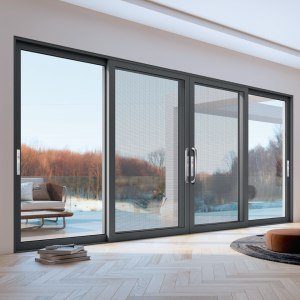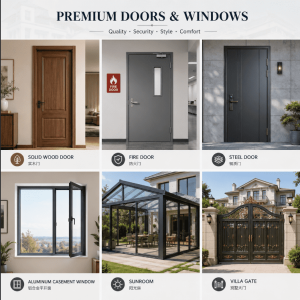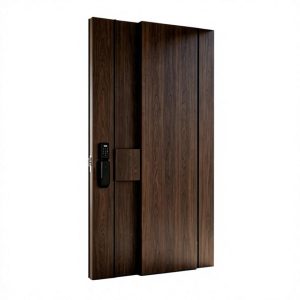
Full glass exterior doors maximize daylight and visibility by using glazing across most of the door surface. They are popular for modern homes, patios, garden rooms, side entries, and commercial spaces where a strong visual connection is important.
The best full-glass exterior door is not simply the one with the most glass. The frame, glass construction, thermal performance, weather sealing, hardware, and security specification all matter.
What is a full glass exterior door?
A full glass exterior door uses a large glazed area within a supporting frame. The door may be hinged, sliding, pivoting, or part of a larger door system.
Common variations include:
- Full-lite hinged exterior doors
- Full-glass patio doors
- Full-glass French doors
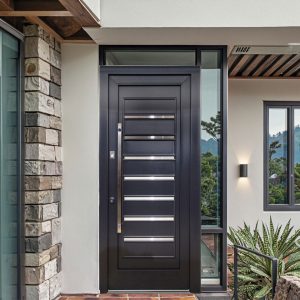
- Modern black-frame glass doors
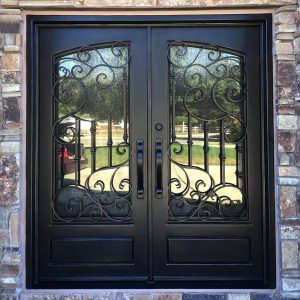
- Double glass exterior doors
- Full-glass entry systems with sidelights or transoms
Clear, frosted and decorative glass
Clear glass
Provides maximum visibility and daylight. Best when privacy is not a major concern.
Frosted or obscure glass
Diffuses views and is useful for private entries or rooms where daylight is desired without direct visibility.
Reeded or textured glass
Adds privacy and visual texture while maintaining useful light transmission.
Decorative or leaded glass
Useful for traditional and architectural styles.
Low-E insulated glass
For exterior applications, an insulated Low-E glass package can reduce heat transfer compared with basic single glazing. Ask for the actual glass construction and performance values.
Safety and security
Exterior door glazing must be specified according to the applicable building code and location.
Depending on the application, consider:
- Tempered safety glass
- Laminated glass
- Insulated glass
- Reinforced frame
- Multi-point locking
- Quality deadbolt
- Reinforced strike area
- Security glazing near locks
Laminated glass can provide additional security because the interlayer helps keep broken glass together. Tempered glass is designed to break into smaller pieces rather than large sharp shards.
The applicable code should always be checked for the actual installation.
Common sizes
A 36 × 80-inch single exterior door is a common residential starting point. Other configurations include:
- 32 × 80
- 36 × 84
- 36 × 96
- 42 × 96
- Double doors
- Custom oversized systems
Large glass doors may require reinforced framing and engineered hardware. The actual maximum size depends on the door system.
Frame materials
Aluminum
Aluminum is widely used in modern full-glass doors because it can provide slim profiles and large glass areas. For exterior applications, thermal-break construction can improve thermal performance.
Wood
Wood frames provide a warmer appearance and work well with traditional architecture. Exterior wood requires weather protection and maintenance.
Fiberglass/composite
These materials can provide lower maintenance and useful insulation while supporting wood-look designs.
Energy performance
The glass is only part of the system.
Check:
- Glass U-factor
- Solar heat gain coefficient where relevant
- Low-E coating
- Number of panes
- Gas fill
- Spacer system
- Frame thermal break
- Weatherstripping
- Threshold and sill design
A large glass area can increase solar gain or heat loss if the glass package is poorly selected for the climate.
Full glass vs. partial glass
| Feature | Full glass | Half/partial glass |
|---|---|---|
| Daylight | Maximum | Moderate |
| Visibility | Maximum | Lower |
| Privacy | Lower | Higher |
| Modern appearance | Strong | Moderate |
| Security exposure | More glazing | Less glazing |
| Thermal sensitivity | Higher | Lower glass area |
Choose full glass when light and visual connection are priorities. Choose partial glass when privacy, security, or reduced glazing area is more important.
Exterior installation considerations
The complete opening needs appropriate:
- Flashing
- Sill drainage
- Weatherstripping
- Threshold
- Frame anchoring
- Structural support
- Finished-floor coordination
For large openings, do not use a generic rough-opening formula as the final installation specification. Use the manufacturer's drawings.
B2B specification checklist
For commercial or project sourcing, specify:
- Overall unit size
- Door type
- Glass construction
- Frame material
- Thermal-break requirement
- Finish
- Hardware
- Locking system
- Threshold
- Performance requirements
- Wind or structural requirements where applicable
- Quantity and packaging
Jusen Door and Windows can manufacture custom aluminum full-glass exterior and entry systems with custom sizes, finishes, glass configurations, and OEM/ODM production.
FAQ
Are full glass exterior doors secure?
They can be. Security depends on the glass, frame, locking system, hardware, and installation rather than glass area alone.
Is tempered glass enough for an exterior door?
Tempered glass provides safety performance, but the applicable code and project requirements determine the required glazing. Laminated or insulated options may be appropriate for additional security or thermal performance.
Are full glass doors energy efficient?
They can be when equipped with suitable insulated Low-E glass and a thermally appropriate frame. Ask for actual performance data rather than relying on the term “energy efficient.”
Can a full-glass door be frosted?
Yes. Frosted, etched, reeded, and other privacy-glass options can be used depending on the door system.