Content Menu
● 1. Understanding Wood Front Entry Doors with Glass: Types and Applications
● 2. Quality and Performance Factors: What Actually Matters
● 3. How to Evaluate Wood Front Entry Doors with Glass Suppliers
● 4. Relevant Industry Standards and Certifications
● 5. Production Process: From Raw Material to Finished Door
● 6. Customization and OEM/ODM Options
● 7. Ordering Process: MOQ, Lead Time, and Shipping
● 8. How Jusen Door and Windows Manufacturing Co., Ltd. Meets These Standards
● 9. Frequently Asked Questions
10 min read
A contractor in Seattle had a problem last winter. The glazed wood entry doors he had specified for a custom home were showing condensation on the interior glass surface at 35°F outside. The homeowner noticed. The architect noticed. The builder was stuck with a warranty claim on a door that had looked perfect in the showroom.
The issue was not the wood. It was not the glass manufacturer. It was the edge-of-glass temperature — a thermal performance detail that most buyers never check until it fails.
Wood front entry doors with glass are a specification that combines aesthetics, security, and building science. For B2B buyers — contractors, architects, distributors, and developers — the procurement decision requires more than comparing photos. This guide covers the technical parameters that separate a door that performs for twenty years from one that fails in two winters.
Understanding Wood Front Entry Doors with Glass: Types and Applications
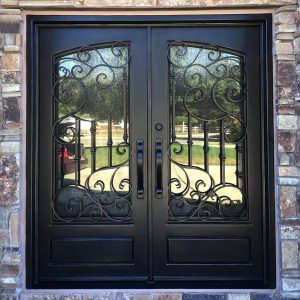
A wood front entry door with glass is a door slab manufactured from solid wood or engineered wood components, with one or more glazed openings integrated into the panel design. These openings can range from small decorative lites to full-length sidelite assemblies.
Direct answer: Wood front entry doors with glass are exterior door units where glazing is integrated into a wood stile-and-rail or solid timber construction, providing daylight, aesthetic character, and thermal performance when properly specified.
Solid Wood vs. Engineered Stile-and-Rail Construction
Solid wood doors are constructed from single-piece timber or glued-laminated boards. They are heavy — a 36″×80″ solid mahogany door typically weighs 80–120 pounds before hardware. The weight affects hinge selection and installation labor.
Engineered stile-and-rail doors use a laminated veneer lumber (LVL) or finger-jointed core with solid wood veneer faces. This construction is dimensionally more stable than solid timber, particularly in large formats. When glass is inserted, the moisture differential between glazed and unglazed areas creates stress on the panel. Engineered cores resist warping and twisting better than solid lumber under this stress.
For exterior glazed doors in commercial-grade specifications, engineered stile-and-rail construction is the industry default. It is not a cost-cutting measure — it is a performance decision.
Door Configurations: Single, Double, and Sidelite Assemblies
The most common B2B specification is a single 36″×80″ door with one or two glass lites. Double-door configurations — French or hinged pairs — are specified for openings up to 72″ wide. Each additional glazed panel increases air-infiltration risk at the meeting stile, requiring careful weather-stripping specification.
Sidelite assemblies are fixed glazing panels flanking the active door. These are popular in high-end residential projects but introduce thermal bridging considerations. The structural anchoring of sidelites to the door frame must accommodate wind load transfer without racking the main door.
Glass Types Used in Wood Entry Doors
Tempered glass is mandatory in door panels per most building codes. The International Building Code (IBC) and International Residential Code (IRC) classify door glazing as a hazardous location, requiring safety glazing.
Insulated glass units (IGUs) — dual or triple pane with low-E coatings and argon or krypton gas fills — achieve U-factors of 0.25–0.30. The glass-to-wood ratio directly affects the overall door assembly U-factor.
Decorative glass options — beveled, frosted, seeded, or leaded — change light transmission and privacy characteristics. Laminated glass with polyvinyl butyral (PVB) or SentryGlas interlayers provides forced-entry resistance.
Quality and Performance Factors: What Actually Matters
The performance of a glazed wood door is determined by three factors: the test data, the thermal characteristics, and the glazing method.
Direct answer: Performance verification for wood front entry doors with glass requires third-party test reports for air infiltration, water resistance, and structural wind load — not just aesthetic samples.
Air, Water, and Wind Load Testing
The AAMA/WDMA/CSA 101/I.S.2/A440 standard governs performance testing for windows and doors. The performance class system — R (residential), LC (light commercial), CW (commercial) — indicates the design pressure the unit withstands.
Air infiltration limits for R-class performance are typically 0.3 cfm/ft². Water resistance is verified through controlled spray testing at specified pressure differentials. Wind load structural testing checks deflection limits — typically L/240 or L/360 — and permanent deformation criteria.
Buyers should request third-party test reports. In-house claims are not equivalent.
Thermal Performance: U-Factor and Condensation Resistance
The condensation resistance factor (CRF) measures how well the edge-of-glass area maintains temperature. Low CRF means condensation — the exact failure the Seattle contractor experienced.
Low-E coating placement matters. Surface 2 coatings (inside face of the outer pane) are standard for cold climates. Surface 3 coatings (outside face of the inner pane) are used for warm climates.
Wood is naturally insulating — roughly R-1 per inch — but hardware cutouts and glass pockets are weak points. The glass-to-wood ratio is the primary thermal performance variable.
Glazing Methods: Wet vs. Dry Systems
Wet glazing uses silicone or butyl sealant applied around the glass perimeter. It is common in traditional wood door manufacturing. Dry glazing uses gaskets and mechanical stops, allowing easier field replacement and better long-term weather resistance.
For exterior entry doors, dry glazing with a minimum glass bite of 3/8″ to 1/2″ is the preferred specification. Wet glaze systems can degrade under UV exposure and thermal cycling.
How to Evaluate Wood Front Entry Doors with Glass Suppliers
Supplier evaluation for glazed wood doors requires a structured framework. The wrong supplier costs more than money — it costs schedule delays, compliance failures, and reputation.
Direct answer: Evaluate wood front entry doors with glass suppliers by requesting performance test reports, verifying manufacturing process control, and confirming documentation capability for your target market’s building codes.
Key Quality Indicators for Buyers
Checklist for supplier evaluation:
- Third-party test reports for air, water, and wind performance (AAMA/WDMA/CSA 101/I.S.2/A440)
- Moisture content documentation for wood components (8–12% target)
- Glass certification — tempered, laminated, or IGU with proper labeling
- Factory inspection protocol — what is checked before shipment
- Compliance documentation for your target market (CE, FSC, NFRC labels)
- Sample production unit for physical inspection before bulk order
Red Flags to Avoid
Avoid suppliers who:
- Cannot provide third-party test reports — only in-house data
- Cannot specify the moisture content of their wood
- Recommend field glazing for exterior doors
- Have no documentation for export compliance
- Cannot explain their quality control process in detail
Choose A If… Choose B If…
Choose a factory-direct supplier if you need customization, have container-level volume, or require OEM/private label manufacturing.
Choose a regional distributor if you need small quantities quickly, have no import experience, or require local warranty service.
Relevant Industry Standards and Certifications
Direct answer: Wood front entry doors with glass must meet AAMA/WDMA/CSA 101/I.S.2/A440 for performance, energy codes like IECC or Title 24 for U-factor, and safety glazing requirements per IBC/IRC.
Key standards:
- AAMA/WDMA/CSA 101/I.S.2/A440 — performance testing
- IECC (International Energy Conservation Code) — U-factor requirements by climate zone
- Title 24 (California) — stricter energy performance requirements
- NFRC labeling — certified thermal performance ratings
- IBC/IRC — safety glazing in hazardous locations
- ADA — accessibility requirements for clear opening width and threshold height
Production Process: From Raw Material to Finished Door
Understanding how glazed wood doors are manufactured helps buyers ask better questions.
Direct answer: The production process for wood front entry doors with glass involves lumber selection and drying, panel assembly, glazing integration, finishing, and performance testing before shipment.
Step-by-Step Process
- Lumber selection and kiln drying — target 8–12% moisture content to minimize warping
- Core assembly — LVL or finger-jointed cores for engineered construction
- Veneer application — solid wood veneer faces matched for grain consistency
- CNC machining — door profile, glass pockets, and hardware cutouts
- Glazing — glass unit installation with wet or dry glaze system
- Finishing — UV-cured urethane or polyester systems applied in controlled conditions
- Hardware installation — hinges, locksets, weather-stripping
- Performance testing — air, water, and wind load verification
- Packing — crating, foam protection for glass, moisture-barrier wrapping
Customization and OEM/ODM Options
Direct answer: OEM and ODM manufacturing for wood front entry doors with glass allows buyers to specify custom sizes, glazing patterns, wood species, finishes, and hardware — with the buyer’s brand applied to the finished product.
Custom Sizes and Configurations
Standard sizes (36″×80″, 36″×96″) are available from stock or short production runs. Custom openings require dimensional verification and may affect lead time. Glazing patterns — grids, muntins, irregular shapes — add manufacturing cost and extend production schedules.
OEM and Private Label Manufacturing
OEM manufacturing means the factory produces doors to the buyer’s specifications, with the buyer’s brand applied. Minimum order quantities and setup costs vary by complexity.
Buyers can specify their own glass supplier or hardware brand, but glass must be fabricated before door assembly. The door frame design must accommodate the specified glass thickness — 5/8″ vs. 1″ IGU requires different pocket dimensions.
Documentation for Importers
Importers need packing lists, proforma invoices, certificates of origin, and customs clearance support. Suppliers with foreign trade experience provide these documents routinely.
Ordering Process: MOQ, Lead Time, and Shipping
Direct answer: Typical lead times for custom glazed wood doors range from 25–45 days depending on order size and complexity. MOQs vary from 5–10 units for standard configurations to container-level quantities for fully custom OEM production.
Shipping Considerations
FCL (full container load) makes sense for orders above roughly 40–50 doors, depending on configuration. LCL (less than container load) works for smaller orders but increases cost per unit and handling risk.
Packing requirements for glazed wood doors include crating, foam protection for glass surfaces, and moisture-barrier wrapping. Poor packing is a leading cause of transit damage.
Typical transit times from China: US West Coast 16–20 days, Rotterdam 30–35 days, Sydney 15–20 days.
Common Incoterms: FOB (buyer assumes risk at port of loading), CIF (seller covers insurance and freight), EXW (buyer handles all logistics).
How Jusen Door and Windows Manufacturing Co., Ltd. Meets These Standards
As a factory manufacturer of wood front entry doors with glass, our approach is straightforward: we meet the standards described above because our production process is built around them.
Our Manufacturing Capabilities
Our production line handles both solid wood and engineered stile-and-rail construction. We offer full customization on size, color, glass type, and hardware accessories. OEM and ODM services are available — your specifications, your brand, our manufacturing capacity.
Because we are a direct factory supplier, our pricing reflects actual production costs, not distribution layers. For B2B buyers comparing factory-direct vs. distributor supply, this is the structural price advantage.
Quality Control and Testing
Every glazed wood door shipment undergoes pre-shipment inspection covering air-tightness, water-tightness, and wind resistance testing — the same performance parameters discussed in Section 3 of this guide. We provide test documentation and compliance paperwork to support customs clearance and building permit processes.
Our adjustable profile structure and fittings can be adapted to match local building codes for target markets — IBC, Eurocode, or Australian NCC.
Export and Logistics Support
With foreign trade experience, we provide complete shipping documentation: packing lists, proforma invoices, and full customs paperwork. We support both FCL and LCL shipments, direct from our China factory to your port of entry.
For bulk project supply, we coordinate production schedules to match construction timelines.
Frequently Asked Questions
Can you still buy solid wood doors?
Yes — solid wood doors remain available, though most commercial-grade exterior doors use engineered stile-and-rail construction with solid wood veneers for better dimensional stability. For glazed doors specifically, engineered construction resists warping better when glass cutouts create moisture differentials across the panel.
Can a solid core door have glass?
Yes, but the process requires careful cutting and sealing. For exterior applications, the glass must be tempered and properly glazed with a weather-tight sealant system. Factory-installed glass is strongly preferred over field modification — improper installation voids the door’s weather resistance.
Are solid wood doors worth the money?
For exterior entry doors, solid wood doors offer superior aesthetics, natural insulation, and long-term value when properly maintained. The cost premium over steel or fiberglass is typically justified in mid-to-high-end residential projects. However, the door must be correctly specified for the climate and finished with a quality exterior-grade coating system.
Can you add glass to a solid wood door?
You can, but it requires cutting an opening, finishing the exposed wood edges, installing a properly sized glass unit, and sealing everything against moisture. The structural integrity of the door is affected around the cutout. For B2B procurement, factory-glazed doors are always the safer specification.
What is the typical lead time for OEM wood front entry doors with glass?
Typical lead times range from 25–45 days depending on order size, glass complexity, and finish requirements. Bulk project orders (50+ units) may require longer production windows. Confirm lead times at quotation stage and align with construction schedules.
How do I verify a supplier’s quality claims?
Request third-party test reports for air, water, and wind load performance. Ask for sample production units. If possible, arrange a factory audit or third-party inspection before shipment. A reputable supplier provides test documentation without hesitation.
Procurement Checklist Before You Order
Final checklist for wood front entry doors with glass:
- Confirm your climate zone and required U-factor
- Verify local building codes for glazing safety and egress
- Select wood species and finish system appropriate for your climate
- Specify glass type (tempered, IGU, decorative) and confirm dimensions
- Request third-party test reports and compliance documentation
- Confirm OEM/ODM requirements and packaging specifications
- Align production lead time with your construction schedule
If you are planning a project that requires wood front entry doors with glass, the next step is to discuss your technical specifications with a factory supplier who can support custom manufacturing, compliance documentation, and bulk supply.
References
- AAMA/WDMA/CSA 101/I.S.2/A440 — North American Fenestration Standard. https://www.aamanet.org/
- International Energy Conservation Code (IECC). https://www.iccsafe.org/
- National Fenestration Rating Council (NFRC). https://www.nfrc.org/
- International Building Code (IBC) — Safety Glazing Requirements. https://www.iccsafe.org/
- California Title 24 Energy Code. https://energycodeace.com/