Content Menu
● 1. What Are Unfinished Entry Doors?
● 2. Why Choose Unfinished Entry Doors?
● 3. Key Specifications for Unfinished Entry Doors
● 4. What Is the Least Expensive Exterior Door Type?
● 5. Sourcing Strategies for B2B Buyers
● 6. How to Evaluate Unfinished Entry Door Suppliers
● 7. Questions to Ask Before Ordering
● 8. Relevant Industry Standards and Certifications
● 9. Global Sourcing: What to Expect from an Overseas Factory
● 10. Production Process: From Raw Material to Finished Door
● 11. Customization and OEM/ODM Options
● 12. How a Factory-Direct Partner Meets These Standards
11 min read
A contractor in Phoenix had a problem. The custom home builder specified a deep navy blue front door, Pantone 282C. Factory-finished doors came in four standard colors, none matching. The painter quoted $400 extra to strip and refinish each unit. The builder switched to unfinished entry doors. The doors arrived as bare slabs and pre-hung units. The painter sprayed them in two hours. The color matched perfectly, and the project came in under budget.
Unfinished entry doors are delivered without paint, stain, or primer, ready for finishing after installation. For B2B buyers, they offer complete control over the final appearance without paying for a finish that might be damaged in transit.
What Are Unfinished Entry Doors?
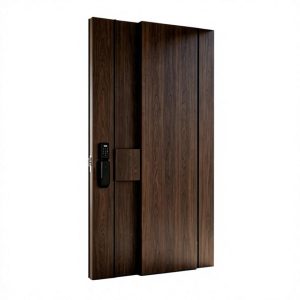
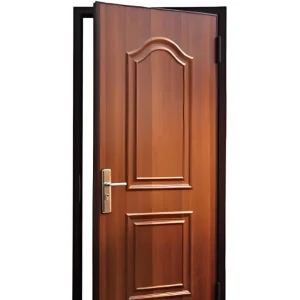
An unfinished entry door is a door unit delivered without any factory-applied finish. No paint. No stain. No primer. The door arrives as a bare wood slab or pre-hung unit, ready for final coating on-site.
This category is standard practice in commercial and high-end residential construction. It serves to match job-site color schemes and avoid transit damage to delicate finishes.
—
Why Choose Unfinished Entry Doors?
Cost Efficiency for Painting and Staining Contractors
Contractors can mark up finishing as a separate line item. A $400 unfinished door can generate an additional $150–$250 in finishing labor revenue. Factory-finished doors eliminate that revenue stream.
Unfinished doors typically cost 15–25% less than factory-finished equivalents. The factory does not run the door through a spray booth, cure oven, or UV finishing line, removing that cost from the price.
Job-Site Flexibility and Finish Control
Contractors coordinate with painters on a single schedule. There is no need to match a factory finish that may have faded during warehousing. Factory-finished doors often arrive with scratches, dents, and UV fading from shipping. Unfinished doors avoid this — the finish is applied after installation, so it is fresh and uniform.
The “Paid Off” Front Door Symbolism
A red front door has historically symbolized a paid-off mortgage in parts of the United States. While not a legal or financial indicator, the tradition persists, and many homeowners request red doors for this meaning.
This matters because homeowners want to choose their own door color. Unfinished doors allow that choice after installation. Buyers can serve this demand without carrying inventory in dozens of colors.
—
Key Specifications for Unfinished Entry Doors
Door Sizes and Pre-Hung Configurations
The standard exterior door size in the U.S. is 3’0″ x 6’8″ (36″ x 80″). Other standard widths include 2’8″ (32″) and 2’6″ (30″). Heights of 6’8″ and 7’0″ are the industry norm.
Standard 6’8″ and 7’0″ single exterior doors are typically available pre-hung with 2–4 week lead times. The 8’0″ single exterior door also has a shorter lead time when pre-hung, but confirm rough opening dimensions with the manufacturer before ordering.
Pre-hung units come with the door attached to a frame, with hinges and weatherstripping in place, saving on-site labor. Slab doors are just the door — preferred for retrofit jobs with sound existing frames.
| Specification | Slab Door | Pre-Hung Unit |
|---|---|---|
| Includes frame | No | Yes |
| On-site labor | Higher (frame prep needed) | Lower (drop-in installation) |
| Alignment control | Depends on existing frame | Factory-set, consistent |
| Best for | Retrofit, custom frames | New construction, standard openings |
Wood Species and Performance Characteristics
- Oak: Durable, prominent grain, accepts stain well. A workhorse species.
- Mahogany: Rot-resistant, stable, premium appearance. Worth the premium for high-exposure entryways.
- Fir and Pine: Economical, takes paint well, common in production building.
- Alder and Cherry: Premium options for high-end projects. Softer woods requiring careful handling.
Engineered stile-and-rail construction uses engineered components for stiles and rails with a solid wood veneer. These resist warping better than solid wood and are common in commercial projects.
Glazing Options and Energy Performance
Unfinished doors can come with pre-installed glass or glazing kits for on-site installation. Factory-installed glazing ensures proper seals and warranty coverage. On-site glazing shifts seal failure risk to the installer.
Energy performance is governed by glazing. Dual-pane and triple-pane options, low-E coatings, and U-factor ratings affect building code compliance. Local codes such as IECC and Title 24 set specific requirements. Verify your supplier can meet regional U-factor requirements.
Door Configuration and Hardware Preparation
Single doors are most common, but double doors and doors with sidelights are standard for larger entryways. Configurations affect cost and lead time.
Pre-drilled doors come with bores for handlesets and deadbolts, saving on-site labor but limiting hardware choices. Blank doors have no bores, offering full flexibility but requiring on-site drilling. Specify your preference in the RFQ.
—
What Is the Least Expensive Exterior Door Type?
Steel doors are typically the least expensive exterior door option, costing 30–50% less than comparable solid wood doors. Fiberglass doors sit in the middle. Solid wood doors are the premium option.
When finishing labor is already budgeted, unfinished wood doors offer the best cost-to-value ratio. The unit costs less than factory-finished wood, and finishing labor is already accounted for.
Discounted wood exterior doors come from manufacturer overstock, discontinued models, mill seconds, and direct factory orders. Factory-direct sourcing eliminates retail markup. Unfinished doors handle minor cosmetic blemishes well — they disappear under paint or stain.
—
Sourcing Strategies for B2B Buyers
Local Lumber Yards vs. Direct Factory Sourcing
Local lumber yards offer convenience — single-unit orders, local warranty support, quick delivery — at 15–30% higher per-unit costs.
Direct factory sourcing offers lower per-unit cost and full customization, but requires container-volume orders and longer lead times. This suits projects with 50+ doors or distributors building inventory.
Choose a lumber yard if: You need 1–5 doors this week in standard sizes.
Choose direct factory sourcing if: You need 50+ doors, have 60–90 days of lead time, and want custom sizes or configurations.
Filtering by Door Size, Type, and Configuration
- Door size: Standard (6’8″, 7’0″) vs. custom (8’0″, oversized). Custom sizes require confirmation of rough opening dimensions.
- Door type: Single, double, with sidelights, with transoms. Each adds complexity and cost.
- Door configuration: Pre-hung vs. slab; left-hand vs. right-hand inswing; outswing vs. inswing. Get these details right in the RFQ.
Evaluating Lead Times and MOQs
| Order Type | Lead Time |
|---|---|
| Standard sizes (6’8″, 7’0″), pre-hung | 2–4 weeks |
| Custom sizes (8’0″, oversized) | 6–10 weeks |
| Factory-direct, container volume | 4–8 weeks plus shipping |
Lumber yards can order single units from distributors. Factory-direct orders usually require 20–50 units or a full container. For large projects, plan 60–90 days ahead.
—
How to Evaluate Unfinished Entry Door Suppliers
1. Manufacturing Capability
Visit the factory or request a virtual tour. Look for kiln-drying capacity, CNC machining capability, and finishing lines. Ask about production capacity in units per month. A factory producing 500 doors per month cannot handle a 200-door order in three weeks.
2. Quality Control Process
Ask for the QC checklist. Look for moisture content testing, dimensional tolerance checks, and pre-shipment inspection protocols. WDMA and AAMA set performance testing standards for air-tightness, water-tightness, and wind resistance.
3. Pre-Shipment Inspection
Who inspects before doors leave the factory? A factory that welcomes third-party inspection is more trustworthy. Ask for inspection reports from recent shipments.
4. Documentation and Compliance
A competent supplier provides a packing list, proforma invoice, bill of lading, and certificates of origin. Ask about moisture content documentation and building code compliance for glazing and insulation.
5. Communication and Responsiveness
Send a test inquiry with detailed technical questions. Time the response. A supplier that takes five days to answer a pre-sale question will take two weeks to resolve a post-shipment problem.
Red Flags to Avoid
- No moisture content data. Wood with high moisture content will warp after installation.
- Vague lead times. “It depends” is not an answer.
- No QC documentation. Assume no inspection exists.
- Unwillingness to customize. A factory offering only standard sizes lacks flexibility.
—
Questions to Ask Before Ordering
- What is the moisture content of your kiln-dried wood?
- Do you conduct air-tightness, water-tightness, and wind resistance tests before shipment?
- What is your lead time for standard sizes (6’8″, 7’0″) pre-hung?
- What is your MOQ for factory-direct orders?
- Do you provide packing lists, proforma invoices, and full customs documentation?
- Can you adjust profile structures and fittings to meet local building codes?
- Do you offer pre-drilled hardware options, or are doors shipped blank?
- What is your warranty policy for doors damaged in transit?
—
Relevant Industry Standards and Certifications
WDMA (Window and Door Manufacturers Association): Sets performance standards for air-tightness, water-tightness, and structural integrity.
AAMA (American Architectural Manufacturers Association): Establishes testing protocols for fenestration products.
IECC (International Energy Conservation Code): Sets energy efficiency requirements, including U-factor limits for glazing.
Title 24 (California): Imposes stricter efficiency requirements than IECC. Verify compliance for California shipments.
Moisture Content Standard: Industry standard is 8–12% for solid wood doors. Kiln-dried wood in this range resists warping.
—
Global Sourcing: What to Expect from an Overseas Factory
Shipping and Logistics
FCL (Full Container Load) is more cost-effective for large orders — lower per-unit cost. LCL (Less than Container Load) works for smaller volumes but has higher per-unit costs and longer transit times.
Doors ship in plywood crates or heavy-duty cartons with protective corner boards. A factory that skimps on packing will deliver damaged goods.
Documentation and Customs
Required documents: packing list, proforma invoice, bill of lading, and certificates of origin. Confirm Incoterms (FOB, CIF, EXW) before ordering — this determines who bears shipping cost and risk.
Risk Mitigation
Pre-shipment inspection is non-negotiable. Hire a third-party inspector or require inspection reports with photos. Use a T/T deposit (typically 30%) with the balance against a bill of lading copy, or an L/C for larger contracts.
—
Production Process: From Raw Material to Finished Door
1. Lumber selection and kiln drying. Raw lumber is inspected and kiln-dried to 8–12% moisture content. This 2–4 week process prevents post-installation warping.
2. Milling and component cutting. Dried lumber is cut into stiles, rails, and panels. CNC machines shape components to precise tolerances. Mortise-and-tenon or dowel joints are cut.
3. Assembly and gluing. Components are assembled into stile-and-rail construction with waterproof adhesives, then clamped and cured.
4. Sanding and surface preparation. The door is sanded smooth, ready for finishing. This is the final stage for an unfinished door.
5. Glazing (if applicable). Glass inserts are installed and sealed with weather-resistant gaskets.
6. Quality inspection. The door is checked for dimensional accuracy, surface defects, and structural integrity. Pre-hung units are tested for squareness.
—
Customization and OEM/ODM Options
Key customization options:
- Size: Standard sizes are fastest; custom sizes require rough opening confirmation.
- Wood species: Oak, mahogany, fir, pine, alder, cherry.
- Glass: Dual-pane, triple-pane, low-E coatings, tinted, decorative.
- Hardware: Pre-drilled bores, custom placement, or blank.
- Configuration: Single, double, with sidelights, with transoms.
OEM suppliers build to your exact drawings. ODM suppliers help design the product and manufacture to their own design.
—
How a Factory-Direct Partner Meets These Standards
A factory-direct manufacturer eliminates the distributor margin, builds to your specifications, tests doors before shipment, and handles logistics.
Our Manufacturing Capability and Customization
We manufacture unfinished entry doors in solid wood, thermal-break aluminum, and aluminum alloy configurations. Our line handles standard 6’8″ and 7’0″ pre-hung units with short lead times and accommodates 8’0″ custom openings.
Full customization is standard — size, color, glass, and hardware accessories are adjustable. Our OEM and ODM capabilities match your exact requirements, including sidelights, transoms, and double-door configurations. Adjustable profiles and fittings meet local building codes.
Quality Control and Pre-Shipment Inspection
Every batch undergoes air-tightness, water-tightness, and wind resistance tests for WDMA/AAMA compliance. Our kiln-dried wood is maintained at 8–12% moisture content. Tests are performed, documented, and reports are shared with the buyer. If a door fails, it does not ship.
Logistics, Documentation, and Pricing
As the manufacturer, we eliminate the distributor margin — a critical advantage on high-volume projects. We handle FCL and LCL shipments directly from our China factory, providing packing lists, proforma invoices, and full customs documentation.
—
How to Work with Us: A Step-by-Step Process
Step 1: Submit Your Specifications. Send door sizes, wood species, glazing requirements, and quantities. Request a quote: Contact Our Team.
Step 2: Receive a Detailed Quote. We respond with per-unit price, MOQ, lead time, and shipping options (FCL/LCL), plus a proforma invoice.
Step 3: Production and Pre-Shipment Inspection. We produce your doors and conduct the full battery of quality tests, sharing inspection reports and photos before shipment.
Step 4: Shipping and After-Sales Support. We handle export documentation and coordinate loading, remaining available for installation guidance and warranty claims.
—
Can you have unfinished doors? Yes. Unfinished doors are a standard product category in residential and commercial construction. They are delivered without paint, stain, or primer, allowing on-site finishing. This is common for doors matching custom color palettes or where finishes risk damage during construction.
What is the least expensive type of exterior door? Steel doors are generally the least expensive, followed by fiberglass and solid wood. However, unfinished wood doors can be more cost-effective than pre-finished wood because they save on factory finishing costs. The total installed cost — including finishing labor — should be the deciding factor.
What color front door means the house is paid off? A red front door is a traditional symbol of a paid-off mortgage in parts of the U.S. While not a legal indicator, many homeowners still choose red doors for this meaning. Unfinished doors allow any color choice after installation.
Where can I find discounted wood exterior doors? Through manufacturer overstock, discontinued models, mill seconds, and direct factory sourcing. For B2B buyers, ordering directly from a manufacturer eliminates retail markup and yields the lowest per-unit cost at container volumes. Verify quality and inspection before committing.
What is the lead time for pre-hung unfinished entry doors? Standard 6’8″ and 7’0″ pre-hung units typically have 2–4 week lead times from local suppliers. Custom sizes like 8’0″ may take 6–10 weeks. Factory-direct orders may require longer lead times but offer lower pricing.
Do unfinished doors come pre-drilled for hardware? It depends on the manufacturer. Some arrive with pre-drilled bores; others are blank for custom hardware placement. Specify your preference in the RFQ. Pre-drilling saves labor but limits choices; blank doors offer full flexibility.
Can unfinished doors be used outdoors? Yes, but they must be finished — painted, stained, or sealed — before exposure to the elements. Unfinished wood absorbs moisture, causing warping, swelling, or rot. Apply a weather-resistant finish within a few days of installation.
—
The decision comes down to your project’s scale and timeline. For a single custom home with a specific color requirement, a local lumber yard with unfinished door stock is practical. For a development with 100 units, factory-direct sourcing is the only financially sensible option. The per-unit savings, customization capability, and quality control documentation all point to working directly with the manufacturer.
Ready to discuss your project requirements? Submit your inquiry and our team will respond with pricing, lead times, and shipping options.
—
References
- Window and Door Manufacturers Association. “Performance Standards and Certification.” https://www.wdma.com/
- American Architectural Manufacturers Association. “AAMA Certification Program.” https://www.aamanet.org/
- International Energy Conservation Code. “IECC Compliance Requirements.” https://www.iccsafe.org/
- California Energy Commission. “Title 24 Building Energy Efficiency Standards.” https://www.energy.ca.gov/